Buy Commercial Exercise Equipment for Distributors | Bick OEM Factory Direct
The cheapest quote on your desk is almost never the cheapest container that lands at your port.
Distributors sourcing commercial exercise equipment must lock voltage compliance, certification scope, and container consolidation details into the purchase order before production starts — not after the doors seal. Spec-sheet verification, flexible MOQ structures, and mixed-SKU loading plans are what protect your margin, not the unit price on the proforma invoice.
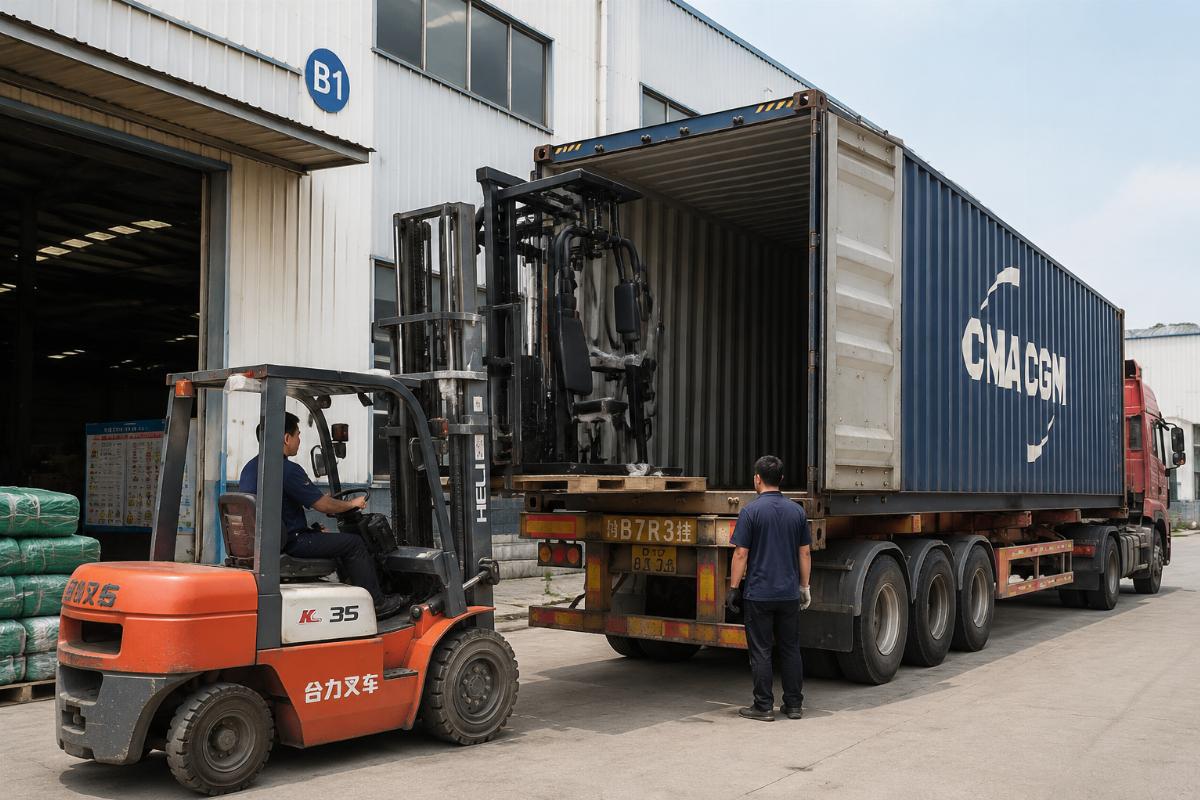
I still remember the morning the warehouse supervisor in Jimo called me down to the loading bay. A full 40HQ of selectorized plate-loaded machines — matte black finish, custom upholstery, the whole package — was sitting half-loaded because the voltage plates on the embedded consoles were stamped for 60Hz markets, while the buyer’s distribution hub in Riyadh runs 220V/50Hz. Nobody had cross-checked the spec sheet against the destination country’s grid standard before the production run started. The machines looked perfect. They were dead on arrival the moment they were plugged in. Air-freighting replacement control boards cost several times the original ocean freight saving the buyer had negotiated, and the relationship nearly collapsed. That container taught me, more than any sales training ever could, that a distributor’s real job starts long before the purchase order is signed — it starts at the spec sheet [NEED_CITE: CE/EN certification scope requirements for commercial fitness equipment sold in regulated markets].
When you buy exercise equipment for distributors, the conversation has to move past unit price and into the territory of compliance paperwork, packaging lead times, and how many SKUs you can legally and safely stack into a single container.
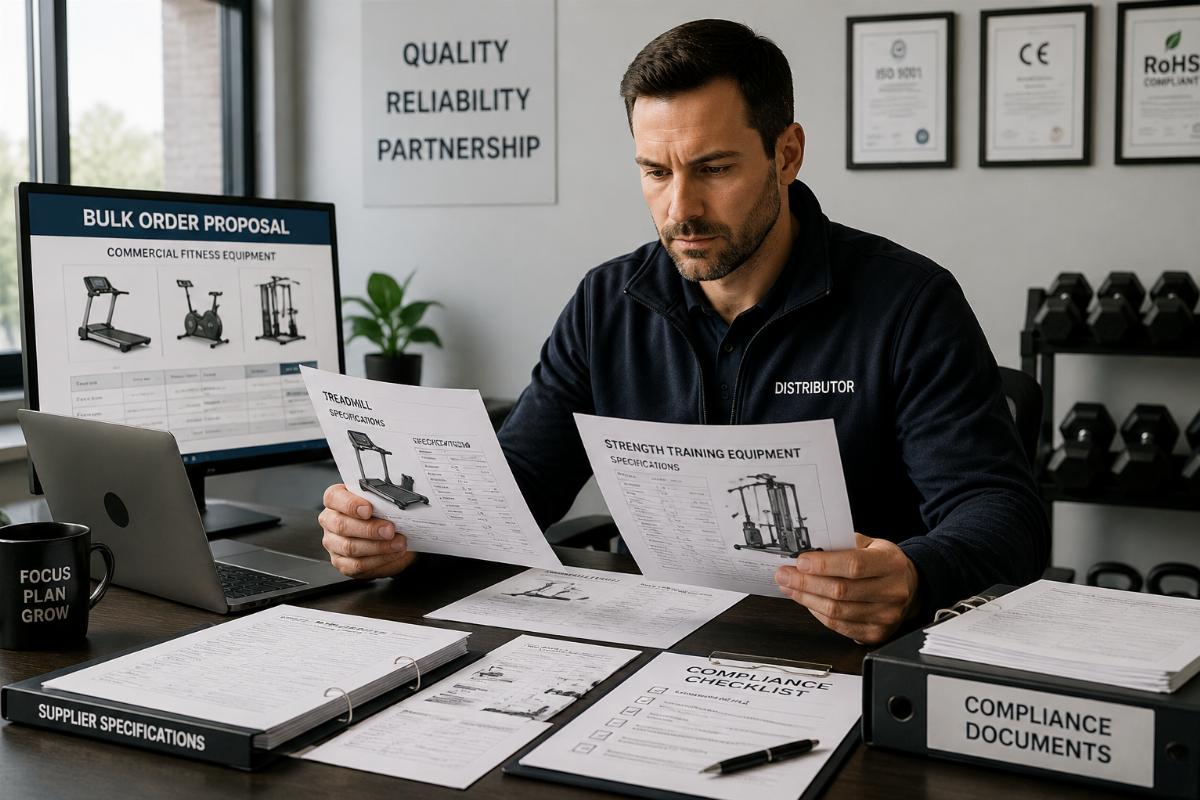
Let me walk you through the four checkpoints that separate distributors who grow steadily from those who keep bleeding money on avoidable mistakes.
What Should Distributors Verify Before Ordering Exercise Equipment in Bulk?
Voltage, frequency, certification scope, and load-rating documentation must be confirmed in writing before the first unit enters the production queue.
This sounds obvious, but in practice it is where the majority of costly shipment failures originate. A spec sheet is not a brochure. It is a contractual snapshot of what will actually be built, and it needs to answer four questions unambiguously:
- Input voltage and frequency compatibility with the destination market (220V/50Hz, 110V/60Hz, or dual-voltage)
- Certification coverage that matches the import country’s regulatory framework — CE/EN for most of Europe and MENA, SASO-aligned documentation for Saudi Arabia, SONCAP for Nigeria [NEED_CITE: regional certification requirements for imported commercial fitness equipment]
- Structural load rating for the specific user demographic the distributor serves
- Warranty clause wording, including what is classified as a wear part versus a structural defect
I once reviewed a purchase order from a West African distributor who had been buying generic cardio equipment through a trading company for years. When we pulled the original spec sheets, the embedded treadmill consoles were rated for 110V/60Hz only. The distributor had been selling them into a 220V/50Hz market with step-down transformers bundled in every box. The transformers added cost, added failure points, and added warranty claims that the trading company quietly refused to honor. Switching to a factory-direct OEM relationship with verified voltage plates eliminated the transformers entirely and cut warranty traffic noticeably.
The verification process should include a written confirmation loop: the factory sends a pre-production spec sheet, the distributor’s technical contact signs it off, and only then does the production schedule lock. Skipping this loop to save a few days almost always costs far more than it saves.

How Does MOQ Flexibility Work for Fitness Equipment Distributors?
MOQ for commercial exercise equipment ranges from single units for testing to full container loads for established distribution, with volume tiers unlocking progressively deeper factory-direct pricing.
There is a persistent myth in the import community that lower MOQ is always better. It is not. When a factory accepts a one-unit MOQ on a complex selectorized machine, it is pulling that unit off a shared production line that was scheduled for a full batch. The unit absorbs a disproportionate share of setup time, material procurement overhead, and quality-control attention — and the price reflects that. Conversely, a distributor who commits to a full container of mixed SKUs gives the factory the ability to plan raw material procurement, schedule welding and powder-coating runs efficiently, and pass meaningful cost savings downstream.
The practical MOQ structure for a distributor typically looks like this:
- Single-unit orders: viable for sample evaluation, showroom display, or new-SKU testing; priced at a premium
- Partial-container orders: workable for distributors expanding a product line; moderate pricing
- Full-container orders: the standard tier for established distributors; best unit pricing and priority production scheduling
- Multi-container commitments: unlock OEM branding, custom colorways, and exclusive territory discussions [NEED_CITE: OEM private-label MOQ thresholds for commercial fitness equipment branding programs]
A distributor in Southeast Asia came to us initially wanting to test five different strength machines in small quantities. We accommodated the samples, but the unit cost was high enough that the distributor’s margin was razor-thin. Six months later, after validating market demand, the same distributor placed a full 40HQ combining plate-loaded machines, a cable crossover, and free-weight accessories. The per-unit cost dropped noticeably, the production lead time shortened because the factory could batch the powder-coating run, and the distributor finally had room to build a healthy margin into the local resale price.
The lesson: MOQ is not a barrier to negotiate down — it is a lever to plan with. Committing to volume at the right moment is what turns a testing phase into a profitable distribution business.

How Can Distributors Consolidate Multiple SKUs Into One Container?
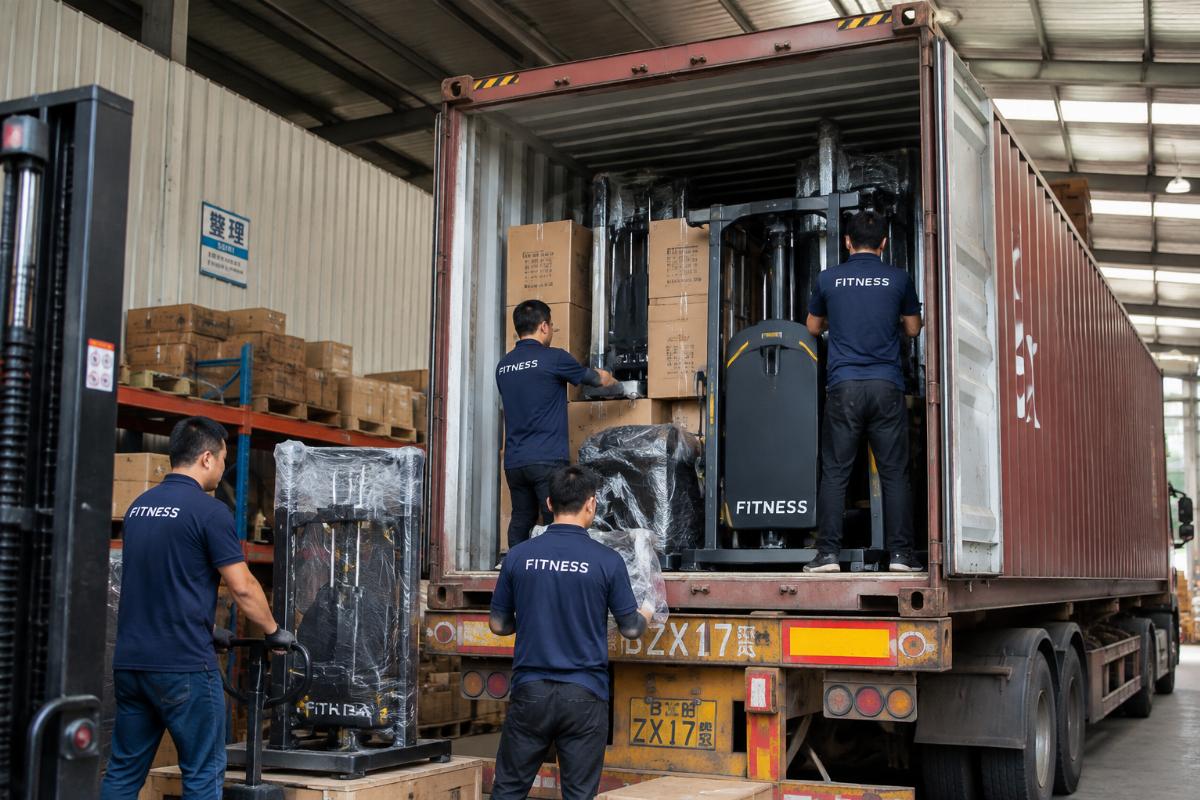
Mixed-container consolidation — combining plate-loaded strength machines, cardio units, and free-weight accessories into a single 40HQ — reduces per-unit freight cost and matches the diverse product demand of a distributor’s local market.
Most end-user gyms and fitness centers do not buy one type of equipment. They buy a mix: strength machines for the main floor, cardio for the front row, free weights for the functional zone, and flooring and accessories to complete the space. A distributor who can only ship single-SKU containers is forcing the end buyer to place multiple small orders, each carrying its own freight burden. The distributor who can consolidate wins the account.
The consolidation process requires a loading plan that respects three constraints:
- Weight distribution: heavy plate-loaded machines must be positioned to keep the container’s axle load within legal road limits at destination
- Cube utilization: bulky cardio units and compact free-weight accessories need to be interleaved so that neither air space nor weight capacity is wasted
- Product protection: free-weight plates and dumbbells must be secured separately from upholstered machines to prevent transit damage
A distributor in Latin America was previously importing cardio equipment in one container and strength equipment in another, two separate shipments per quarter. By consolidating treadmills, ellipticals, a Smith machine, plate-loaded row, and a full set of adjustable benches into a single 40HQ, the distributor cut the number of annual shipments in half, reduced total freight cost substantially, and could offer local gym buyers a complete floor package from one purchase order. The factory’s loading team developed a reusable loading diagram for that specific SKU mix, which eliminated guesswork on every reorder.
Container consolidation is not a favor the factory does for the distributor — it is a core capability that separates a real manufacturing partner from a catalog supplier. When you buy exercise equipment for distributors, the ability to mix SKUs intelligently is what makes your distribution model work at scale.
What Does the OEM/Private-Label Process Look Like?
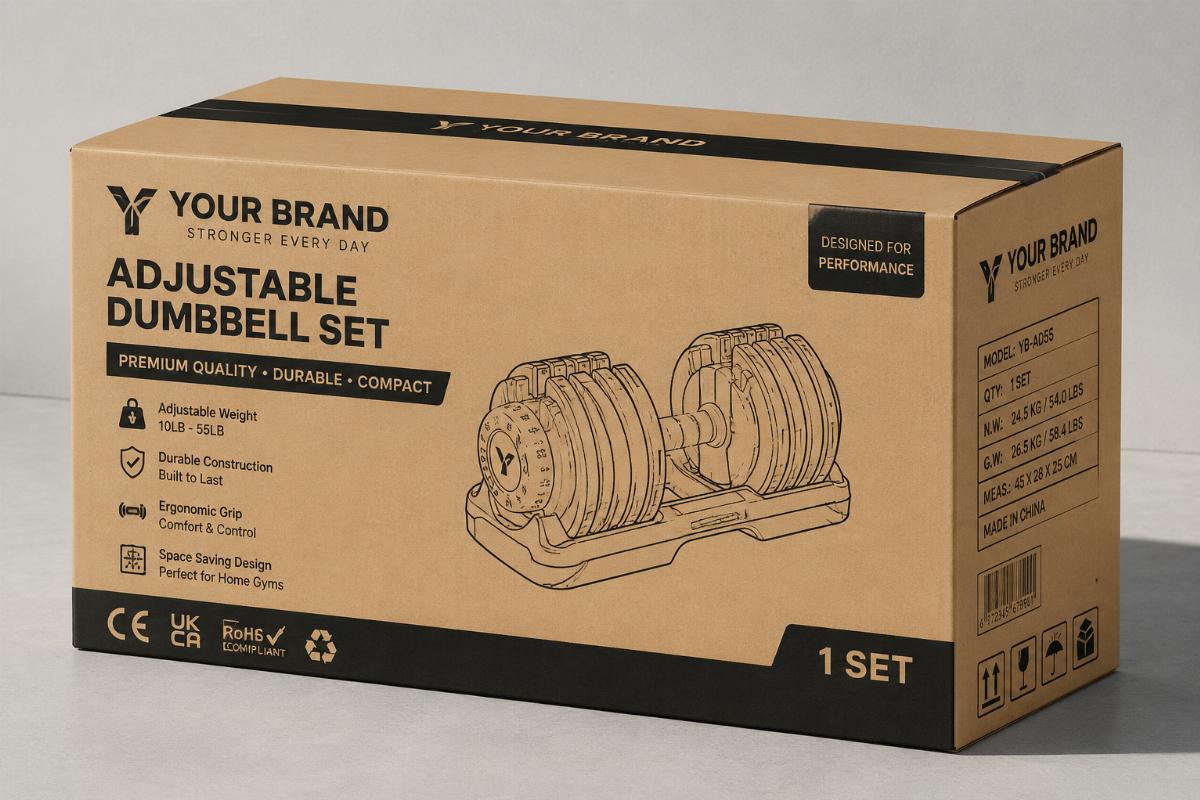
The OEM branding workflow moves from logo file submission to packaging proof approval to production launch, with clear milestone checkpoints that prevent costly rework.
A distributor who has been importing generic equipment and reselling it under the buyer’s brand name will eventually hit a ceiling. The market gets crowded, price comparison becomes unavoidable, and brand loyalty stays with the retailer, not the distributor. Transitioning to a private-label OEM program is how the distributor builds an asset that compounds over time.
The process, done properly, follows a defined sequence:
- Brand asset submission: the distributor provides vector logo files, brand color codes, and any typography guidelines
- Packaging design proof: the factory’s design team produces a packaging artwork proof showing logo placement, barcode positioning, warning labels, and regulatory markings
- Proof approval: the distributor reviews and signs off on the proof in writing — this is the last chance to catch errors before tooling and printing begin
- Production launch: branded packaging enters the production line alongside the equipment build
- First-article inspection: the first finished unit with full branded packaging is photographed and shared with the distributor for final confirmation before the batch continues
A distributor in the Middle East had been selling unbranded equipment for years and decided to launch a private label. The first packaging proof came back with the logo placed correctly but the regulatory compliance markings in the wrong language for the target market. Because the proof approval step caught it, the error was corrected before any printed boxes were produced. Had that error slipped into production, the entire batch of packaging would have been scrapped, and the shipment would have been delayed by weeks.
The OEM transition typically requires a minimum commitment that covers the cost of custom packaging tooling and branded material procurement. Once that threshold is met, the repeat order cycle becomes significantly more efficient, because the branding assets are already in the factory’s system and only need to be refreshed periodically.
What After-Sales Support Should Distributors Expect?
Spare parts supply, structured warranty terms, and remote technical support form the baseline after-sales infrastructure that any serious distributor must require from an OEM partner.
Equipment will need service. That is not a possibility — it is a certainty. The question is not whether a distributor will face warranty claims, but whether the OEM partner has a system in place to resolve them quickly and at reasonable cost. A distributor who sells a machine and then has to wait weeks for a replacement part is a distributor who loses the next order.
The after-sales framework that protects a distributor’s reputation includes:
- Spare parts availability: critical wear parts — cables, pulleys, upholstery panels, console components — must be available for reorder independently of the equipment itself
- Warranty clarity: the warranty document must clearly distinguish between structural frame coverage, mechanical component coverage, and wear-part exclusion, so that both the distributor and the end buyer know exactly what is covered
- Remote technical guidance: when a field issue arises, the distributor’s service technician should have direct access to the factory’s technical team for troubleshooting, rather than relying on guesswork or third-party repair shops unfamiliar with the equipment
A distributor in Africa reported that a batch of cable crossover machines was experiencing premature cable wear in a high-humidity environment. The factory’s technical team reviewed photographs and usage data, identified that the cable routing path was correct but the environmental conditions exceeded the standard lubrication specification, and shipped a batch of marine-grade cables along with updated maintenance instructions. The issue was resolved without a single machine being returned to the factory, and the distributor was able to update the maintenance schedule for all units in the field.
After-sales infrastructure is not a cost center — it is the foundation of repeat business. When you buy exercise equipment for distributors, the conversation about warranty and spare parts is not the last item on the agenda. It is one of the first.

Conclusion
Spec verification, MOQ planning, container consolidation, OEM branding discipline, and after-sales infrastructure are the five pillars that determine whether a distributor’s exercise equipment business grows or bleeds.
The unit price on the invoice is the smallest part of the equation. The distributors who succeed long-term are the ones who treat the purchase order as the end of a careful preparation process, not the beginning of a gamble. Buy exercise equipment for distributors with the full picture in mind — and the margin takes care of itself.