
Commercial Fitness Equipment Manufacturer: OEM Gym Machines for Sale
Most buyers think the lowest unit price wins the bid. In reality, assembly tolerance gaps can swallow every dollar of that savings before the first member checks in.
The fitness equipment price Saudi Arabia lands on your warehouse floor is not a single number—it is a four-layer stack: FOB factory cost, ocean freight allocation per unit, SASO certification and customs clearance, and last-mile local delivery. Understanding each layer is the only way to negotiate a real landed cost instead of chasing a misleading catalog quote.
I still remember a container that rolled into Jeddah port a few years back. The buyer had chased the cheapest Smith machine quote he could find. When his installer tried to bolt the guide rails, the tolerance gap was visible to the naked eye. Shoulder presses jammed halfway up. The entire batch had to be crated back out—return freight alone cost more than the original invoice. That container taught everyone involved a painful lesson: the spec sheet is easy to copy, but assembly precision is where real manufacturers separate themselves from workshops. [NEED_CITE: root cause distribution of commercial gym equipment warranty claims by failure category]

Let me walk you through what actually drives the numbers you will see on your procurement spreadsheet.
How Much Does Each Equipment Category Cost at Factory Level?
Fitness equipment price Saudi Arabia buyers pay at the factory gate splits cleanly into four categories: cardio, fixed strength, free weight, and functional training. Each category has its own cost structure, and mixing them in one container is where smart buyers save serious money.
When I was welding power racks back in Shandong, I learned quickly that a plate-loaded chest press and a commercial treadmill share almost nothing in raw material, labor hours, or packaging footprint. The treadmill is heavy, motor-driven, and electronics-heavy. The chest press is mostly steel tube, bearings, and cable assemblies. Their FOB prices sit in completely different ranges, and their shipping density is worlds apart.
Here is how the four categories compare at the factory level for commercial-grade equipment:
| Category | Typical FOB Range | Material Intensity | Electronics Content | Packaging Density |
|---|---|---|---|---|
| Cardio (treadmills, ellipticals, spin bikes) | Mid-to-high | Moderate | High | Low (bulky, fragile) |
| Fixed Strength (Smith machines, cable crossovers, plate-loaded) | Moderate | High | Low-to-moderate | Moderate |
| Free Weight (dumbbells, barbells, plates, benches) | Low-to-moderate | Very high | None | High (dense stackable) |
| Functional Training (rigs, battle ropes, plyo boxes) | Low | Moderate | None | Moderate |
[NEED_CITE: commercial fitness equipment FOB pricing structure by equipment category in China manufacturing hubs]
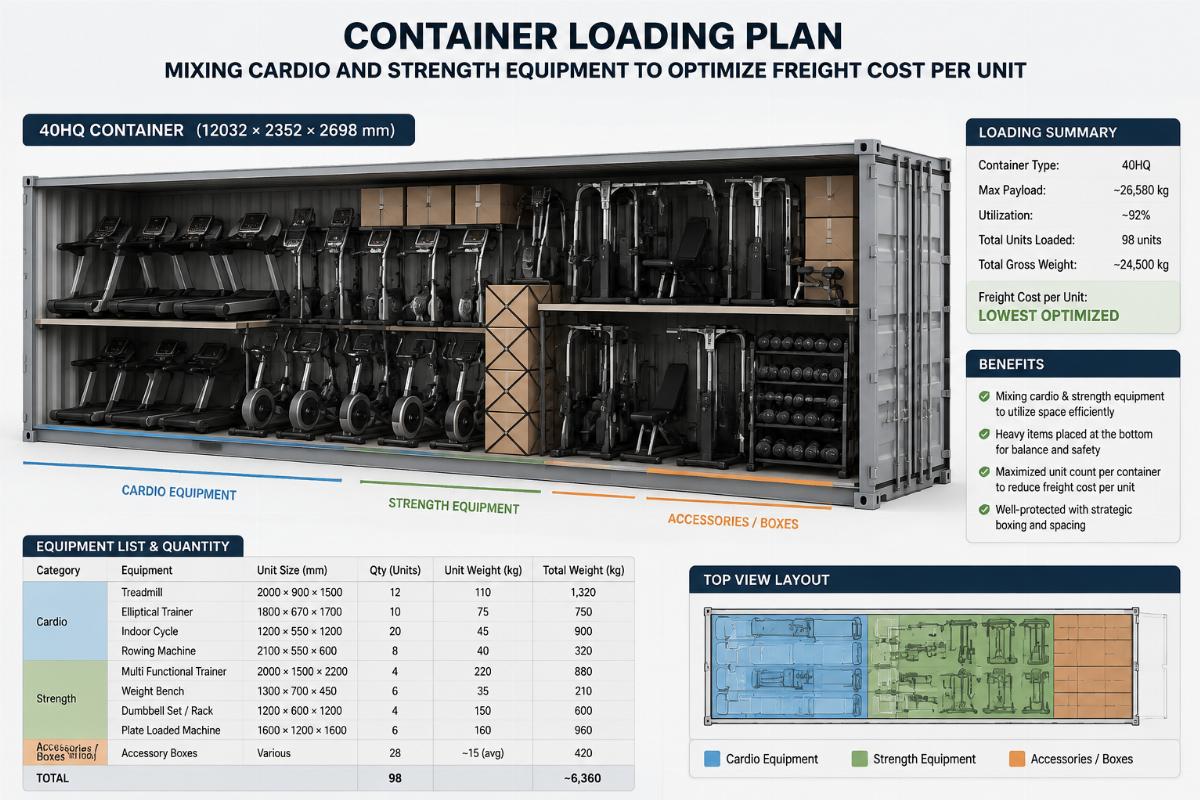
The key insight most overseas buyers miss: a container stuffed only with treadmills carries a brutal per-unit freight cost because the machines are voluminous but cannot be nested. Fill the voids between treadmills with dumbbell sets and adjustable benches, and the freight cost per treadmill drops noticeably. The free weight and functional gear essentially subsidize the cardio shipping.
I worked with a distributor in the Gulf who initially quoted his gym clients based on per-category averages. His margins collapsed on cardio-heavy projects. Once we restructured his orders to mix full containers—cardio frames paired with plate-loaded machines and free weight sets—his effective per-unit landed cost across the entire order dropped by a meaningful margin, even though the FOB price of each individual SKU stayed the same.
How Does Container Consolidation Affect Per-Unit Landed Cost?
The fitness equipment price Saudi Arabia importers actually pay per machine is heavily shaped by how efficiently the container is packed. A poorly planned load can add tens of percent to the effective per-unit cost, while a mixed-load strategy brings it down sharply.
A standard 40-foot high-cube container gives you roughly 67-76 cubic meters of usable space, depending on packaging design. Commercial treadmills in full retail packaging consume a disproportionate share of that volume. A single treadmill can occupy as much space as three plate-loaded machines or a full set of adjustable dumbbells.
Here is a typical mixed-load scenario I have seen work well for gym fit-out projects:
| Equipment Type | Units per 40HQ (Approx.) | Space Utilization | Freight Cost Allocation |
|---|---|---|---|
| Commercial Treadmills | Limited (single-digit) | Low density | High per unit |
| Fixed Strength Machines | Moderate | Moderate density | Moderate per unit |
| Free Weight Sets | High (palletized) | High density | Low per unit |
| Functional Accessories | Flexible fill | Variable | Absorbed as filler |
[NEED_CITE: ocean freight cost allocation methodology for mixed commercial fitness equipment container loads]
The trick is treating the container as a single cost pool. You calculate the total freight, insurance, and port charges, then allocate them across all units based on volume or weight share—not by dividing the freight bill by the number of SKUs. Buyers who skip this step often think their treadmills cost less than they actually do, and their dumbbells cost more. The distortion shows up later when they try to price individual machines for resale or project billing.
A hotel project buyer in the Middle East once asked me to quote a boutique fitness center with mostly cardio equipment. The first draft looked expensive. We reworked the load plan: added a full set of adjustable benches, rubber flooring rolls, and a functional rig into the same container. The total freight barely changed, but the per-unit allocation across the entire project dropped noticeably. The client got a better number, and we filled the container to structural capacity instead of shipping air.

What Hidden Costs Do Importers Face at Saudi Customs?
The fitness equipment price Saudi Arabia buyers budget for often ignores the customs layer entirely—until the container sits at the port accruing demurrage. SASO certification, import duty, and clearance delays are the three silent cost eaters that can add a meaningful percentage to your total landed expense.
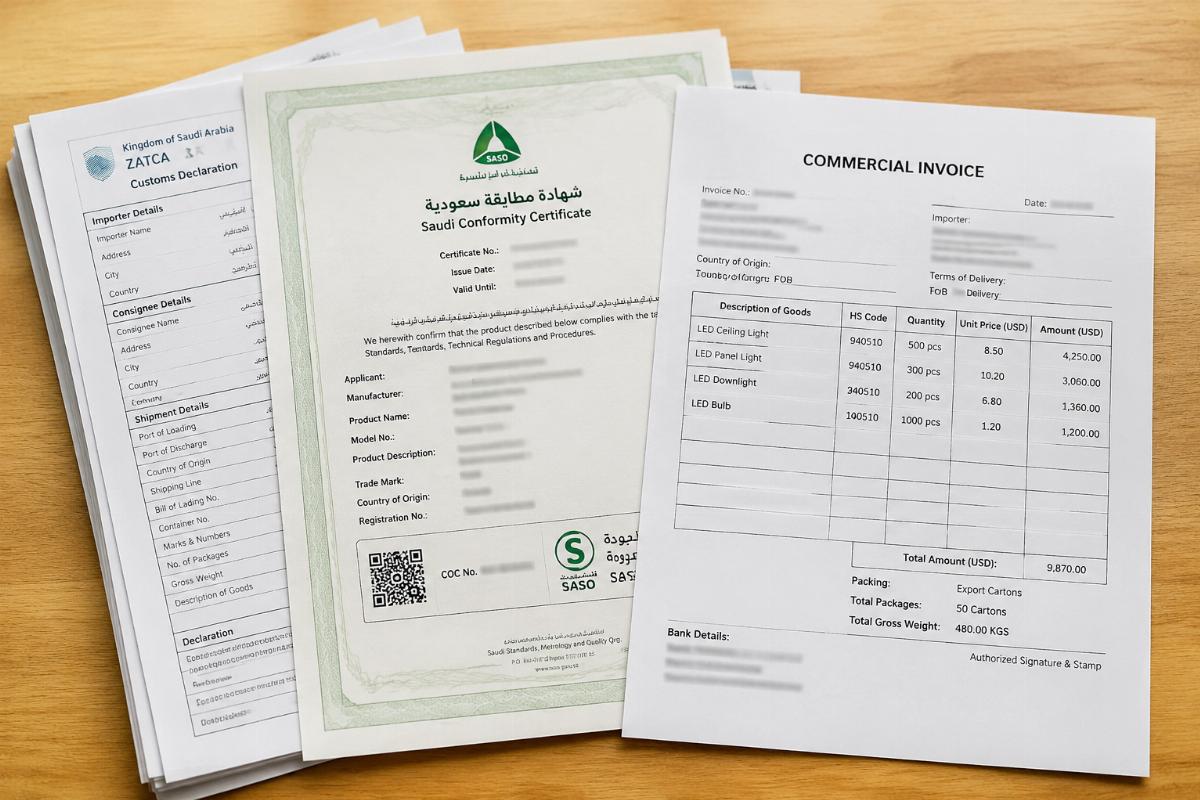
Saudi Arabia’s Standards, Metrology and Quality Organization (SASO) requires that most imported electrical and mechanical products meet specific conformity standards before they clear customs. Commercial fitness equipment with motors, electronic consoles, and power supplies falls squarely in this scope. The certification process involves product testing, factory audit documentation, and a conformity certificate that must accompany every shipment.
Here is what the customs cost stack typically looks like:
| Cost Component | Nature | Timing | Risk if Missed |
|---|---|---|---|
| SASO Conformity Certificate | Mandatory pre-shipment | Before loading | Container held at port |
| Customs Import Duty | Percentage of CIF value | At clearance | Budget overrun |
| Port Demurrage | Daily rate per container | After free period expires | Compounding daily cost |
| VAT on Total Landed Value | Percentage applied at clearance | At clearance | Cash flow surprise |
[NEED_CITE: SASO conformity assessment requirements for imported commercial fitness equipment with electrical components]
The most common mistake I see: buyers confirm an FOB price, add estimated freight, and call that their landed cost. Then the SASO certificate was not arranged before loading, or the product test report from the factory does not match the exact model being shipped. The container arrives, customs holds it, and demurrage starts ticking. By the time the paperwork is sorted, the port storage fees alone can rival the freight cost.
I recall a shipment where the buyer’s forwarding agent assumed the factory’s CE mark was sufficient for Saudi customs. It was not. CE is a European conformity standard. SASO has its own technical regulations and requires specific testing through authorized bodies. The container sat for over a week. The demurrage bill was painful, and the buyer had to pay for an expedited conformity review on top of it.
The lesson is simple: before you confirm any fitness equipment price Saudi Arabia project budget, get a written breakdown from your clearing agent that includes SASO fees, duty rates for each HS code in your order, and the free storage days at your destination port. Build those numbers into your spreadsheet from day one.
How to Compare Factory-Direct Pricing vs Local Distributor Quotes?
The fitness equipment price Saudi Arabia buyers receive from a local distributor versus a factory-direct quote can differ dramatically—but the gap is not always what it seems. Factory-direct sourcing can deliver substantial savings, yet it demands that you verify assembly quality, warranty infrastructure, and spare parts availability before you sign.
A local distributor adds margin, but also adds inventory availability, local technical support, and often faster response times for warranty claims. A factory-direct quote removes the middleman margin, but puts the burden of import logistics, customs, and after-sales coordination on you.
Here is how the two channels compare across key dimensions:
| Evaluation Dimension | Factory-Direct | Local Distributor |
|---|---|---|
| Unit Price | Noticeably lower | Includes margin layer |
| Assembly Tolerance Control | Verifiable with factory audit | Self-reported by dealer |
| Spare Parts Availability | Requires pre-agreed supply plan | Usually stocked locally |
| Warranty Response Time | Dependent on shipping | Typically faster |
| Custom Branding (OEM) | Full control available | Limited or unavailable |
| Minimum Order Flexibility | Varies by manufacturer | Usually lower MOQ |
[NEED_CITE: cost comparison framework for factory-direct versus distributor procurement of commercial fitness equipment]
The real question is not which channel is cheaper on paper—it is which channel gives you a lower total cost of ownership over the equipment’s service life. A machine that saves you a noticeable amount on the invoice but jams after six months because the guide rail tolerance was off costs you far more in member complaints, technician dispatches, and reputation damage than any upfront saving.
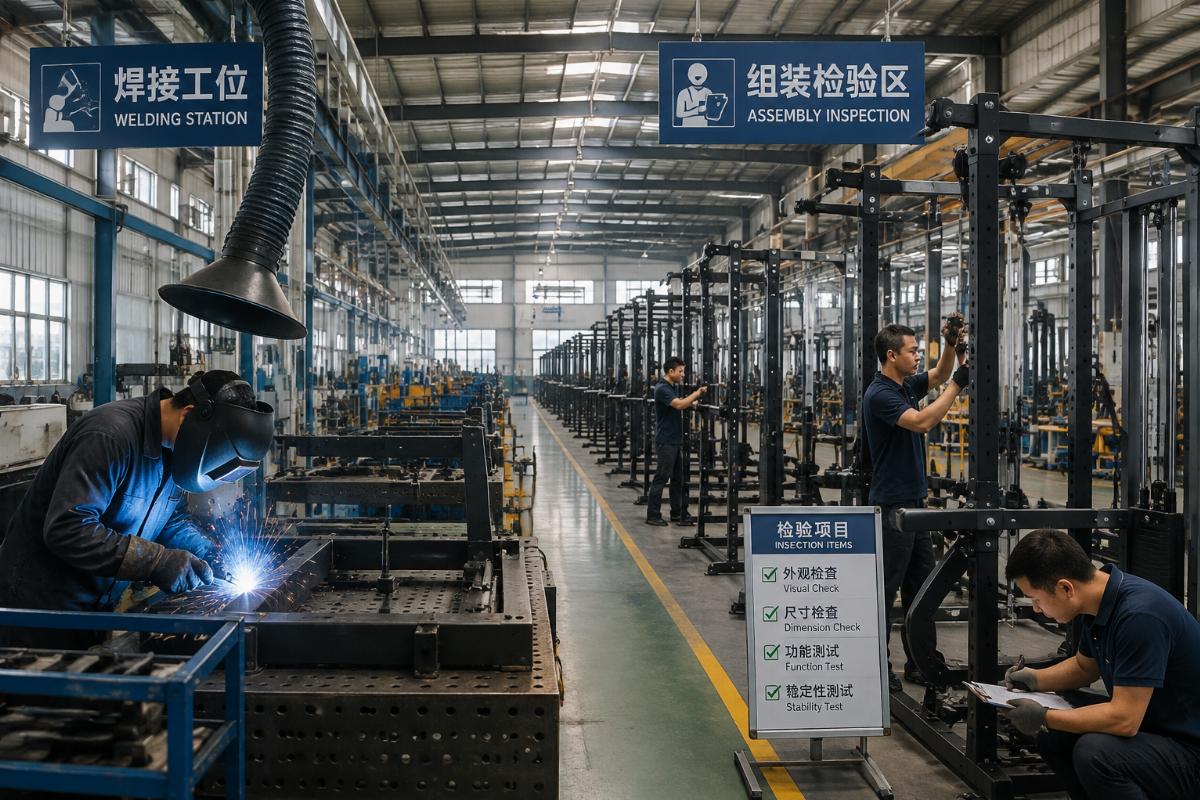
This is where factory selection matters more than price comparison. I have visited production floors where the welding jigs were precision-machined and every frame was checked against a master fixture before painting. I have also walked into workshops where the jigs were hand-ground and the alignment check was a visual eyeball test. The spec sheets from both factories looked identical. The assembly reality was entirely different.
When evaluating a factory-direct source, ask three questions: Can you provide a conformity certificate for Saudi customs before shipment? What is your warranty spare parts supply mechanism, and how fast can critical components reach the Gulf region? Can you demonstrate assembly tolerance control with documented inspection records, not just marketing claims?
If the manufacturer can answer all three with verifiable evidence, the factory-direct route will almost always deliver a better fitness equipment price Saudi Arabia projects can build profitable margins around.
Conclusion
The fitness equipment price Saudi Arabia buyers ultimately pay is a layered construct, not a single quote. Factory cost, container efficiency, customs compliance, and sourcing channel each add their own weight to the final number. Buyers who understand all four layers negotiate from a position of knowledge. Buyers who only look at the unit price on a catalog page often discover the real cost long after the container has left the port.


