
Commercial Gym Equipment Supplier from China Factory Direct
Lower factory-direct pricing does not automatically mean lower quality—but skipping structural validation before customization almost always guarantees port delays and warehouse losses.
Sourcing from a reliable gym equipment supplier Indonesia operators trust means verifying commercial-grade tube wall thickness, weld integrity under tropical humidity, and a verified spare parts supply chain before signing. China factory-direct pricing can cut procurement costs substantially compared to international brands, but only when CE certification, steel grade, and load-point engineering are independently confirmed—not assumed from a catalog spec sheet.
I still remember a hotel project in the Middle East where the client insisted on modifying the weight stack plate thickness based on their own drawings. We followed the图纸 exactly. When the containers arrived, the selector pin holes didn’t align. The entire batch sat in a warehouse for weeks until we air-freighted replacement parts at a cost that nearly wiped out the margin on the whole order. Since then, I have made it a rule: any parameter change goes through a full engineering review of load points and universal component compatibility. Two extra days of confirmation beats one emergency air shipment every time. When you are evaluating a gym equipment supplier Indonesia buyers work with, this kind of technical gate is what separates a real factory partner from a catalog forwarder [NEED_CITE: structural validation protocols in commercial fitness equipment manufacturing].

The rest of this guide breaks down how to evaluate a gym equipment supplier Indonesia operators and distributors can rely on—covering category priorities, pricing reality, tropical climate specs, customization traps, and after-sales requirements.
What Equipment Categories Should Indonesian Gyms Prioritize from China?
Commercial cardio, plate-loaded and selectorized strength machines, and free weight systems form the three core categories that a gym equipment supplier Indonesia buyers engage with can source from a single Shandong production base.
Shandong Province has developed into one of the world’s densest fitness manufacturing clusters, with integrated supply chains covering steel tube bending, powder coating, upholstery foam, and electronic console assembly. A qualified gym equipment supplier Indonesia operators partner with typically offers the following category coverage:
| Category | Typical SKUs | Commercial-Grade Requirement |
|---|---|---|
| Cardio | Commercial treadmills, ellipticals, spin bikes, rowers | Continuous-duty motors, commercial running deck thickness |
| Strength Machines | Smith machines, cable crossovers, plate-loaded, selectorized | Heavy-gauge frame tube, guided bearing systems |
| Free Weights | Dumbbells, barbells, plates, kettlebells, benches | Precision tolerance on weight accuracy, knurling consistency |
| Functional Gear | Functional trainers, battle ropes, plyo boxes, medicine balls | Reinforced anchor points, drop-tested construction |
| Flooring & Accessories | Rubber tiles, mirrors, storage racks | Density rating, impact absorption verification |
A Middle East hotel developer once ordered a complete fitness center package from a gym equipment supplier Indonesia projects had previously sourced from. The initial quote looked attractive, but the cardio selection was built on light-commercial frames rated for residential daily use cycles. Within months of opening, treadmill decks showed premature wear in the high-humidity coastal environment. The lesson: category coverage matters, but commercial-grade rating within each category matters more [NEED_CITE: commercial versus residential fitness equipment classification standards per international guidelines].
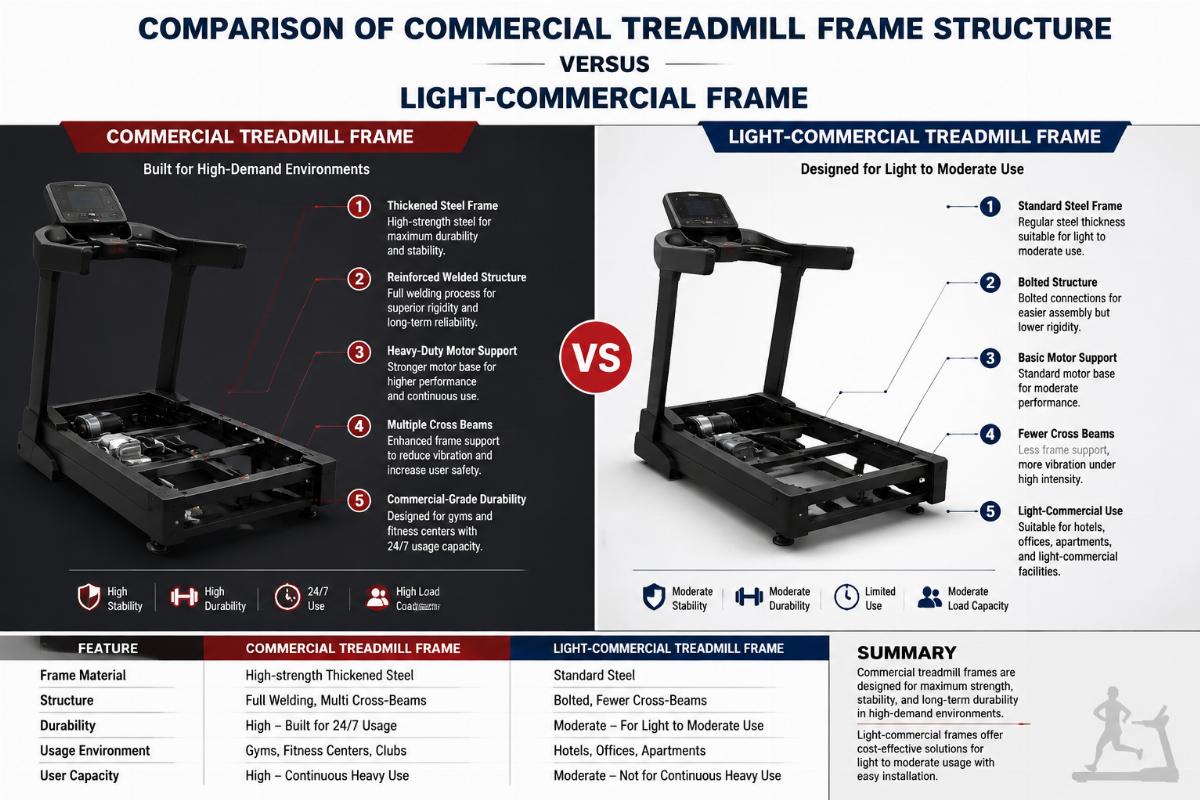
For Indonesian gym owners and hotel developers, the priority sequence should be: first lock in strength machines and free weights where frame integrity directly determines lifespan, then select cardio units with verified motor duty cycles, and finally add functional and accessory items that are simpler to validate visually.
How to Compare Factory-Direct Pricing vs. International Brands?
A verified gym equipment supplier Indonesia buyers source from typically offers factory-direct pricing substantially below international premium brands on equivalent commercial-grade specifications—but the comparison only holds when steel grade, tube wall thickness, and certification status are matched line by line.
The pricing gap between Chinese factory-direct and established international brands is significant. However, the trap many buyers fall into is comparing a commercial-grade unit from a premium brand against a light-commercial or residential-grade unit from a Chinese catalog, then concluding the Chinese option is "cheap quality." The real comparison requires identical spec alignment.
| Comparison Factor | International Premium Brand | Verified Chinese Factory-Direct | Unverified Low-Price Source |
|---|---|---|---|
| Frame Tube Wall Thickness | Commercial heavy-gauge | Matched commercial heavy-gauge | Noticeably thinner, residential range |
| Steel Grade Certification | Verifiable mill certificates | Verifiable mill certificates | Self-reported or not provided |
| CE / EN Compliance | Certified and documented | Certified and documented | Basic or not provided |
| Weld Quality Standard | Full batch-level inspection | Full batch-level inspection | Sample-level or uncontrolled |
| Powder Coat Corrosion Resistance | Extended salt-spray endurance | Extended salt-spray endurance | Vulnerable to tropical humidity |
A Southeast Asian distributor once received two quotes for a full container of selectorized machines. The lower quote came from a source that did not provide mill certificates for the steel tube. When the distributor requested independent material testing, the actual tube wall thickness measured noticeably below the commercial threshold stated in the catalog. The slightly higher quote from a gym equipment supplier Indonesia buyers had vetted through factory visits turned out to include full material traceability and matched the international brand spec on every structural parameter [NEED_CITE: steel tube wall thickness requirements for commercial fitness equipment per EN standards].

The key takeaway: price comparison without spec comparison is meaningless. A gym equipment supplier Indonesia operators trust will provide transparent material documentation alongside pricing, not just a unit cost.
What Specs Matter Most for Indonesia’s Tropical Climate?
Rust-resistant coating systems, humidity-resistant upholstery, and fully sealed weld points are the three non-negotiable acceptance criteria for any gym equipment supplier Indonesia buyers deploy in tropical coastal or high-humidity inland environments.
Indonesia’s climate presents a specific set of challenges for fitness equipment that temperate-market buyers may not immediately consider. Salt-laden coastal air in cities like Jakarta and Surabaya accelerates corrosion. Consistently high humidity levels promote rust formation at weld joints and exposed metal surfaces. And the combination of heat and moisture breaks down low-grade vinyl and foam upholstery rapidly.
The critical specification areas to verify:
- Powder coating system: Multi-stage pretreatment with phosphating or zirconium conversion coating, followed by epoxy-polyester hybrid powder applied at controlled thickness. The coating must demonstrate extended salt-spray endurance when tested per relevant international standards [NEED_CITE: salt-spray testing methodology and rating criteria per ISO standards for coated metal surfaces].
- Weld sealing: All weld joints on frame structures must be continuously welded and ground smooth, then fully sealed before coating. Intermittent welds or exposed weld seams create moisture traps that initiate rust from inside the joint outward—invisible until structural integrity is compromised.
- Upholstery material: High-density foam with closed-cell structure and vinyl covers with antimicrobial and hydrolysis-resistant treatment. Standard residential-grade vinyl cracks and peels under sustained tropical heat and humidity exposure.
- Cable and pulley systems: Sealed bearing housings and corrosion-resistant cable guides to prevent internal cable fraying from humidity penetration.
A boutique studio operator in Bali ordered functional training rigs from a gym equipment supplier Indonesia projects had sourced before. The frames arrived looking solid, but within a single rainy season, rust appeared along the inside edges of the weld joints on the pull-up bar structures. Investigation revealed the welds had not been continuously sealed before coating—moisture had penetrated through micro-gaps and corroded the steel from within. The entire rig had to be replaced at a cost that far exceeded the initial savings from choosing a lower-priced source [NEED_CITE: corrosion failure mechanisms in welded steel structures exposed to tropical marine environments].

When evaluating a gym equipment supplier Indonesia buyers should request cross-section photos of weld joints, salt-spray test reports, and upholstery material data sheets—not just glossy product photos.
How to Avoid Customization Mistakes That Cause Port Delays?
Any parameter modification requested by the buyer must go through a full engineering review of load-point redistribution and universal component compatibility before production approval—never approve a change based on dimensional drawing alone.
Customization is where the majority of costly procurement failures originate. The most common scenario: a buyer requests a dimensional change—longer cable travel, different weight stack increment, modified bench angle—and the factory adjusts the drawing without recalculating how that change affects load distribution, pivot alignment, or compatibility with standard components like selector pins, bearings, or cable anchors.
The engineering reality is that fitness equipment frames are designed as integrated systems. Changing one dimension shifts the load path. A longer cable run changes the tension profile on the pulley system. A modified weight stack plate thickness changes the selector pin hole spacing relative to the guide rods. A different bench angle changes the load vector on the frame joint.
| Customization Type | Surface-Level Change | Hidden Engineering Impact |
|---|---|---|
| Weight stack plate thickness | Dimensional adjustment on drawing | Selector pin hole alignment mismatch with guide rods |
| Cable travel length | Longer cable specified | Altered tension profile, pulley bearing overload risk |
| Bench angle modification | Angle dimension changed | Load vector shift on frame joint, potential fatigue point |
| Frame height extension | Taller frame specified | Center of gravity shift, stability recalculation required |
The Middle East hotel project I mentioned earlier is the textbook case. The client modified the weight stack plate thickness. The factory adjusted the drawing. But the selector pin hole pattern was not recalculated relative to the new plate stack height. When the units arrived, the pins could not engage the weight plates. The entire batch was non-functional. Air-freighting replacement weight stacks with corrected hole patterns cost a mid-six-figure sum and delayed the hotel opening by weeks [NEED_CITE: engineering change order protocols in fitness equipment manufacturing requiring load-point validation].

A gym equipment supplier Indonesia buyers rely on for project success will insist on a technical review cycle for every customization request—no matter how minor it appears on paper. The review should cover load-point recalculation, universal component compatibility check, and a prototype verification step before batch production. Two days of engineering confirmation is always cheaper than one emergency air shipment.
What After-Sales Support Should You Require Before Ordering?
A verified spare parts catalog, a documented technical support response timeline, and clear warranty coverage terms must be locked into the purchase contract before the first unit enters production—not discussed vaguely after delivery.
After-sales support is the dimension that separates a transactional vendor from a long-term supply partner. For gym equipment supplier Indonesia operators choose for commercial installations, the after-sales framework determines equipment uptime and total cost of ownership over the service life of the machines.
Three elements must be contractually specified:
Spare parts availability: The supplier must provide a complete spare parts catalog with part numbers, pricing, and lead times at the time of order. Critical wear components—cables, pulleys, bearing cartridges, upholstery covers, selector pins, adjustment knobs—should be stocked or producible within a defined lead time. A gym equipment supplier Indonesia buyers engage with should be able to ship spare parts to Indonesian ports within a reasonable timeframe, not leave operators waiting months for a broken cable replacement [NEED_CITE: spare parts supply chain requirements for commercial fitness equipment importers in Southeast Asia].
Technical support response: Define the response timeline for technical queries—how quickly the supplier’s engineering team responds to installation questions, troubleshooting requests, or warranty claims. For a gym equipment supplier Indonesia operators depend on, this means having English-speaking technical staff available across time zones compatible with Indonesian business hours.
Warranty coverage clarity: Warranty terms must specify what is covered, what is excluded, how claims are processed, and whether replacement parts or full unit replacement applies. Ambiguous warranty language leads to disputes when the first component fails.
A fitness chain operator in Southeast Asia once sourced equipment from a supplier that offered an attractive unit price but had no structured spare parts program. When cable fraying occurred across multiple units after extended use, the operator spent months trying to source compatible replacement cables from third-party suppliers—cables that did not match the original specifications and created safety concerns. The total downtime cost across the chain far exceeded what would have been paid for a slightly higher unit price from a gym equipment supplier Indonesia operators could rely on for structured after-sales support [NEED_CITE: total cost of ownership analysis for commercial fitness equipment including downtime and spare parts logistics].
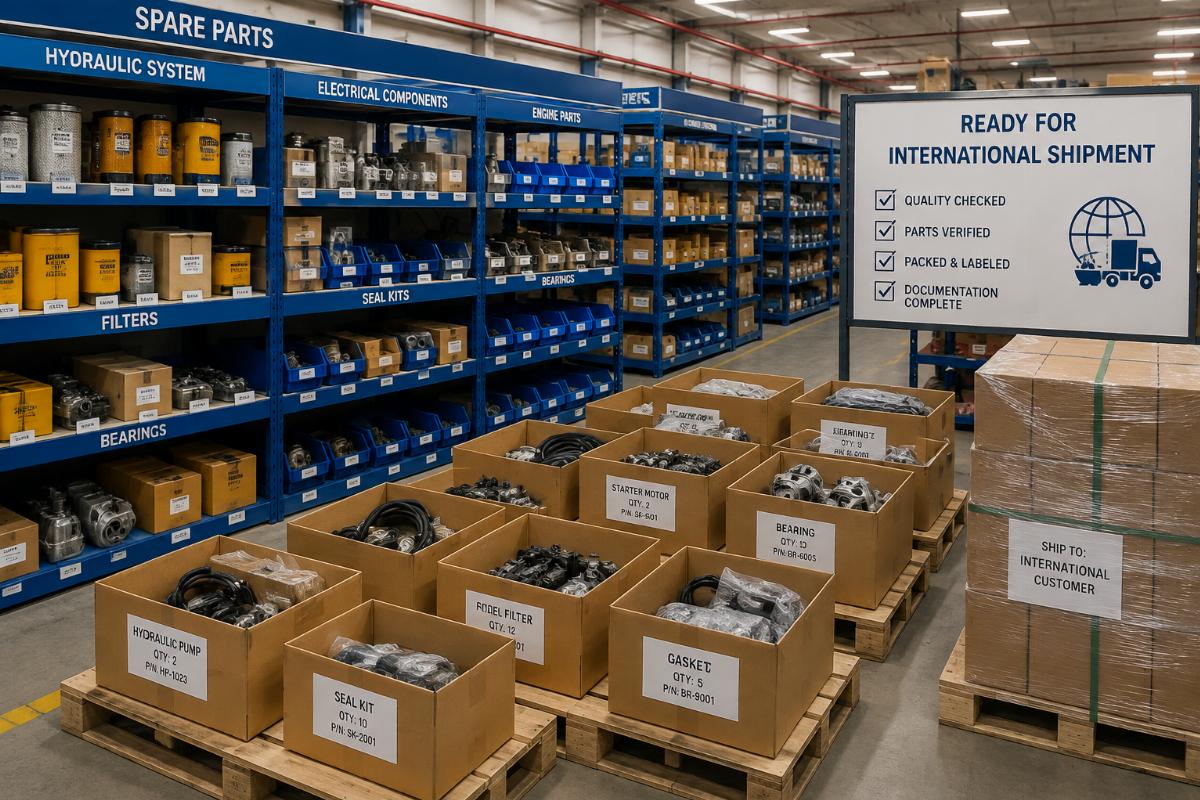
Before placing an order, request the spare parts catalog, confirm the technical support contact channel and response commitment, and ensure warranty terms are written in unambiguous language. These three elements are the foundation of a supply relationship that lasts beyond the first container.
Conclusion
Factory-direct sourcing from a qualified gym equipment supplier Indonesia buyers vet properly delivers substantial cost advantages—but only when commercial-grade structural validation, tropical climate specifications, engineering-controlled customization, and contractual after-sales support are treated as non-negotiable prerequisites. The pricing gap between Chinese factory-direct and international brands is real, but realizing that value requires verifying steel grade, weld integrity, coating systems, and spare parts infrastructure before signing—not discovering gaps after the container arrives at Tanjung Priok.


