Plate Storage Tree Customs Clearance in Chile | Wholesale Supplier for Commercial Gyms
Most importers assume a plate storage tree is just "metal furniture." Chilean customs disagrees—and that one misclassification can double your duty rate and strand your container at San Antonio port for weeks.
The correct HS code for a plate storage tree in Chile falls under gym accessory metalware (typically heading 9506), not general furniture (heading 9403). Combined with a valid China-Chile FTA Certificate of Origin, this classification unlocks preferential tariff treatment and keeps your landed cost predictable. Skip the paperwork, and you face the standard Most-Favored-Nation rate plus 19% IVA on top.
I learned this the hard way. Years ago, while coordinating a mixed-container shipment of free-weight accessories for a distributor heading to Valparaíso, the local broker defaulted the plate storage tree to a generic "steel storage rack" classification. The customs officer at San Antonio flagged it as gym-specific equipment, reclassified it on the spot, and the duty jumped noticeably. The container sat at the terminal for over twenty days. The storage fees alone nearly wiped out the margin on that entire SKU line [NEED_CITE: Chilean customs reclassification procedure and terminal demurrage structure per Aduanas de Chile regulations]. That single misstep reshaped how I handle every South American shipment of gym accessories to this day.
Getting the paperwork right before the vessel leaves Shanghai is the only way to avoid this trap. Let me walk you through the exact classification logic, the FTA mechanism, the hidden VAT layer, and the document checklist that keeps your plate storage tree moving through Chilean customs without delays.
What Is the Correct HS Code for a Plate Storage Tree in Chile?
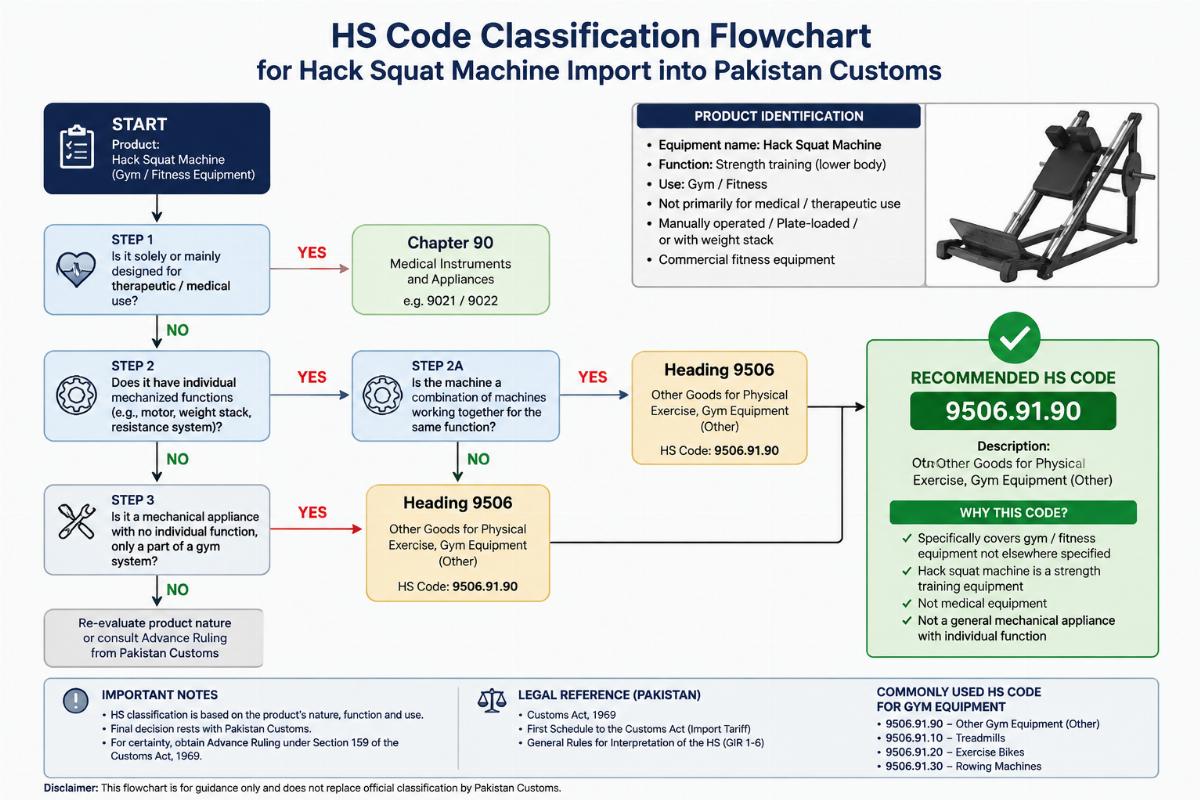
A plate storage tree is classified as gym accessory metalware under heading 9506, not as general furniture under heading 9403, because its sole functional design serves weight plate organization in a training environment.
Chilean customs follows the Harmonized System with strict functional interpretation. A generic metal shelf in a warehouse gets classified as furniture. A vertical post with angled pegs designed exclusively to hold Olympic bumper plates and grip plates? That is gym equipment accessory metalware, full stop [NEED_CITE: WCO Harmonized System classification principles for sports equipment accessories vs general furniture]. The distinction matters because the duty differential between these two headings is significant.
Here is how the classification logic breaks down at the Chilean border:
| Classification Factor | Furniture (9403) | Gym Accessory Metalware (9506) |
|---|---|---|
| Primary Design Intent | General storage | Dedicated weight plate organization |
| End-Use Environment | Office, home, warehouse | Commercial gym, training facility |
| FTA Preferential Rate Eligibility | Limited | Fully eligible under China-Chile FTA |
| Customs Scrutiny Level | Standard | Moderate, requires functional justification |
| Duty Rate Under MFN | Noticeably higher | Standard gym accessory rate |
A distributor in Santiago once ordered a batch of plate storage trees alongside a set of dumbbell racks. The broker lumped everything under "steel shelving." Customs separated them: the dumbbell racks passed as gym accessories, but the plate storage trees got pulled for a functional review because the invoice description said "storage rack" instead of "weight plate organizer" [NEED_CITE: Chilean customs functional use test for sports equipment classification]. The review added weeks to the clearance cycle.
The fix is simple but specific. The commercial invoice must describe the product as "plate storage tree for Olympic weight plates" or "gym accessory plate organizer." The packing list should echo that language. Never use vague terms like "metal rack" or "storage stand" on Chile-bound shipping documents.
How Does the China-Chile FTA Reduce Import Duty on Gym Equipment?
A valid China-Chile Free Trade Agreement Certificate of Origin (Form FTA) reduces the import duty on plate storage trees to a preferential rate, provided the product meets the required origin criteria and the certificate is correctly issued before arrival.
The China-Chile FTA has been in force for years and covers a wide range of manufactured goods, including commercial gym equipment and accessories. The key requirement is that the product must originate in China and the exporter must hold a valid Certificate of Origin issued by the authorized Chinese authority [NEED_CITE: China-Chile FTA tariff elimination schedule and rules of origin per bilateral agreement text].
Here is how the process works in practice:
-
Origin Verification at the Factory Level: The manufacturer must confirm that the plate storage tree meets the specific rules of origin for its HS code. This typically involves a regional value content threshold or a tariff shift requirement. For welded steel gym accessories, the manufacturing process in China usually satisfies the origin rule comfortably.
-
Certificate Application Before Shipment: The exporter applies for the Form FTA through the China Council for the Promotion of International Trade or the local customs authority. The certificate must reference the exact HS code, product description, and consignee details that match the commercial invoice and bill of lading.
-
Presentation at Chilean Customs: The importer presents the original or electronically transmitted Certificate of Origin alongside the standard clearance documents. Chilean customs verifies the certificate against the FTA database. If everything aligns, the preferential duty rate applies automatically.
A gym chain owner in Concepción imported a full container of free-weight accessories, including plate storage trees, dip stations, and barbell racks. The Chinese supplier had shipped the goods without applying for the FTA certificate, assuming the buyer would handle it locally. That assumption cost the buyer the full MFN duty rate on every item in the container. The duty difference was substantial enough to erase the pricing advantage of buying direct from the manufacturer [NEED_CITE: China-Chile FTA utilization rate and common documentation gaps for gym equipment imports].
The lesson: always confirm with your supplier that the Form FTA is applied for and issued before the vessel departs. If the certificate arrives after the goods, you may still claim the preferential rate retroactively, but the process involves additional paperwork, delays, and potential storage fees at the port.
What Are the Hidden Costs Like IVA and Port Fees?
The 19% Import Value-Added Tax (IVA) in Chile is calculated on the CIF value plus the import duty, not on the CIF value alone. Miscalculating this base is the most common budget error for first-time gym equipment importers.
Most buyers focus on the duty rate and forget that IVA compounds the cost. Here is the actual formula Chilean customs uses:
IVA Base = CIF Value + Import Duty
IVA Payable = IVA Base × 19%
This means the duty itself becomes part of the tax base. If your CIF value is a certain amount and the duty adds a percentage on top, the IVA is calculated on that combined total. Underestimating this layer leads to landed cost surprises that can run into thousands of dollars on a full container of plate storage trees and complementary gym accessories [NEED_CITE: Chilean IVA calculation methodology per Servicio de Impuestos Internos regulations].
Beyond IVA, port-related costs at San Antonio and Valparaíso can escalate quickly if clearance is delayed:
- Terminal Storage Fees: Charged per day per container after the free storage period expires. For a plate storage tree shipment held up due to classification disputes, these fees accumulate rapidly.
- Customs Inspection Charges: If customs selects your container for a physical examination, the cost of moving the container to the inspection area, the examination itself, and repacking are all borne by the importer.
- Broker Amendment Fees: If your broker needs to resubmit documents or correct the HS code after initial filing, additional service charges apply.
A Middle East-based gym equipment distributor once shipped a mixed container of functional training gear to a Chilean client. The plate storage trees were declared under an incorrect HS code, triggering a customs hold. The container sat at San Antonio for an extended period. The terminal storage fees alone cost several times what the duty savings from the FTA would have provided. The client absorbed the loss, but the relationship with the local buyer was strained for months [NEED_CITE: San Antonio port terminal storage fee structure and customs hold cost implications].
The takeaway: build the IVA and potential port delay costs into your landed cost model from day one. A plate storage tree that looks cheap on a CIF quote can become expensive if the paperwork is not airtight.
Which Documents Are Mandatory for Smooth Plate Storage Tree Customs Clearance?
Four core documents are non-negotiable for clearing a plate storage tree through Chilean customs: the Commercial Invoice, Packing List, Bill of Lading, and China-Chile FTA Certificate of Origin. Missing or mismatched details on any of these will trigger delays.
Chilean customs is document-driven. The clearance process moves fast when the paperwork is complete and consistent. It stalls the moment there is a discrepancy between the invoice description, the HS code on the certificate of origin, and the bill of lading cargo description.
Here is the document checklist with the critical details for each:
-
Commercial Invoice: Must include the full product description ("plate storage tree for Olympic weight plates, steel construction, gym accessory"), the correct HS code (9506 subheading), unit price, total CIF value, and the consignee’s Chilean tax identification number (RUT). The description must match the certificate of origin exactly.
-
Packing List: Must detail the number of cartons, gross and net weight, dimensions, and the shipping mark. For plate storage trees that ship knocked-down or partially assembled, the packing list should clarify the assembly status to avoid customs confusion about whether the product is fully finished gym equipment or raw metal components.
-
Bill of Lading: The cargo description on the B/L must align with the invoice. If the B/L says "gym equipment" but the invoice says "plate storage tree," customs may flag the shipment for review.
-
China-Chile FTA Certificate of Origin (Form FTA): Must be issued before shipment, reference the correct HS code, and list the same consignee as the invoice. The certificate must be authenticated by the authorized Chinese issuing body.
A fitness equipment importer in Antofagasta received a shipment of plate storage trees and adjustable benches. The supplier had issued the FTA certificate under a slightly different company name than the one on the commercial invoice. Chilean customs rejected the certificate on the first submission. The importer had to request a corrected certificate from the supplier, wait for it to be reissued and transmitted, and then resubmit the clearance application. The entire process added weeks to the delivery timeline and generated significant storage costs at the port [NEED_CITE: Chilean customs document consistency requirements and certificate of origin rejection procedures].
The prevention is straightforward: before the vessel sails, send draft copies of the invoice, packing list, and certificate of origin to your Chilean customs broker for pre-review. Confirm that every name, HS code, and product description matches across all four documents. This single step eliminates the majority of clearance delays for gym accessory shipments.
Conclusion
Correct HS classification, a valid FTA Certificate of Origin, and precise IVA calculation form the three pillars of smooth plate storage tree customs clearance in Chile. Get the product description and HS code right on every document, secure the Form FTA before departure, and model the IVA on the duty-inclusive base. These steps keep your plate storage tree moving from the manufacturer’s floor in Shandong to your gym floor in Chile without unnecessary cost or delay.