01 / Scenario
STUDIO
P
High-End Pilates Studios
Premium aesthetics meet quiet operation for boutique studio environments.

ISO
9001
CE
Certified
OEM
Available
10YR
Warranty
// Spec Highlights
• Direct from Manufacturer · No Middlemen · Worldwide Shipping
01
// Material
Imported Solid Wood
Premium hardwood frames sourced for density and visual warmth.
02
// Hardware
Medical-Grade Silent
Whisper-quiet pulleys and springs for clinical environments.
03
// Customization
Appearance OEM
Color, upholstery, and branding tailored to your studio.
04
// Service
Layout Design
Free venue planning for studios and rehab institutions.
Every component is selected for longevity, performance, and aesthetic harmony - from imported hardwood frames to silent medical-grade accessories.
// Features
Torsional rigidity verified — 3×3 inch, 11-gauge frame steel with mill-certified Q345 traceability resists deformation during repetitive rotational oblique crunch movements.
| Parameter | Value |
|---|---|
| Product Type | Selectorized Abdominal Trainer |
| Model NO. | 5025 |
| Frame Steel | 11-gauge, 3×3 inch tube |
| Steel Grade | Q345 industrial steel, mill-certified |
| Welding Type | Robotic MIG continuous weld |
| Loading Type | Plate loaded |
| Exercise Part | Abdominal |
| Product Dimensions | 1670×1100×1600mm |
| Net Weight | 121kg |
| Powder Coating | 200μm scratch-resistant industrial finish |
| Upholstery | Available in standard or high-density options |
| Fit Area | Professional Gym and Club |
| Age Group | Adult |
| Gender | Unisex |
| OEM/ODM | Available |
| Transport Package | Plywood Case |
| Production Capacity | 500 PCS/Month |
| Certification | ISO 9001, CE |
| Facility Type | Typical Use |
|---|---|
| Commercial gym strength floor | Dedicated core and oblique training station in high-traffic zones |
| Hotel and resort fitness center | Space-efficient abdominal station for diverse guest demographics |
| University strength and conditioning room | Rotational core work for athletic performance programs |
| Community fitness center | Durable oblique training for general membership use |
Rotational oblique movements demand frame rigidity that vague "commercial grade" claims cannot guarantee.
Many abdominal machines specify tube dimensions without disclosing steel grade or wall thickness, leaving buyers unable to verify torsional resistance. Under repetitive rotational loading at the oblique crunch pivot point, undersized frames develop lateral flex within months of daily commercial use. The result is misaligned movement paths, uneven pad wear, and eventual structural fatigue at welded joints [NEED_CITE: structural steel fatigue under cyclic torsional loading].
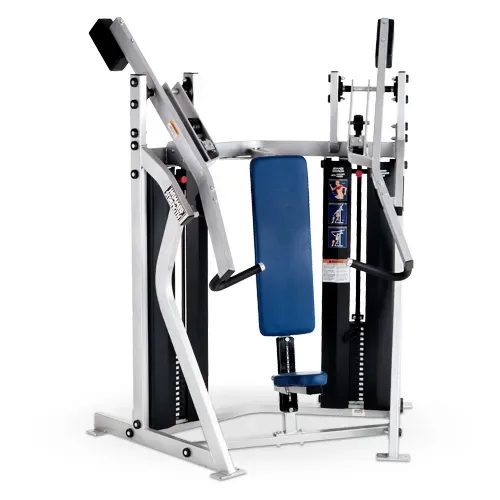
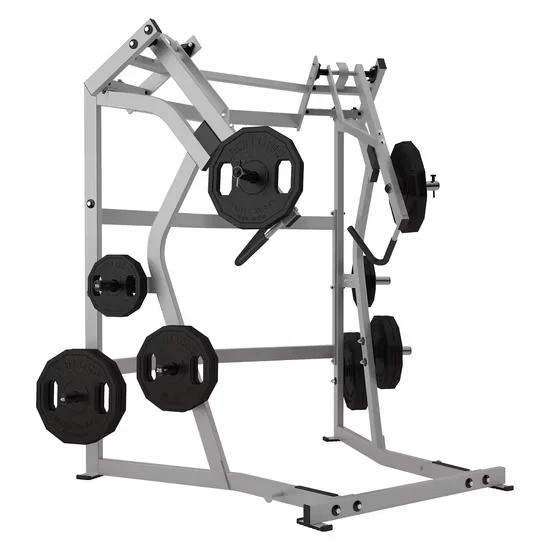
This commercial abdominal oblique crunch machine addresses the transverse and rotational planes that standard crunch machines neglect. The plate-loaded configuration allows progressive resistance scaling across user strength levels, while the converging movement pattern matches natural oblique fiber orientation. In a commercial gym strength floor, it complements linear abdominal machines and functional cable stations by isolating rotational core capacity. The 1670×1100mm footprint fits standard 36-inch spacing grids, maintaining safe clearance between adjacent stations during high-density facility layouts.
Oblique crunch movements generate asymmetric torsional forces concentrated at the pivot axis and frame-to-base junctions. Unlike linear pressing equipment, rotational core training subjects the frame to multi-directional stress vectors during each repetition cycle. Commercial facilities operating 8+ hours daily accumulate thousands of fatigue cycles monthly at these stress concentration points. Sealed industrial bearings at the pivot axis resist contamination from sweat and gym floor debris, maintaining smooth rotational travel without developing play. The 200μm powder coating withstands repeated contact with cleaning agents and sweat exposure at high-wear grip and pad mounting areas [NEED_CITE: powder coating adhesion standards for fitness equipment contact surfaces].
The 3×3 inch, 11-gauge tube specification provides a section modulus that resists torsional deflection under off-center loading during oblique crunch movements. Larger tube cross-sections increase the polar moment of inertia, directly limiting angular deformation at the pivot point. Robotic MIG continuous welding eliminates the spot-weld discontinuities that become crack initiation sites under cyclic torsional stress. The weld penetration depth and bead consistency across all frame joints ensure uniform fatigue resistance throughout the structure. Sealed bearings at the rotational axis prevent contamination ingress that causes premature wear and movement roughness in unsealed bushing designs. Surface preparation through sandblasting followed by 200μm powder application creates coating adhesion that resists chipping at contact points where users grip and adjust the machine.
Thin-wall tubing specified without gauge verification deforms visibly under commercial loading frequencies, creating frame flex that misaligns the movement path and accelerates bearing wear. Spot-welded joints pass initial visual inspection but develop fatigue cracks under repetitive torsional stress, creating structural failure points that compromise user safety and generate liability exposure. Unsealed pivot bearings develop play within months of high-traffic use, requiring frequent replacement and creating maintenance downtime. Low-density upholstery compresses permanently under daily commercial use, losing support geometry and requiring replacement within the first year. Inadequate powder coating thickness chips at contact points, exposing bare steel to sweat corrosion that spreads beneath the coating film.
Every commercial abdominal oblique crunch machine ships with mill-certified Q345 steel documentation traceable to the original coil, verifying material specification compliance. Robotic MIG continuous welding across all frame joints eliminates spot-weld weak points, ensuring uniform fatigue resistance under torsional loading. Each unit undergoes individual load testing before shipment, confirming structural integrity rather than relying on sample-based quality assurance. The 200μm industrial powder coating provides scratch and corrosion resistance validated for high-contact commercial environments. A 10-year frame warranty covers structural components against manufacturing defects and material failures. 2D-3D CAD facility planning support ensures this 1670×1100mm station integrates with proper safety clearances and traffic flow in your core training zone. OEM private label and custom color options accommodate brand-specific facility design requirements.
Provide your core training zone dimensions and equipment list to receive 2D-3D CAD layout planning that integrates this commercial abdominal oblique crunch machine with appropriate safety clearances and traffic flow. Specify your daily user volume to confirm the structural grade matches your facility’s operational intensity. Indicate target user demographic anthropometric ranges to verify seat and pad adjustment compatibility. Detail custom requirements for frame color, upholstery specification, or private label branding to receive accurate quotation and lead time.
Q: What frame specification prevents torsional deformation during oblique crunch movements?
A: The 3×3 inch, 11-gauge Q345 steel tube provides sufficient section modulus to resist angular deflection under rotational loading. Mill-certified material documentation verifies the steel grade and wall thickness, ensuring the frame maintains structural rigidity throughout repetitive oblique crunch cycles in commercial environments.
Q: How does robotic continuous welding differ from spot welding for abdominal equipment frames?
A: Robotic MIG continuous welding creates uniform weld beads without the discontinuities inherent in spot welding. This eliminates crack initiation points at frame joints where torsional stress concentrates during oblique crunch movements, extending fatigue life under commercial loading frequencies compared to intermittent spot-weld construction.
Q: What maintenance intervals should facilities expect for the pivot bearing system?
A: Sealed industrial bearings at the rotational axis resist contamination from sweat and gym debris, maintaining smooth movement without developing play. Monthly inspection of rotation smoothness is recommended, with bearing replacement typically required only after extended high-traffic service life rather than routine maintenance schedules.
Q: How does powder coating thickness affect long-term appearance in commercial gym environments?
A: The 200μm industrial powder coating applied over sandblasted surface preparation provides scratch and corrosion resistance at high-contact grip and pad mounting areas. This thickness withstands repeated cleaning agent exposure and sweat contact without chipping, maintaining appearance integrity throughout commercial facility service life.
Q: Can this abdominal oblique crunch machine accommodate different user body sizes?
A: The plate-loaded configuration allows resistance scaling across user strength levels, while the converging movement pattern accommodates various torso lengths. Seat and pad positioning adjusts to align the rotational axis with different user anthropometrics, supporting the adult demographic range specified for commercial gym applications.
Premium aesthetics meet quiet operation for boutique studio environments.
Medical-grade silence and precision for sports & postpartum recovery.
Furniture-grade craftsmanship for premium residential installations.
Compact premium setups for one-on-one and small-group training.
Aesthetic Pilates integration for hybrid wellness studio programming.
Multi-unit deployment with instructor-grade reliability for certification programs.
Tell us about your project. Our team will respond within 24 hours with pricing, customization options, and shipping details.
// Sales Director
William
+86 132 2531 1800
// Export Manager
Bella
+86 198 5412 8032
william@bickfit.com