01 / Scenario
STUDIO
P
High-End Pilates Studios
Premium aesthetics meet quiet operation for boutique studio environments.

ISO
9001
CE
Certified
OEM
Available
10YR
Warranty
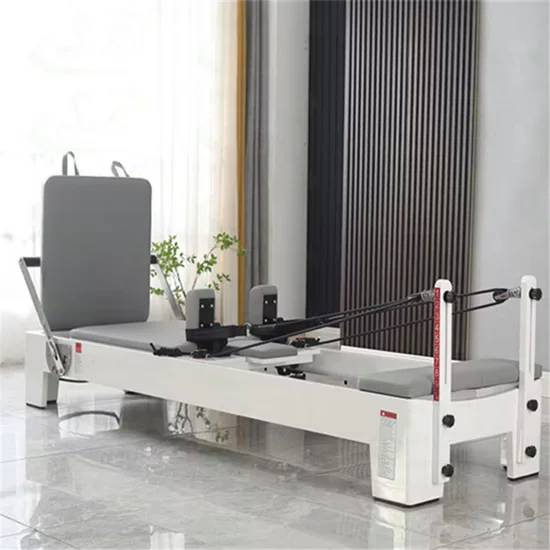
Commercial Pilates Reformer Machine, 2570×730×270mm, 90kg Net Weight — aluminum alloy carriage and frame deliver low-friction glide for high-repetition studio work, supported by integrated long box, jump board, and platform for full-spectrum programming without add-on purchases. 3-year warranty covers structural joint integrity under cyclic spring tension. Every unit undergoes load testing before shipment to verify carriage rail tolerance and accessory mounting stability.
// Spec Highlights
• Direct from Manufacturer · No Middlemen · Worldwide Shipping
01
// Material
Imported Solid Wood
Premium hardwood frames sourced for density and visual warmth.
02
// Hardware
Medical-Grade Silent
Whisper-quiet pulleys and springs for clinical environments.
03
// Customization
Appearance OEM
Color, upholstery, and branding tailored to your studio.
04
// Service
Layout Design
Free venue planning for studios and rehab institutions.
Every component is selected for longevity, performance, and aesthetic harmony - from imported hardwood frames to silent medical-grade accessories.
// Features
Precision-Cut Aluminum Carriage Rails — CNC-machined alloy tracks hold tolerances that prevent lateral drift during high-repetition spring-loaded sequences.
| Parameter | Value |
|---|---|
| Product Type | Pilates Reformer |
| Model NO. | SRY-12 |
| Frame Material | Aluminum Alloy |
| Carriage Type | Aluminum Alloy |
| Product Dimensions | 2570×730×270mm |
| Net Weight | 90kgs |
| Included Accessories | Long Box / Jump Board / Platform |
| Color Options | White or customized finish available |
| Logo | Customized Is Allowed |
| Age Group | Adult |
| Gender | Unisex |
| Warranty | 3 Years |
| Facility Type | Typical Use |
|---|---|
| Pilates training center | Group reformer classes with high daily rotation |
| Home fitness studio | Private sessions requiring full accessory integration |
| Rehabilitation & physiotherapy facility | Low-impact resistance work under clinical supervision |
| Hotel wellness center | Guest-accessible equipment with durable finish requirements |
A commercial pilates reformer machine must survive thousands of carriage cycles without rail wear introducing lateral play into the movement path.
When buyers evaluate reformers, the spec sheet often reads "aluminum alloy" with no grade designation and no rail tolerance data. In a busy studio running six classes a day, that ambiguity shows up as carriage wobble during jump board sequences — the kind of drift that compromises form and erodes client confidence. We’ve seen facilities replace entire units within eighteen months because the carriage rails were never machined to hold alignment under cyclic spring tension. The structural integrity of the frame-to-rail joint, the precision of the carriage glide surface, and the spring anchoring hardware all determine whether a reformer holds calibration or degrades into a maintenance liability [NEED_CITE: EN 957 structural requirements for stationary training equipment].
This reformer addresses the full sagittal and transverse plane work that defines classical and contemporary pilates programming. The integrated long box enables supine and prone pulling movements, the jump board introduces plyometric loading against spring resistance, and the platform extends the working surface for standing balance sequences. In a studio layout, this commercial pilates reformer machine complements cadillac and chair stations by handling the highest-volume movement patterns — footwork, leg circles, and short spine work. It fits facilities running group classes with equipment spacing that allows instructor circulation, and the carriage dimensions accommodate users across a broad height range without manual reconfiguration between sessions.
A reformer in a commercial environment endures eccentric loading every time a user controls the carriage return against spring tension — that’s hundreds of deceleration cycles per day concentrated at the carriage stop and spring anchor points. The jump board introduces impact loading that transfers through the platform mounting hardware into the main frame. Over time, any fastener that isn’t torqued to specification or any joint that relies on adhesive rather than mechanical fastening will develop play. The upholstery on the carriage and long box faces compression fatigue from body weight combined with sweat exposure, which breaks down low-density foam and degrades vinyl at the contact edges. Coating integrity matters here because aluminum oxidation doesn’t compromise structural strength the way steel corrosion does, but a poorly finished surface creates friction points that accelerate rail wear [NEED_CITE: fatigue classification in cyclic-loaded aluminum structures].
The aluminum alloy carriage reduces overall unit mass compared to wood-platform reformers, which means less inertial resistance when users transition between spring settings mid-class. The 90 kg net weight and 2570×730mm footprint produce a mass-to-size ratio that dampens floor vibration during jump board work — lighter units tend to walk across the floor during high-impact sequences. The three-year frame warranty signals confidence in the structural joint integrity under repeated spring cycling, though buyers should verify what the warranty covers beyond the main extrusion. Spring resistance calibration matters for studio consistency: instructors need to know that a red spring on one unit matches the resistance curve on the adjacent unit, otherwise group class choreography breaks down. The accessory mounting points — long box brackets, jump board insertion sleeves, platform attachment hardware — must be machined rather than cast to prevent deformation under dynamic loading.
When a manufacturer cuts cost by using thin-wall aluminum extrusion for the carriage, the result isn’t immediate failure — it’s gradual rail deformation that introduces carriage drift months into service. Non-precision fasteners at the spring anchor points strip under repeated tension cycling, leaving the studio with units that can’t hold calibration. Low-density carriage foam compresses permanently within a season of heavy use, and replacing the upholstery means taking the unit offline for days. Vinyl that isn’t rated for commercial abrasion cracks at the fold lines where users grip during leg work. These aren’t warranty claims — they’re operational costs that compound across a studio’s equipment fleet.
The aluminum alloy construction paired with the 90 kg mass keeps the unit stable during dynamic sequences while remaining repositionable for floor reconfiguration — studios that run workshops need to rearrange layouts without calling a crew. The integrated accessory package eliminates the lead time and fitment risk of sourcing third-party long boxes and jump boards that may not match the carriage rail geometry. The customizable logo option lets facilities brand equipment for resale value retention or franchise consistency. The three-year warranty window aligns with the typical studio renovation cycle, meaning the equipment remains under coverage through the first major refresh. Floor planning support matters here: reformer spacing must account for full carriage extension plus instructor clearance, and a unit footprint that doesn’t match the published dimensions creates unusable gaps in a tight studio layout.
Provide your studio floor area and target class capacity to receive a 2D layout that accounts for reformer spacing, instructor circulation, and emergency egress. Specify your average daily session count so we can confirm the structural grade matches your use intensity. Indicate any customization requirements — color, logo placement, upholstery material — to verify lead time and minimum order thresholds.
Q: How do I verify aluminum alloy grade and carriage rail precision?
A: Request a material test report that specifies the alloy designation and temper condition. For rail precision, ask for the machining tolerance on the carriage glide surface and the maximum allowable lateral play at full extension. A manufacturer confident in their process will provide these values without hesitation; vague responses about "commercial grade" signal unverified sourcing.
Q: What is the difference between wood and aluminum alloy carriages?
A: Wood carriages are heavier, which increases inertial resistance and can make spring transitions feel sluggish. Aluminum reduces mass, allowing the spring resistance curve to dominate the movement feel. Wood can absorb moisture in humid environments, leading to dimensional drift over time. Aluminum holds tolerance better but requires precision machining to prevent rail wear.
Q: Which accessories are essential for a commercial studio versus home use?
A: A commercial studio needs the long box for pulling sequences and the jump board for plyometric programming — both are high-demand items in group class formats. The platform extends standing exercise options. Home users may skip the jump board if their programming focuses on classical mat-style reformer work, but the long box remains valuable for most intermediate and advanced practitioners.
Q: What is the spring replacement cycle for high-traffic studios?
A: Springs in commercial reformers lose calibration as the steel fatigues under cyclic tension. Studios running six or more classes daily should plan on spring replacement as part of annual maintenance rather than waiting for noticeable resistance loss. Keeping a spring log by unit helps track which stations need service first based on actual usage patterns.
Q: How much floor space does each reformer station require?
A: Beyond the unit footprint itself, you need clearance for full carriage travel plus an instructor walkway on at least one side. For group classes, plan for lateral spacing that allows users to extend limbs without contacting adjacent stations. Exact clearance depends on your class format — standing work requires more side clearance than supine footwork sequences.
Premium aesthetics meet quiet operation for boutique studio environments.
Medical-grade silence and precision for sports & postpartum recovery.
Furniture-grade craftsmanship for premium residential installations.
Compact premium setups for one-on-one and small-group training.
Aesthetic Pilates integration for hybrid wellness studio programming.
Multi-unit deployment with instructor-grade reliability for certification programs.
Tell us about your project. Our team will respond within 24 hours with pricing, customization options, and shipping details.
// Sales Director
William
+86 132 2531 1800
// Export Manager
Bella
+86 198 5412 8032
william@bickfit.com