01 / Scenario
STUDIO
P
High-End Pilates Studios
Premium aesthetics meet quiet operation for boutique studio environments.
ISO
9001
CE
Certified
OEM
Available
10YR
Warranty
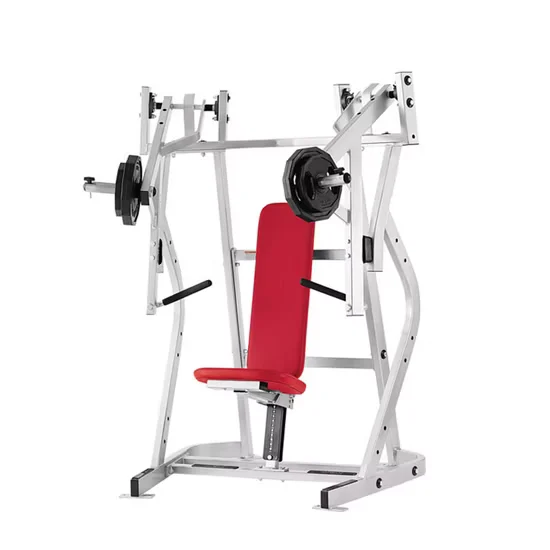
Plate Loaded ISO-Lateral Bench Press, 1323×1599×746mm, 140kg Net Weight — built with heavy-gauge steel frames and robotic MIG continuous welding to eliminate stress concentration points and prevent frame flex under repeated heavy loading. Sealed industrial bearings ensure smooth iso-lateral movement paths with minimal maintenance in high-traffic environments. Every unit undergoes individual load testing before shipment, backed by a 10-year frame warranty.
// Spec Highlights
• Direct from Manufacturer · No Middlemen · Worldwide Shipping
01
// Material
Imported Solid Wood
Premium hardwood frames sourced for density and visual warmth.
02
// Hardware
Medical-Grade Silent
Whisper-quiet pulleys and springs for clinical environments.
03
// Customization
Appearance OEM
Color, upholstery, and branding tailored to your studio.
04
// Service
Layout Design
Free venue planning for studios and rehab institutions.
Every component is selected for longevity, performance, and aesthetic harmony - from imported hardwood frames to silent medical-grade accessories.
// Features
Traceable Steel Coil — Every 11-gauge tube in this plate loaded bench press traces back to the mill certificate, so you can verify the exact steel grade before it hits your gym floor.
| Parameter | Value |
|---|---|
| Product Type | Plate Loaded Chest Press |
| Frame Steel Gauge | 11-gauge |
| Frame Tube Size | 3×3 inch |
| Steel Grade | Q235 and Q345 industrial steel |
| Welding Type | Robotic MIG, continuous weld lines |
| Loading Type | Plate loaded |
| Bearing Type | Sealed industrial bearings |
| Pulley System | Aircraft-cable pulley system |
| Upholstery | Available in standard or high-density options |
| Powder Coating | 200μm scratch-resistant, sandblast pre-treated |
| Product Dimensions | 1323×1599×746mm |
| Net Weight | 140kg |
| Certification | ISO 9001, CE |
| Warranty | 10-year frame |
| Facility Type | Typical Use |
|---|---|
| Commercial gym strength floor | High-volume daily chest training across diverse member profiles |
| Hotel and resort fitness center | Multi-user environment with minimal on-site maintenance capacity |
| University strength and conditioning room | Athlete-level loading during supervised and unsupervised sessions |
| CrossFit box functional zone | Supplemental pressing work alongside barbell and gymnastics programming |
| Rehabilitation and performance center | Controlled iso-lateral pressing for return-to-play protocols |
The joint always breaks before the tube.
When a commercial plate loaded iso-lateral bench press takes repeated heavy loading, the stress concentrates at every weld intersection. I have seen gym owners pull machines off the floor after six months because spot welds cracked along the main frame junction — not because the steel was weak, but because the weld coverage was incomplete. Spot welding passes a visual check on day one. Under off-center pressing loads, the un-welded gaps become fatigue initiation points, and the crack propagates with each rep cycle. [NEED_CITE: weld classification and fatigue performance in structural steel]
Robotic MIG continuous welding eliminates those gaps. The weld bead runs the full length of every joint, distributing stress evenly across the connection rather than pinning it to discrete dots. That is the structural difference between a frame that holds up to daily abuse and one that gets tagged out-of-service before its first year ends.
The iso-lateral bench press targets the pectoral major through a converging pressing path that mirrors natural arm travel during horizontal adduction. It sits alongside the plate loaded shoulder press and incline press to cover the full pressing plane, giving members a complete upper-body push sequence without leaving the plate loaded zone. This machine fits medium-to-high density commercial floors where traffic justifies dedicated chest stations. The converging arm design accommodates users across a broad shoulder-width range, making it suitable for general membership populations as well as strength-focused athletes.
Every rep on a plate loaded chest press generates both static load at the bottom position and impact stress during the eccentric return, especially when users drop weight back to the start. In a busy commercial gym, a single station may see hundreds of press cycles per day, each one adding to the cumulative fatigue tally on the frame and welds. The pivot bearings at the arm junction carry the highest rotational stress, which is why sealed industrial bearings matter — unsealed units let chalk dust and sweat infiltrate, developing play that degrades the pressing feel. The powder coating at the plate loading horns and frame contact zones faces abrasion from iron plates and rubber bumpers alike. [NEED_CITE: EN 957 structural requirements for stationary training equipment] Upholstery compression cycles accumulate fast under high-frequency use, and low-density foam loses its recovery ability within months, leaving a permanently flattened seat and back pad.
The 11-gauge wall thickness combined with the 3×3 inch square tube profile determines how much the frame resists deflection under maximum loading. A thinner tube might hold the same static weight, but it flexes visibly during heavy eccentric phases, and that flex accelerates fatigue at every bolted and welded connection. Robotic MIG continuous wel*nt, avoiding the cold spots and incomplete fusion that plague manual spot welding on high-production lines. Sealed bearings at each pivot point keep the arm rotation smooth by blocking particulate ingress — in a gym environment saturated with chalk dust, humidity, and cleaning chemicals, that seal is the difference between a bearing that lasts years and one that needs replacement within months. The 200μm powder coating, applied over a sandblast-prepped surface, provides a coating thickness that resists chipping at the high-contact zones where plates load and unload repeatedly.
When a manufacturer drops from 11-gauge to a lighter tube to reduce unit cost, the savings show up immediately on the invoice — and then they show up again in warranty claims. Thinner-walled frames deflect under heavy loads, and that deflection transfers into the weld joints, accelerating crack formation. Spot-welded frames that pass initial inspection develop visible fractures along the weld perimeter under repeated commercial loading, creating both a safety liability and a machine that gets red-tagged and pulled from the floor. Non-sealed bearings develop rotational play within the first year of high-traffic use, producing grinding noises and uneven arm travel that members notice and complain about. Low-density upholstery compresses permanently, requiring pad replacement far sooner than a facility budget anticipates. [NEED_CITE: fatigue failure patterns in light-gauge welded steel frames] Thin powder coatings chip down to bare steel at contact points, and once the substrate is exposed, corrosion spreads beneath the surrounding coating, forcing a full refinish rather than a spot touch-up.
The 11-gauge Q235 and Q345 steel used in this commercial plate loaded iso-lateral bench press comes with mill-certified traceability to the original coil, so the material grade is verifiable, not just claimed. Robotic MIG welding produces continuous weld lines at every structural joint, eliminating the weak points that spot welding leaves behind. Every single unit undergoes load testing before it leaves the factory — not a sample from the batch, but the actual machine heading to your loading dock. The 200μm industrial powder coating goes on over sandblast-prepped steel, providing the coating depth that contact-heavy zones require. The 10-year frame warranty reflects confidence in that structural build. For facility planning, we provide 2D-3D CAD layouts that account for this machine’s 1323×1599mm footprint plus the safe clearance zones members need when loading plates and moving between stations. OEM options are available for facilities requiring custom color, logo placement, or upholstery specification.
Provide your strength floor area and current equipment list, and we will return a 2D-3D CAD layout showing how this plate loaded bench press fits within your pressing zone, including safe clearance calculations. Share your estimated daily user volume so we can confirm the structural grade matches your traffic profile. Let us know your member demographic and body-type range so we can verify the seat and back pad geometry covers your population. If you need custom frame color, logo application, or specific upholstery material, include those requirements and we will provide the OEM specification sheet.
Q: How do I verify that a machine is truly commercial grade rather than light commercial?
A: Request the specific steel gauge and tube dimensions — genuine commercial frames use 11-gauge or thicker steel with verifiable mill certificates. Ask whether welding is continuous MIG or spot-welded, and require a per-unit load test record rather than a sample-based batch report. Check that bearings are sealed industrial type, not open bushings, and confirm the powder coating thickness is measured in microns rather than described generically as durable finish.
Q: How does steel gauge and tube size affect long-term frame performance?
A: Thicker gauge steel in a larger tube profile resists deflection under heavy loading, keeping the frame rigid through thousands of press cycles. When a frame flexes under load, that movement transfers stress into the weld joints and bolt connections, accelerating fatigue at those points. A rigid 11-gauge, 3×3 inch tube frame maintains alignment and pressing feel over years of commercial use, while lighter frames develop visible sag and joint loosening much sooner.
Q: When should a facility choose plate loaded over selectorized chest press machines?
A: Plate loaded stations suit environments where users load heavier weights and prefer the direct feel of adding iron plates, common in strength-focused commercial gyms and athletic facilities. Selectorized machines work better for general membership populations who value quick weight changes and do not want to handle plates. Many facilities run both types, placing plate loaded units in the dedicated strength zone and selectorized machines in the circuit or introductory training area.
Q: How should equipment spacing and safety clearances be planned around plate loaded machines?
A: Each plate loaded station needs clearance on all sides for safe plate loading, member passage, and emergency access. The machine footprint must be measured with plates loaded on the horns, not just the bare frame dimensions. A proper floor plan accounts for the swing radius when users carry plates to and from the station, plus the aisle width needed for traffic flow between adjacent machines during peak hours.
Q: What is the expected replacement cycle for upholstery and grip components?
A: Upholstery lifespan depends on daily user volume, cleaning practices, and foam density. High-density foam pads in commercial environments typically hold their shape through years of regular use, while standard density options may show compression earlier. Grip surfaces wear from chalk, sweat, and repeated hand contact. Confirm that your supplier stocks replacement pads and grips as individual spare parts so you can swap worn components without replacing the entire machine.
Premium aesthetics meet quiet operation for boutique studio environments.
Medical-grade silence and precision for sports & postpartum recovery.
Furniture-grade craftsmanship for premium residential installations.
Compact premium setups for one-on-one and small-group training.
Aesthetic Pilates integration for hybrid wellness studio programming.
Multi-unit deployment with instructor-grade reliability for certification programs.
Tell us about your project. Our team will respond within 24 hours with pricing, customization options, and shipping details.
// Sales Director
William
+86 132 2531 1800
// Export Manager
Bella
+86 198 5412 8032
william@bickfit.com