01 / Scenario
STUDIO
P
High-End Pilates Studios
Premium aesthetics meet quiet operation for boutique studio environments.

ISO
9001
CE
Certified
OEM
Available
10YR
Warranty
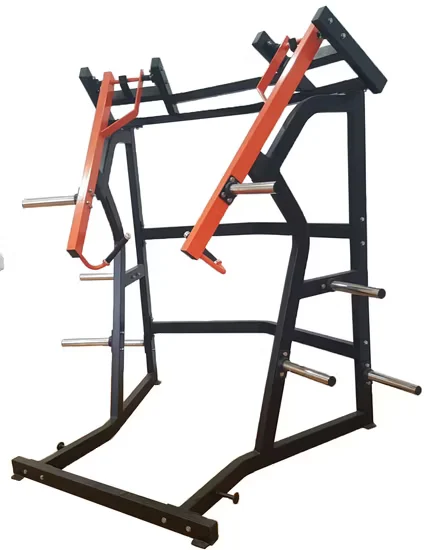
Commercial Plate Loaded Squat Rack, 1830×1200×1876mm Dimensions, 98kg Net Weight — engineered with steel frame construction and plate loaded resistance system for heavy compound movements. Built with continuous welding method and customizable frame and cushion color options to match facility branding. Every unit undergoes individual load testing before shipment to verify structural integrity under commercial use conditions.
// Spec Highlights
• Direct from Manufacturer · No Middlemen · Worldwide Shipping
01
// Material
Imported Solid Wood
Premium hardwood frames sourced for density and visual warmth.
02
// Hardware
Medical-Grade Silent
Whisper-quiet pulleys and springs for clinical environments.
03
// Customization
Appearance OEM
Color, upholstery, and branding tailored to your studio.
04
// Service
Layout Design
Free venue planning for studios and rehab institutions.
Every component is selected for longevity, performance, and aesthetic harmony - from imported hardwood frames to silent medical-grade accessories.
// Features
Mill-Certified Steel Frame — Every tube in this commercial plate loaded squat rack machine traces back to its Q235 or Q345 steel coil, eliminating guesswork about material grade under heavy loading.
| Parameter | Value |
|---|---|
| Product Type | Squat Rack |
| Frame Tube Size | 1830×1200×1876mm |
| Frame Steel | 11-gauge, 3×3 inch tube |
| Steel Grade | Q235 / Q345 industrial steel |
| Welding Type | Robotic continuous MIG |
| Loading Type | Plate loaded |
| Powder Coating | 200μm scratch-resistant |
| Net Weight | 98kg |
| Main Frame Color | Customizable |
| Cushion Color | Customizable |
| Certification | ISO 9001, CE |
| Warranty | 10-year frame |
| Facility Type | Typical Use |
|---|---|
| Commercial gym strength floor | Primary free weight station for squats, presses, and rack pulls |
| University strength and conditioning room | High-volume athletic training with repeated heavy loading cycles |
| Hotel and resort fitness center | Premium environment requiring reliable structural performance |
| Crossfit box functional zone | Heavy compound movements within modular rig layouts |
| Community fitness center | Durable shared-use equipment for varied membership demographics |
Continuous weld lines distribute stress across the entire joint rather than concentrating it at isolated points.
I have pulled squat rack frames off gym floors where the uprights looked perfectly intact but the J-cup brackets tore away cleanly at spot-welded joints. Under repeated eccentric loading from dropped bars, a spot weld acts as a stress concentrator — microcracks initiate at the weld boundary and propagate through the heat-affected zone until the bracket separates entirely [NEED_CITE: weld classification and fatigue performance in structural steel]. The commercial plate loaded squat rack machine uses robotic MIG welding with continuous bead paths along every load-bearing joint, which means the connection between the J-cup mounting plate and the upright shares force across a full-length weld rather than three or four discrete tack points.
This squat rack anchors the free weight zone, handling barbell back squats, front squats, overhead presses, and rack pulls. It pairs directly with a flat or adjustable bench for combined pressing work and sits adjacent to deadlift platforms to separate heavy compound movements from selectorized machine traffic. The 1830×1200mm footprint fits standard commercial spacing grids, and the upright height accommodates users across a broad stature range without requiring bar-height adjustment beyond the standard J-cup positions. For high-density gym floors, the commercial plate loaded squat rack machine occupies a compact envelope while maintaining safe lateral clearance for barbell travel and spotter arm access.
A squat rack endures three distinct load profiles: static load from a racked barbell, impact load when the bar is returned to the J-cups, and eccentric load if the lifter fails a rep and the bar contacts the safety spotter arms. Each cycle concentrates stress at the junction between upright and cross-member, where bending moments peak [NEED_CITE: EN 957 structural requirements for stationary training equipment]. Over thousands of daily cycles in a busy commercial gym, these junctions experience fatigue accumulation that exposes any welding discontinuity. The 11-gauge frame tube walls resist ovalization at bolt-hole locations, while the 200μm powder coating prevents sweat and cleaning chemicals from attacking the steel surface at high-wear contact zones where the bar repeatedly meets the J-cup.
The 3×3 inch tube profile provides a broad moment of inertia that resists lateral deflection when a loaded barbell shifts off-center during a heavy squat. Wall thickness at 11-gauge keeps the tube from buckling under compressive loads well beyond typical barbell weights. Robotic MIG welding produces uniform penetration depth along each seam, avoiding the cold-joint defects common in manual spot-welding where the arc fails to fuse both base metals. Pre-treatment before powder coating — sandblasting to bare steel — ensures the 200μm finish bonds mechanically rather than sitting on mill scale that eventually delaminates at contact points. The plywood-crated transport packaging prevents coating damage during transit, so the rack arrives with its corrosion protection intact.
Thin-wall tubing bends visibly after a few months of heavy use, forcing gym owners to either pull the rack from the floor or accept progressive misalignment that makes J-cup insertion difficult. Spot-welded joints crack without warning — I have seen uprights separate from base plates during a routine Monday evening session, creating immediate liability exposure. Non-industrial powder coatings chip at bar-contact points within weeks, exposing bare steel to sweat corrosion that spreads beneath adjacent coating. When manufacturers use proprietary fastener sizes instead of standard metric hardware, replacement bolts and J-cups become unavailable once the supplier discontinues the model. These failures rarely appear in product photos but show up predictably on gym floors running eight or more hours daily [NEED_CITE: structural fatigue in commercial fitness equipment under cyclic loading].
Mill-certified Q235 and Q345 steel means the coil source for every upright tube is documented and verifiable, not an unmarked import batch. Robotic MIG welding replaces operator-dependent manual welds with repeatable continuous seams that pass three-stage inspection. Every unit undergoes load testing before crating — not sample-based QC that lets untested racks ship. The 200μm powder coating applied over sandblasted surfaces survives barbell contact, sweat exposure, and commercial cleaning chemicals without chipping at high-wear zones. A 10-year frame warranty reflects confidence in the steel and weld specifications. For facility planners, CAD-based 2D-3D floor layouts ensure this commercial plate loaded squat rack machine fits with correct clearance zones for barbell travel, spotter access, and adjacent equipment spacing.
Provide your strength floor dimensions and current equipment list to receive a 2D-3D CAD placement plan showing clearance zones and traffic flow around this squat rack. Specify your expected daily user volume so we can confirm the frame gauge and weld protocol match your facility’s load profile. Share your preferred frame color, cushion color, and any logo or branding requirements for OEM customization.
Q: How do I tell a true commercial-grade squat rack from a light commercial one?
A: Request the frame steel gauge and tube dimensions — genuine commercial racks specify 11-gauge or thicker with 3×3 inch profiles. Ask for mill certification tracing the steel to its coil source. Inspect weld joints for continuous bead patterns rather than spot welds. Light commercial units typically use thinner tubing and discrete tack welds that fail under sustained heavy loading.
Q: What frame specifications prevent deformation under heavy barbell loads?
A: The combination of 11-gauge wall thickness and 3×3 inch tube cross-section provides sufficient moment of inertia to resist lateral deflection and buckling. Continuous MIG welding at upright-to-base and upright-to-cross-member junctions prevents joint-level failure. Load testing each unit before shipment verifies that the assembled frame performs within structural tolerance.
Q: How does welding method affect long-term frame integrity?
A: Spot welding creates isolated connection points that concentrate stress, leading to crack initiation under repeated impact loads. Robotic continuous MIG welding distributes force along the entire joint length, eliminating stress concentrators. This approach produces uniform penetration depth and avoids cold-joint defects that compromise fatigue life over thousands of loading cycles.
Q: What spacing and clearance does this squat rack require on a gym floor?
A: The 1830×1200mm footprint needs additional clearance on all sides for barbell travel, spotter access, and safe user movement. A CAD-based floor plan accounts for adjacent equipment placement, traffic flow between stations, and emergency egress paths. Proper spacing prevents barbell collisions and ensures lifters can load and unload plates without obstruction.
Q: What warranty coverage applies to the frame versus wearable components?
A: The frame carries a 10-year warranty covering structural defects in steel and welds. Wearable components such as J-cup liners, protective inserts, and cushion upholstery carry shorter coverage periods reflecting their expected replacement cycle. Warranty documentation specifies coverage terms for each component category separately.
Premium aesthetics meet quiet operation for boutique studio environments.
Medical-grade silence and precision for sports & postpartum recovery.
Furniture-grade craftsmanship for premium residential installations.
Compact premium setups for one-on-one and small-group training.
Aesthetic Pilates integration for hybrid wellness studio programming.
Multi-unit deployment with instructor-grade reliability for certification programs.
Tell us about your project. Our team will respond within 24 hours with pricing, customization options, and shipping details.
// Sales Director
William
+86 132 2531 1800
// Export Manager
Bella
+86 198 5412 8032
william@bickfit.com