01 / Scenario
STUDIO
P
High-End Pilates Studios
Premium aesthetics meet quiet operation for boutique studio environments.
ISO
9001
CE
Certified
OEM
Available
10YR
Warranty
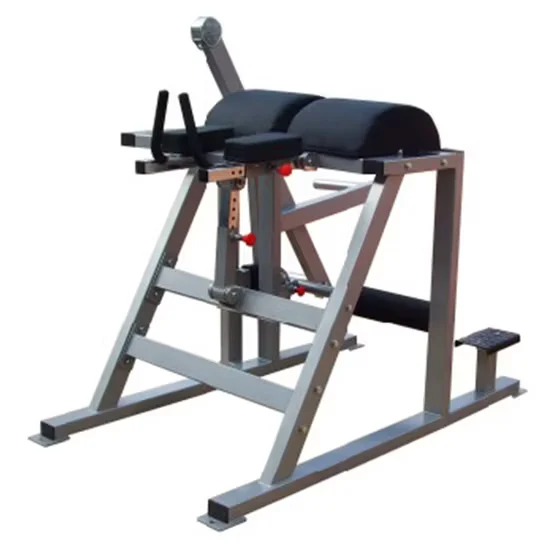
Commercial Reverse Hyper Extension, 1727×1448×1651mm, 120 kg Net Weight — engineered with an 11-gauge steel frame and robotic MIG continuous welds to eliminate spot-weld failure points under repetitive hip extension loads. Sealed industrial bearings at the pivot joint ensure zero play and maintenance-free articulation across high-traffic commercial use. Every unit undergoes full load testing before shipment, backed by a 10-year frame warranty and factory-direct floor planning support.
// Spec Highlights
• Direct from Manufacturer · No Middlemen · Worldwide Shipping
01
// Material
Imported Solid Wood
Premium hardwood frames sourced for density and visual warmth.
02
// Hardware
Medical-Grade Silent
Whisper-quiet pulleys and springs for clinical environments.
03
// Customization
Appearance OEM
Color, upholstery, and branding tailored to your studio.
04
// Service
Layout Design
Free venue planning for studios and rehab institutions.
Every component is selected for longevity, performance, and aesthetic harmony - from imported hardwood frames to silent medical-grade accessories.
// Features
Mill-Traceable Steel — every tube used in this commercial reverse hyper extension traces back to the coil certificate, so you know exactly what is bearing the load.
| Parameter | Value |
|---|---|
| Product Type | Reverse Hyper Extension |
| Frame Steel Gauge | 11-gauge |
| Frame Tube Size | 3×3 inch |
| Steel Grade | Q235 / Q345 industrial steel, mill-certified |
| Welding Type | Robotic MIG continuous weld |
| Loading Type | Bodyweight / Plate Loaded |
| Bearing Type | Sealed industrial bearing |
| Powder Coating | 200μm scratch-resistant, sandblast pre-treatment |
| Product Dimensions | 1727×1448×1651mm |
| Net Weight | 120 kg |
| Upholstery | Available in standard or high-density options |
| Color Options | Optional |
| Certification | ISO 9001, CE |
| OEM | Available |
| Warranty | 10-year frame |
| Facility Type | Typical Use |
|---|---|
| Commercial gym strength floor | Dedicated posterior chain station in the free-weight zone |
| University strength and conditioning room | Athlete recovery and hip extension power development |
| Functional training box | CrossFit-style posterior chain accessory work |
| Rehabilitation and performance center | Low-impact spinal decompression and glute activation |
| Hotel and resort fitness center | Compact footprint posterior chain option for limited-space layouts |
An 11-gauge frame with continuous MIG welds keeps the pivot axis rigid when the swing arm carries heavy plates through full hip extension.
Most reverse hyper units on the market are labeled "commercial grade" without disclosing the actual tube wall thickness or weld pattern. I once pulled back an entire batch of reverse hyper stations from a gym because the client insisted on thinner-wall tubing to cut cost — the crossbeam deformed under repeated heavy swing loads, and the pivot joint started to wander off-axis. That single failure taught me that the frame gauge and weld continuity are not line items you negotiate on a posterior chain station. When the swing arm is loaded and the athlete drives through hip extension, the moment arm puts enormous stress on the pivot weld and the upright-to-base junction [NEED_CITE: structural deflection thresholds in plate-loaded posterior chain equipment]. Spot welds pass a visual check on the showroom floor but crack under cyclic loading within months.
This station targets the posterior chain — glutes, hamstrings, and lumbar erectors — through a hip-dominant extension arc that complements squat racks, deadlift platforms, and back extension benches already on the floor. In a high-density commercial layout, the reverse hyper occupies a footprint that fits between a power rack and a cable column without creating dead space. It suits facilities where athletes and general-population members both need controlled spinal decompression and hip extension work. The pad and foot-cradle geometry accommodates a wide range of torso lengths, so users from shorter to taller builds can align their hip crease with the pivot axis.
Every repetition sends an eccentric load pulse through the swing arm, into the pivot bearing, and down into the upright welds. In a busy commercial gym, a single reverse hyper station can see hundreds of loaded cycles per day. The pivot bearing absorbs the most concentrated wear — if it is an open bushing, sweat and chalk dust infiltrate within weeks and play develops at the articulation point [NEED_CITE: bearing wear rates in high-cycle fitness equipment]. The weld at the upright-to-base junction faces the highest bending moment, and the powder coating at the pad-mount brackets endures repeated compression and friction from torso contact.
The 3×3 inch, 11-gauge steel tube resists lateral deflection at the pivot even when the swing arm carries multiple bumper plates — a thinner or narrower tube would flex and shift the hip alignment off-center. Robotic MIG continuous welding lays a uniform bead along the entire joint length, distributing stress rather than concentrating it at discrete spot-weld nodes. Sealed industrial bearings at the pivot keep sweat, chalk, and dust out, which means the articulation stays smooth without scheduled teardowns. The 200μm powder coating, applied over a sandblast pre-treatment, resists chipping at the pad-mount contact zones where metal-on-metal abrasion is constant.
Thinner-wall tubing saves money on the purchase order but bends under repeated swing loads, pulling the pivot axis out of alignment and turning a rehabilitation movement into a shearing risk. Spot-welded joints that fail mid-cycle become a liability event, not just a maintenance ticket. Non-sealed bushings demand regular teardown and replacement, and every hour a technician spends inside the pivot is an hour the station sits off the floor. Low-density upholstery compresses within months of daily use, exposing the pad substrate and forcing a reupholster cycle. Thin powder coating chips at contact points, exposing bare steel to sweat and humidity until surface rust spreads beneath adjacent coating [NEED_CITE: powder coating degradation in commercial gym environments].
The 11-gauge Q235/Q345 steel is sourced with mill certificates traceable to the coil, so there is no guesswork about what is carrying the load. Robotic MIG welding replaces spot welds on every frame joint, eliminating the cold-joint and incomplete-penetration failures that show up under cyclic hip-extension loading. Every unit undergoes a load test before it leaves the factory — not a sample-based QC pass, but a test on the actual machine heading to your floor. The 200μm industrial powder coating survives daily contact with pads, plates, and cleaning chemicals. The 10-year frame warranty reflects what the structure is built to endure. And when you are planning the posterior chain zone, 2D and 3D CAD layout support ensures this station is placed with safe clearance around the swing arc, not jammed against a rack upright.
Provide your strength-floor square footage and existing equipment list so we can generate a 2D or 3D layout that positions the reverse hyper with proper swing-arc clearance. Indicate your expected daily user volume so the structural grade matches actual traffic. Share the torso-length range of your primary user population to confirm pad and foot-cradle fit. Specify any custom color, logo, or upholstery density requirements at the inquiry stage.
Q: How do I tell a true commercial reverse hyper from a light-commercial one?
A: Request the mill certificate for the frame steel and verify the gauge and tube dimensions — not just a "commercial grade" label. Inspect the weld pattern at the pivot and base junctions; continuous MIG welds indicate a structure built for cyclic loading, while spot welds suggest cost-driven assembly. Confirm sealed bearings at the pivot rather than open bushings [NEED_CITE: EN 957 structural requirements for stationary training equipment].
Q: Why does frame tube size matter on a reverse hyper extension?
A: The swing arm creates a long moment arm that pushes lateral force into the upright and base junction. A wider, heavier-gauge tube resists this deflection, keeping the hip pivot axis stable under load. If the frame flexes, the user’s hip alignment drifts off-center, reducing the effectiveness of the movement and increasing shear at the lumbar spine.
Q: What pivot bearing type prevents play over time?
A: Sealed industrial bearings keep contaminants out and maintain tight tolerances through thousands of loaded cycles. Open bushings absorb sweat, chalk dust, and cleaning residue, which accelerates wear and introduces wobble at the articulation point. A sealed bearing eliminates scheduled teardowns and keeps the swing arm tracking smoothly.
Q: How much floor space should I allocate around the reverse hyper station?
A: Plan for the full 1727×1448mm footprint plus clearance behind the swing arc for loaded plate travel and user foot overhang. Leave a lateral gap between adjacent stations so users can load and unload plates without crossing into another station’s movement envelope. A 2D or 3D CAD layout confirms safe spacing before installation.
Premium aesthetics meet quiet operation for boutique studio environments.
Medical-grade silence and precision for sports & postpartum recovery.
Furniture-grade craftsmanship for premium residential installations.
Compact premium setups for one-on-one and small-group training.
Aesthetic Pilates integration for hybrid wellness studio programming.
Multi-unit deployment with instructor-grade reliability for certification programs.
Tell us about your project. Our team will respond within 24 hours with pricing, customization options, and shipping details.
// Sales Director
William
+86 132 2531 1800
// Export Manager
Bella
+86 198 5412 8032
william@bickfit.com