01 / Scenario
STUDIO
P
High-End Pilates Studios
Premium aesthetics meet quiet operation for boutique studio environments.

ISO
9001
CE
Certified
OEM
Available
10YR
Warranty
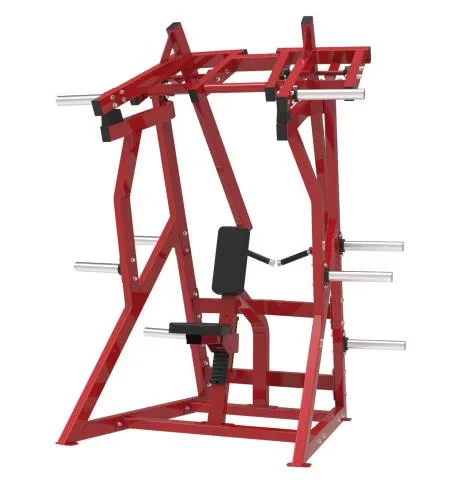
Commercial Seated Biceps Curl Machine, 3×3 Inch Frame Tube, 93kg Net Weight — pin-select loading with sealed industrial bearings and aircraft-cable pulley system for smooth, maintenance-free curl motion. Heavy-gauge steel frame with robotic MIG continuous welding resists deformation under repeated commercial loading. Every unit undergoes per-shipment load testing and ships with 10-year frame warranty plus CAD floor planning support.
// Spec Highlights
• Direct from Manufacturer · No Middlemen · Worldwide Shipping
01
// Material
Imported Solid Wood
Premium hardwood frames sourced for density and visual warmth.
02
// Hardware
Medical-Grade Silent
Whisper-quiet pulleys and springs for clinical environments.
03
// Customization
Appearance OEM
Color, upholstery, and branding tailored to your studio.
04
// Service
Layout Design
Free venue planning for studios and rehab institutions.
Every component is selected for longevity, performance, and aesthetic harmony - from imported hardwood frames to silent medical-grade accessories.
// Features
Mill-Certified Steel Traceability — Every tube in this commercial selectorized seated bicep curl machine traces back to the coil with documented Q235/Q345 grade verification, eliminating guesswork on structural integrity.
| Parameter | Value |
|---|---|
| Product Type | Selectorized Bicep Curl Machine |
| Frame Steel Gauge | 11-gauge |
| Frame Tube Size | 3×3 inch |
| Steel Grade | Q235 / Q345 mill-certified |
| Welding Type | Robotic MIG, continuous weld lines |
| Loading Type | Pin select |
| Weight Stack | Up to 150kg pin-select stack |
| Bearing Type | Sealed industrial bearings |
| Pulley System | Aircraft-cable with sealed bearing pulleys |
| Upholstery | Standard or high-density options, color configurable |
| Powder Coating | 200μm scratch-resistant, sandblast pre-treatment |
| Product Dimensions | 1466 × 1292 × 1502 mm |
| Net Weight | 93 kg |
| Adjustment Positions | Multiple seat and pad positions |
| Certification | ISO 9001:2015, CE |
| Warranty | 10-year frame warranty |
| Facility Type | Typical Use |
|---|---|
| Commercial gym strength floor | Primary isolation station in arm training zones |
| Hotel and resort fitness center | Durable selectorized option for high-turnover environments |
| University strength and conditioning room | Supervised athlete arm development within periodized programs |
| Professional training facility | High-frequency use in split-routine programming blocks |
Continuous MIG welds distribute stress across the full joint, not just at discrete points.
I have seen selectorized arm machines come back from gym floors with cracked weld seams at the seat-post junction — almost always where spot welds were used to cut production time. Under repeated curl loading, those discrete weld points concentrate fatigue cycles until a crack propagates. [NEED_CITE: weld classification and fatigue performance in structural steel] That is not a cosmetic problem; it compromises the structural connection between the seat support and the main upright. A commercial selectorized seated bicep curl machine that sees eight hours of daily traffic will expose every weak weld within the first year. Continuous robotic MIG welding eliminates those stress risers by running a full bead along each joint, which is why we specify it on every load-bearing connection in this frame.
This commercial selectorized seated bicep curl machine targets elbow flexion in the sagittal plane, isolating the biceps brachii and brachialis with a fixed movement path. In a strength floor layout, it pairs naturally with a seated triceps press and a preacher curl station to cover both sides of the upper arm. The compact footprint — roughly 1466 × 1292 mm — fits standard commercial spacing grids without consuming the floor area a free-weight curl station demands. It serves facilities where member throughput is high and equipment needs to guide the movement path, reducing the instruction burden on floor staff.
Each curl cycle places an eccentric load on the seat-post weld and the pivot bolt connecting the lever arm to the weight stack cable. Over thousands of daily repetitions, those micro-loads accumulate into fatigue cycles that reveal any structural shortcuts. [NEED_CITE: EN 957 structural requirements for stationary training equipment] The sealed bearings at the pulley axis handle rotational wear without developing the lateral play that open bushings show after months of commercial traffic. Sweat and cleaning agents attack the powder coating at grip contact points, which is why the 200μm coating with sandblast pre-treatment matters — it resists the chemical and mechanical abrasion that chips thinner finishes down to bare steel.
The 11-gauge steel frame with 3×3 inch tube cross-section sets the deflection threshold under load: when a user loads the full stack and curls explosively, the frame must resist lateral flex that would shift the movement path off-axis. Robotic MIG welding with continuous beads ensures every joint on this commercial selectorized seated bicep curl machine shares the load rather than concentrating it at discrete spot-weld points. Sealed industrial bearings at the pulley prevent dust and moisture ingress, which is the primary failure mode in gym environments where airborne chalk and sweat residue settle into open mechanisms. The 200μm powder coating, applied after sandblast surface preparation, bonds to the substrate at a thickness that absorbs contact abrasion from dumbbell racks and neighboring equipment without exposing the steel underneath. Guide rod alignment within the weight stack housing prevents the binding that occurs when off-center loading forces the rod against its liner — a problem that compounds with every rep until the stack no longer moves freely.
A lighter-gauge frame tube may pass a static load test but will develop visible flex under repeated commercial curl loading, eventually shifting the alignment between the seat and the pivot axis. Spot-welded joints on selectorized arm machines are a liability issue as much as a structural one — a cracked weld at the seat post during use creates an immediate injury risk. [NEED_CITE: liability standards for commercial fitness equipment structural failure] Non-sealed bearings and open bushings require scheduled maintenance that most gym operators skip until the pulley develops enough play to derail the cable. Low-density upholstery compresses within months of daily use, leaving a thin pad over a hard frame edge that members will complain about. Thin powder coating at contact zones chips within the first year, and once bare steel is exposed to sweat and humidity, corrosion spreads under the adjacent coating until the damage is no longer cosmetic.
The 11-gauge frame with mill-certified Q235/Q345 steel means every tube in this commercial selectorized seated bicep curl machine is traceable to its source coil — not just labeled "commercial grade" without documentation. Robotic MIG continuous welding is applied at every structural joint on this unit, not selectively on visible welds while hidden connections get spot treatment. Each unit undergoes individual load testing before crating, which catches guide rod binding and bearing play that batch sampling would miss. The 200μm powder coating with sandblast pre-treatment protects this station through years of contact with neighboring equipment and daily cleaning chemicals. The 10-year frame warranty applies to this unit’s structural steel, backed by the same load test record we share with buyers. Floor planning CAD support covers this station’s footprint and the safe clearance spacing needed between it and adjacent selectorized units for user passage and plate loading.
Provide your strength zone floor area and current equipment list so we can generate 2D-3D placement layouts that account for this station’s clearance requirements. Specify your average daily member traffic to confirm the structural grade matches your usage intensity. Share the body type range of your primary user population so we can verify the seat and pad adjustment positions cover them. Note any color, logo, or upholstery customization requirements for brand consistency across your floor.
Q: How do I tell a true commercial selectorized bicep curl machine from a light-commercial one?
A: Check the frame steel gauge with mill documentation, not just the "commercial grade" label. Verify the welding method — continuous robotic MIG versus spot welds at hidden joints. Confirm the bearing type at every pulley; sealed industrial bearings are a commercial requirement, while open bushings indicate light-commercial construction. Request per-unit load test records rather than accepting sample-based quality claims.
Q: What does 11-gauge steel actually mean for a selectorized arm machine frame?
A: The gauge number defines the wall thickness of the frame tube. An 11-gauge tube in a 3×3 inch cross-section resists lateral flex under loaded curl repetitions far better than thinner alternatives. That rigidity keeps the pivot axis aligned with the seat position throughout the machine’s service life, which directly affects movement quality and the fatigue life of every welded joint in the structure.
Q: Selectorized pin-select or plate-loaded — which bicep curl station fits a high-traffic gym?
A: Pin-select stations serve high-throughput commercial floors because members change load in seconds without handling plates, which also reduces floor clutter and plate storage demands. Plate-loaded stations suit facilities where advanced users want incremental loading beyond stack limits and prefer the direct force feedback. Most commercial gyms allocate pin-select for general population zones and plate-loaded for dedicated strength areas.
Q: What clearance spacing should I plan around this bicep curl station?
A: Allow passage width on the entry side for users to approach and seat themselves without blocking adjacent equipment traffic. The rear and sides need enough space for maintenance access to the weight stack and pulley system. A detailed CAD layout accounts for these clearances alongside neighboring station dimensions, ensuring no unsafe pinch points form between equipment during peak traffic hours.
Premium aesthetics meet quiet operation for boutique studio environments.
Medical-grade silence and precision for sports & postpartum recovery.
Furniture-grade craftsmanship for premium residential installations.
Compact premium setups for one-on-one and small-group training.
Aesthetic Pilates integration for hybrid wellness studio programming.
Multi-unit deployment with instructor-grade reliability for certification programs.
Tell us about your project. Our team will respond within 24 hours with pricing, customization options, and shipping details.
// Sales Director
William
+86 132 2531 1800
// Export Manager
Bella
+86 198 5412 8032
william@bickfit.com