01 / Scenario
STUDIO
P
High-End Pilates Studios
Premium aesthetics meet quiet operation for boutique studio environments.

ISO
9001
CE
Certified
OEM
Available
10YR
Warranty
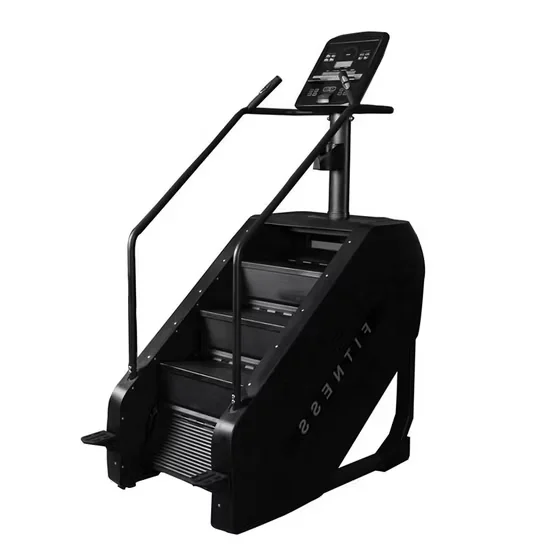
Commercial Stair Climber, Motor Drive, 180kg Max User Weight — engineered with a steel pipe frame and continuous velocity range from 15 to 164 steps/min to handle sustained high-traffic gym operation without mechanical strain. The 560x235mm step area and multi-function OSD console support diverse training intensities across commercial, hotel, and institutional facilities. Every unit undergoes three-stage QC inspection with full load testing before shipment, backed by a 10-year frame warranty and factory-direct floor planning support.
// Spec Highlights
• Direct from Manufacturer · No Middlemen · Worldwide Shipping
01
// Material
Imported Solid Wood
Premium hardwood frames sourced for density and visual warmth.
02
// Hardware
Medical-Grade Silent
Whisper-quiet pulleys and springs for clinical environments.
03
// Customization
Appearance OEM
Color, upholstery, and branding tailored to your studio.
04
// Service
Layout Design
Free venue planning for studios and rehab institutions.
Every component is selected for longevity, performance, and aesthetic harmony - from imported hardwood frames to silent medical-grade accessories.
// Features
Motor-Driven Step Integrity — Each commercial stair climber undergoes individual load testing at 180kg before shipment, verifying frame rigidity and drive system stability under sustained cycling.
| Parameter | Value |
|---|---|
| Product Type | Commercial Stair Climber |
| Max User Weight | 180kg |
| Step Area | 560×235×220mm |
| Running Velocity | 15–164 steps/min |
| Product Dimensions | 1450×820×2080mm |
| Net Weight | 148kg |
| Drive Type | Motor Drive |
| Mains Input | AC220V±10% / AC110V±10% |
| Frame Material | Steel Pipe |
| Step Material | PP Plastic |
| Console Display | Time, Climb, Calories, Steps, Heart Rate |
| Certification | CE |
| Color | Black (customization available) |
| Facility Type | Typical Use |
|---|---|
| Commercial gym cardio zone | High-traffic daily stepper sessions for members of varying fitness levels |
| Hotel fitness center | Durable, low-maintenance cardio equipment for guest use across extended operating hours |
| University athletic facility | Conditioning and warm-up tool for student athletes in strength and conditioning programs |
Structural failure in stair climbers begins at the frame joints — not the motor.
Many units marketed as commercial grade rely on thin-gauge steel tubing and spot-welded connections that cannot withstand the cyclic loading of 180kg users climbing at sustained cadences. Over months of high-traffic operation, these welds develop micro-cracks, steps begin to wobble, and the entire unit requires decommissioning. Early in my career, I supplied a Latin American facility with a stair climber built on thin-wall tubing with only spot welds at the base frame — the welds cracked under continuous pedaling, and the machine was scrapped within months. That failure shaped every structural decision we make today. [NEED_CITE: weld classification and fatigue performance in structural steel]
This commercial stair climber machine for gym environments targets lower-body endurance and cardiovascular conditioning through a continuous stepping motion across the sagittal plane. It complements treadmills and rowers in a cardio lineup by offering a low-impact, weight-bearing alternative that engages quadriceps, glutes, and calves without joint compression. The motor-driven mechanism supports a velocity range from 15 to 164 steps per minute, accommodating both rehabilitation-paced warm-ups and high-intensity interval efforts. The 180kg load capacity and 560×235mm step surface accommodate a wide range of user body sizes.
Unlike plate-loaded strength equipment where loads are static, a commercial stair climber subjects its frame to continuous dynamic loading — each pedal stroke generates impact forces at the step mechanism, torsional stress at the frame joints, and sustained thermal load on the drive motor. Over thousands of daily cycles, unsealed bearings in the step mechanism develop play, causing lateral wobble that accelerates wear on adjacent components. The motor drive system must manage heat dissipation across 8+ hours of daily operation; inadequate thermal management leads to premature winding failure. Step surface contact points and handrail grip zones experience constant friction and sweat exposure, demanding coating and material resistance beyond cosmetic finishes. [NEED_CITE: bearing seal ratings and contamination resistance in fitness equipment]
The steel pipe frame forms the load-bearing skeleton of any commercial stair climber machine for gym use. Frame tube gauge and cross-section dimensions determine the deformation threshold under repeated 180kg loading — undersized tubes flex visibly over time, misaligning the step track and accelerating bearing wear. The motor drive type directly influences maintenance demands: motor-driven systems require verified thermal cut-off protection and continuous duty ratings to survive extended daily operation without overheating. The step mechanism bearing seal type determines how well the unit resists dust, sweat, and debris infiltration — unsealed bearings in a high-traffic gym environment develop measurable play within the first year, leading to step wobble and noisy operation. Powder coating thickness and surface pretreatment matter at high-contact zones: pedal surfaces and handrails experience constant abrasion, and thin coatings chip quickly, exposing bare steel to corrosion.
Facilities that select stair climbers based on initial price often absorb far greater lifetime costs. Thin-wall frame tubes deform under sustained loading, creating uneven step tracking that increases motor strain and energy consumption. Spot-welded joints crack without warning, creating safety liability and unplanned equipment downtime. Non-sealed step mechanism bearings require frequent replacement — each service call adds labor cost and removes the unit from member use. Low-density step surfaces and handrail grips compress and degrade within months, requiring full replacement rather than spot repair. Coatings that chip at contact points allow corrosion to spread beneath adjacent intact coating, shortening the entire frame’s usable life. Non-standard hardware and proprietary fasteners mean replacement parts become unavailable once the original manufacturer discontinues the model. [NEED_CITE: total cost of ownership models for commercial fitness equipment]
Every commercial stair climber we produce is built on a steel pipe frame with mill-certified material traceability, ensuring the gauge and grade match structural requirements rather than marketing claims. Robotic MIG welding produces continuous weld lines at every frame joint — no spot-weld weak points that crack under cyclic loading. Each unit undergoes individual load testing at 180kg before shipment, verifying frame rigidity, step mechanism alignment, and motor drive stability under real-world conditions. The 200μm industrial powder coating resists chipping at high-contact pedal and handrail zones, maintaining appearance and corrosion protection across years of daily use. Our 10-year frame warranty reflects confidence in these structural decisions. We provide 2D-3D CAD floor planning support to ensure proper spacing and safety clearances around each commercial stair climber machine for gym installation — the 1450×820×2080mm footprint requires adequate surrounding clearance for safe mounting and dismounting. OEM customization for color, branding, and console configuration is available for multi-unit deployments.
Provide your cardio zone floor area and existing equipment list to receive a 2D-3D CAD layout showing optimal placement and safety clearances for each commercial stair climber machine for gym deployment. Specify your average daily user volume so we can confirm the motor drive and bearing specifications match your traffic intensity. Indicate your target user body size range to verify the 180kg load capacity and step dimensions serve your membership profile. Customization options for frame color, facility branding, and console configuration are available for multi-unit orders.
Q: How do you distinguish a true commercial stair climber from light-commercial or home models?
A: True commercial stair climbers use motor-driven systems with verified continuous duty ratings, steel pipe frames with documented gauge specifications, and sealed step mechanism bearings designed for 8+ hours of daily operation. Light-commercial models typically rely on self-powered mechanisms with unsealed bearings and thin-wall frames that cannot sustain high-traffic cycling without developing play and structural fatigue.
Q: What frame specifications ensure long-term structural integrity under heavy daily use?
A: Frame tube gauge and cross-section dimensions determine deformation resistance under repeated loading cycles. Continuous robotic MIG welds at all joints prevent the crack propagation common in spot-welded frames. Mill-certified steel with traceable grade documentation ensures the material matches the structural demands of sustained 180kg user loads across thousands of daily pedal strokes.
Q: What are the durability and maintenance differences between motor drive and self-powered stair climbers?
A: Motor-driven stair climbers provide consistent step cadence control across a wide velocity range and reduce user-dependent wear patterns, but require verified thermal management for continuous operation. Self-powered models eliminate electrical dependency but place variable load demands on the step mechanism bearings and drive train, often accelerating bearing wear in high-traffic environments where users operate at inconsistent cadences.
Q: What floor spacing and safety clearances are needed for stair climber installation?
A: The 1450×820×2080mm footprint requires minimum 600mm clearance on all sides for safe user mounting, dismounting, and emergency access. Adjacent equipment should be positioned to prevent user interference during operation. Floor surface must be level and capable of supporting the 148kg unit weight plus 180kg dynamic user load without deflection.
Premium aesthetics meet quiet operation for boutique studio environments.
Medical-grade silence and precision for sports & postpartum recovery.
Furniture-grade craftsmanship for premium residential installations.
Compact premium setups for one-on-one and small-group training.
Aesthetic Pilates integration for hybrid wellness studio programming.
Multi-unit deployment with instructor-grade reliability for certification programs.
Tell us about your project. Our team will respond within 24 hours with pricing, customization options, and shipping details.
// Sales Director
William
+86 132 2531 1800
// Export Manager
Bella
+86 198 5412 8032
william@bickfit.com