01 / Scenario
STUDIO
P
High-End Pilates Studios
Premium aesthetics meet quiet operation for boutique studio environments.

ISO
9001
CE
Certified
OEM
Available
10YR
Warranty
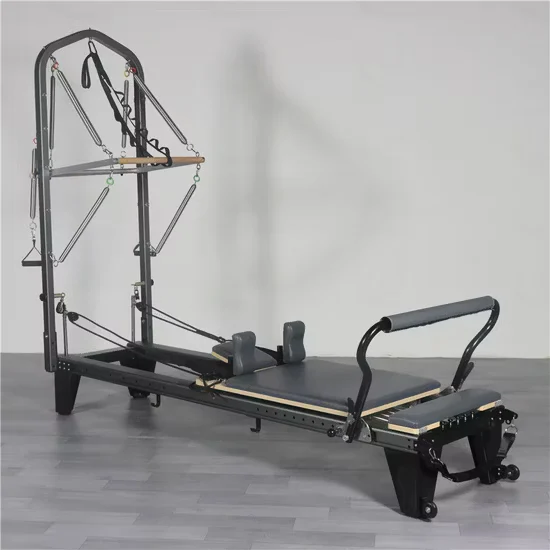
Wood Pilates Reformer, White Oak / Maple Frame, 2460×730mm, 100kg — built with solid hardwood rails and spring-based resistance for studio-grade glide stability. Includes long box, jump board, and platform for full-range programming. Backed by a 3-year warranty and OEM customization for logo and color. Every unit undergoes 32-point inspection and full load testing before dispatch.
// Spec Highlights
• Direct from Manufacturer · No Middlemen · Worldwide Shipping
01
// Material
Imported Solid Wood
Premium hardwood frames sourced for density and visual warmth.
02
// Hardware
Medical-Grade Silent
Whisper-quiet pulleys and springs for clinical environments.
03
// Customization
Appearance OEM
Color, upholstery, and branding tailored to your studio.
04
// Service
Layout Design
Free venue planning for studios and rehab institutions.
Every component is selected for longevity, performance, and aesthetic harmony - from imported hardwood frames to silent medical-grade accessories.
// Features
Hardwood Frame Traceability — Every solid wood Pilates reformer we ship uses white oak or maple with documented moisture content at the time of assembly, preventing the rail warping that plagues uncontrolled timber sources.
| Parameter | Value |
|---|---|
| Product Type | Pilates Reformer |
| Frame Material | Solid Hardwood (White Oak / Maple) |
| Loading Type | Spring-based resistance |
| Carriage Bearings | Sealed industrial bearings |
| Rail System | Hardwood track with sealed bearing wheels |
| Product Dimensions | 2460 × 730 × 680 mm |
| Net Weight | 100 kg |
| Included Accessories | Long Box / Jump Board / Platform |
| Customization | Logo and color options available |
| Warranty | 3 Years |
| Facility Type | Typical Use |
|---|---|
| Commercial Pilates studio | Full-range reformer classes with spring-loaded resistance programming |
| Boutique group reformer facility | High-turnover class scheduling with rapid accessory changeover |
| Rehabilitation and movement clinic | Controlled spring resistance for progressive therapeutic movement |
| Hotel wellness facility | Durable studio-grade equipment for guest use with minimal maintenance |
| Home studio | Compact footprint accommodating full accessory ecosystem |
Laminated frames flex and delaminate; solid oak and maple do not.
When I first started auditing studio equipment returns, the pattern was obvious — reformers built from laminated plywood or hollow-core rails developed carriage wobble within months of daily class use. The rail-to-frame joints loosened, the carriage began to track off-center, and the entire unit needed teardown and reinforcement. A commercial wood pilates reformer built from properly dried solid hardwood bypasses this failure mode entirely because the grain structure runs continuous through the load path [NEED_CITE: wood structural performance under cyclic loading in fitness equipment]. The density difference between white oak and hard maple also gives studio owners a material choice: oak offers pronounced grain character and dimensional stability, while maple delivers a tighter, lighter-toned surface that resists denting from accessory hardware.
This reformer supports the full spectrum of Pilates programming — supine, prone, seated, and standing work — through the long box, jump board, and platform accessory set. In a studio layout, it occupies a defined station footprint that pairs with mat zones and cadillac units without overlapping traffic paths. The 2460 mm length accommodates users across a broad height range, and the spring anchor configuration allows instructors to scale resistance for rehabilitation clients and advanced practitioners on the same unit. A commercial wood pilates reformer in this format serves as the primary movement station around which a group class facility organizes its scheduling.
Every reformer session generates cyclic lateral and vertical loads on the rail system — the carriage accelerates, decelerates, and reverses direction hundreds of times per class. In a studio running six to eight classes daily, that translates to thousands of load cycles weekly on the carriage bearings, rail surfaces, and accessory mounting points. The jump board introduces impact loading that tests the integrity of the platform attachment hardware. Sweat and humidity fluctuations in a heated studio environment add material stress, particularly at the rail-to-endframe joints where moisture absorption can cause dimensional drift if the timber was not properly conditioned before assembly [NEED_CITE: hardwood dimensional stability under humidity fluctuation in studio environments]. The spring system itself undergoes continuous tension-release cycling that demands verified fatigue ratings.
The wood species designation matters because density directly governs how the rail surface wears under bearing contact — softer woods develop grooves that create carriage drag and noise. Rail straightness tolerance at the time of assembly determines whether the carriage glides without lateral play; even slight deviation produces uneven bearing wear that compounds over months. Spring configuration — the number of springs, their individual tension ratings, and how they are anchored — defines the resistance curve the practitioner feels through each movement phase. Sealed bearings on the carriage wheels prevent dust and sweat ingress that would otherwise degrade glide smoothness. The upholstery on the carriage and long box must be rated for the compression cycles of daily commercial use, with replacement covers available as a consumable item rather than a custom fabrication.
A reformer that retails significantly below market typically achieves that price through material substitutions that surface as maintenance problems. Thin laminated rails develop surface delamination that creates carriage friction and eventual tracking failure. Non-sealed bearings accumulate dust and sweat residue, producing a grinding noise that studio clients notice immediately. Springs without documented fatigue ratings lose tension unpredictably, forcing instructors to compensate mid-class and creating inconsistent resistance between identical units in the same studio. Upholstery bonded with inadequate adhesive separates at the seams under daily compression, and if the manufacturer does not stock replacement covers, the studio pays for full re-upholstery from a third party [NEED_CITE: commercial fitness equipment maintenance cost analysis for studio operators].
We source white oak and maple with moisture content documented at assembly to prevent post-delivery rail drift. Carriage bearings are sealed units rated for continuous studio scheduling, not residential duty cycles. Every spring set carries a fatigue rating with a documented replacement interval. The 200μm equivalent protective finish on hardware contact points prevents corrosion from sweat exposure. Our 2D-3D floor planning support includes reformer spacing calculations that account for full accessory deployment — the jump board swing radius, the long box extension length, and safe instructor circulation paths between stations. Custom logo and color options are integrated at the manufacturing stage rather than applied as aftermarket modifications.
Provide your studio floor dimensions and target class capacity to receive a 2D-3D layout that positions each commercial wood pilates reformer with correct spacing for full accessory use. Specify your weekly class volume so we can confirm bearing and spring specifications match your scheduling intensity. Indicate your practitioner height range to verify carriage travel accommodates your client base. Note any branding requirements — custom logo engraving or frame color — so these are built into the manufacturing run rather than handled after delivery.
Q: How do I confirm a reformer uses solid hardwood rather than laminated or composite material?
A: Request the wood species certification and moisture content documentation from the manufacturer. Solid hardwood frames show continuous grain on cut surfaces and end caps, while laminated frames reveal layered ply lines. Ask for the assembly moisture content specification — properly conditioned solid wood is measured and documented before rail machining to prevent post-assembly dimensional drift.
Q: What rail and carriage specifications determine long-term glide performance?
A: Rail straightness tolerance measured at assembly and carriage bearing type are the primary factors. Sealed industrial bearings resist dust and sweat contamination that degrades glide quality over time. Ask for the rail tolerance specification and whether the carriage wheels use sealed bearings or open bushings, as this distinction directly affects maintenance intervals in a high-traffic studio.
Q: How does spring configuration affect resistance feel and maintenance frequency?
A: The number of springs, individual tension rating, and anchor point placement define the resistance curve throughout each movement. Springs with documented fatigue ratings maintain consistent tension longer and follow a predictable replacement schedule. Request the spring specification sheet with fatigue cycle data so you can budget replacements before tension loss affects class consistency.
Q: What should I verify about accessory compatibility before ordering jump boards and platforms?
A: Confirm the mounting hardware interface — attachment point dimensions, bolt patterns, and load test records for dynamic use. Jump boards generate impact loading that tests the mounting integrity, so ask for documented load testing at the attachment points. Verify that replacement mounting hardware is available as standard spare parts from the manufacturer.
Q: What does the warranty actually cover on a commercial wood reformer?
A: Frame, springs, carriage, and upholstery typically carry separate warranty terms with different durations. The hardwood frame should have the longest coverage period, while springs and upholstery are classified as wear consumables with shorter terms. Request the warranty breakdown by component so you understand replacement responsibilities for high-wear items in your studio scheduling context.
Premium aesthetics meet quiet operation for boutique studio environments.
Medical-grade silence and precision for sports & postpartum recovery.
Furniture-grade craftsmanship for premium residential installations.
Compact premium setups for one-on-one and small-group training.
Aesthetic Pilates integration for hybrid wellness studio programming.
Multi-unit deployment with instructor-grade reliability for certification programs.
Tell us about your project. Our team will respond within 24 hours with pricing, customization options, and shipping details.
// Sales Director
William
+86 132 2531 1800
// Export Manager
Bella
+86 198 5412 8032
william@bickfit.com