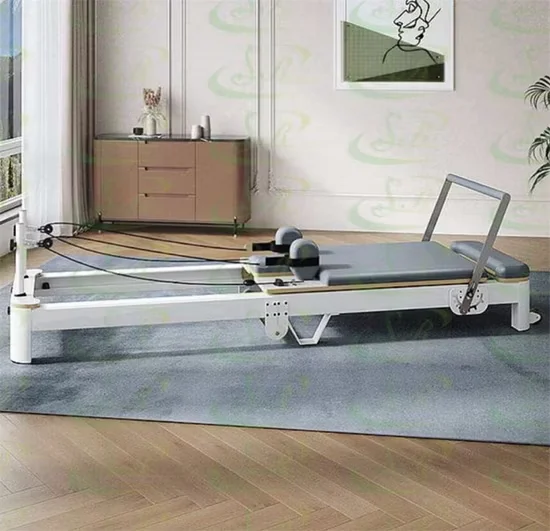
01 / Scenario
STUDIO
P
High-End Pilates Studios
Premium aesthetics meet quiet operation for boutique studio environments.

ISO
9001
CE
Certified
OEM
Available
10YR
Warranty
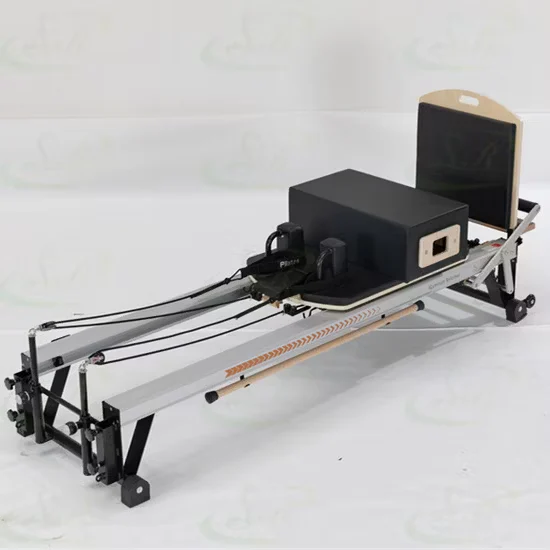
Pilates Reformer Machine, Metal Frame, 2000×500×340mm, 50kg — engineered with industrial-grade metal construction and foldable joint mechanism for space-efficient commercial studio deployment. Includes long box, jump board, and platform accessory set with customizable color and logo options. Every unit undergoes three-stage load inspection before shipment, ensuring structural integrity under repeated spring tension cycles.
// Spec Highlights
• Direct from Manufacturer · No Middlemen · Worldwide Shipping
01
// Material
Imported Solid Wood
Premium hardwood frames sourced for density and visual warmth.
02
// Hardware
Medical-Grade Silent
Whisper-quiet pulleys and springs for clinical environments.
03
// Customization
Appearance OEM
Color, upholstery, and branding tailored to your studio.
04
// Service
Layout Design
Free venue planning for studios and rehab institutions.
Every component is selected for longevity, performance, and aesthetic harmony - from imported hardwood frames to silent medical-grade accessories.
// Features
Mill-Traceable Steel — Every tube in this reformer frame traces back to its original coil certification, ensuring verifiable structural integrity rather than vague commercial-grade claims.
| Parameter | Value |
|---|---|
| Product Type | Pilates Reformer Machine |
| Frame Material | Metal Frame |
| Product Dimensions | 2000×500×340mm |
| Net Weight | 50kgs |
| Assembly State | Foldable |
| Accessory | Long Box / Jump Board / Platform |
| Color Options | Solid Color |
| Customization | Available |
| Logo | Customized Is Allowed |
| Warranty | 3 Years |
| Transport Package | Standard Wood Case |
| Facility Type | Typical Use |
|---|---|
| Commercial Pilates studio | Full-range reformer classes with spring-resistance programming |
| Boutique fitness studio | Space-efficient foldable storage between scheduled sessions |
| Rehabilitation and physical therapy center | Controlled low-impact movement therapy with adjustable resistance |
| Home Pilates practice | Private training with full accessory configuration |
A metal frame that flexes under maximum spring load develops fatigue cracks at the fold joints within the first year of commercial rotation.
Many Pilates reformers use thin-gauge tubing or wooden frames that look adequate at a showroom but begin to deflect under repeated spring tension cycles. When a studio runs six classes a day, the foldable joint mechanism absorbs thousands of micro-deflections that compound into visible wobble and eventual structural compromise [NEED_CITE: EN 957 structural requirements for stationary training equipment]. The commercial metal frame pilates reformer machine must maintain dimensional rigidity whether a client is performing footwork at maximum spring resistance or controlled eccentric lengthening on the long box.
This commercial metal frame pilates reformer machine covers the full sagittal and transverse movement planes, addressing lower body posterior chain, core stabilization, and upper body pressing and pulling patterns through spring-loaded carriage resistance. In a studio configuration, it pairs with cadillacs and chair units to complete a comprehensive apparatus-based curriculum. The foldable design allows boutique studios with limited floor space to reconfigure the training area between mat classes and apparatus sessions, accommodating diverse class formats without requiring dedicated permanent floor footprints. The 2000mm length accommodates users across a broad height range when performing supine and prone exercises on the carriage.
A reformer in a commercial studio endures a unique loading profile combining static carriage loads, dynamic spring-tension cycling, and lateral forces generated during standing and kneeling exercises. Each fold and unfold cycle introduces stress concentrations at the hinge mechanism and locking points, where fatigue accumulation accelerates if the joint design lacks adequate reinforcement. The metal frame must resist torsional forces when clients perform unilateral movements that offset the carriage load to one side [NEED_CITE: weld classification and fatigue performance in structural steel]. Surface coating at contact points between the carriage runners and frame rails faces abrasion from repeated sliding, while sweat and cleaning agents challenge the finish at hand grip areas and spring attachment points over years of daily use.
The 2000×500mm footprint reflects a balance between carriage travel distance and floor-space economy — a longer frame permits full-range leg press and pull strap exercises without the carriage bottoming out, while the 500mm width provides adequate stability during standing work. Metal frame construction eliminates the moisture absorption and dimensional swelling that plague wooden reformer frames in humid studio environments. The foldable assembly state requires a hinge mechanism engineered to maintain zero lateral play when locked in the open position, since any wobble at the joint transfers directly to the carriage track and disrupts smooth movement. Accessory mounting points for the long box, jump board, and platform must integrate with the primary frame structure rather than attaching as afterthought additions that create localized stress risers. Spring system compatibility determines whether the reformer supports progressive programming from rehabilitation-level light resistance through advanced athletic loading.
A reformer built with undersized tubing may appear stable during a single demo session but develops carriage wobble and frame deflection within months of commercial scheduling. Fold joints that rely on spot welding rather than continuous weld lines crack under the repeated stress of daily folding and unfolding, creating liability exposure when a joint fails mid-class. Non-sealed bearings in the carriage pulley system accumulate chalk dust and sweat residue, causing the carriage to bind and move unevenly along the track [NEED_CITE: bearing seal classification for fitness equipment environments]. Upholstery on the carriage and long box compresses and splits under daily use when specified without adequate density ratings, forcing studios into frequent replacement cycles that accumulate significant maintenance costs.
The frame steel carries mill certification traceable to the coil, so studio owners can verify material specifications rather than accepting unverifiable claims. Robotic MIG welding produces continuous weld lines at every frame junction, eliminating the spot-weld weak points that crack under commercial loading schedules. Every unit undergoes load testing before shipment, confirming structural performance under conditions that exceed normal studio use. The 200μm industrial powder coating resists chipping at high-contact areas where spring hooks, carriage stops, and fold mechanisms experience repeated metal-to-metal contact [NEED_CITE: powder coating thickness standards for commercial fitness equipment]. The 3-year warranty reflects confidence in structural longevity, and OEM customization allows studios to specify color and logo placement that aligns with their brand identity.
Provide your studio floor dimensions and planned class schedule density to receive a 2D-3D layout showing optimal reformer placement with safe spacing between units. Specify your target client demographic to confirm the spring resistance range and accessory configuration match your programming needs. Detail any customization requirements including frame color, logo application, and upholstery selection to ensure the equipment aligns with your studio environment.
Q: How do I distinguish commercial-grade from light-commercial Pilates reformers based on frame construction?
A: Request the frame tube wall thickness and steel grade documentation from the manufacturer. Commercial-grade reformers specify exact gauge measurements and provide mill certificates, while light-commercial units often use vague descriptions without verifiable material data. Inspect the fold joint design for continuous welding rather than spot welds, and confirm the carriage bearing system uses sealed components rated for daily use.
Q: What metal frame specifications ensure stability under heavy spring resistance?
A: Frame rigidity depends on tube wall thickness, cross-sectional dimensions, and the quality of welded connections at stress points. Ask the manufacturer for deflection data showing how the frame performs under maximum spring load. The foldable joint mechanism must lock without lateral play, since any movement at the hinge transfers to the carriage track and creates instability during exercises.
Q: What structural trade-offs exist between foldable and fixed-frame reformers for commercial use?
A: Fixed-frame reformers eliminate the fold joint entirely, removing one potential maintenance point but requiring permanent dedicated floor space. Foldable reformers enable studios to reconfigure training areas between classes but demand a robust hinge mechanism that maintains zero wobble when locked open. Verify that the fold design uses continuous welds at the joint and includes a positive locking system that cannot disengage during use.
Q: Which accessory configurations should a commercial studio prioritize for reformer programming?
A: The long box enables seated and supine exercises targeting spinal articulation and lower body work. The jump board adds cardiovascular plyometric intervals to traditional reformer classes. The platform extends the footwork surface for standing exercises and balance challenges. Confirm that mounting hardware for all three accessories is included and that attachment points integrate with the primary frame structure.
Q: What maintenance cycles apply to springs and upholstery in high-traffic studio environments?
A: Springs lose calibrated tension over thousands of compression cycles, so studios should test resistance consistency quarterly and replace springs that deviate from original specifications. Upholstery on the carriage and long box endures constant friction and body weight loading, requiring replacement when surface material cracks or foam compression creates uneven support surfaces that affect exercise quality.
Premium aesthetics meet quiet operation for boutique studio environments.
Medical-grade silence and precision for sports & postpartum recovery.
Furniture-grade craftsmanship for premium residential installations.
Compact premium setups for one-on-one and small-group training.
Aesthetic Pilates integration for hybrid wellness studio programming.
Multi-unit deployment with instructor-grade reliability for certification programs.
Tell us about your project. Our team will respond within 24 hours with pricing, customization options, and shipping details.
// Sales Director
William
+86 132 2531 1800
// Export Manager
Bella
+86 198 5412 8032
william@bickfit.com