
01 / Scenario
STUDIO
P
High-End Pilates Studios
Premium aesthetics meet quiet operation for boutique studio environments.
ISO
9001
CE
Certified
OEM
Available
10YR
Warranty
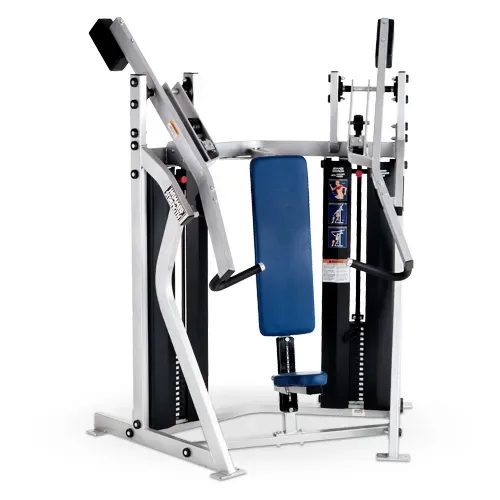
MTS-8008 Selectorized Iso-Lateral Row Machine, Dual 80 kg Stacks, Pin-Select Loading — engineered with 3×3 inch frame steel and robotic MIG continuous welding to eliminate cold joints under repetitive heavy rowing loads. Sealed industrial bearings maintain smooth pivot action without play, while precision guide rods prevent off-center binding across full range of motion. Every unit undergoes individual load testing before shipment, backed by a 10-year frame warranty.
// Spec Highlights
• Direct from Manufacturer · No Middlemen · Worldwide Shipping
01
// Material
Imported Solid Wood
Premium hardwood frames sourced for density and visual warmth.
02
// Hardware
Medical-Grade Silent
Whisper-quiet pulleys and springs for clinical environments.
03
// Customization
Appearance OEM
Color, upholstery, and branding tailored to your studio.
04
// Service
Layout Design
Free venue planning for studios and rehab institutions.
Every component is selected for longevity, performance, and aesthetic harmony - from imported hardwood frames to silent medical-grade accessories.
// Features
Traceable Mill Steel — Every MTS-8008 frame tube traces back to certified Q235 or Q345 coils with documented gauge verification before cutting.
| Parameter | Value |
|---|---|
| Designation | MTS-8008 |
| Product Type | Selectorized Iso-Lateral Row Machine |
| Frame Steel | 11-gauge, 3×3 inch tube |
| Steel Grade | Q235 / Q345 mill-certified |
| Welding Type | Robotic MIG continuous weld |
| Weight Stack | 80 kg × 2 stacks |
| Loading Type | Pin Select |
| Bearing Type | Sealed industrial bearings |
| Pulley System | Aircraft-cable pulley system |
| Upholstery | Available in standard or high-density options |
| Powder Coating | 200μm scratch-resistant |
| Product Dimensions | 130 cm × 158 cm × 208 cm |
| Net Weight | 347 kg |
| Certification | CE, ISO 9001:2015, SGS |
| Warranty | 10-year frame |
| Facility Type | Typical Use |
|---|---|
| Commercial gym strength floor | High-volume back and rear-chain development station for daily member use |
| Hotel and resort fitness center | Durable, low-maintenance selectorized row option for diverse guest demographics |
| University strength and conditioning room | Team training station for athletes requiring repeated heavy pulling loads |
| Institutional training facility | Long-service-life iso-lateral row for rehabilitation and performance programs |
A row machine lives or dies by what happens at the cross-member under peak contraction load.
Many selectorized machines carry a "commercial grade" label without any documentation showing the actual wall thickness or steel origin. When a high-traffic gym loads these machines with repeated heavy pulls day after day, the cross-member where the seat carriage meets the main upright begins to flex. Over months, that flex turns permanent. I pulled a batch of thin-wall row machines back after six months because the cross-tube deformed under repeated heavy use — the steel simply was not thick enough to handle the bending moment at that junction. The commercial selectorized iso-lateral row machine category is full of these quiet failures [NEED_CITE: EN 957 structural requirements for stationary training equipment].
The MTS-8008 targets the horizontal pulling plane, engaging the latissimus dorsi, rhomboids, rear deltoids, and biceps through an iso-lateral converging path. In a commercial strength floor layout, this selectorized iso-lateral row machine pairs directly with a vertical pulldown station and a chest press to complete the primary push-pull pairing. It suits high-density floors where pin-select convenience keeps turnover fast between users, and the converging arm path accommodates a wide range of torso lengths without requiring manual adjustment between sets.
Every rowing repetition sends a bending load through the seat carriage upright and into the main frame weld. In a gym running twelve or more hours daily, that junction accumulates thousands of fatigue cycles per week. Spot welds concentrate stress at discrete points, and under off-center pulling — which happens constantly with real users — those points become crack initiation sites. Sealed bearings at the pivot absorb lateral play that would otherwise transfer shock into the pulley housing. The powder coating at contact zones faces abrasion from plate guides and user grip, demanding the pre-treatment and thickness hold up against sweat and cleaning chemicals [NEED_CITE: weld classification and fatigue performance in structural steel].
The 11-gauge frame steel in a 3×3 inch tube profile sets the deflection threshold well beyond what typical commercial loads produce — the cross-section resists bending at the upright-to-base junction where rowing forces concentrate. Robotic MIG continuous welding means the weld bead runs uninterrupted along the joint, eliminating the cold-start and cold-stop points where spot welds tend to fatigue first. Sealed industrial bearings keep the pivot axis tight through thousands of cycles without the play that bushing systems develop as lubricant washes out. Dual 80 kg pin-select stacks on precision guide rods prevent the binding that occurs when a single heavy stack shifts off-center during aggressive pulls. The 200μm powder coating, applied over sandblast pre-treatment, resists chipping at plate contact points where bare steel exposure starts corrosion.
Thin-wall tubing bends permanently under sustained heavy pulling loads, and once the frame deforms, the entire movement path shifts — no amount of maintenance corrects it. Spot-welded joints pass a visual inspection on day one but open micro-cracks under repeated eccentric loading that grow until failure. Unsealed bearings and low-grade pulleys develop measurable play within the first year of high-traffic use, forcing maintenance calls and part replacements that compound across a fleet of machines. Thin powder coating chips at cable guide contact points, exposing bare steel that rusts outward from the inside. Non-standard hardware means replacement bearings or pulleys are unavailable when the original components wear out [NEED_CITE: commercial fitness equipment maintenance frequency and component lifecycle].
The 11-gauge mill-certified steel in the MTS-8008 means every tube traces to a specific coil with verifiable gauge, not a vague commercial-grade claim. Robotic MIG continuous welding runs unbroken weld lines at every frame joint, removing the fatigue weak points that spot welds create. Each unit undergoes load testing before shipment rather than relying on sample-based QC that misses individual defects. The 200μm industrial powder coating over sandblast pre-treatment holds up at high-wear contact zones where gym traffic concentrates. A 10-year frame warranty backs the structural package. Floor planning support provides CAD layouts that account for the MTS-8008 footprint and required safety clearance between adjacent pulling stations, so the strength zone operates without bottleneck or collision risk.
Share your strength zone square footage and current equipment list to receive a 2D or 3D floor plan showing where this row station fits within safe clearance standards. Specify expected daily user volume so the structural grade aligns with actual traffic load. Provide target user demographics to confirm the iso-lateral arm path and seat range accommodate your member base. Note any color, logo, or upholstery customization requirements for brand consistency across the floor.
Q: How do I verify that a selectorized row machine is truly built for commercial use?
A: Request the mill certificate showing steel gauge and grade traceable to the coil, not a generic commercial-grade label. Confirm the welding method — continuous robotic MIG welds resist fatigue far better than spot welds under repeated heavy loading. Ask for a per-unit load testing report rather than a sample-based QC summary, which only catches defects on the tested unit.
Q: What frame gauge is necessary for a row machine handling heavy daily loads?
A: An 11-gauge frame in a 3×3 inch tube profile provides the cross-sectional area needed to resist permanent deformation at the upright-to-base junction where pulling forces concentrate. Thinner gauges may hold up under light use but deflect and eventually bend under sustained commercial volume. The tube wall thickness and profile together determine whether the frame absorbs repeated bending moments without shifting.
Q: Pin-select or plate-loaded row — which fits a high-traffic gym better?
A: Pin-select machines like the MTS-8008 suit high-traffic floors because weight changes take seconds, keeping user turnover fast and reducing wait times between sets. Plate-loaded options serve facilities where users prefer loading custom increments or training with maximal external loads. For commercial gyms with diverse membership and limited floor attendants, pin-select systems minimize supervision needs and speed transitions.
Q: What maintenance intervals should I expect for bearings and cables on a commercial row?
A: Sealed industrial bearings at the pivot points typically maintain smooth rotation without play for the first several years of commercial use, requiring only periodic inspection rather than lubrication. Aircraft cables at pulley contact points need visual checks for fraying at regular maintenance intervals. Replacement cycles depend on daily user volume, but sealed systems meaningfully extend service intervals compared to open bushing or unsealed bearing designs.
Q: How should I plan spacing between this row machine and adjacent stations?
A: The MTS-8008 footprint of 130 cm × 158 cm requires clearance on all sides for safe user passage, plate stack access, and full range of motion without collision. A 2D or 3D floor plan accounts for these gaps alongside neighboring equipment dimensions, preventing unusable dead space or unsafe pinch points in the strength zone. Proper spacing also ensures maintenance access to bearings and cable runs without moving adjacent machines.
Premium aesthetics meet quiet operation for boutique studio environments.
Medical-grade silence and precision for sports & postpartum recovery.
Furniture-grade craftsmanship for premium residential installations.
Compact premium setups for one-on-one and small-group training.
Aesthetic Pilates integration for hybrid wellness studio programming.
Multi-unit deployment with instructor-grade reliability for certification programs.
Tell us about your project. Our team will respond within 24 hours with pricing, customization options, and shipping details.
// Sales Director
William
+86 132 2531 1800
// Export Manager
Bella
+86 198 5412 8032
william@bickfit.com


