01 / Scenario
STUDIO
P
High-End Pilates Studios
Premium aesthetics meet quiet operation for boutique studio environments.

ISO
9001
CE
Certified
OEM
Available
10YR
Warranty
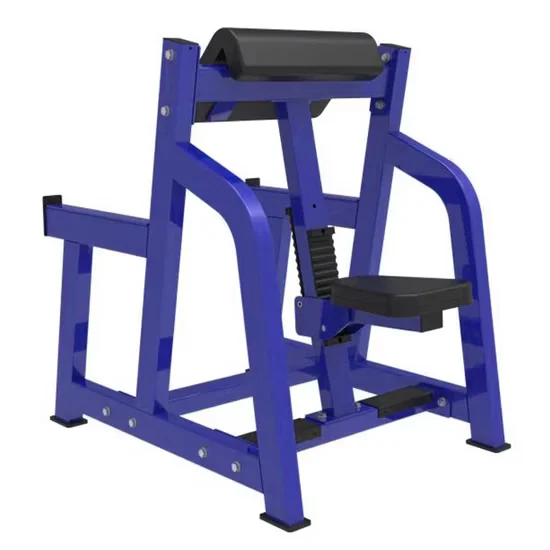
Plate Loaded Reverse Hyperextension 5073, 1727×1448×1651mm, 120kg Net Weight — engineered with heavy-gauge steel frame and robotic MIG continuous welding to eliminate spot-weld failure under repetitive hip extension loads. Sealed pivot bearings maintain smooth arc movement without play across thousands of commercial reps. Every unit undergoes individual load testing before shipment, backed by a 10-year frame warranty for high-traffic posterior chain training zones.
// Spec Highlights
• Direct from Manufacturer · No Middlemen · Worldwide Shipping
01
// Material
Imported Solid Wood
Premium hardwood frames sourced for density and visual warmth.
02
// Hardware
Medical-Grade Silent
Whisper-quiet pulleys and springs for clinical environments.
03
// Customization
Appearance OEM
Color, upholstery, and branding tailored to your studio.
04
// Service
Layout Design
Free venue planning for studios and rehab institutions.
Every component is selected for longevity, performance, and aesthetic harmony - from imported hardwood frames to silent medical-grade accessories.
// Features
Mill-Certified Steel — 11-gauge Q235 frame with traceable coil origin ensures every Plate Loaded Reverse Hyperextension Machine 5073 resists torsional flex under heavy hip extension loads.
| Parameter | Value |
|---|---|
| Designation | 5073 |
| Loading Type | Plate loaded |
| Product Type | Plate Loaded Reverse Hyperextension Machine |
| Frame Steel | 11-gauge, 3×3 inch tube |
| Steel Grade | Q235 and Q345 industrial steel |
| Welding Type | Robotic MIG continuous weld |
| Bearing Type | Sealed industrial bearings |
| Powder Coating | 200μm scratch-resistant |
| Upholstery | High-density commercial vinyl, available in custom colors |
| Product Dimensions | 1727×1448×1651mm |
| Net Weight | 120kg |
| Certification | ISO 9001:2015, CE |
| Warranty | 10-year frame |
| Facility Type | Typical Use |
|---|---|
| Commercial gym strength floor | Posterior chain isolation and lower back conditioning |
| Athletic performance center | Glute activation and spinal decompression protocols |
| CrossFit box functional zone | Hip extension strength accessory work |
| Hotel and resort fitness center | Low-maintenance lower body station for diverse users |
| University strength and conditioning room | Athlete posterior chain development and rehab support |
An 11-gauge frame with continuous robotic MIG welding eliminates the structural drift that turns a controlled hip extension into an uncontrolled shear event.
Many plate loaded reverse hyperextension machines in commercial settings use thin-wall tubing and spot-welded pivot joints that look acceptable at installation but begin to deform within months of heavy use. The lever arm on a reverse hyper generates substantial torsional stress at the pivot point, and when spot welds crack under cyclic loading, the entire movement path shifts. Users feel the instability before the frame fails completely, which is why equipment gets pulled from the floor quietly rather than reported. [NEED_CITE: weld classification and fatigue performance in structural steel]
The commercial plate loaded reverse hyperextension machine 5073 occupies the posterior chain specialization zone, complementing leg press, Romanian deadlift platforms, and GHD stations. It targets the glutes, hamstrings, and spinal erectors through a horizontal hip extension arc that cannot be replicated on standard free-weight equipment. The unit serves high-traffic commercial environments where users range from general fitness members to competitive athletes. Its footprint fits standard commercial spacing grids, allowing placement adjacent to free-weight racks without compromising traffic flow or safety clearance.
Every repetition on a reverse hyper places dynamic eccentric and concentric load through the pivot bearing and the weld connecting the lever arm to the main frame. In a commercial gym running eight or more hours daily, that pivot undergoes thousands of stress cycles per week. The sealed industrial bearings prevent sweat and chalk dust from penetrating the raceway, which is the primary cause of play development in unsealed alternatives. [NEED_CITE: bearing contamination failure modes in fitness equipment] The continuous MIG weld at the hinge junction distributes stress across the entire joint rather than concentrating it at discrete spot-weld points, reducing the likelihood of crack propagation under repeated heavy loading.
Frame tube gauge determines the deformation threshold before the structure yields under load. An 11-gauge steel frame with a 3×3 inch cross-section provides the sectional modulus needed to resist twisting during off-center plate loading. Robotic MIG welding produces uniform penetration depth and consistent bead geometry, eliminating the cold joints and incomplete fusion defects common in manual spot welding. The 200μm powder coating thickness, applied over sandblasted steel, resists chipping at plate-loading contact points and pad-mounting hardware where bare steel exposure accelerates corrosion. Sealed bearings at the pivot maintain smooth arc tracking without scheduled lubrication intervals, which reduces maintenance labor in high-traffic facilities.
Thin-wall frame tubing on a reverse hyper flexes visibly under moderate plate loads, creating a movement path that deviates from the intended arc and transfers unintended shear forces to the user’s lumbar region. Spot-welded pivot joints may pass initial inspection but develop hairline cracks within months of commercial-frequency use, creating liability exposure for facility operators. Non-sealed bearings accumulate particulate contamination from gym environments, developing play that requires premature replacement and equipment downtime. [NEED_CITE: EN 957 structural requirements for stationary training equipment] Low-micron powder coatings chip at high-contact zones within the first year, exposing untreated steel to humidity and sweat-borne chlorides that drive subsurface corrosion.
The 11-gauge steel frame with mill-certified Q235 and Q345 sourcing ensures structural performance is verifiable, not a marketing claim. Robotic MIG continuous welding on every load-bearing joint eliminates the weak-link failures associated with spot-welded assemblies. Each 5073 unit undergoes load testing before shipment, providing unit-level verification rather than sample-based quality assumptions. The 200μm industrial powder coating protects high-wear contact surfaces through years of plate loading and unloading. The 10-year frame warranty reflects confidence in the structural engineering rather than a prorated coverage schedule. Floor planning CAD support ensures the 1727×1448mm footprint integrates correctly into strength zone layouts with appropriate safety clearances on all sides.
Provide your strength floor area and planned equipment list to receive 2D and 3D layout drawings that position the 5073 within your posterior chain training zone with correct clearances. Specify average daily traffic volume so the structural grade matches your usage profile. Share your member demographic and body-type range to confirm pad positioning and lever arm travel accommodate your user base. Communicate any color, logo, or upholstery customization requirements for facility branding consistency.
Q: How do you verify the frame steel is actually 11-gauge and not a lighter gauge labeled as commercial grade?
A: Every steel coil entering the facility carries a mill certificate documenting gauge, grade, and chemical composition. The 5073 frame uses Q235 and Q345 industrial steel with traceable origin from coil to finished product. Buyers can request the mill certificate matched to their production batch, providing verifiable proof rather than relying on generic commercial grade claims that lack third-party documentation.
Q: What is the difference between sealed and unsealed bearings on a plate loaded reverse hyperextension?
A: Sealed industrial bearings prevent gym-environment contaminants including sweat, chalk dust, and cleaning chemicals from entering the bearing raceway. Unsealed bearings accumulate particulate debris that accelerates wear and develops rotational play within the first year of commercial-frequency use. The sealed design eliminates scheduled lubrication intervals and maintains consistent pivot tracking throughout the equipment service life.
Q: How does robotic MIG welding compare to manual spot welding for load-bearing joints?
A: Robotic MIG welding produces a continuous bead with uniform penetration depth along the entire joint length, distributing stress evenly across the connection. Manual spot welding creates discrete attachment points with unwelded gaps between them, concentrating cyclic stress at those isolated points. Under repeated heavy loading typical of commercial gyms, spot welds are the first structural element to develop fatigue cracks.
Q: What floor space and clearance does this unit require in a commercial strength zone?
A: The 5073 footprint measures 1727×1448mm with additional clearance required on the plate-loading side and rear swing arc for safe operation. Commercial layout standards recommend sufficient clearance on all sides to prevent interference with adjacent equipment and user traffic. Providing your floor dimensions allows generation of a CAD layout that positions the unit with verified safe spacing.
Premium aesthetics meet quiet operation for boutique studio environments.
Medical-grade silence and precision for sports & postpartum recovery.
Furniture-grade craftsmanship for premium residential installations.
Compact premium setups for one-on-one and small-group training.
Aesthetic Pilates integration for hybrid wellness studio programming.
Multi-unit deployment with instructor-grade reliability for certification programs.
Tell us about your project. Our team will respond within 24 hours with pricing, customization options, and shipping details.
// Sales Director
William
+86 132 2531 1800
// Export Manager
Bella
+86 198 5412 8032
william@bickfit.com