01 / Scenario
STUDIO
P
High-End Pilates Studios
Premium aesthetics meet quiet operation for boutique studio environments.

ISO
9001
CE
Certified
OEM
Available
10YR
Warranty
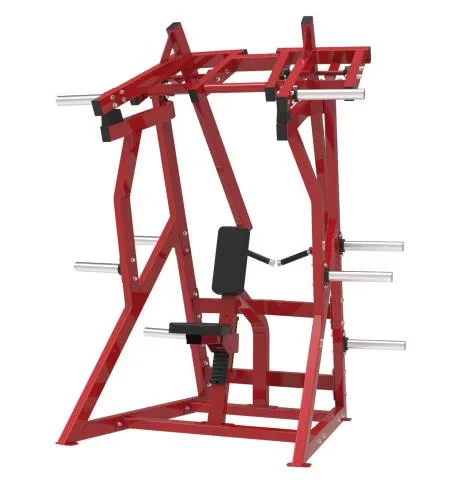
Commercial Plate Loaded Adductor Machine, 3×3 inch Frame Tube, 139kg Net Weight — built with Q235/Q345 industrial steel and robotic MIG welding featuring continuous weld lines for high-traffic commercial environments. Sealed industrial bearings at pivot points ensure smooth operation under repeated loading. ISO9001 and CE certified. Every unit undergoes load testing before shipment, backed by a 10-year frame warranty with floor planning support.
// Spec Highlights
• Direct from Manufacturer · No Middlemen · Worldwide Shipping
01
// Material
Imported Solid Wood
Premium hardwood frames sourced for density and visual warmth.
02
// Hardware
Medical-Grade Silent
Whisper-quiet pulleys and springs for clinical environments.
03
// Customization
Appearance OEM
Color, upholstery, and branding tailored to your studio.
04
// Service
Layout Design
Free venue planning for studios and rehab institutions.
Every component is selected for longevity, performance, and aesthetic harmony - from imported hardwood frames to silent medical-grade accessories.
// Features
Mill-Traceable 11-Gauge Frame — Every tube of the H5027 Adductor is cut from Q235/Q345 coil with certification papers traceable back to the steel mill, so buyers can verify gauge claims against physical documentation rather than marketing brochures.
| Parameter | Value |
|---|---|
| Product Type | Plate Loaded Adductor Machine |
| Frame Tube Size | 3×3 inch |
| Steel Grade | Q235 / Q345 industrial steel, mill-certified |
| Welding Type | Robotic MIG, continuous weld lines |
| Loading Type | Plate loaded |
| Bearing Type | Sealed industrial bearings |
| Powder Coating | 200μm scratch-resistant finish |
| Product Dimensions | 1690×730×750mm |
| Net Weight | 139kg |
| Certification | ISO 9001, CE |
| Warranty | 10-year frame warranty |
| Color Options | Optional |
| OEM | Available |
| Upholstery | Standard or high-density options available |
| Facility Type | Typical Use |
|---|---|
| Commercial gym strength floor | High-traffic lower-body training station in dedicated plate-loaded zones |
| Hotel and resort fitness center | Durable adductor station for diverse guest demographics and heavy daily turnover |
| University athletic facility | Strength and conditioning programs targeting hip and inner-thigh development |
| Rehabilitation and performance center | Controlled lateral-resistance movement for athletic populations |
| CrossFit box functional zone | Supplemental isolation work adjacent to squat racks and Olympic platforms |
A lateral-loaded machine demands a frame that does not yield, because even minor tube deflection shifts the entire pivot geometry mid-rep.
When a commercial plate loaded adductor machine faces repeated eccentric loading from athletes pressing heavy plates through a wide range of motion, the frame experiences forces that cheap "commercial grade" tubing simply cannot handle. Suppliers who quote steel specifications without mill certificates leave gym owners guessing whether the frame will hold its shape after six months of daily abuse. Spot-welded joints at the pivot base are the first to crack — often invisibly — creating a liability that only reveals itself under a loaded barbell plate [NEED_CITE: weld classification and fatigue performance in structural steel]. The difference between a machine that stays rigid for a decade and one that develops frame wobble within a season comes down to verifiable gauge, continuous weld coverage, and bearing assemblies that do not develop play under cyclic stress.
This plate loaded adductor machine targets the hip adductor group through a controlled converging movement path, complementing the abductor, hip thrust, and leg press stations already anchored on the strength floor. In high-density commercial layouts, it occupies a narrow footprint while delivering an isolation movement that free-weight programming alone cannot replicate effectively. The fixed movement arc suits a wide range of user body sizes, making it practical for facilities serving both general membership and athletic populations without requiring constant seat adjustments between users.
During heavy-loaded adductor work, the pivot arms generate substantial lateral torque that concentrates at the frame-to-base junction and the main pivot shaft. High-traffic commercial environments push this assembly through fatigue cycles that expose weak welds and undersized bearings within months [NEED_CITE: EN 957 structural requirements for stationary training equipment]. The powder-coated contact zones where plates load and unload face constant abrasion, and sweat exposure around the pivot area accelerates corrosion on inadequately finished surfaces. Sealed bearings at each pivot point prevent the play development that turns smooth adductor motion into a grinding, maintenance-heavy experience.
The 3×3 inch frame tube cross-section provides a stiffness threshold that resists lateral deformation when loaded plates push the pivot arms outward at maximum extension. Robotic MIG welding produces continuous weld lines along every joint, eliminating the cold spots and incomplete penetration that hand-welded frames carry at stress-concentrated corners. Sealed industrial bearings at the main pivot isolate the rotating assembly from gym floor dust, chalk residue, and sweat that would otherwise infiltrate open bushing systems and accelerate wear. The 200μm powder coating applied after full sandblast preparation creates a scratch-resistant barrier at plate-loading contact points — the zones most vulnerable to chipping and bare-steel exposure in high-use commercial environments. Upholstery options in standard or high-density foam address different replacement-cycle expectations depending on the facility’s daily traffic volume.
Thin-walled frame tubes that flex under heavy adductor loads shift the pivot axis mid-repetition, placing uneven stress on the user’s hip joint and accelerating bearing wear from misaligned rotation. Spot-welded frame connections that pass initial visual inspection develop micro-cracks under repeated lateral loading, creating a safety liability that gym operators often discover only after visible frame separation. Non-sealed bearings in the pivot assembly require frequent replacement as gym dust and chalk contaminate the bearing race, driving maintenance costs that eclipse any initial savings on the equipment purchase [NEED_CITE: bearing maintenance intervals in commercial fitness equipment]. Undersized powder coating chips at plate contact points within months, exposing bare steel to moisture and corrosion that compromises both appearance and structural surface integrity.
The 11-gauge frame steel on the H5027 Adductor ships with mill certification traceable to the original coil, eliminating the guesswork that surrounds vague "commercial grade" claims. Robotic MIG welding ensures every joint on this commercial plate loaded adductor machine carries continuous weld coverage rather than spot-weld approximations. Each unit undergoes load testing before leaving the factory, not sample-based batch testing. The 200μm industrial powder coating withstands plate abrasion and cleaning chemicals without premature chipping. The 10-year frame warranty reflects confidence in the structural specification rather than actuarial calculation. Floor planning CAD support ensures this machine sits with proper safety clearances relative to adjacent plate-loaded and free-weight stations, preventing the unusable gaps that waste valuable strength-floor square footage. OEM customization allows facility operators to match color and upholstery specifications to their brand identity.
Provide your strength zone dimensions and current equipment list to receive a 2D or 3D floor plan showing the H5027 Adductor positioned with correct safety clearances relative to neighboring stations. Specify expected daily user volume so the structural grade and upholstery density match your facility’s traffic profile. Confirm the body-size range of your target membership to verify that the fixed movement arc accommodates your user population without requiring supplemental adjustment mechanisms. Communicate any custom requirements including frame color, logo placement, or upholstery material to align the equipment with your brand standards.
Q: How can I verify the steel gauge specification before purchasing?
A: Request mill certification that traces the frame steel back to the original coil production batch. Genuine commercial-grade manufacturers provide this documentation as standard, showing the exact steel grade and thickness rather than vague marketing claims. Compare the certified values against the physical tube dimensions on a sample unit before committing to a bulk order.
Q: What determines whether an adductor frame survives heavy commercial use?
A: Frame tube gauge and cross-section dimensions set the baseline stiffness, while continuous robotic welding at every joint prevents the crack propagation that spot-welded connections experience under cyclic lateral loading. Sealed bearings at pivot points maintain smooth rotation without developing play, and adequate powder coating thickness prevents corrosion from undermining the structural surface over time.
Q: Should I choose plate loaded or selectorized adductor machines for my gym?
A: Plate loaded units suit facilities where users expect to load heavy external plates and prefer the incremental weight progression that plate systems provide. Selectorized machines work better in high-turnover environments where quick pin-selection between users reduces transition time. Consider your membership demographics, average session duration, and whether adjacent equipment already follows a plate-loaded or selectorized configuration.
Q: How do I plan proper spacing for this machine on the strength floor?
A: Account for the full pivot-arm travel arc plus a safety buffer zone on each side where users load and unload plates. Request CAD floor plans from the manufacturer showing recommended clearances relative to adjacent stations. Improper spacing creates pinch points where loaded plates extend into walkway traffic, creating both safety hazards and unusable dead space between equipment.
Q: What bearing maintenance does a commercial adductor machine require?
A: Sealed industrial bearings require no routine lubrication, but quarterly inspection for smooth rotation and absence of play is essential in high-traffic environments. If the pivot develops lateral movement or grinding sensation, the sealed bearing cartridge should be replaced as a unit rather than serviced. Non-sealed alternatives demand more frequent attention as dust and moisture infiltrate the bearing race.
Premium aesthetics meet quiet operation for boutique studio environments.
Medical-grade silence and precision for sports & postpartum recovery.
Furniture-grade craftsmanship for premium residential installations.
Compact premium setups for one-on-one and small-group training.
Aesthetic Pilates integration for hybrid wellness studio programming.
Multi-unit deployment with instructor-grade reliability for certification programs.
Tell us about your project. Our team will respond within 24 hours with pricing, customization options, and shipping details.
// Sales Director
William
+86 132 2531 1800
// Export Manager
Bella
+86 198 5412 8032
william@bickfit.com