China OEM Life Fitness Signature Rubber Coated Dumbbell Set Wholesale Supplier
Most gym owners assume rubber odor means cheap material. The real culprit is incomplete vulcanization and insufficient post-production resting time.
A Life Fitness rubber dumbbell alternative sourced directly from a qualified China OEM factory delivers identical commercial-grade durability, ergonomic knurling, and hex anti-roll design—at 40-50% below premium brand pricing. The key lies in verifying material hardness, coating adhesion, and factory quality protocols before placing a bulk order.
I still remember the shipment that nearly didn’t leave the port. A South American gym chain had placed their first full-container order of rubber-coated dumbbells with us. When the pre-shipment samples arrived at their facility, the gym manager called back within days: the handle knurling had visible burrs, and the rubber smell was overpowering even in a ventilated space. They threatened to reject the entire container. The problem wasn’t the raw rubber compound—it was that our vulcanization cycle had been shortened to meet an aggressive production timeline, and the dumbbells hadn’t rested long enough before packaging to off-gas properly. We reworked the entire batch, extended the curing time, and implemented a mandatory static resting period before final inspection. That single incident reshaped how our production line handles every rubber-coated product that leaves the factory. [NEED_CITE: vulcanization time impact on rubber odor and durability per ASTM D2084]

For buyers evaluating a Life Fitness rubber dumbbell alternative, understanding what separates a reliable OEM partner from a risky one requires looking past the price tag and into the production process itself.
What Specifications Should You Verify in a Rubber Dumbbell Alternative?
Commercial-grade rubber dumbbells must meet specific hardness, knurling depth, coating thickness, and anti-roll geometry standards to perform reliably under daily gym use.
When a fitness chain procurement manager asks me what to check before committing to a supplier, I walk them through a specification matrix that separates marketing claims from verifiable engineering parameters. Here is the comparison framework we use internally when benchmarking our production against premium brand samples:
| Specification Parameter | Premium Brand Benchmark | Qualified China OEM Output | Unverified Low-Cost Source |
|---|---|---|---|
| Rubber Hardness (Shore A) | Controlled commercial range | Matching commercial range | Uncontrolled / inconsistent |
| Handle Knurling Depth | Standardized medium aggressiveness | Matched depth and pitch | Shallow or irregular |
| Coating Adhesion | Full batch-level pull testing | Standard pull testing per lot | Not provided |
| Hex Anti-Roll Angle | Precision-molded flat surfaces | Matched geometry | Vulnerable to rounding |
| Post-Production Odor | Noticeably reduced after resting | Noticeably reduced after resting | Persistent chemical odor |
| Weight Tolerance | Tight commercial tolerance | Standard commercial tolerance | Uncontrolled variance |
[NEED_CITE: Shore A hardness testing methodology for fitness equipment rubber components per ISO 48]
The rubber hardness matters more than most buyers realize. If the compound is too soft, the coating deforms under repeated drops and develops flat spots within months. If it is too hard, the dumbbell cracks at the coating-handle junction when it hits rubber flooring at an angle. The target range must match the commercial usage environment—high-traffic gym floors demand a compound that absorbs impact without permanent deformation.
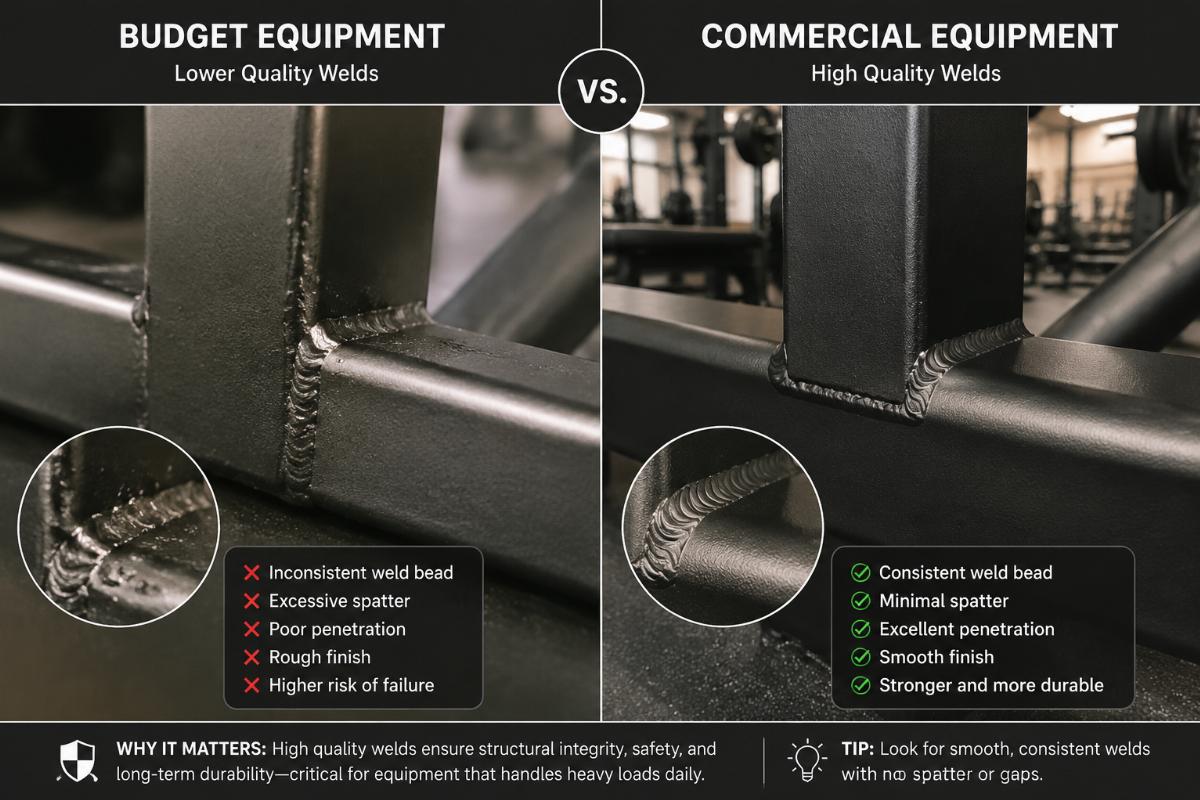
Handle knurling is where cost-cutting becomes visible fastest. A poorly machined handle leaves sharp burrs that tear calluses and irritate users. The knurling pattern needs consistent depth across every dumbbell in the set, not just the sample piece. We learned this the hard way during that South American order—the machining pass had been run too fast, leaving micro-burrs that only became apparent after the rubber coating was applied and the handle was gripped under load.
The hex anti-roll design seems simple until you see a cheap imitation rolling off a bench and damaging a member’s foot. The flat surfaces must be molded with precise angular geometry, not just stamped roughly. Over time, inferior molds produce hex dumbbells where the flats gradually round off, defeating the entire purpose of the design.

Coating thickness is another area where assumptions mislead buyers. Thicker rubber is not inherently better. If the coating layer is excessively thick relative to the handle diameter, the effective grip circumference increases beyond what the user’s hand can comfortably close around. The coating must be thick enough to protect the steel head and absorb impact, but proportioned to preserve ergonomic handling. Our production team adjusts the mold cavity depth based on each weight class to maintain this balance across the entire set.
How to Verify Quality from Chinese OEM Dumbbell Factories?
Reliable quality verification requires a three-layer approach: sample testing under real-use conditions, documented factory audit records, and independent third-party material certification.
A Middle East distributor once told me he had been burned twice before finding a dependable partner. His previous suppliers sent flawless samples, then shipped production batches with visible coating separation and inconsistent weight calibration. His solution was not to avoid Chinese factories altogether—it was to build a verification protocol that made quality deviations impossible to hide.
The first layer is sample testing that simulates actual gym conditions, not just visual inspection. We send pre-production samples to prospective buyers with a clear instruction: drop them on rubber flooring repeatedly, leave them in a closed room overnight to assess odor, and have trainers actually use them during a workout session. Lab measurements of hardness and weight accuracy mean nothing if the dumbbell fails in the hand of a paying member. [NEED_CITE: fitness equipment durability testing standards per EN 957 series]
The second layer involves reviewing the factory’s internal quality documentation. This includes incoming material inspection records for the rubber compound and steel handle, in-process inspection checkpoints during the vulcanization and molding stages, and final inspection reports with batch traceability. A factory that cannot produce these records is not necessarily dishonest, but it lacks the process control needed for consistent commercial-grade output.
The third layer is independent verification. Third-party testing laboratories can confirm rubber compound composition, hardness consistency across a production batch, and coating adhesion strength. These reports carry weight because the testing entity has no commercial interest in the outcome. [NEED_CITE: third-party material testing accreditation standards for rubber products]

For buyers sourcing a Life Fitness rubber dumbbell alternative, I recommend requesting a complete quality dossier before placing a production order. This dossier should include the sample test results, the factory’s standard operating procedures for rubber coating and vulcanization, and at least one recent third-party test report covering the specific rubber compound used. If a supplier hesitates to provide this documentation, that hesitation is itself a data point.
Our own quality protocol evolved directly from the South American incident. We now require every batch of rubber-coated dumbbells to complete a mandatory resting period after vulcanization—long enough for volatile compounds to off-gas before the products are sealed in packaging. We also conduct random grip inspections on finished units, running a gloved hand along every handle to detect any residual burrs that machine inspection might miss. These steps add time and cost, but they eliminate the category of defect that destroys buyer-supplier trust permanently.
What Are the Cost Advantages of China OEM vs Premium Brands?
Direct factory sourcing eliminates brand licensing fees, regional distributor markups, and imported logistics premiums—delivering equivalent commercial quality at substantially lower per-unit cost.
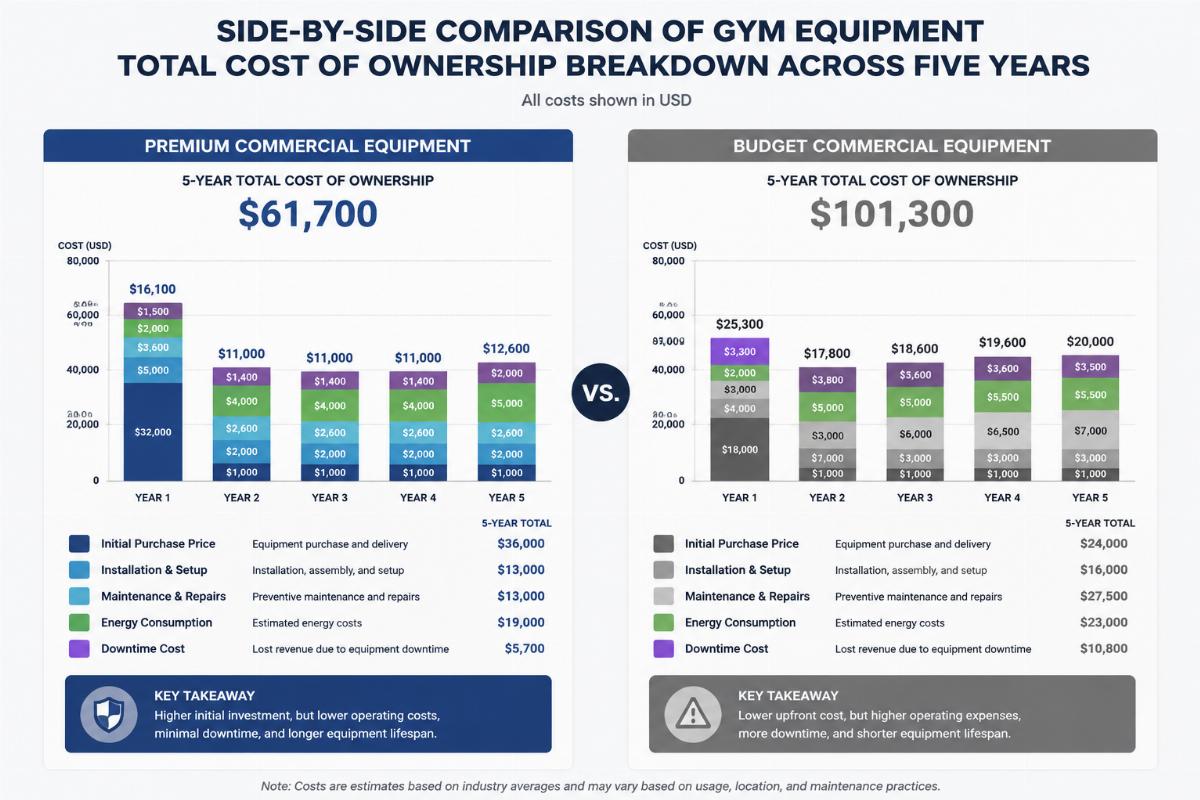
The pricing gap between a premium-branded rubber dumbbell set and a China OEM equivalent is not a mystery—it is a structural feature of how international fitness equipment supply chains operate. Brand owners invest heavily in marketing, athlete endorsements, and showroom presence. Those costs are embedded in every piece of equipment that carries their logo. A factory-direct Life Fitness rubber dumbbell alternative strips out those layers while preserving the engineering specifications that matter for commercial durability.
Consider what a commercial gym actually pays for when purchasing premium-branded free weights. The base manufacturing cost is one component. On top of that, the buyer absorbs the brand’s distribution margin, the regional importer’s margin, warehousing costs in the destination country, and the cost of maintaining branded inventory locally. Each layer adds a percentage that compounds into a final price that can be nearly double the actual production cost.
When a gym chain or regional distributor sources directly from a qualified Chinese OEM factory, the cost structure changes fundamentally. The buyer pays the factory production cost plus international freight and import duties. There is no brand royalty, no intermediate distributor margin, and no local warehousing premium built into the unit price. The result is a per-unit cost reduction that typically falls within the range that makes large-scale gym outfitting projects financially viable for operators working with constrained capital budgets.

Beyond the unit price, direct factory sourcing offers flexibility that branded distribution channels rarely match. A regional distributor in Southeast Asia once needed to outfit a boutique functional training studio with a very specific weight progression—unusual increments that premium brands do not stock as standard SKUs. Because we control the production molds and weight calibration process, we configured a custom set that matched their exact programming requirements. The order included mixed specifications packed into a single container, something that would have required multiple separate orders through traditional distribution channels.
This flexibility extends to branding as well. Distributors who want to build their own private-label fitness equipment lines can work directly with the factory on custom logo placement, color matching, and packaging design. The minimum order quantities for OEM branding have dropped significantly as production processes have become more adaptable, making private-label programs accessible even to mid-size regional dealers who cannot commit to the volumes that premium brands require for exclusive territory agreements.
For buyers comparing a Life Fitness rubber dumbbell alternative against the original, the honest conversation is not about whether the OEM product is identical in every intangible aspect—it is about whether it meets the commercial performance requirements at a price point that allows the gym to operate profitably. The answer, backed by material testing and real-world gym deployment across multiple regions, is consistently affirmative.
How to Ensure Long-Term Supply Reliability from Alternative Suppliers?
Sustainable supply partnerships require standardized inspection protocols, documented spare parts commitments, and responsive technical support structures that survive beyond the initial transaction.
The initial order is the easy part. Any factory can produce a good first batch when they know the buyer is evaluating them. The real test of a supplier relationship begins with the second order, the fifth order, and the inevitable moment when a production issue arises and the buyer needs the factory to respond quickly and transparently.
Standardized inspection protocols protect both parties. We provide our long-term buyers with a detailed inspection checklist that covers every critical parameter—from rubber hardness spot checks to handle knurling visual inspection to weight calibration verification. Buyers can use this checklist with their own third-party inspection agents, or they can request that we conduct the inspection jointly via live video before the container is sealed. This transparency eliminates the anxiety that comes from shipping goods across an ocean and hoping they arrive in the condition expected.

Spare parts availability is another dimension that separates transactional suppliers from genuine partners. Commercial gym equipment experiences wear. Rubber coatings can develop surface cracks after years of heavy use. Handle knurling can smooth out. A reliable supplier maintains production tooling and raw material sourcing relationships that allow them to produce replacement units or individual components years after the original order was shipped. We keep mold sets and material specifications on file for every product we have produced, ensuring that a buyer who needs to reorder a specific weight class five years later receives a product that matches the original batch.
Technical support extends beyond product replacement. When a gym operator has questions about equipment maintenance, rubber coating care, or optimal floor mat pairing to extend dumbbell life, the factory should be able to provide guidance based on actual product knowledge—not a generic FAQ page. Our technical team includes former production line supervisors who understand the manufacturing process intimately and can diagnose field issues with precision.
A Latin American fitness chain that has been ordering from us across multiple container shipments developed a simple but effective protocol: they maintain a buffer stock of replacement dumbbells for their highest-use weight ranges, and they schedule their reorders to align with our production cycles so that lead times remain predictable. This approach prevents the situation where a popular weight class runs out and members are left without equipment while waiting for a new shipment to clear customs.

For buyers entering a long-term sourcing relationship for a Life Fitness rubber dumbbell alternative, the most valuable step is establishing clear communication channels and documented quality expectations before the first production run begins. A written quality agreement that specifies acceptable tolerance ranges, inspection procedures, and resolution protocols for any deviations creates a framework that protects both the buyer’s investment and the factory’s reputation.
Conclusion
Sourcing commercial-grade rubber dumbbells directly from a qualified China OEM factory delivers measurable cost savings without sacrificing the durability and safety standards that gym environments demand. The verification process—covering material hardness, knurling quality, coating adhesion, and factory documentation—transforms an uncertain purchase into a controlled procurement decision. Buyers who invest time in establishing clear quality protocols and long-term communication structures with their OEM partner build supply chains that perform reliably across years of commercial use.