HS Code 95069190 Preacher Curl Machine Wholesale Supplier for Poland Import
Not every piece of gym equipment falls under HS Code 9506 in Poland. A fully welded, floor-bolted Preacher Curl station can be reclassified as metal furniture under 9403, triggering a tariff jump and weeks of customs hold.
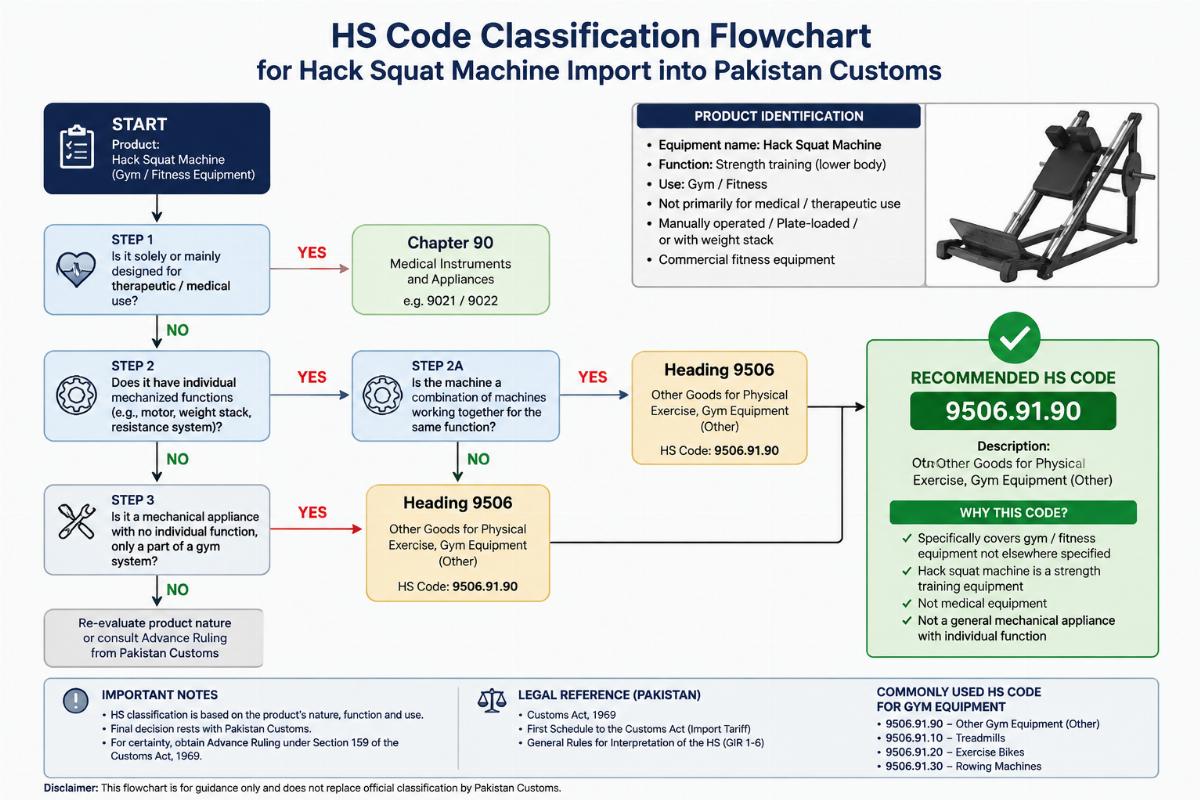
The correct HS Code for a Preacher Curl machine imported into Poland depends on its structural design and material composition. Standalone, purpose-built units with dedicated exercise function typically fall under HS Code 95069190 as articles for general physical exercise. However, fully fixed, all-metal structures without adjustable or removable components may be assessed under HS Code 9403 as other metal furniture by Polish customs authorities, following EU Combined Nomenclature rules. [NEED_CITE: EU Combined Nomenclature classification criteria for fitness equipment vs. furniture]
I still remember the first time a Polish buyer called me in a panic. We had shipped a batch of commercial Preacher Curl units to Gdańsk, and the customs broker in Warsaw flagged the declaration. The broker argued the machines were not "fitness articles" but "metal furniture" because they were permanently bolted frames with no electronic or adjustable resistance elements. The cargo sat at the terminal for weeks, storage fees piled up, and the duty rate shifted from the low single digits to nearly double. That was the moment I realized HS Code classification is not a fill-in-the-blank exercise—it is a negotiation with customs logic, and the product description on the commercial invoice is the battlefield.
Getting the HS Code right before the container leaves Shandong is the single lowest-cost risk control step in exporting to Poland. Let me walk you through how the classification actually works, where buyers get trapped, and what documentation keeps the cargo moving.
What Is the Correct HS Code for Preacher Curl Machines in Poland?
The default classification for a Preacher Curl machine designed for physical exercise is HS Code 95069190, covering articles and equipment for general physical exercise within the EU TARIC system. [NEED_CITE: EU TARIC database classification for HS 950691 articles for general physical exercise]
But "default" does not mean "guaranteed." Polish customs officers apply the EU Combined Nomenclature strictly, and the decisive factors are not the product name or the marketing brochure—they are the physical attributes of the machine itself.
Three elements determine whether your Preacher Curl lands in 9506 or gets pushed into 9403:
- Material dominance: If the unit is predominantly steel with no significant non-metal components, customs may view it as a metal structure rather than a specialized exercise article. [NEED_CITE: World Customs Organization HS Explanatory Notes on heading 9506 vs. 9403 material composition criteria]
- Functional specificity: A machine built exclusively for preacher curl movement, with no modular attachments or multi-station capability, strengthens the 9506 argument. If it is part of a larger modular rack system, the entire assembly may be classified differently.
- Mobility and fixity: Floor-bolted, non-relocatable units are more likely to be treated as fixtures or furniture. Freestanding, movable units—even if heavy—align more clearly with 9506.
A distributor in central Poland once ordered a batch of heavy-duty commercial Preacher Curl stations from us. The units were fully welded, powder-coated steel frames with fixed pad angles and no weight stack—plate-loaded only. The buyer’s forwarder initially declared them under 95069190. Polish customs requested a technical drawing and a written explanation of the exercise-specific design. After review, they accepted the 9506 classification because we could demonstrate the pad geometry and lever arm were engineered exclusively for the preacher curl biomechanical path, not for general seating or storage.
The key takeaway: the HS Code is not assigned by the product category you choose—it is assigned by the physical evidence you present.
Why Do Preacher Curl Machines Get Misclassified at Polish Customs?
The root cause is almost always vague product descriptions on shipping documents, combined with a fundamental mismatch between the exporter’s assumption and the importer’s customs broker interpretation. [NEED_CITE: Common customs classification errors for fitness equipment in EU member states]
When I first started exporting to Europe, I assumed that writing "Preacher Curl Machine" on the commercial invoice was sufficient. It was not. Polish customs officers do not read marketing names—they read structural descriptions. If your invoice says "Preacher Curl Machine" and nothing else, the broker has no basis to defend the 9506 classification against a 9403 challenge.
Here are the specific patterns that trigger reclassification:
- Generic naming: Calling the unit "gym equipment" or "fitness machine" without specifying the exercise function invites customs to apply the most conservative interpretation.
- Missing material declaration: If the invoice does not state that the unit is primarily steel or includes upholstery, customs may default to a furniture classification.
- Bundled shipments: When a Preacher Curl is shipped alongside benches, racks, or storage units in the same container, customs may assess the entire shipment under a single heading if the documentation does not clearly separate line items.
A gym chain owner in Wrocław received a combined container with plate-loaded machines, adjustable benches, and a Preacher Curl unit. The forwarder declared everything under a single 9506 code. Customs separated the benches into 9401 (seating) and questioned whether the Preacher Curl was a standalone exercise article or part of a modular station. The delay cost the buyer warehouse fees and a rescheduled gym opening.
The lesson is simple: every line item on the commercial invoice must carry enough technical detail for a customs officer with no fitness industry background to understand exactly what the product is and why it belongs in 9506.
How to Write the Product Description to Avoid Tariff Jumps?
The product description must include three mandatory elements: primary material composition, dedicated exercise function, and structural mobility status. [NEED_CITE: EU customs product description requirements for fitness equipment classification]
When we prepare shipping documents for Poland-bound orders, every Preacher Curl unit gets a description that follows a specific structure. It is not marketing copy—it is a customs-ready technical statement.
Here is the framework we use:
- Material: State the dominant material explicitly. For example: "Predominantly constructed from welded steel frame with high-density foam pad and vinyl upholstery."
- Function: Name the specific exercise and confirm the design intent. For example: "Specifically engineered for isolated biceps curl exercise using preacher curl biomechanical path, with fixed-angle arm pad and lever resistance system."
- Structure and mobility: Clarify whether the unit is freestanding or fixed. For example: "Freestanding, non-electric, plate-loaded resistance design, not permanently affixed to floor or building structure."
When combined, the full description reads as a single, defensible paragraph that leaves no room for a 9403 reclassification argument.
We also provide a Polish-language translation of the key technical terms alongside the English description. This is not legally required, but it significantly speeds up the broker’s review process and reduces the chance of miscommunication with the customs officer.
A buyer in Katowice told me that after we started including these structured descriptions with every shipment, his clearance time dropped noticeably. The broker no longer had to call us for clarification—everything was on the paper.
What Documents Should You Prepare Before Shipping to Poland?
A complete customs documentation package for Preacher Curl machines entering Poland must include the commercial invoice with structured descriptions, packing list with line-item separation, CE Declaration of Conformity, and ideally a Binding Tariff Information ruling if the classification is uncertain. [NEED_CITE: Polish customs documentation requirements for fitness equipment imports]
Let me break down each document and its role:
- Commercial invoice: This is the primary classification document. Every line item must include the structured description outlined above. Do not use generic terms.
- Packing list: Must match the invoice line by line. If the Preacher Curl is shipped in multiple packages, each package must be identified with the same product description and HS Code.
- CE Declaration of Conformity: While CE marking relates to product safety (Machinery Directive or EN 957 for stationary training equipment), not to tariff classification, Polish customs routinely request it as part of the import clearance package. Missing CE documentation can delay clearance even if the HS Code is correct. [NEED_CITE: EN 957 standard requirements for stationary strength training equipment CE compliance]
- Binding Tariff Information (BTI): If you are importing a high-value order or a structurally ambiguous unit, applying for a BTI ruling from Polish customs before shipment provides a legally binding classification valid across all EU member states. The application process takes several weeks, so it must be initiated well in advance.
A distributor in the Baltic region once shipped a container of selectorized Preacher Curl units without a BTI. The units had integrated weight stacks and cable systems. Customs argued the cable system made it a "multi-function station" rather than a single-exercise article, pushing it toward a different subheading. The dispute took weeks to resolve. Had the buyer applied for a BTI before shipment, the classification would have been settled legally and the cargo would have cleared without delay.
How to Confirm the HS Code with Your Polish Forwarder in Advance?
The most effective pre-shipment risk control step is to send the complete product description, technical drawing, and proposed HS Code to the Polish customs broker or forwarder for written confirmation before the cargo departs the origin port. [NEED_CITE: Best practices for pre-shipment customs classification verification with EU import brokers]
This step costs nothing in additional fees but prevents the majority of classification disputes. Here is how we handle it on our side:
When a Polish buyer places an order for Preacher Curl machines, we prepare a classification package that includes the structured product description, a simplified technical drawing showing the frame structure and pad configuration, and our recommended HS Code with a brief justification. We send this package directly to the buyer’s nominated forwarder or customs broker, requesting written acknowledgment of the proposed classification.
If the broker agrees, we proceed with shipment using that exact description on all documents. If the broker raises concerns or suggests an alternative code, we adjust the documentation before the container is loaded—not after it arrives in Gdańsk or Gdynia.
This process also helps when the buyer is ordering a full gym package. A typical commercial gym order includes cardio equipment, plate-loaded machines, free weights, benches, and functional training gear. Each category may fall under a different HS Code. By confirming the classification for every line item in advance, we ensure the entire container clears smoothly, rather than having one ambiguous item hold up the whole shipment.
A fitness chain owner in Poznań told me that after we implemented this pre-shipment confirmation process across all his orders, he had not had a single customs delay in over a year. That is the kind of operational reliability that keeps gym opening dates on track.
Conclusion
Correct HS Code classification for Preacher Curl machines in Poland requires precise product descriptions aligned with EU Combined Nomenclature criteria, not generic fitness equipment labels. The difference between smooth clearance and weeks of customs hold lies in documenting material composition, exercise-specific function, and structural mobility before shipment. Confirming the classification with the Polish forwarder in advance, supported by structured invoices and CE documentation, is the most reliable path to avoiding tariff reclassification and clearance delays.