01 / Scenario
STUDIO
P
High-End Pilates Studios
Premium aesthetics meet quiet operation for boutique studio environments.

ISO
9001
CE
Certified
OEM
Available
10YR
Warranty
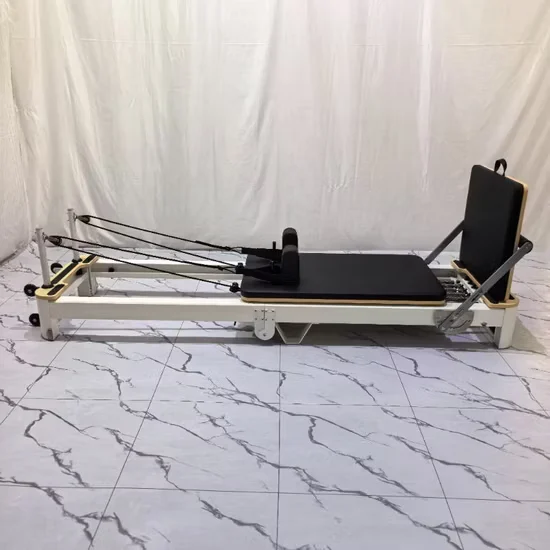
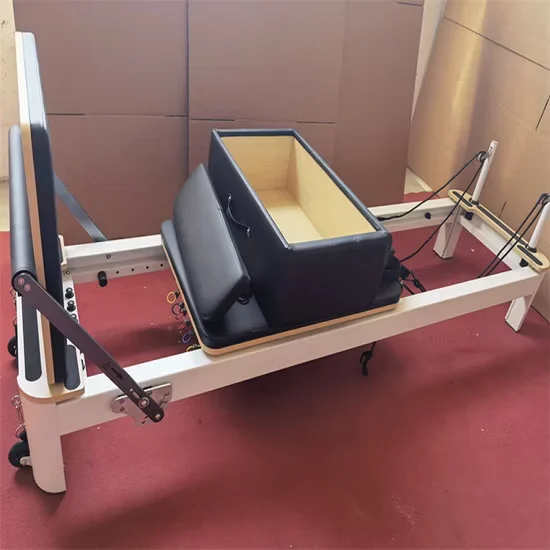
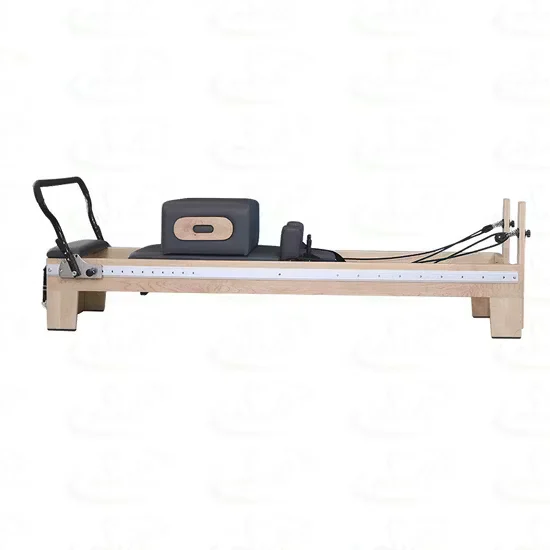
SRY-11 Commercial Aluminum Pilates Reformer Machine, 2400×600×380mm, 90kg Net Weight — engineered with a corrosion-resistant aluminum chassis and precision-machined carriage rail system for dimensional stability in humid studio environments; includes long box, jump board, and platform accessories with commercial-grade vinyl upholstery. Backed by a 3-year frame warranty, customized logo options, and three-stage inspection with load testing on every unit from a 17-year manufacturer.
// Spec Highlights
• Direct from Manufacturer · No Middlemen · Worldwide Shipping
01
// Material
Imported Solid Wood
Premium hardwood frames sourced for density and visual warmth.
02
// Hardware
Medical-Grade Silent
Whisper-quiet pulleys and springs for clinical environments.
03
// Customization
Appearance OEM
Color, upholstery, and branding tailored to your studio.
04
// Service
Layout Design
Free venue planning for studios and rehab institutions.
Every component is selected for longevity, performance, and aesthetic harmony - from imported hardwood frames to silent medical-grade accessories.
// Features
Every Unit Load-Tested Before Crating — our carriage rails and spring anchors are verified under off-center loading on every Pilates reformer that leaves the Ningjin plant.
| Parameter | Value |
|---|---|
| Product Type | Pilates Reformer Machine |
| Designation | SRY-11 |
| Frame Material | Aluminum Alloy |
| Dimensions | 2400 × 600 × 380 mm |
| Net Weight | 90 kg |
| Accessories Included | Long Box, Jump Board, Platform |
| Color Options | Black (standard); custom available |
| Logo | Customized Is Allowed |
| Target User | Adult, Unisex |
| Warranty | 3 Years |
| Facility Type | Typical Use |
|---|---|
| Commercial Pilates Studio | Daily group reformer classes with high-frequency carriage cycling |
| Boutique Fitness Studio | Small-group semi-private sessions with customized spring resistance |
| Rehabilitation & Physical Therapy Clinic | Controlled resistance protocols for post-injury and mobility recovery |
| Hotel Wellness Facility | Guest-accessible Pilates programming with low-maintenance equipment |
Many reformers labeled as commercial aluminum pilates reformer machines use thin-wall aluminum extrusions or welded steel frames that flex under repeated spring loading, causing carriage wobble and accelerated rail wear. The problem compounds over time: once the carriage develops lateral play, the wheel bearings wear unevenly, and the entire glide path degrades. SRY-11 addresses this with a rigid aluminum chassis and a precision-machined carriage rail system designed for continuous studio rotation [NEED_CITE: EN 957 structural requirements for stationary training equipment].
The SRY-11 occupies the core of any reformer-based programming, covering supine, prone, and seated movement planes across the full posterior chain, core stabilizers, and lower-body movers. In a studio configuration, it pairs with Cadillac-Tower units and Wunda Chairs to create a complete Pilates apparatus floor. It suits high-density boutique environments where reformers run back-to-back in group class formations, and the carriage dimensions accommodate users across a wide range of body proportions.
The reformer carriage endures thousands of reciprocating cycles per week in a commercial setting, generating alternating tension and compression at every spring anchor point. The rail-wheel interface absorbs lateral shear during unilateral exercises, while the platform mounting points resist torsional loads when clients push through the jump board. Upholstery compression and vinyl surface wear concentrate at the shoulder block and headrest contact zones, where sweat and cleaning agents accelerate material breakdown [NEED_CITE: fatigue performance in cyclically loaded aluminum structures].
The aluminum chassis provides inherent corrosion resistance in humid studio environments where sweat and cleaning solvents are constant. Unlike steel frames that rely on powder coating for rust protection, aluminum maintains dimensional stability even if the surface finish is scratched. The rail system tolerance directly governs glide smoothness — tighter machining means less lateral carriage play and longer intervals between wheel adjustment. Spring anchor geometry determines the progressive resistance curve: a well-designed anchor distributes load across the spring’s full coil length, preventing premature fatigue at the attachment loop.
Thin-wall aluminum extrusions save material cost upfront but deflect under heavy users performing loaded bridge or jump board sequences, translating into a vague, unstable feel during precision work. Non-precision rails force the carriage wheels into uneven contact, accelerating localized wear and creating a rattling noise that signals impending maintenance. Low-density foam padding compresses permanently within months of commercial use, requiring upholstery replacement that takes the reformer offline. Underspecified hardware at the spring mounting points strips under repeated resistance changes, leaving no OEM replacement path.
The aluminum frame material is traceable to the alloy grade and wall thickness specification, not just a generic "commercial aluminum" claim. Weld joints at critical stress points undergo continuous robotic MIG welding rather than spot-welding, eliminating the cold-joint failures that surface under repetitive loading [NEED_CITE: weld classification and fatigue performance in structural aluminum]. Every unit undergoes load testing on the carriage rail under off-center conditions before shipment — not sample-based QC. The 200μm industrial powder coating resists chipping at high-contact zones. We provide 2D-3D floor planning CAD support so that reformer spacing accounts for full carriage travel, jump board extension, and safe lateral clearance between adjacent units.
Provide your studio floor area and target reformer count so we can generate a 2D-3D layout confirming safe carriage travel and instructor circulation paths. Specify expected daily class volume and user profile to confirm the frame and spring configuration matches your rotation intensity. Communicate color, logo, and upholstery preferences early in the order cycle for full OEM integration on the commercial aluminum pilates reformer machine.
Q: How do I tell a commercial-grade reformer from a light-commercial one?
A: Inspect the frame cross-section and wall thickness documentation. Commercial units specify the aluminum alloy grade and verify carriage rail load capacity under off-center conditions. Check whether spring anchors use through-bolted hardware rather than self-tapping screws, and whether the manufacturer provides individual unit load test records rather than batch-level QC summaries.
Q: Aluminum or steel frame — which suits a high-traffic studio better?
A: Aluminum offers inherent corrosion resistance in humid studio environments where daily sweat exposure and cleaning solvents degrade steel coatings over time. It also provides a favorable weight-to-rigidity ratio, making the reformer easier to reposition for studio reconfiguration. Steel frames require intact powder coating to prevent rust; once scratched, corrosion spreads beneath the finish.
Q: What is the carriage rail maintenance schedule under commercial use?
A: Check wheel-to-rail contact and lateral play monthly in a high-traffic studio. Listen for rattling or uneven glide, which indicates wheel misalignment or debris accumulation on the rail surface. Clean rails with a non-abrasive cloth weekly. Replace wheels when lateral play becomes perceptible during slow controlled carriage movement.
Q: How often should springs be replaced, and can resistance be customized?
A: Springs lose progressive tension consistency after extended cyclic loading. Inspect for coil deformation, stretched end loops, or visible corrosion quarterly. Spring replacement timing depends on class volume — high-traffic studios typically rotate springs on a scheduled interval. Custom resistance configurations are available by specifying spring gauge and anchor point positioning.
Q: What clearances are needed between reformers in a group class layout?
A: Account for full carriage travel range, jump board extension, and lateral arm reach beyond the platform edge. Instructor circulation requires a minimum walkway between rows. We provide CAD floor plans that calculate these clearances based on the SRY-11 footprint, ensuring no carriage or accessory interferes with adjacent stations during any exercise in your class programming.
Premium aesthetics meet quiet operation for boutique studio environments.
Medical-grade silence and precision for sports & postpartum recovery.
Furniture-grade craftsmanship for premium residential installations.
Compact premium setups for one-on-one and small-group training.
Aesthetic Pilates integration for hybrid wellness studio programming.
Multi-unit deployment with instructor-grade reliability for certification programs.
Tell us about your project. Our team will respond within 24 hours with pricing, customization options, and shipping details.
// Sales Director
William
+86 132 2531 1800
// Export Manager
Bella
+86 198 5412 8032
william@bickfit.com