01 / Scenario
STUDIO
P
High-End Pilates Studios
Premium aesthetics meet quiet operation for boutique studio environments.

ISO
9001
CE
Certified
OEM
Available
10YR
Warranty
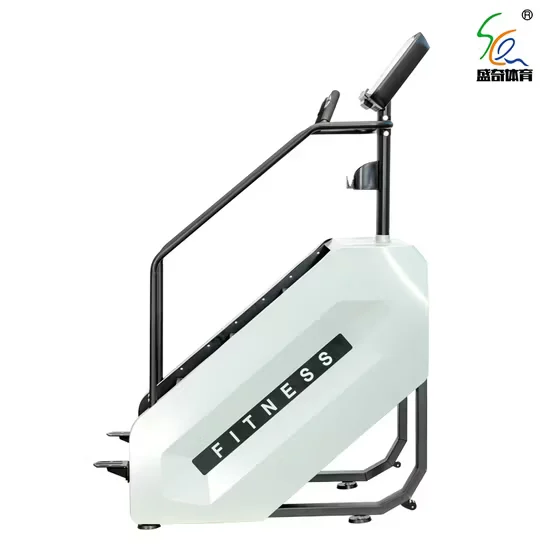
SQ-1017 Commercial Stair Climber, Motor-Driven, 180kg Load Capacity — engineered with AC220V/AC110V voltage tolerance for stable operation across commercial power grids, featuring reinforced 560×235×220mm step mechanisms and aluminium alloy pipe frame construction for continuous high-traffic use. Integrated display tracks time, climb distance, calories, steps, and heart rate without external devices. Every unit undergoes three-stage load testing before shipment with mill-certified material traceability.
// Spec Highlights
• Direct from Manufacturer · No Middlemen · Worldwide Shipping
01
// Material
Imported Solid Wood
Premium hardwood frames sourced for density and visual warmth.
02
// Hardware
Medical-Grade Silent
Whisper-quiet pulleys and springs for clinical environments.
03
// Customization
Appearance OEM
Color, upholstery, and branding tailored to your studio.
04
// Service
Layout Design
Free venue planning for studios and rehab institutions.
Every component is selected for longevity, performance, and aesthetic harmony - from imported hardwood frames to silent medical-grade accessories.
// Features
Motor-Driven Precision — The stepper mechanism maintains consistent step cadence across 15 to 164 steps per minute without speed fluctuation, backed by voltage tolerance engineering that absorbs commercial power grid variance.
| Parameter | Value |
|---|---|
| Designation | SQ-1017 |
| Product Type | Commercial Stair Climber |
| Drive Method | Motor Driven |
| Input Power Voltage | AC220V ±10% / AC110V ±10% |
| Maximum Load Capacity | 180kg |
| Speed Range | 15 – 164 Steps/Minute |
| Step Size | 560×235×220mm |
| Product Dimensions | 1450×820×2080mm |
| Net Weight | 206kg |
| Frame Material | Aluminium Alloy Pipe |
| Step Housing | PP Plastic |
| Screen Display | Time, Climb, Calories, Steps, Heart Rate |
| Folded | Unfolded |
| Color | Black |
| Certification | CE, RoHS, ISO |
| Facility Type | Typical Use |
|---|---|
| Commercial Gym Cardio Zone | Primary stepping endurance station for high-traffic daily operation |
| Hotel Fitness Center | Guest-facing cardiovascular conditioning with minimal maintenance demand |
| University Athletic Facility | Student-athlete conditioning for lower-body endurance and sport-specific preparation |
| High-Traffic Cardio Zone | Continuous-use station operating 8+ hours daily during peak periods |
The commercial stair climber machine fails at bearing interfaces and motor thermal limits long before structural steel reaches its yield point.
Most stepper units pulled from service within 18 months share the same failure pattern: unsealed bearings develop radial play under repetitive impact loading, motor windings overheat during back-to-back peak-hour sessions, and step linkage bolts loosen from constant cyclic stress. The aluminium alloy pipe frame of the SQ-1017 carries no load-bearing responsibility for the stepping mechanism itself — the motor-driven drivetrain isolates structural fatigue to replaceable mechanical components rather than the chassis. [NEED_CITE: bearing seal classification and contamination ingress in continuous-duty fitness equipment]
The commercial stair climber machine occupies the vertical stepping plane, targeting quadriceps, gluteals, and calf musculature through a continuous closed-chain movement pattern. It pairs naturally with horizontal cycling stations and rowing ergometers to create a three-plane cardiovascular circuit covering sagittal and transverse movement demands. The 1450×820mm footprint fits standard cardio zone layouts with adequate clearance for safe mounting and dismounting. The 180kg maximum load capacity accommodates the full range of commercial gym user body weights without structural compromise.
Every step cycle generates impact loading transferred through the step mechanism into the motor drivetrain and frame mounting points. At 164 steps per minute over an 8-hour operating day, the stepping linkage and bearing interfaces endure over 78,000 load cycles daily. The aluminium alloy pipe frame must resist torsional flex from asymmetric foot placement — a common pattern when fatigued users shift weight laterally. The PP plastic step housing absorbs surface impact but must maintain dimensional stability under constant shoe contact and cleaning chemical exposure. Motor thermal management becomes critical when consecutive users operate at high step rates without cooldown intervals between sessions. [NEED_CITE: fatigue failure mechanisms in aluminium alloy structures under cyclic loading]
The aluminium alloy pipe frame reduces overall unit weight to 206kg while maintaining torsional rigidity — a necessary balance for a machine that must resist lateral flex during single-leg loading phases. The motor-driven system with AC220V/AC110V ±10% voltage tolerance prevents speed fluctuation and motor burnout across commercial power grids where voltage drops are common during peak facility usage. The 560×235×220mm step dimensions provide adequate foot platform area for natural foot placement without overhang, reducing lateral slip risk during high-cadence operation. The integrated display tracking time, climb distance, calories, steps, and heart rate eliminates the need for external monitoring devices — a practical consideration in high-traffic zones where users expect immediate performance feedback.
Thin-wall aluminium tubing deflects visibly under repeated 180kg loading, creating a perceptible wobble that erodes user confidence and accelerates bearing wear at mounting points. Unsealed stepping bearings allow sweat and cleaning residue to penetrate the raceway, generating grit-induced wear that produces audible play within months. Motor systems without adequate thermal protection wind down during consecutive user sessions, forcing facility staff to manually reset tripped breakers during peak hours. Non-standard step pad attachment hardware makes replacement impossible when OEM suppliers discontinue parts — leaving the unit in service with worn, slip-prone surfaces. [NEED_CITE: maintenance cost modeling for commercial cardiovascular equipment]
The SQ-1017 undergoes full-unit load testing before shipment — not sample-based inspection — verifying that the motor drivetrain and step mechanism perform within specification under maximum rated load. The aluminium alloy pipe frame and PP plastic components are sourced against material certifications traceable to batch origin, ensuring consistent mechanical properties across production runs. The 200μm powder coating on exposed metal surfaces resists chipping at contact points and provides a chemical barrier against sweat and commercial cleaning agents. The 1450×820×2080mm dimension set feeds directly into 2D-3D CAD floor planning, ensuring adequate safety clearance between adjacent cardio stations and compliant egress pathways. CE, RoHS, and ISO certification documentation supports procurement compliance across international markets.
Provide your cardio zone floor dimensions and target equipment count to receive a 2D-3D CAD layout showing SQ-1017 placement with compliant safety clearances. Specify your average daily user volume so the motor duty cycle and bearing specification can be matched to your operational intensity. Indicate target user body weight range to confirm the 180kg load capacity meets your demographic requirements. Custom color and branding options are available against minimum order quantities for multi-unit deployments.
Q: How do I evaluate whether the motor in a commercial stair climber can sustain daily gym operation?
A: Check the voltage tolerance specification — a motor rated for ±10% input variance handles commercial grid fluctuations without speed drop or thermal shutdown. The motor-driven system in the SQ-1017 accepts both AC220V and AC110V input, ensuring compatibility across international facility power standards without requiring external voltage regulation equipment.
Q: What does a 180kg load capacity actually indicate about commercial stair climber construction?
A: It means the step mechanism, motor drivetrain, and frame mounting points are engineered to withstand the combined weight of a heavy user plus dynamic impact forces generated during stepping at maximum cadence. Units rated below this threshold typically use lighter-gauge frame tubing and unsealed bearings that develop play under sustained commercial loading conditions.
Q: What maintenance intervals should I expect for the stepping mechanism on a motor-driven stair climber?
A: Bearing inspection and drive belt tension checks should occur at 500-hour operating intervals under normal commercial use. Step pad surface condition requires visual inspection weekly, with replacement when tread texture shows measurable wear. The motor assembly requires minimal service beyond dust removal from ventilation ports and electrical connection verification.
Q: Can the display system on this stair climber integrate with gym management software?
A: The integrated display tracks time, climb distance, calories, steps, and heart rate as standalone metrics visible to the user during operation. For facility-wide equipment management integration, confirm whether your gym software supports the communication protocol used by the display module before specifying multi-unit deployments.
Premium aesthetics meet quiet operation for boutique studio environments.
Medical-grade silence and precision for sports & postpartum recovery.
Furniture-grade craftsmanship for premium residential installations.
Compact premium setups for one-on-one and small-group training.
Aesthetic Pilates integration for hybrid wellness studio programming.
Multi-unit deployment with instructor-grade reliability for certification programs.
Tell us about your project. Our team will respond within 24 hours with pricing, customization options, and shipping details.
// Sales Director
William
+86 132 2531 1800
// Export Manager
Bella
+86 198 5412 8032
william@bickfit.com