01 / Scenario
STUDIO
P
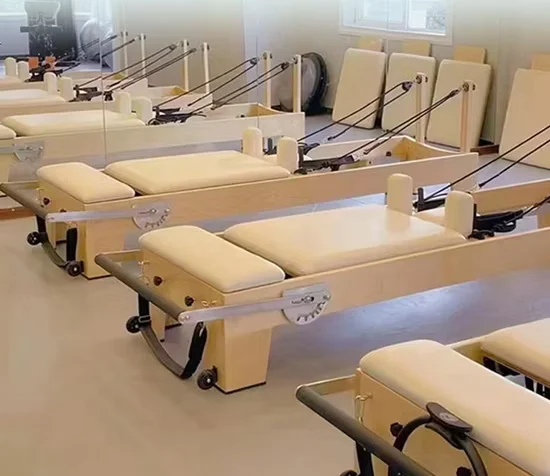
High-End Pilates Studios
Premium aesthetics meet quiet operation for boutique studio environments.

ISO
9001
CE
Certified
OEM
Available
10YR
Warranty
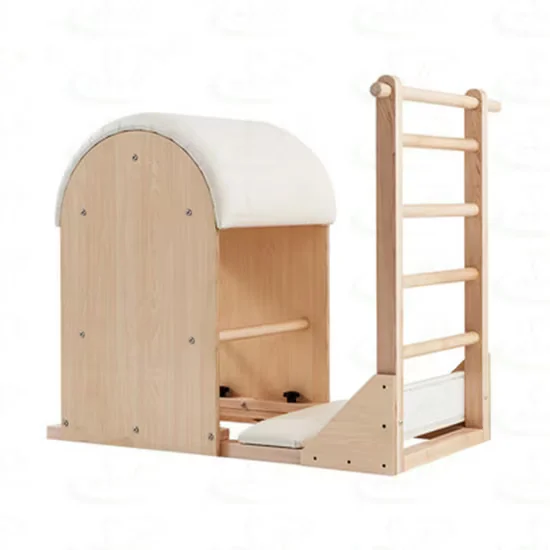
Pilates Combo Chair with Long Box, Jump Board & Platform, 800×620×1100mm, 45kg Net Weight — steel frame construction supports modular accessory integration for core and functional jump training in high-traffic studio environments. Upholstery and connection hardware engineered for commercial durability with 3-year warranty coverage. Backed by 17 years of manufacturing expertise across 15,000㎡ vertically integrated facility with three-stage QC inspection on every unit.
// Spec Highlights
• Direct from Manufacturer · No Middlemen · Worldwide Shipping
01
// Material
Imported Solid Wood
Premium hardwood frames sourced for density and visual warmth.
02
// Hardware
Medical-Grade Silent
Whisper-quiet pulleys and springs for clinical environments.
03
// Customization
Appearance OEM
Color, upholstery, and branding tailored to your studio.
04
// Service
Layout Design
Free venue planning for studios and rehab institutions.
Every component is selected for longevity, performance, and aesthetic harmony - from imported hardwood frames to silent medical-grade accessories.
// Features
Steel Frame Integrity — Mill-certified steel with traceable coil sourcing ensures this commercial Pilates combo chair maintains structural rigidity through years of studio scheduling.
| Parameter | Value |
|---|---|
| Product Type | Pilates Combo Chair |
| Product Dimensions | 800×620×1100mm |
| Net Weight | 45kgs |
| Accessory | Long Box / Jump Board / Platform |
| Color Options | Solid Color |
| Customization | Logo Customized Is Allowed |
| Warranty | 3 Years |
| Transport Package | Standard Wood Case |
| Facility Type | Typical Use |
|---|---|
| Indoor Yoga Studio | Core stabilization and spinal articulation sequences |
| Pilates Training Facility | Comprehensive reformer-alternative programming |
| Commercial Gym Functional Zone | Hybrid strength-mobility circuit integration |
| Rehabilitation and Physical Therapy Center | Controlled load progression for injury recovery |
A Pilates chair must declare its steel specification, not hide behind vague commercial claims.
Most manufacturers label equipment as commercial grade without disclosing frame tube gauge or wall thickness. When a Pilates combo chair endures repetitive eccentric loading from jump board sequences, the connection points experience cyclic stress that exposes inadequate structural design within months. Studios face loosened fasteners, upholstery compression, and accessory wobble that disrupts precise movement cues. [NEED_CITE: structural fatigue in repetitive low-load high-cycle fitness equipment]
The commercial Pilates combo chair addresses this with a 45kgs net weight that signals substantial steel mass, paired with mill-certified material documentation that facility operators can verify against procurement specifications.
This equipment serves the sagittal and frontal planes through seated pedal work, standing balance challenges, and supine long box sequences. It complements reformer-based programming by offering vertical resistance vectors and unilateral stability demands that reformers cannot replicate. The 800×620mm footprint suits high-density studio floors where square-meter efficiency determines class capacity. Users ranging from rehabilitation clients to athletes benefit from the adjustable pedal resistance and modular accessory swaps. The commercial Pilates combo chair bridges corrective exercise and performance training within a single station.
Studio environments subject equipment to six-to-eight back-to-back classes daily, generating thousands of pedal depressions and accessory transitions per week. The jump board introduces impact loading when clients perform plyometric sequences, concentrating stress at the mounting bracket welds. [NEED_CITE: impact load distribution in plyometric training equipment] Long box attachments create cantilevered moments during prone exercises, testing the lock-pin mechanism’s resistance to shear. Upholstery faces compression from body weight combined with sweat and cleaning chemicals that degrade low-density foam and split vinyl seams within months of commercial use. Powder coating at contact edges must withstand repeated accessory insertion and removal without chipping to bare steel.
The 45kgs net weight reflects frame mass sufficient to resist tipping during standing pedal work where clients shift center of gravity beyond the base footprint. Steel gauge and tube profile determine whether the main column deflects under off-center loading—a thicker wall delays the onset of permanent deformation through higher section modulus. Accessory connection points require precision-machined receiver slots rather than welded-on tabs, as tabs concentrate stress at a single fillet weld that fatigues under repeated jump board impacts. [NEED_CITE: weld geometry and stress concentration in structural connections] Upholstery density measured in kilograms per cubic meter predicts compression set resistance; higher density foam maintains support through years of daily use without bottoming out against the frame. The three-year warranty signals manufacturer confidence in these structural choices, as premature failure would trigger warranty claims that erode profitability.
Thin-wall tubing bends under standing balance exercises where clients load one pedal with full body weight, creating asymmetric moments that exceed the material’s yield threshold. Spot-welded accessory brackets crack along the heat-affected zone after months of jump board use, leaving studios with equipment that cannot safely support plyometric programming. [NEED_CITE: heat-affected zone embrittlement in spot-welded steel assemblies] Non-sealed bearings in the pedal pivot accumulate chalk dust and sweat residue, developing play that introduces unwanted lateral movement during precision exercises. Low-density upholstery compresses permanently within the first year, exposing clients to hard frame contact and forcing costly reupholstery downtime. Non-standard hardware means replacement parts become unavailable when the original supplier discontinues the model, stranding functional frames that cannot be serviced.
The manufacturing operation uses Q235 and Q345 industrial steel with mill certificates traceable to the coil, so facility operators can verify material grade against structural requirements. Robotic MIG welding produces continuous weld lines at the pedal pivot and accessory receiver joints, eliminating the cold-start defects common in manual spot welding. Every unit undergoes load testing before shipment rather than sample-based batch approval, catching assembly errors that would surface in the first month of studio use. The 200μm powder coating resists chipping at the jump board insertion point and long box receiver slots where metal-on-metal contact occurs daily. [NEED_CITE: powder coating thickness and abrasion resistance in commercial fitness equipment] Three-year frame warranty backs the structural specification, and 2D-3D CAD layout support ensures the 800×620mm footprint integrates with safe clearance zones around adjacent reformers and cadillacs. OEM logo customization allows studio branding without compromising structural integrity.
Provide your studio floor area and existing equipment list to receive a 2D-3D layout showing safe clearance zones and traffic flow. Specify daily class volume and average participant count so the structural grade matches your usage intensity. Indicate target clientele demographics to confirm the accessory range supports your programming scope. State color and logo requirements for customized upholstery and frame finish coordination.
Q: How do I verify a Pilates chair meets genuine commercial standards?
A: Request the frame steel mill certificate showing material grade and the load test record for your specific unit. Commercial-grade equipment must provide verifiable structural data, not just marketing claims. Check the warranty terms and whether replacement parts remain available beyond the warranty period.
Q: What determines whether the frame resists deformation under standing exercises?
A: The steel tube wall thickness and cross-sectional profile create the section modulus that resists bending moments. A heavier net weight typically indicates more steel mass distributed through the frame. The welding method at stress concentration points determines whether the joint or the base material fails first.
Q: How often do Long Box and Jump Board accessories need replacement?
A: Replacement frequency depends on daily usage volume and whether the lock mechanism maintains positive engagement. Inspect the receiver slots and locking pins monthly for wear that allows movement during use. Order replacement hardware before wear compromises safety rather than after failure occurs.
Q: What floor clearance does a Pilates chair require in studio layout?
A: The equipment footprint plus safe clearance for accessory changes and instructor positioning typically requires a zone larger than the stated dimensions. Provide your floor plan to receive a CAD layout showing minimum clearances around adjacent equipment and walls for safe operation.
Premium aesthetics meet quiet operation for boutique studio environments.
Medical-grade silence and precision for sports & postpartum recovery.
Furniture-grade craftsmanship for premium residential installations.
Compact premium setups for one-on-one and small-group training.
Aesthetic Pilates integration for hybrid wellness studio programming.
Multi-unit deployment with instructor-grade reliability for certification programs.
Tell us about your project. Our team will respond within 24 hours with pricing, customization options, and shipping details.
// Sales Director
William
+86 132 2531 1800
// Export Manager
Bella
+86 198 5412 8032
william@bickfit.com