01 / Scenario
STUDIO
P
High-End Pilates Studios
Premium aesthetics meet quiet operation for boutique studio environments.

ISO
9001
CE
Certified
OEM
Available
10YR
Warranty
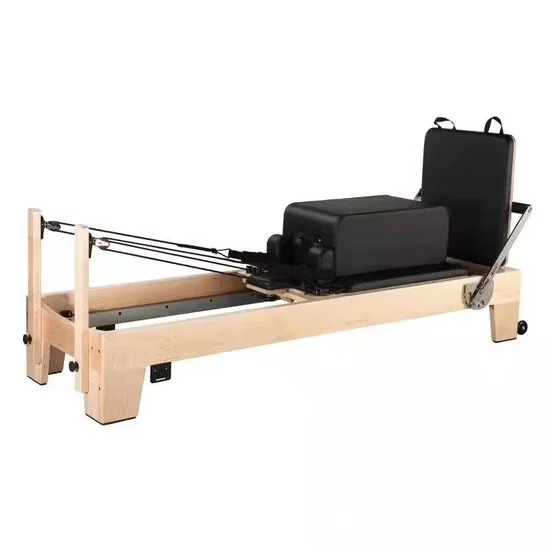
Maple Wood Pilates Reformer Bed, 2400×600mm, 100kg Net Weight — solid maple frame with long box, jump board, and platform accessories for commercial studio use. Precision-milled rail system ensures smooth carriage travel under repeated loading cycles. Every unit undergoes full load testing and 32-point inspection before shipment.
// Spec Highlights
• Direct from Manufacturer · No Middlemen · Worldwide Shipping
01
// Material
Imported Solid Wood
Premium hardwood frames sourced for density and visual warmth.
02
// Hardware
Medical-Grade Silent
Whisper-quiet pulleys and springs for clinical environments.
03
// Customization
Appearance OEM
Color, upholstery, and branding tailored to your studio.
04
// Service
Layout Design
Free venue planning for studios and rehab institutions.
Every component is selected for longevity, performance, and aesthetic harmony - from imported hardwood frames to silent medical-grade accessories.
// Features
Solid Maple Frame Rigor — Every SRY-20B rail is precision-milled from kiln-dried solid maple, not laminated veneer, to maintain carriage alignment through years of studio cycling.
| Parameter | Value |
|---|---|
| Product Type | Pilates Reformer Bed |
| Material | Solid Maple Wood |
| Model NO. | SRY-20B |
| Product Dimensions | 2400 × 600 × 350 mm |
| Net Weight | 100 kg |
| Included Accessories | Long Box, Jump Board, Platform |
| Color Options | Solid Color options available |
| Customization | Logo customization available |
| Warranty | 3 Years |
| Standards | ISO 9001 (manufacturer-level) |
| Facility Type | Typical Use |
|---|---|
| Commercial Pilates Studio | Multi-session daily group and private reformer classes |
| Boutique Movement Studio | Premium equipment matching interior aesthetics for high-ticket memberships |
| Rehabilitation & Physical Therapy Facility | Controlled resistance protocols for post-injury recovery and mobility work |
| Hotel Wellness Center | Guest-accessible equipment rated for varied skill levels and intermittent use |
| Commercial Fitness Center Pilates Zone | Dedicated reformer area complementing main strength floor programming |
Solid maple resists the warping that destroys laminated frames in humid studio environments.
Many reformers labeled as commercial grade use plywood cores with thin wood veneer. Under daily carriage cycling and fluctuating studio humidity, these laminated frames begin to delaminate at the rail mounting points within the first year. The rails shift, the carriage binds, and instructors start hearing the grinding noise mid-class. A commercial maple wood Pilates reformer bed built from solid stock maintains dimensional stability because the grain structure runs continuously through the frame [NEED_CITE: dimensional stability of solid hardwoods vs. laminated composites in cyclic loading]. The 100 kg net weight here is not arbitrary mass — it reflects the density required for vibration dampening during jump board work and repetitive footwork sequences.
The SRY-20B covers the full spectrum of classical and contemporary Pilates repertoire — supine footwork, seated arm work, prone pulling, and dynamic jump board sequences. In a studio configuration, it pairs with mat stations for warm-up flow and cadillac units for advanced decompression work. The 2400 × 600 mm footprint allows placement in rooms designed for six to ten reformer group classes with adequate instructor walkway clearance. The solid maple aesthetic suits boutique studios where equipment appearance contributes to the member experience. This commercial maple wood Pilates reformer bed accommodates users across a wide range of body sizes through adjustable spring tension and accessory integration.
A reformer in a busy studio endures carriage cycling hundreds of times per day, generating repetitive friction along the rail track and impact loading at the end stops. The footwork series alone produces eccentric loading through the lower body that transfers shock through the carriage into the frame. Jump board exercises multiply this impact further, demanding that the frame-to-rail joint maintain zero deflection. Sweat, chalk dust, and cleaning chemicals create a corrosive environment at the contact surfaces where carriage wheels meet the track [NEED_CITE: wear mechanisms in wood-on-wheel track systems under commercial use]. The long box and platform attachments introduce additional point loads at their mounting interfaces, requiring locking mechanisms that resist loosening through repeated installation cycles.
The 100 kg net weight of this commercial maple wood Pilates reformer bed serves as a reliable indicator of frame density and rigidity — lighter reformers typically achieve their mass through hollow construction or composite materials that flex under loaded carriage movement. Solid maple provides consistent grain density that resists compression set at the rail mounting points, where carriage wheels exert concentrated downward force thousands of times weekly. The 350 mm frame height positions the working surface at an appropriate level for both floor-based exercises and standing transitions while maintaining a low center of gravity that prevents tipping during asymmetric loading. Accessory integration — the long box, jump board, and platform — requires precisely machined mounting points that accept attachment hardware without play or wobble during dynamic movement.
Laminated or veneer-covered reformers enter the market at attractive price points but generate compounding expenses once placed in commercial rotation. Delaminated frames require complete replacement rather than repair, pulling a station out of class scheduling and reducing revenue capacity. Carriage binding caused by rail misalignment accelerates wheel wear and demands frequent bearing replacement. Non-standard mounting hardware on cheaper frames means accessories from one manufacturer cannot transfer to replacement units, forcing full ecosystem repurchase. Thin finishes on low-density wood substrates chip and stain under studio cleaning protocols, degrading the visual presentation that boutique studios depend on for member retention [NEED_CITE: lifecycle cost comparison of solid wood vs. composite fitness equipment frames].
The same engineering discipline we apply to 11-gauge steel strength equipment governs this reformer’s construction — material traceability from the timber source through final assembly, with mill documentation available for verification. Robotic precision in milling the carriage tracks ensures straightness tolerances that prevent binding under eccentric loading. Each unit undergoes functional testing of carriage travel, accessory locking, and spring resistance calibration before shipment. The 3-year warranty reflects confidence in the frame’s structural continuity under studio volume. Floor planning support includes reformer spacing layouts that account for instructor circulation paths and emergency access between stations in group class configurations. OEM customization allows studio branding through logo integration on the frame.
Provide your studio floor dimensions and target class capacity to receive a 2D-3D layout showing optimal reformer placement with instructor walkway clearance. Specify your expected daily session volume so we can confirm the structural grade matches your utilization pattern. Indicate your target membership demographic to verify spring resistance ranges accommodate your user population. Communicate any customization requirements including frame color, logo placement, and accessory package preferences for studio branding alignment.
Q: How does solid maple compare to laminated wood for reformer frame longevity?
A: Solid maple maintains structural continuity through the entire frame cross-section, meaning the grain structure resists delamination that plagues laminated plywood under humidity cycling. Laminated frames separate at glue lines where carriage mounting points concentrate stress, typically failing within the first two years of commercial use. Solid maple can be refinished and retains rail alignment indefinitely under normal studio conditions.
Q: What maintenance does the carriage track require in a commercial studio?
A: Track surfaces need weekly wiping to remove chalk dust, skin oils, and cleaning residue that accumulate in the wheel channel. Inspect carriage wheels monthly for flat spots or bearing play that indicates replacement need. Avoid silicone-based lubricants that attract particulate matter — a dry PTFE spray applied sparingly maintains smooth travel without creating a contamination magnet. Rail straightness should be verified annually with a straightedge.
Q: When should springs be recalibrated or replaced?
A: Springs lose tension predictability after sustained cyclic loading, typically showing measurable deviation in resistance curves before visible deformation occurs. In a studio running six or more classes daily, schedule spring resistance verification every six months using a calibrated force gauge. Replace any spring that shows permanent elongation, surface corrosion, or inconsistent tension through its travel range to maintain safe resistance delivery across all user levels.
Q: Are third-party accessories compatible with the mounting system?
A: The long box, jump board, and platform included with this reformer use proprietary mounting interfaces engineered for secure locking under dynamic loading conditions. Third-party accessories designed for universal fit may physically attach but often introduce lateral play or insufficient engagement depth at the locking points. Verify compatibility through fit testing before committing to mixed-brand accessory configurations in a commercial environment.
Q: What spacing is needed between reformers for safe group instruction?
A: Allow minimum clearance on each side for instructor passage and participant arm extension during supine exercises. Measure from the outer edge of the frame rather than the working surface, as participants extend limbs beyond the carriage boundaries during footwork and pulling sequences. Additional clearance at the head end accommodates standing exercises and jump board setups where participants move away from the reformer footprint.
Premium aesthetics meet quiet operation for boutique studio environments.
Medical-grade silence and precision for sports & postpartum recovery.
Furniture-grade craftsmanship for premium residential installations.
Compact premium setups for one-on-one and small-group training.
Aesthetic Pilates integration for hybrid wellness studio programming.
Multi-unit deployment with instructor-grade reliability for certification programs.
Tell us about your project. Our team will respond within 24 hours with pricing, customization options, and shipping details.
// Sales Director
William
+86 132 2531 1800
// Export Manager
Bella
+86 198 5412 8032
william@bickfit.com