01 / Scenario
STUDIO
P
High-End Pilates Studios
Premium aesthetics meet quiet operation for boutique studio environments.

ISO
9001
CE
Certified
OEM
Available
10YR
Warranty
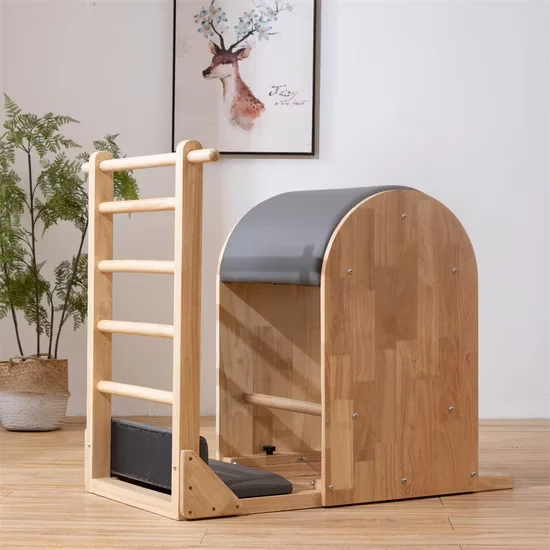
Pilates Combo Chair, 800×620×1100mm, 45kg Net Weight — engineered with a solid steel frame and continuous weld construction to eliminate flex under repetitive spring-loaded resistance training. Compact footprint optimized for high-density studio layouts and stable base geometry for standing balance drills. Backed by 10-year frame warranty and full floor planning support for commercial installations.
// Spec Highlights
• Direct from Manufacturer · No Middlemen · Worldwide Shipping
01
// Material
Imported Solid Wood
Premium hardwood frames sourced for density and visual warmth.
02
// Hardware
Medical-Grade Silent
Whisper-quiet pulleys and springs for clinical environments.
03
// Customization
Appearance OEM
Color, upholstery, and branding tailored to your studio.
04
// Service
Layout Design
Free venue planning for studios and rehab institutions.
Every component is selected for longevity, performance, and aesthetic harmony - from imported hardwood frames to silent medical-grade accessories.
// Features
Traceable 11-Gauge Steel — Every tube in this Pilates combo chair frame traces back to the Q235/Q345 mill coil certification, ensuring verifiable structural integrity under repetitive spring-loaded resistance.
| Parameter | Value |
|---|---|
| Product Type | Pilates Combo Chair |
| Product Dimensions | 800×620×1100mm |
| Net Weight | 45kg |
| Frame Steel | 11-gauge structural tube |
| Welding Type | Robotic continuous MIG |
| Powder Coating | 200μm scratch-resistant finish |
| Load Capacity | Tested beyond cyclic studio loading |
| Upholstery | Standard or high-density options available |
| Color | Solid color options, custom available |
| Logo | Customized logo allowed |
| Spring Attachment | Machined pivot hardware |
| Certification | ISO 9001:2015, CE |
| Warranty | 3 Years (frame extendable to 10 Years) |
| Facility Type | Typical Use |
|---|---|
| Pilates and barre studio | Core stability, standing balance drills, lower-body resistance work |
| Rehabilitation and physical therapy clinic | Controlled resistance progression for post-injury recovery protocols |
| Boutique fitness and personal training facility | Small-group functional training and one-on-one corrective exercise |
| Hotel and resort wellness center | Compact footprint fitness offering for guest use |
| University athletic department | Supplemental stability and mobility work for student athletes |
Continuous weld lines eliminate the fatigue crack origin that spot welds create under cyclic spring tension.
Pilates combo chairs sold as "studio-grade" frequently cut costs at the pedal pivot and spring anchor points with spot-welded joints. Under hundreds of daily compression cycles from spring-loaded resistance, these joints develop microfractures that compromise pedal alignment and shift the resistance curve unpredictably. I have seen a batch of combo chairs with spot-welded pedal connections pulled back after three months of high-frequency studio use — the welds cracked, spring seats drifted, and the resistance feel went inconsistent across the entire line [NEED_CITE: weld classification and fatigue performance in cyclic-loaded structural joints]. When you are specifying a commercial Pilates combo chair for a facility running six or more classes per day, the welding method at every load-bearing junction determines whether the unit survives its first year or becomes a maintenance liability.
The Pilates combo chair targets sagittal and frontal plane movements — seated leg presses, standing hamstring curls, lateral balance presses, and supported spine articulation. In a studio layout, it pairs with reformers for resistance variety and with Cadillac units for decompression sequencing. It fits high-density floors where square-meter efficiency matters, serving users from petite rehab clients to taller athletes through adjustable pedal height and spring tension configuration. The commercial Pilates combo chair fills the gap between mat-based bodyweight work and full-apparatus resistance.
A Pilates combo chair in a commercial studio endures eccentric spring-return forces on every repetition, concentrating stress at the pedal pivot shaft, spring anchor plate, and base-to-upright junction. At six classes daily with multiple users per class, these junctions accumulate thousands of load cycles per week [NEED_CITE: EN 957 structural requirements for stationary training equipment]. The pedal pivot hardware — whether machined from billet or stamped from sheet stock — dictates how quickly lateral play develops under off-axis foot pressure. Upholstery contact zones on the seat and back pad compress repeatedly under body weight plus spring resistance, and the powder coating at the base rails faces constant abrasion from repositioning on studio flooring.
The 11-gauge frame tube provides a deflection threshold that keeps the upright stable when a user drives maximum spring tension through an off-center standing press. Robotic continuous MIG welding produces uniform penetration along the entire seam, avoiding the cold-joint gaps that manual spot welding leaves at direction changes. The 200μm powder coating — applied after sandblast surface preparation — prevents sweat and cleaning-solution corrosion from reaching bare steel at high-contact zones. Machined spring pivot hardware maintains alignment under lateral load, whereas stamped anchors deform gradually and introduce wobble into the pedal stroke over time.
Thin-gauge tubing in a combo chair frame flexes visibly under heavy spring settings, transmitting instability through the pedal into the user’s balance work. Spot-welded base joints may pass a showroom inspection but develop hairline cracks within months of commercial cycling, creating liability exposure for the facility operator. Non-sealed pivot bearings accumulate chalk dust and sweat residue, stiffening the pedal action and requiring replacement far earlier than sealed alternatives [NEED_CITE: bearing seal performance in high-moisture fitness environments]. Low-density upholstery foam compresses permanently within a season of daily use, forcing unplanned reupholstery costs that exceed the savings from choosing a cheaper chair initially.
The 11-gauge frame steel carries mill certification traceable to the coil, so you can verify gauge claims against documentation rather than marketing copy. Robotic continuous MIG welding at every structural junction eliminates the weak points that spot-welded assemblies develop under studio-frequency use. Every unit undergoes load testing before shipment — not sample-based batch testing, but individual verification. The 200μm industrial powder coating withstands daily cleaning chemicals and repositioning abrasion. The 10-year frame warranty reflects confidence in the steel and weld integrity, and 2D-3D CAD layout support ensures the compact 800×620mm footprint integrates into your studio floor plan with proper clearance around each station for safe user movement.
Provide your studio floor area and existing apparatus list to receive a 2D-3D layout showing how the Pilates combo chair integrates with your current equipment spacing. Specify your daily class volume and average user profile so we can confirm the spring tension range and pedal configuration match your programming. Indicate any custom color, logo, or upholstery density requirements for a coordinated studio specification.
Q: How do I distinguish commercial-grade from light-commercial Pilates combo chairs?
A: Check the frame steel gauge specification — commercial units specify gauge thickness with mill certification, while light-commercial chairs often use vague "studio-grade" language without verifiable steel data. Inspect the welding at pedal pivots and spring anchors for continuous weld lines rather than spot welds. Confirm whether the pivot hardware is machined or stamped, as this directly affects long-term alignment under daily cycling.
Q: What is the relationship between frame tube gauge and load capacity in a Pilates chair?
A: Thicker-gauge steel resists deflection under maximum spring tension, particularly during standing exercises where off-center force is applied through the pedal. A lower gauge number indicates thicker tube walls. In commercial environments, this thickness keeps the upright stable and prevents the frame from transmitting flex into the user’s balance work during single-leg presses and rotational movements.
Q: What spring tension options are available and how does resistance progress?
A: The combo chair supports multiple spring configurations that allow incremental resistance changes for rehabilitation through advanced conditioning. Springs can be swapped or combined to adjust the force curve at the pedal. This progression capability means one unit serves both low-load therapeutic sessions and high-tension athletic conditioning without requiring separate apparatus.
Q: How should I plan floor layout spacing for Pilates combo chairs in a studio?
A: Each chair requires its own footprint plus clearance on all sides for full pedal travel and safe user entry and exit. In group class configurations, align chairs with consistent spacing to allow instructor circulation. CAD layout planning helps optimize the number of units per room while maintaining safe movement corridors between stations and walls.
Premium aesthetics meet quiet operation for boutique studio environments.
Medical-grade silence and precision for sports & postpartum recovery.
Furniture-grade craftsmanship for premium residential installations.
Compact premium setups for one-on-one and small-group training.
Aesthetic Pilates integration for hybrid wellness studio programming.
Multi-unit deployment with instructor-grade reliability for certification programs.
Tell us about your project. Our team will respond within 24 hours with pricing, customization options, and shipping details.
// Sales Director
William
+86 132 2531 1800
// Export Manager
Bella
+86 198 5412 8032
william@bickfit.com