
01 / Scenario
STUDIO
P
High-End Pilates Studios
Premium aesthetics meet quiet operation for boutique studio environments.
ISO
9001
CE
Certified
OEM
Available
10YR
Warranty
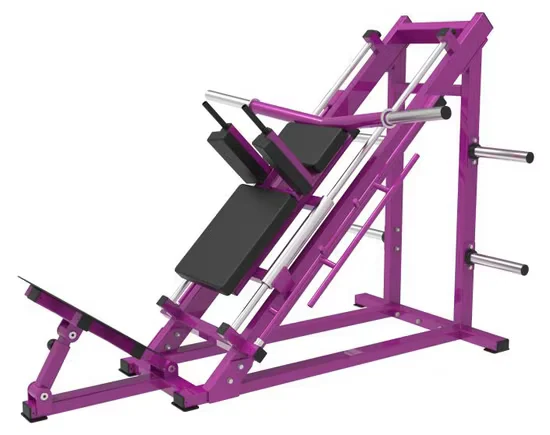
Commercial Plate Loaded Linear Hack Press, 2375×1500×1475mm, 250kg Net Weight — plate loaded design eliminates weight stack constraints for unrestricted progressive overload in high-volume leg training zones. Built with industrial steel frame and continuous welding to handle repetitive heavy loading without frame flex or weld fatigue. Every unit undergoes structural load testing before shipment, backed by a 10-year frame warranty for commercial operators.
// Spec Highlights
• Direct from Manufacturer · No Middlemen · Worldwide Shipping
01
// Material
Imported Solid Wood
Premium hardwood frames sourced for density and visual warmth.
02
// Hardware
Medical-Grade Silent
Whisper-quiet pulleys and springs for clinical environments.
03
// Customization
Appearance OEM
Color, upholstery, and branding tailored to your studio.
04
// Service
Layout Design
Free venue planning for studios and rehab institutions.
Every component is selected for longevity, performance, and aesthetic harmony - from imported hardwood frames to silent medical-grade accessories.
// Features
Mill-Certified Frame Steel — every coil of 11-gauge Q345 used in this commercial plate loaded linear hack press is traceable to its heat number, ensuring the tube wall you see on the spec sheet is the tube wall carrying the load at 6 AM when your heaviest member piles on plates.
| Parameter | Value |
|---|---|
| Product Type | Plate Loaded Linear Hack Press |
| Frame Steel Gauge | 11-gauge |
| Frame Tube Size | 3×3 inch |
| Steel Grade | Q235 / Q345 industrial steel |
| Welding Type | Robotic MIG continuous weld |
| Loading Type | Plate loaded |
| Bearing Type | Sealed industrial bearings at pivot points |
| Powder Coating | 200μm scratch-resistant, sandblast pre-treated |
| Product Dimensions | 2375×1500×1475mm |
| Net Weight | 250kg |
| Certification | CE, ISO 9001, RoHS |
| Warranty | 10-year frame |
| Facility Type | Typical Use |
|---|---|
| Commercial gym strength floor | High-volume daily leg training for diverse membership |
| University strength and conditioning room | Athlete lower-body programming with progressive plate loading |
| Hotel and resort fitness center | Durable leg machine for transient users of varying experience levels |
| CrossFit box functional zone | Supplemental heavy leg work alongside barbell programming |
| Rehabilitation and performance center | Controlled linear-path pressing for late-stage return-to-load protocols |
A commercial plate loaded linear hack press lives under a specific kind of abuse: eccentric loading that spikes every time a user drops into the bottom position with two or three plates per side. The weld is the first thing to betray a shortcut.
Many machines quote "commercial grade" without naming the steel gauge or wall thickness. Under repeated heavy cycles, spot-welded joints develop hairline cracks at the carriage-to-frame interface — invisible until the tube starts to flex and the guide rods bind off-center. By the time the problem is visible, the structural damage has already propagated through multiple load paths [NEED_CITE: weld classification and fatigue performance in structural steel].
The linear hack press occupies a specific role: a fixed-path, high-load compound movement that isolates the quads and glutes without requiring the balance demand of a free squat. It pairs naturally with a leg press for volume work and a leg curl station for posterior balance. In a commercial strength zone running moderate to high member density, it absorbs traffic from users who want heavy leg work without a spotter. The converging footplate accommodates a wide range of stances, fitting users from lighter recreational lifters to larger athletes without hardware adjustment.
The load profile on a commercial plate loaded linear hack press is not symmetrical — users favor one side, drop weight unevenly, and rack plates off-center. This creates cyclic eccentric stress concentrated at the carriage pivot and the lower frame junction. Sealed industrial bearings at those pivot points resist contamination from chalk dust and sweat, maintaining alignment through thousands of repetitions. The 200μm powder coating, applied over a sandblast-prepared surface, holds up against plate contact and cleaning chemicals without chipping down to bare steel [NEED_CITE: EN 957 structural requirements for stationary training equipment].
Wall thickness and tube cross-section together define how much the frame will deflect before the carriage starts to drag on the guide rods. An 11-gauge wall in a 3×3 inch tube provides a deflection threshold that keeps the sled tracking true even under unbalanced loading. Robotic MIG continuous welding eliminates the cold joints and incomplete penetration that plague manual spot-welded assemblies — the weld line is uniform along the entire joint, not interrupted by starts and stops. Sandblast pre-treatment before powder coating ensures adhesion at the molecular level, so the finish stays bonded through years of plate loading and bumper contact. Sealed bearings at the carriage pivot mean no scheduled regreasing and no play developing in the first year of commercial traffic.
Thinner wall tubing saves material cost on day one and creates a maintenance problem by month six. Under repeated 200kg-plus loads, undersized tubes flex at the carriage rail, causing the guide rods to bind and the sled to track off-line. Spot-welded joints crack progressively — each failure requires pulling the machine off the floor for rework that never fully restores the original joint integrity. Unsealed bearings develop play within the first year of high-traffic use, creating noise and slop that members notice immediately. Thin powder coating chips at the plate-loading horns, exposing bare steel to sweat and humidity until rust forces a full respray [NEED_CITE: powder coating adhesion and thickness standards for fitness equipment].
Every tube in this frame traces back to a mill-certified coil — the steel spec is not a marketing claim, it is documentation you can audit. Robotic MIG continuous welding means no spot-weld weak points hiding under the powder coat. Each unit is load-tested before crating, not pulled from a sample batch. The 200μm industrial coating is rated for the contact abrasion of daily plate loading. A 10-year frame warranty backs the structural specification. And because the footprint is fixed at 2375×1500mm, we can drop it into a 2D or 3D floor plan with verified safety clearances on all sides, so you know the spacing works before the truck arrives.
Provide your strength zone dimensions and current machine list to receive a 2D or 3D layout showing this commercial plate loaded linear hack press positioned with verified safety clearances. Specify your expected daily traffic volume so we can confirm the structural rating matches your use profile. Share your target user demographic to validate the footplate stance range and loading height. Frame color, logo placement, and upholstery options are available for private-label builds — confirm your preferences before production scheduling.
Q: How do I tell a true commercial hack press from a light-commercial one?
A: Request the steel gauge and tube dimensions in writing — true commercial frames use 11-gauge minimum with 3×3 inch tube sections. Ask for the welding method; continuous robotic MIG welds indicate structural commitment, while spot welds suggest cost reduction. Verify that load testing is performed on every unit, not just production samples.
Q: What maintenance does a plate loaded hack press require versus a selectorized leg machine?
A: Plate loaded machines eliminate weight stack guide rods, cables, and selector pins — the components that generate the most service calls on selectorized equipment. Maintenance focuses on the carriage pivot bearings and structural fasteners. Fewer moving parts means fewer failure points and longer intervals between scheduled inspections in a high-traffic commercial environment.
Q: How much floor space should I allocate around this machine?
A: The machine footprint is 2375×1500mm, but safe installation requires clearance on all sides for plate loading and user movement. Plan for a minimum 600mm buffer zone, more on the loading side where users handle bumper plates. A detailed floor plan with this machine positioned alongside your other stations will confirm the spacing before delivery.
Q: What steel specification should I insist on for a heavy-use leg machine?
A: Specify 11-gauge wall thickness in a Q235 or Q345 industrial steel tube. Request the mill certificate so the material is traceable to the original coil. Vague "commercial grade" claims without documented gauge and grade leave no recourse when the frame deflects under load and the carriage starts to bind on the guide rails.
Premium aesthetics meet quiet operation for boutique studio environments.
Medical-grade silence and precision for sports & postpartum recovery.
Furniture-grade craftsmanship for premium residential installations.
Compact premium setups for one-on-one and small-group training.
Aesthetic Pilates integration for hybrid wellness studio programming.
Multi-unit deployment with instructor-grade reliability for certification programs.
Tell us about your project. Our team will respond within 24 hours with pricing, customization options, and shipping details.
// Sales Director
William
+86 132 2531 1800
// Export Manager
Bella
+86 198 5412 8032
william@bickfit.com


