01 / Scenario
STUDIO
P
High-End Pilates Studios
Premium aesthetics meet quiet operation for boutique studio environments.

ISO
9001
CE
Certified
OEM
Available
10YR
Warranty
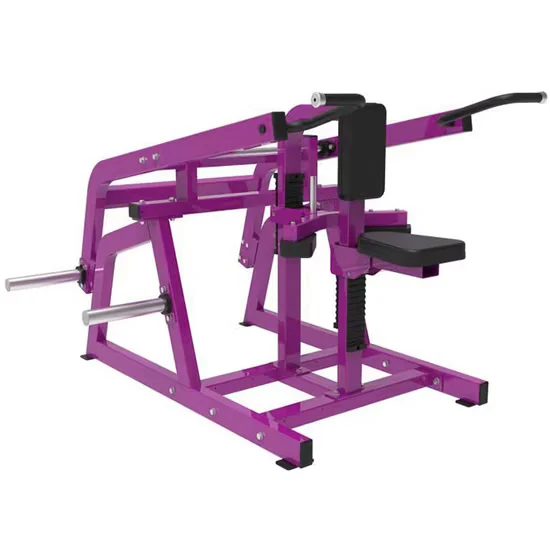
SRH-67 Sissy Squat Machine, 50×100×3mm Frame Tube, 80kg Net Weight — engineered with 3mm wall thickness for torsional rigidity during controlled quadriceps loading, compact 950×380mm footprint enables high-density strength zone layouts. Every unit undergoes full load testing before shipment to verify structural integrity under repeated commercial use.
// Spec Highlights
• Direct from Manufacturer · No Middlemen · Worldwide Shipping
01
// Material
Imported Solid Wood
Premium hardwood frames sourced for density and visual warmth.
02
// Hardware
Medical-Grade Silent
Whisper-quiet pulleys and springs for clinical environments.
03
// Customization
Appearance OEM
Color, upholstery, and branding tailored to your studio.
04
// Service
Layout Design
Free venue planning for studios and rehab institutions.
Every component is selected for longevity, performance, and aesthetic harmony - from imported hardwood frames to silent medical-grade accessories.
// Features
Traceable Steel Frames — Mill-certified Q235 and Q345 steel coils cut to verified 50×100×3mm tube dimensions for every Sissy Squat unit we ship.
| Parameter | Value |
|---|---|
| Product Type | Sissy Squat Machine |
| Designation | SRH-67 |
| Frame Tube Size | 50×100×3mm |
| Steel Grade | Q235 / Q345 industrial steel, mill-certified |
| Welding Type | Robotic MIG, continuous weld lines |
| Loading Type | Plate loaded |
| Product Dimensions | 950×380×360mm |
| Net Weight | 80kg |
| Powder Coating | 200μm scratch-resistant, sandblast pre-treated |
| Color Options | Customized to facility branding |
| Certification | CE, ISO 9001, RoHS |
| Warranty | 10-year frame |
| Facility Type | Typical Use |
|---|---|
| Commercial gym strength floor | Dedicated quad isolation station in plate-loaded zone |
| Hotel fitness center | Compact lower-body training for space-constrained layouts |
| University strength and conditioning room | Accessory movement for athletic leg development |
| Community fitness center | Bodyweight and loaded squat variation for general members |
| CrossFit box functional zone | Supplementary quad work alongside Olympic lifting platforms |
A Sissy Squat concentrates extreme eccentric torque at the pivot and ankle pad anchor, and vague "commercial grade" claims hide frames that flex and fatigue within months.
When gym operators specify lower-body isolation equipment, the tube wall thickness is rarely disclosed beyond a marketing label. On a commercial sissy squat machine, the user’s entire bodyweight shifts behind the pivot axis during the descent, creating a lever arm that multiplies stress at the weld joints. Frames built from thin-wall tubing develop visible deflection under repeated loading cycles, and spot-welded connections at the ankle pad bracket become crack initiation points. The result is a machine that feels unstable during use and requires frame replacement long before any reasonable depreciation schedule [NEED_CITE: structural fatigue in plate-loaded lower-body equipment frames].
The Sissy Squat occupies a specific role on the strength floor: isolating the quadriceps through a deep knee-flexion arc that compound movements like leg presses and hack squats cannot fully replicate. It pairs naturally with a glute-ham developer or leg curl station to balance anterior and posterior chain development. The compact 950×380mm footprint allows placement in high-density configurations alongside power racks and plate-loaded leg machines without sacrificing the safety clearance needed for loading and unloading. Users ranging from lighter athletes to heavyweight lifters can load plates progressively, and the fixed movement path accommodates a wide range of femur lengths without requiring adjustment mechanisms.
Every repetition on a commercial sissy squat machine begins with a controlled fall into deep knee flexion, generating peak eccentric force at the lowest point where the ankle pad and pivot bearing absorb the combined load of bodyweight plus added plates. In a gym seeing hundreds of sets per day, this translates to thousands of high-stress cycles weekly concentrated on a small number of structural nodes. The welds connecting the pivot shaft to the main frame experience alternating tension and compression, making continuous robotic MIG welds critical to prevent the crack propagation that spot welds invite. The ankle pad upholstery endures constant friction and compressive loading against the shins, while the powder coating on contact surfaces faces abrasion from shoes, chalk dust, and cleaning agents applied between users [NEED_CITE: EN 957 structural requirements for stationary training equipment].
The 50×100×3mm rectangular tube specification defines three variables that together determine how the frame behaves under load. The 100mm depth of the tube’s cross-section provides the section modulus that resists bending along the primary load axis — when a user leans back with plates loaded, this dimension prevents the main beam from bowing. The 3mm wall thickness sets the threshold for local buckling at the points where cross-members and brackets are welded to the main frame; thinner walls collapse inward at these junctions before the steel itself reaches its yield point. The 50mm width stabilizes the frame against lateral torsion, which matters when a user shifts weight unevenly or loads plates on one side. Combined with robotic MIG welding that produces continuous penetration along each joint rather than intermittent tack points, these dimensions keep the SRH-67 rigid through years of high-frequency eccentric loading cycles.
Operators who save on initial equipment cost by accepting thin-wall frames or spot-welded joints absorb that savings as maintenance and liability within the first year. A frame that flexes under load feels unstable to users, reducing confidence during deep eccentric movements and increasing the likelihood of controlled dismounts that still stress the structure. Spot welds at the pivot bracket that pass a visual factory inspection can develop hairline cracks within months of commercial use, and those cracks propagate until the connection fails entirely. Non-sealed pivot bearings ingest chalk dust and sweat, developing play that makes the movement path unpredictable. Thin powder coating chips at the ankle pad contact zone, exposing bare steel to moisture and starting a corrosion cycle that undermines the frame from the surface inward. Each of these failures traces back to a procurement decision that prioritized unit cost over structural specification [NEED_CITE: weld classification and fatigue performance in structural steel].
Every SRH-67 frame begins with Q235 or Q345 steel sourced from mills that provide traceable coil certification, so the tube gauge is verified rather than assumed. The robotic MIG welding process lays continuous beads along every joint, eliminating the cold starts and incomplete fusion points that characterize manual spot welding on lower-cost alternatives. Each unit undergoes load testing before crating — not sample-based batch testing, but individual verification under loaded conditions. The 200μm powder coating is applied over a sandblasted surface to achieve mechanical adhesion that resists chipping at the high-contact zones around the ankle pad and plate horns. The compact 950×380mm footprint comes with 2D-3D CAD layout support so operators can plan safe clearance zones between adjacent stations, and the 10-year frame warranty reflects confidence in the structural margins built into every weld and tube section.
Provide your strength floor dimensions and current equipment list to receive a 2D or 3D CAD layout showing the SRH-67 positioned with compliant safety clearances. Specify average daily user volume so we can confirm the structural grade matches your traffic profile. Share target user demographics — competitive athletes versus general fitness members — to verify the loading range and movement path suit your population. Indicate any branding requirements including custom frame color, logo placement, or upholstery material to align the equipment with your facility’s visual identity.
Q: How do I distinguish a commercial sissy squat machine from a light-commercial version?
A: Request the frame tube specification — commercial units disclose exact dimensions like 50×100×3mm with mill certification, while light-commercial versions often list only "heavy-duty steel" without verifiable gauge data. Check whether the welding is continuous MIG or intermittent spot welds, and confirm the unit weight, as commercial frames use more steel and weigh substantially more to resist movement during loaded exercises.
Q: What is the relationship between the 50×100×3mm frame specification and load capacity?
A: The 100mm tube depth provides the bending resistance needed when a user leans back under plate load, while the 3mm wall thickness prevents local buckling at welded junctions. The 50mm width adds lateral stability. Together these dimensions define the frame’s ability to handle repeated eccentric loading without progressive deformation or fatigue cracking at the pivot and ankle pad connections.
Q: How should I plan floor spacing for multiple Sissy Squat stations?
A: Allow enough lateral clearance between units for users to load and unload plates safely without contacting adjacent equipment. The 950×380mm footprint is compact, but the loading motion extends beyond the frame perimeter. A 2D or 3D CAD layout from the manufacturer helps confirm that clearance zones meet safety standards for your specific floor configuration and user traffic flow.
Q: Can the frame color and finish be matched to an existing gym branding scheme?
A: The powder coating process supports custom color selection to match facility branding. The 200μm coating is applied over sandblasted steel for mechanical adhesion, so color changes do not compromise durability. Specify the target RAL or Pantone reference during the order stage to ensure consistency across multiple units shipped to the same facility.
Premium aesthetics meet quiet operation for boutique studio environments.
Medical-grade silence and precision for sports & postpartum recovery.
Furniture-grade craftsmanship for premium residential installations.
Compact premium setups for one-on-one and small-group training.
Aesthetic Pilates integration for hybrid wellness studio programming.
Multi-unit deployment with instructor-grade reliability for certification programs.
Tell us about your project. Our team will respond within 24 hours with pricing, customization options, and shipping details.
// Sales Director
William
+86 132 2531 1800
// Export Manager
Bella
+86 198 5412 8032
william@bickfit.com