01 / Scenario
STUDIO
P
High-End Pilates Studios
Premium aesthetics meet quiet operation for boutique studio environments.

ISO
9001
CE
Certified
OEM
Available
10YR
Warranty
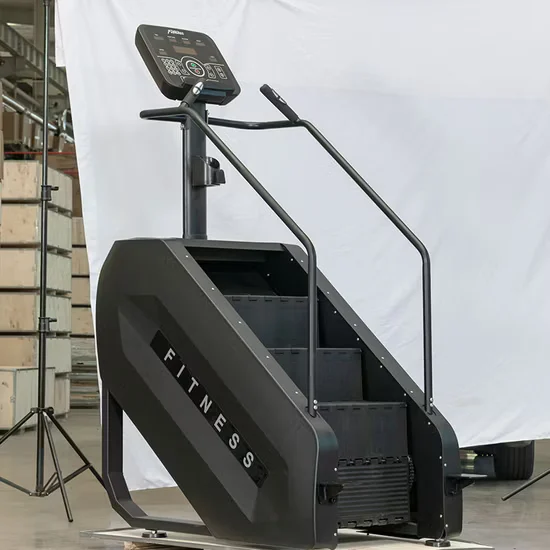
Commercial Stair Climbing Machine, Motor Drive, 148 kg Net Weight — engineered with a steel pipe frame and motor-driven mechanism delivering 15 to 164 steps/min across high-traffic commercial environments. Console tracks time, steps, calories, climb count, and heart rate for integrated programming feedback. Every unit undergoes load testing on the step mechanism before shipment, backed by a 10-year frame warranty and floor planning support.
// Spec Highlights
• Direct from Manufacturer · No Middlemen · Worldwide Shipping
01
// Material
Imported Solid Wood
Premium hardwood frames sourced for density and visual warmth.
02
// Hardware
Medical-Grade Silent
Whisper-quiet pulleys and springs for clinical environments.
03
// Customization
Appearance OEM
Color, upholstery, and branding tailored to your studio.
04
// Service
Layout Design
Free venue planning for studios and rehab institutions.
Every component is selected for longevity, performance, and aesthetic harmony - from imported hardwood frames to silent medical-grade accessories.
// Features
Motor-Driven Stepping — Engineered for Continuous Commercial Operation — The stepping mechanism uses motor-drive rotation paired with a steel pipe frame to deliver consistent resistance across a 15–164 steps/min range without self-powered drift under heavy daily use.
| Parameter | Value |
|---|---|
| Product Type | Stair Climbing Machine |
| Product Dimensions | 1400 × 700 × 2000 mm |
| Net Weight | 148 kg |
| Step Area | 560 × 240 × 200 mm |
| Mains Input | AC220V±10% / AC110V±10% |
| Type of Drive | Motor Drive |
| Running Velocity | 15 – 164 steps/min |
| Display (OSD) | Time, Climb, Calories, Steps, Heart Rate |
| Material | Steel Pipe + PP Plastic |
| Folded | Unfolded |
| Color | Black |
| Certification | CE |
| Condition | New |
| Customized | Yes |
| Age Group | Adult |
| Facility Type | Typical Use |
|---|---|
| Commercial gym cardio zone | High-traffic daily stepping sessions for general members |
| Hotel and resort fitness center | Guest-facing endurance equipment with low maintenance demand |
| University athletic facility | Pre-season conditioning and sport-specific stamina work |
| Rehabilitation and performance center | Controlled-speed stepping for progressive load management |
A commercial stair climbing machine must carry verified steel pipe specifications — not just a label.
Many stair climbers on the market list "commercial grade" frames without disclosing tube wall thickness or steel grade. Under repetitive stepping loads at 160+ steps per minute, thin-wall tubing develops lateral flex at the handrail junction and base plate welds within months. Without mill-certified material traceability, operators cannot confirm whether the steel pipe meets the structural demands of 8+ hours daily operation. [NEED_CITE: structural steel tube specifications for fitness equipment under cyclic loading]
This commercial stair climbing machine occupies the vertical climbing movement plane — targeting lower-body endurance through sustained stepping against motor-driven resistance. In a cardio zone, it complements self-powered treadmills and air bikes by offering a fixed stepping path that removes pacing variables. The 1400 × 700 mm footprint suits medium-to-high density gym floors where operators need predictable clearance between adjacent units. The 560 × 240 mm step area accommodates a broad range of foot sizes during extended sessions.
A motor-driven stair climber faces continuous cyclic loading: each step cycle applies vertical impact at the pedal spindle, lateral torque at the handrail mount, and rotational shear at the drive shaft bearings. At 164 steps/min over an 8-hour operating day, the step mechanism accumulates over 78,000 load cycles daily. Weld joints at the base frame and handrail uprights become primary fatigue points if spot-welded rather than continuously welded. The drive motor and its coupling bearings must sustain thermal load without developing play that transfers vibration into the console mount and step track. [NEED_CITE: bearing fatigue life under continuous radial and axial loading in motor-driven fitness equipment]
The steel pipe frame is the load-bearing skeleton of this commercial stair climbing machine. Tube wall thickness and cross-section dimensions determine how much lateral deflection occurs at the handrail junction when users grip and pull during high-cadence stepping. A motor-drive system eliminates the self-powered flywheel inertia variation that causes inconsistent resistance at low stepping speeds — but it also means the drive unit must include thermal protection to prevent overheating during extended commercial use. The 560 × 240 × 200 mm step area provides a stable foot platform; surface material and texture on the PP plastic steps directly affect slip resistance when users sweat during long sessions. Console OSD integration tracks time, steps, calories, climb count, and heart rate — sensor accuracy and wiring durability determine whether these readings remain reliable under daily commercial use.
When manufacturers reduce steel pipe wall thickness to cut weight and cost, the frame develops visible flex at the handrail uprights within months of heavy use — and that flex transfers into the step track alignment, causing uneven pedal travel and premature bearing wear. Non-sealed bearings in the step spindle and drive shaft allow sweat and floor dust to infiltrate, creating grinding noise and radial play that operators must service repeatedly. Undersized drive motors without adequate thermal protection overheat and shut down during peak-hour operation, forcing facilities to rotate members onto other equipment. Low-grade PP step surfaces wear smooth under commercial foot traffic, creating a slip hazard that requires full step replacement rather than surface repair. [NEED_CITE: material degradation of polymer stepping surfaces under sustained foot traffic and cleaning chemical exposure]
The steel pipe frame uses mill-certified material with traceable grade specifications — not vague "commercial grade" claims. Every unit undergoes load testing before shipment, verifying the frame and step mechanism under operational stress. The motor-drive system is rated for continuous commercial duty with thermal protection parameters documented. The 1400 × 700 mm footprint allows precise floor planning with calculated safety clearances between adjacent cardio units. 2D-3D CAD layout support ensures the commercial stair climbing machine integrates into your cardio zone with correct spacing, power access, and emergency egress paths. OEM customization covers color, console branding, and step surface options to match facility design standards.
Provide your cardio zone floor dimensions and target equipment list to receive a 2D-3D CAD layout showing optimal placement of this commercial stair climbing machine with correct clearance and power access. Specify your average daily user count so the structural grade and motor-drive rating can be matched to your traffic intensity. Indicate any customization requirements for frame color, console branding, or step surface material to align with your facility design.
Q: How do I verify that a stair climber frame is genuinely commercial-grade rather than light-commercial?
A: Request the steel pipe mill certification showing grade, wall thickness, and tube cross-section dimensions. Light-commercial frames typically use thinner-wall tubing with no traceable material source. A verified commercial stair climbing machine will provide steel grade documentation matching the actual frame specifications, not just a generic label.
Q: What are the maintenance differences between motor-driven and self-powered stair climbers?
A: Motor-driven units require periodic inspection of the drive motor, coupling bearings, and electrical connections, but deliver consistent stepping resistance across the full speed range without flywheel inertia variation. Self-powered models eliminate electrical dependency but develop inconsistent resistance at low speeds and require more frequent bearing maintenance due to higher mechanical load on the step spindle.
Q: What stepping speed range is appropriate for high-traffic commercial gym use?
A: A range of 15 to 164 steps/min covers beginner warm-up paces through advanced athlete conditioning intensity. Motor-driven systems maintain consistent resistance at low speeds where self-powered units often feel sluggish. The full range allows a single commercial stair climbing machine to serve diverse user levels without mechanical adjustment between sessions.
Q: What floor space and clearance does this stair climbing machine require?
A: The unit footprint is 1400 × 700 mm. Add minimum 600 mm clearance on all sides for safe mounting, dismounting, and emergency access. Total allocated floor space per unit should be approximately 2600 × 1900 mm. Ceiling height must exceed 2200 mm to accommodate the 2000 mm unit height plus overhead clearance for taller users.
Premium aesthetics meet quiet operation for boutique studio environments.
Medical-grade silence and precision for sports & postpartum recovery.
Furniture-grade craftsmanship for premium residential installations.
Compact premium setups for one-on-one and small-group training.
Aesthetic Pilates integration for hybrid wellness studio programming.
Multi-unit deployment with instructor-grade reliability for certification programs.
Tell us about your project. Our team will respond within 24 hours with pricing, customization options, and shipping details.
// Sales Director
William
+86 132 2531 1800
// Export Manager
Bella
+86 198 5412 8032
william@bickfit.com