01 / Scenario
STUDIO
P
High-End Pilates Studios
Premium aesthetics meet quiet operation for boutique studio environments.

ISO
9001
CE
Certified
OEM
Available
10YR
Warranty
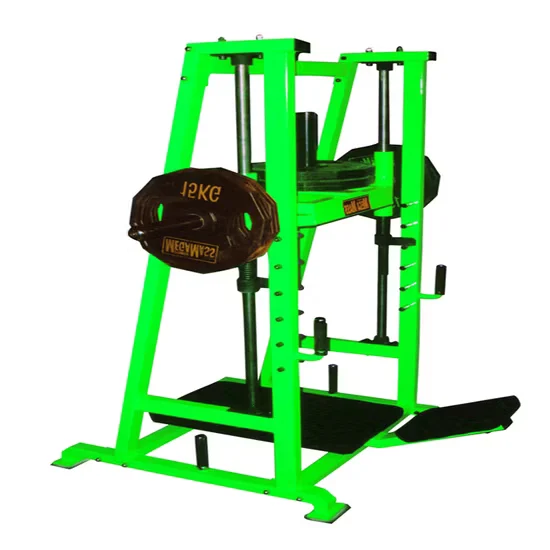
Commercial Vertical Leg Press, 1300×1050×1800mm, 122kg Net Weight — built with industrial steel framing and continuous robotic welding for sustained heavy loading in high-traffic environments. Engineered for professional gyms, clubs, and institutional athletic facilities requiring structural durability. Each unit undergoes load testing before shipment, backed by a 10-year frame warranty and floor planning support for optimal layout integration.
// Spec Highlights
• Direct from Manufacturer · No Middlemen · Worldwide Shipping
01
// Material
Imported Solid Wood
Premium hardwood frames sourced for density and visual warmth.
02
// Hardware
Medical-Grade Silent
Whisper-quiet pulleys and springs for clinical environments.
03
// Customization
Appearance OEM
Color, upholstery, and branding tailored to your studio.
04
// Service
Layout Design
Free venue planning for studios and rehab institutions.
Every component is selected for longevity, performance, and aesthetic harmony - from imported hardwood frames to silent medical-grade accessories.
// Features
Traceable Steel, Verified by the Coil — Every frame on this commercial vertical leg press uses mill-certified Q235 steel, with gauge documentation traceable from the raw coil to the finished unit.
| Parameter | Value |
|---|---|
| Product Type | Commercial Vertical Leg Press |
| Frame Steel Gauge | 11-gauge |
| Frame Tube Size | 3×3 inch |
| Steel Grade | Q235, mill-certified |
| Welding Type | Robotic MIG continuous weld |
| Loading Type | Plate loaded |
| Powder Coating | 200μm scratch-resistant |
| Product Dimensions | 1300×1050×1800 mm |
| Net Weight | 122 kg |
| Exercise Part | Legs |
| Certification | ISO 9001, CE |
| OEM/ODM | Available |
| Facility Type | Typical Use |
|---|---|
| Commercial gym strength floor | Primary lower-body plate-loaded station in high-traffic zones |
| Hotel and resort fitness center | Durable leg training option with minimal maintenance demands |
| University strength and conditioning room | Heavy-duty station for athletic development programs |
| Crossfit box functional zone | Supplementary loaded leg work alongside free-weight areas |
| Rehabilitation and performance center | Controlled vertical pressing for progressive lower-body loading |
Continuous robotic MIG welding eliminates the fatigue failure points that spot welds create under repeated heavy loading.
Many machines marketed as commercial-grade rely on spot welds at critical frame joints. Under sustained vertical leg press loads, these spot welds develop micro-cracks that propagate with every repetition. Within months of heavy daily use, the structural integrity of the frame is compromised — not because the steel failed, but because the weld method was never rated for the stress cycle. On this commercial vertical leg press, every frame joint receives continuous robotic MIG welds with no spot-weld weak points and no cold joints. [NEED_CITE: weld classification and fatigue performance in structural steel]
This commercial vertical leg press occupies the plate-loaded lower-body pressing plane, targeting quadriceps, glutes, and hip extensors through a vertical movement path. In a typical strength zone, it complements horizontal leg press stations, hack squat machines, and free-weight squat racks — filling the vertical pressing gap that horizontal machines cannot address. The 1300×1050 mm footprint fits standard commercial gym floor grids, and the plate-loaded design suits facilities where users prefer self-selected resistance over pin-stack limitations. Its structural capacity handles the full spectrum of commercial users, from rehabilitation clients loading light plates to advanced athletes pushing maximal loads.
A vertical leg press endures a distinct stress profile: heavy static loads at the bottom of the pressing range, dynamic force spikes during the concentric phase, and eccentric loading as plates return under gravity. The frame joints at the base and backrest mounting points absorb the highest cyclic stress with every repetition. Non-sealed bearings in competing units allow sweat and rubber dust to infiltrate, creating play that accelerates wear on guide rods and pivot points. The 200μm powder coating on this commercial vertical leg press resists chipping at plate contact zones and withstands daily exposure to sweat and gym-grade cleaning agents without exposing bare steel. Upholstery on the back pad and shoulder supports must endure sustained compression without bottoming out. [NEED_CITE: EN 957 structural requirements for stationary training equipment]
The 11-gauge, 3×3 inch frame tube on this commercial vertical leg press determines the deformation threshold under load. Thinner gauge tubes — commonly 14-gauge or 12-gauge on lower-tier machines — flex visibly under heavy plate loads, creating an unstable pressing platform and accelerating weld fatigue at tube junctions. The 3×3 inch cross-section provides torsional rigidity that narrower tubes cannot match, keeping the pressing path aligned throughout the full range of motion.
Robotic MIG continuous welding, as applied here, produces uniform weld penetration along the entire joint length. This distributes stress evenly rather than concentrating it at discrete spot-weld locations. Sealed industrial bearings at pivot points prevent contamination ingress — a critical factor in high-traffic gym environments where open bearings degrade rapidly from dust and moisture. The 200μm powder coating, applied over sandblasted steel, creates a surface layer thick enough to resist impact chipping from plate loading while maintaining adhesion under thermal cycling and cleaning chemical exposure.
Facilities that accept thinner frame tubing on plate-loaded machines face progressive frame flex that worsens over time, eventually causing weld failures at stress concentration points. Spot-welded joints that pass visual inspection at delivery crack under sustained heavy use, creating liability exposure and requiring full frame rework or replacement. Non-sealed bearings develop play within the first year of commercial traffic, generating noise, movement inconsistency, and eventual guide rod binding. Thin powder coatings chip at plate contact points, exposing bare steel to sweat-induced corrosion that spreads beneath the coating layer. Low-density upholstery compresses permanently under daily use, requiring replacement within months — and when proprietary foam dimensions are unavailable, the machine sits idle waiting for custom pads. [NEED_CITE: powder coating adhesion standards for fitness equipment surfaces]
Every commercial vertical leg press shipped from this facility carries a 10-year frame warranty backed by 11-gauge mill-certified steel with traceable coil documentation. Robotic MIG continuous welding ensures no spot-weld weak points across the entire frame structure. Each unit undergoes individual load testing before shipment — not sample-based inspection — verifying structural integrity at rated capacity. The 200μm industrial powder coating provides long-term scratch and corrosion resistance across all frame surfaces. For facility planners, 2D-3D CAD layout support ensures this commercial vertical leg press integrates with proper safety clearances and floor density optimization. OEM private label options allow full brand customization including frame color, upholstery selection, and logo placement.
Provide your strength zone floor dimensions and current equipment list to receive a 2D-3D CAD layout showing optimal placement of this commercial vertical leg press with proper safety clearances. Specify your average daily user volume so the structural configuration can be matched to your traffic intensity. Indicate target user body size range to confirm seat and pad positioning compatibility. Custom requirements for frame color, upholstery grade, and facility branding are available through the OEM configuration process.
Q: How does 11-gauge frame steel compare to lighter gauge options on similar machines?
A: The 11-gauge, 3×3 inch tube used on this commercial vertical leg press provides significantly higher resistance to frame flex under heavy plate loads compared to 12-gauge or 14-gauge alternatives. Thinner tubes deform progressively under repeated loading, creating instability at the pressing surface and accelerating weld fatigue. The heavier gauge maintains structural rigidity across the full load range, ensuring consistent pressing path alignment and long-term joint integrity in high-traffic commercial environments.
Q: What welding method is used and why does it matter for a plate-loaded leg press?
A: This commercial vertical leg press uses robotic MIG continuous welding on all frame joints, producing uniform weld penetration along the entire joint length. Spot welding — common on lower-tier machines — creates discrete attachment points that concentrate stress and develop fatigue cracks under the cyclic heavy loading typical of leg press use. Continuous welds distribute stress evenly, eliminating weak points and meaningfully extending frame service life under daily commercial training volumes.
Q: What floor space and safety clearances are needed for installation?
A: The commercial vertical leg press measures 1300×1050 mm in footprint. A minimum clearance of 600 mm should be maintained on all sides to allow safe plate loading and unloading, user entry and exit, and emergency access. Ceiling height must accommodate the 1800 mm frame height plus overhead clearance. Floor surface should be level and rated to support the combined static and dynamic loads from frame weight, plate load, and user force during pressing movements.
Q: What maintenance is required to keep the machine in commercial service condition?
A: Quarterly bolt re-torque checks on all structural connections prevent loosening from vibration and cyclic loading. Sealed bearings at pivot points should be inspected quarterly for smooth rotation and replaced if play develops. The 200μm powder coating requires only pH-neutral cleaning to maintain surface integrity. Upholstery on the back pad and shoulder supports should be monitored for permanent compression and replaced when deformation affects user support. Guide rods should remain clean and free of debris to ensure smooth plate carrier travel.
Premium aesthetics meet quiet operation for boutique studio environments.
Medical-grade silence and precision for sports & postpartum recovery.
Furniture-grade craftsmanship for premium residential installations.
Compact premium setups for one-on-one and small-group training.
Aesthetic Pilates integration for hybrid wellness studio programming.
Multi-unit deployment with instructor-grade reliability for certification programs.
Tell us about your project. Our team will respond within 24 hours with pricing, customization options, and shipping details.
// Sales Director
William
+86 132 2531 1800
// Export Manager
Bella
+86 198 5412 8032
william@bickfit.com