
01 / Scenario
STUDIO
P
High-End Pilates Studios
Premium aesthetics meet quiet operation for boutique studio environments.
ISO
9001
CE
Certified
OEM
Available
10YR
Warranty
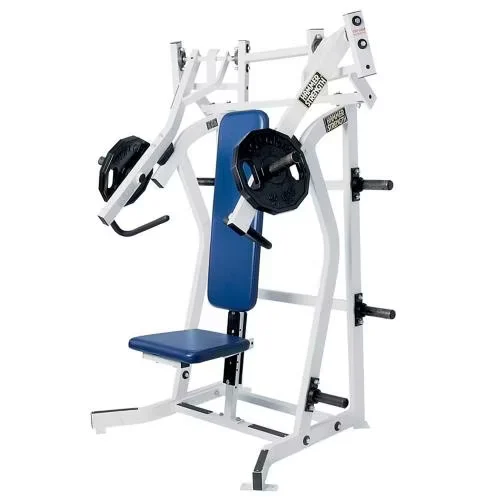
Plate Loaded ISO-Lateral Incline Chest Press, 3×3 inch Frame, 1435×1666×1978mm — engineered with Q235/Q345 industrial steel and robotic MIG continuous welds to eliminate cold joints under repeated heavy loading. Sealed bearing pivot points maintain the converging press path without bushing replacement cycles, while 200μm powder coating resists chipping at high-contact zones. Every unit undergoes three-stage load testing before shipment, backed by a 10-year frame warranty.
// Spec Highlights
• Direct from Manufacturer · No Middlemen · Worldwide Shipping
01
// Material
Imported Solid Wood
Premium hardwood frames sourced for density and visual warmth.
02
// Hardware
Medical-Grade Silent
Whisper-quiet pulleys and springs for clinical environments.
03
// Customization
Appearance OEM
Color, upholstery, and branding tailored to your studio.
04
// Service
Layout Design
Free venue planning for studios and rehab institutions.
Every component is selected for longevity, performance, and aesthetic harmony - from imported hardwood frames to silent medical-grade accessories.
// Features
Mill-Traceable Steel — Every frame tube on the ISO-Lateral Incline Press traces back to its original coil certification, verifying grade and gauge before fabrication begins.
| Parameter | Value |
|---|---|
| Product Type | Plate Loaded Incline Chest Press |
| Frame Steel Gauge | 11-gauge |
| Frame Tube Size | 3×3 inch |
| Steel Grade | Q235 / Q345 |
| Welding Type | Robotic MIG continuous weld |
| Loading Type | Plate loaded |
| Bearing Type | Sealed industrial bearing |
| Powder Coating | 200μm scratch-resistant |
| Product Dimensions | 1435×1666×1978mm |
| Net Weight | 139kg |
| Exercise Target | Chest (incline press path) |
| Movement Pattern | ISO-lateral converging |
| Certification | CE, ISO 9001, RoHS |
| Upholstery | Available in standard or high-density options |
| Warranty | 10-year frame |
| Facility Type | Typical Use |
|---|---|
| Commercial gym strength floor | Primary incline press station in the plate-loaded zone |
| Hotel and resort fitness center | Durable chest press for mixed-ability guest use |
| University strength and conditioning room | Heavy-loading incline press for athletic programs |
| Crossfit box functional zone | Supplemental strength station for upper-body programming |
| Rehabilitation and performance center | Controlled converging press path for return-to-training protocols |
Continuous robotic MIG welds distribute stress across the entire junction instead of concentrating it at isolated tack points.
Many commercial incline presses leave the factory with frame joints held together by spot welds that look clean on the surface but create brittle failure points underneath. When a lifter pushes heavy plates through the converging ISO-lateral path, the independent arms generate torsional load that travels back into the main upright — right where those spot welds sit. [NEED_CITE: weld classification and fatigue performance in structural steel] Within months of daily commercial use, hairline fractures propagate along the heat-affected zone, and the arm assembly begins to flex visibly under load. The commercial plate loaded iso-lateral incline chest press addresses this by running continuous MIG welds along every high-stress junction, performed by robotic arms that maintain consistent travel speed and penetration depth across the entire seam.
The ISO-Lateral Incline Press occupies a defined role in the upper-body pressing cluster, sitting between flat and decline stations to complete the full incline-to-decline range. Its converging ISO-lateral arm path targets the clavicular head of the pectoralis major while engaging the anterior deltoids and triceps through a natural arc. In a commercial strength zone, this commercial plate loaded iso-lateral incline chest press pairs with a flat ISO-lateral press and a pec deck to cover horizontal and incline pressing planes without redundancy. The footprint suits medium-to-high traffic facilities where independent arm movement accommodates lifters with unilateral strength imbalances, and the plate-loaded design keeps throughput high since there is no pin-select stack to queue behind.
An incline press frame endures a specific stress profile: the loaded horns project forward and upward, creating a moment arm that multiplies the force transmitted into the upright during every rep. [NEED_CITE: EN 957 structural requirements for stationary training equipment] In a facility running ten or more hours daily, each arm cycles through thousands of load-unload sequences per week, and the pivot bearings absorb eccentric shock every time a user releases the handle at the top of the movement. The upright tube experiences combined bending and torsional stress, particularly at the base gusset where the vertical member meets the floor-mounted stabilizer. Sealed bearings at each pivot point prevent sweat and chalk dust from migrating into the raceway, preserving smooth arm travel across years of use. The 200μm powder coating resists abrasion at the horn contact zones where plates are loaded and stripped repeatedly throughout the day.
The 3×3 inch frame tube with 11-gauge wall thickness establishes the deformation threshold — the cross-sectional area and wall thickness together determine how much bending moment the upright can absorb before permanent flex occurs. Steel grade Q235 or Q345 defines the yield point: Q345 offers a meaningfully higher threshold before plastic deformation sets in under sustained heavy loading. Robotic MIG continuous welding means the filler metal penetrates the full joint depth without the cold-start and cold-stop defects that manual welding introduces at every rod change. Sealed industrial bearings at the ISO-lateral pivot eliminate the bushing replacement cycle that unsealed pivot points demand in high-traffic environments, where particulate contamination accelerates wear on open bronze or nylon bushings. The 200μm powder coating, applied over sandblast pre-treatment, provides a coating thickness that resists chipping at plate contact points — thin coatings fail here first, exposing bare steel to sweat corrosion within the initial months.
Thin-wall tubing on an incline press does not fail catastrophically at first — it flexes, and that flex transfers directly into the lifter’s shoulder joint as the press path wanders off-axis. Spot welds that crack under torsional load leave the gym operator liable when an arm assembly separates during use. Non-sealed pivot bearings develop play within the first year of heavy commercial rotation, turning a smooth converging arc into a loose, rattling motion path that experienced lifters immediately notice and avoid. [NEED_CITE: bearing contamination and premature failure in commercial fitness equipment] Low-density upholstery compresses permanently under daily use, exposing the underlying board and creating a comfort complaint that drives members away from the station. Undersized powder coating chips at the horn edges, initiating rust streaks that stain the floor and signal neglect to every person walking past the machine.
The 11-gauge frame steel arrives with mill certification traceable to the coil, so you can verify material grade rather than accepting a vague "commercial grade" claim. Robotic MIG welding produces continuous seams at every junction — the arm pivot, the base gusset, the horn bracket — with no spot-weld weak points to fail under repeated incline pressing loads. Every unit undergoes a three-stage inspection with load testing before shipment, meaning the machine that arrives at your facility has been physically verified under load, not just visually checked. The 200μm industrial powder coating covers a sandblasted surface, providing adhesion and chip resistance that holds up at the plate-loading contact zones. A 10-year frame warranty backs the structural assembly. Floor planning support includes 2D and 3D CAD layouts that position this commercial plate loaded iso-lateral incline chest press with correct safety clearances around the horns and arm travel path, preventing the cramped spacing that creates collision risks between adjacent stations.
Provide your strength zone dimensions and current equipment list to receive a 2D or 3D floor plan that positions this incline press with correct safety clearances and traffic flow. Specify your facility’s daily user volume so we can confirm the structural grade matches your throughput demands. Share your target demographic’s body type range to verify seat and back pad geometry accommodates your membership. State any customization requirements including frame color, logo placement, or upholstery material preference for OEM private label projects.
Q: How do I verify the frame steel is genuinely 11-gauge and not a thinner wall marketed as commercial grade?
A: Request the mill certificate that traces the steel coil to its production batch, listing gauge, grade, and chemical composition. A manufacturer with genuine 11-gauge Q235 or Q345 stock will provide this documentation without hesitation. Without coil traceability, "commercial grade" is an unverifiable marketing claim that leaves you guessing about the actual deformation threshold of the upright tubes.
Q: What does plate-loaded offer over a selectorized chest press for a high-traffic commercial floor?
A: Plate-loaded designs eliminate the weight stack, cable, and guide rod assembly that requires periodic maintenance and occasional part replacement in selectorized machines. The resistance transfer is direct through the ISO-lateral arm, and loading is infinitely adjustable with standard plates. For facilities where lifters routinely exceed pin-select stack limits, plate-loaded stations handle unlimited external loading without mechanical modification.
Q: How much floor space should I allocate around the ISO-Lateral Incline Press for safe operation?
A: Beyond the machine’s 1435×1666mm footprint, allocate clearance on both sides for plate loading and on the front for user entry and exit. Exact spacing depends on adjacent equipment height and traffic patterns. A 2D or 3D CAD layout accounts for these variables, ensuring safe passage between stations and preventing horn collision with neighboring machines during loading.
Q: What maintenance do the ISO-lateral pivot bearings require in daily commercial use?
A: Sealed industrial bearings at each pivot point are designed to run without lubrication or adjustment during normal service life. Inspect them quarterly by cycling the arms through full range and checking for lateral play or roughness. If contamination has breached the seal in a particularly harsh environment, replacement bearings are available as spare parts rather than requiring full arm disassembly.
Premium aesthetics meet quiet operation for boutique studio environments.
Medical-grade silence and precision for sports & postpartum recovery.
Furniture-grade craftsmanship for premium residential installations.
Compact premium setups for one-on-one and small-group training.
Aesthetic Pilates integration for hybrid wellness studio programming.
Multi-unit deployment with instructor-grade reliability for certification programs.
Tell us about your project. Our team will respond within 24 hours with pricing, customization options, and shipping details.
// Sales Director
William
+86 132 2531 1800
// Export Manager
Bella
+86 198 5412 8032
william@bickfit.com


