01 / Scenario
STUDIO
P
High-End Pilates Studios
Premium aesthetics meet quiet operation for boutique studio environments.
ISO
9001
CE
Certified
OEM
Available
10YR
Warranty
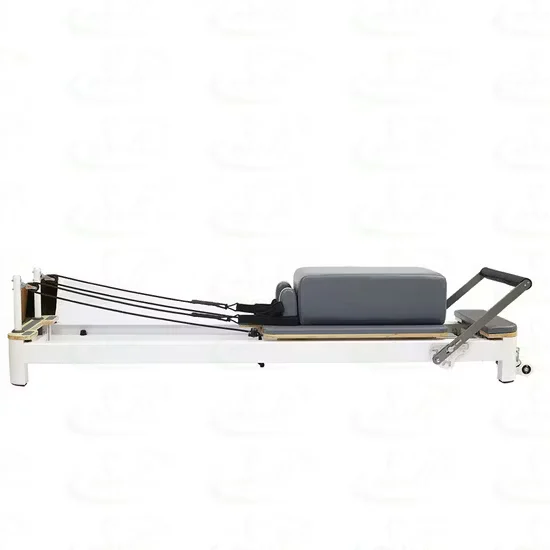
Professional Aluminum Alloy Pilates Reformer, 2570×730mm Footprint, 90kg Net Weight — aircraft-grade aluminum frame delivers corrosion resistance and structural rigidity without steel's weight penalty, while integrated long box, jump board, and platform expand exercise repertoire for high-traffic studio environments. Customizable logo and color options support brand alignment for chain operators. Backed by 3-year warranty and unit-level load testing from a 15,000㎡ vertically integrated facility with 17-year manufacturing heritage.
// Spec Highlights
• Direct from Manufacturer · No Middlemen · Worldwide Shipping
01
// Material
Imported Solid Wood
Premium hardwood frames sourced for density and visual warmth.
02
// Hardware
Medical-Grade Silent
Whisper-quiet pulleys and springs for clinical environments.
03
// Customization
Appearance OEM
Color, upholstery, and branding tailored to your studio.
04
// Service
Layout Design
Free venue planning for studios and rehab institutions.
Every component is selected for longevity, performance, and aesthetic harmony - from imported hardwood frames to silent medical-grade accessories.
// Features
Corrosion-Resistant Alloy Frame — Aircraft-grade aluminum alloy construction eliminates rust risk while maintaining structural rigidity across thousands of loaded carriage cycles.
| Parameter | Value |
|---|---|
| Product Type | Pilates Reformer |
| Frame Material | Aluminium Alloy |
| Product Dimensions | 2570 × 730 × 270 mm |
| Net Weight | 90 kg |
| Color Options | White, custom colors available |
| Included Accessories | Long Box, Jump Board, Platform |
| Customization | Logo and color customization available |
| Warranty | 3 Years |
| Facility Type | Typical Use |
|---|---|
| Commercial Pilates studio | Daily group and private reformer sessions |
| Boutique fitness studio | High-frequency class rotation with multiple users per day |
| Rehabilitation and physical therapy center | Controlled resistance work for recovery protocols |
| Hotel and resort wellness facility | Guest-accessible reformer sessions with low maintenance demands |
| Home studio | Dedicated personal practice in a residential setting |
Unspecified alloys flex and fatigue under repeated spring tension long before the warranty expires.
Many reformers marketed for studio use rely on thin-walled steel or unnamed alloy blends that warp under cyclic spring loading. The carriage rail — the single most stressed structural interface on any reformer — demands dimensional stability that generic material claims cannot guarantee. Aluminum alloy eliminates the corrosion problem entirely, which matters in studios where humidity, sweat residue, and frequent cleaning accelerate oxidation on exposed steel. When a rail warps even fractionally, the carriage develops lateral play, the wheels grind against the track, and the movement feel degrades from smooth to shuddering within months [NEED_CITE: material fatigue behavior in cyclically loaded aluminum structures].
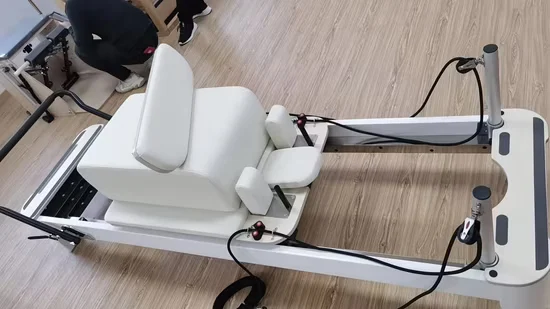
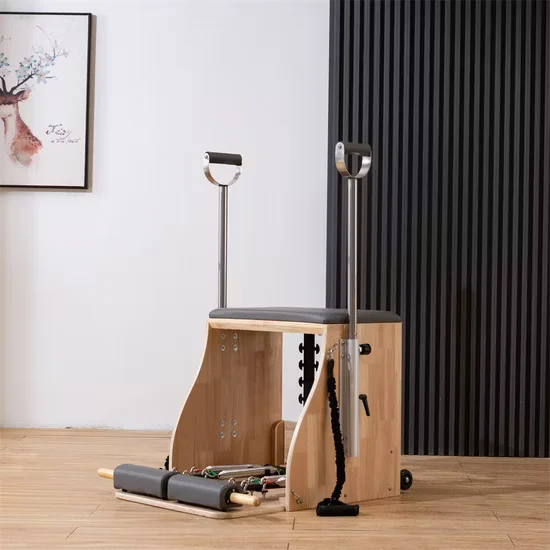
The commercial aluminum alloy pilates reformer supports the full repertoire of supine, prone, seated, and standing positions, covering sagittal, frontal, and transverse plane movements through adjustable spring resistance. In a studio layout, it pairs naturally with Cadillac towers and Wunda chairs to create a complete apparatus circuit. The 2570 × 730 mm footprint fits standard studio bays with adequate clearance between adjacent units for instructor circulation. The platform accommodates users across a wide range of body sizes, and the included long box extends exercise variety for intermediate to advanced practitioners.
Every reformer session generates hundreds of carriage transitions — each one transferring load through the wheels, bearings, and rail interface. The dominant stress pattern is cyclic rather than static, meaning fatigue accumulation matters more than peak load capacity. Spring tension creates both concentric and eccentric resistance phases, and the carriage rail must maintain straightness tolerance under these alternating forces. Bearing wear at the wheel-to-rail contact point is the most common failure path in high-traffic studios, where unsealed bearings accumulate particulate debris and develop lateral play. The aluminum alloy frame resists the corrosion that compounds this problem in humid environments or facilities with aggressive cleaning protocols [NEED_CITE: bearing degradation under cyclic loading in fitness equipment].
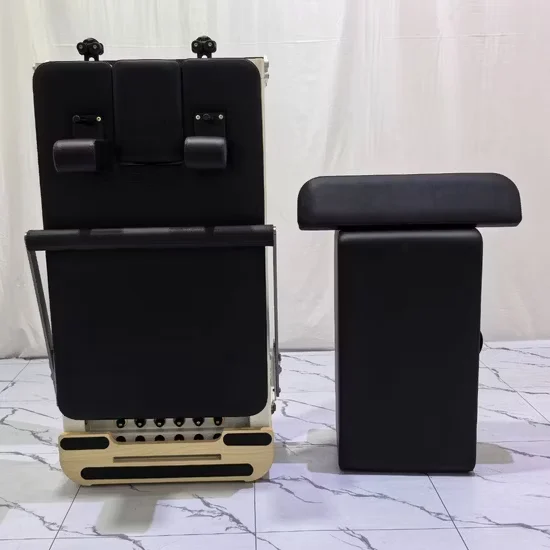
Aluminum alloy framing delivers corrosion immunity without requiring powder coating as a primary defense — a significant advantage over carbon steel in environments where moisture exposure is constant. The net weight of 90 kg provides sufficient platform stability to prevent frame shift during explosive jump board work while remaining repositionable for studio reconfiguration. The 2570 mm rail length accommodates full-range carriage travel for taller users without the frame flex that shorter reformers exhibit under loaded extension. Accessory integration — long box, jump board, and platform — means the unit ships as a complete workstation rather than requiring aftermarket additions that may not align with the rail geometry.
Thin-walled frames in budget reformers develop micro-deformation along the carriage rail after sustained use, creating uneven tracking that manifests as carriage wobble during slow controlled movements. Unsealed bearings in the wheel assembly accumulate chalk dust and skin particles, progressing from smooth glide to grinding within the first year of commercial service. Non-standard spring ratings mean replacement springs from other manufacturers will not match the original resistance curve, locking studio owners into single-source supply chains. Low-density padding on the shoulder rest and headrest compresses visibly within months, requiring upholstery replacement that often exceeds the cost difference between entry-level and commercial-grade units [NEED_CITE: lifecycle cost comparison of commercial versus light-commercial fitness apparatus].
The aluminum alloy frame is cut using fiber laser systems that hold tight dimensional tolerance, ensuring rail straightness from the first unit to the five-hundredth. Robotic MIG welding produces continuous weld lines at structural joints rather than the spot-weld patterns that create failure points under cyclic loading. Every unit undergoes load testing before shipment — not sample-based batch testing, but individual unit verification. The powder coating process applies an industrial-grade finish at thicknesses sufficient to resist chipping at contact points and hardware mounting surfaces. A 3-year warranty backs the structural integrity of the frame, and customization options allow studio chains to align equipment appearance with their brand identity. Facility planning support includes CAD-compatible footprint data so operators can model reformer spacing and instructor circulation paths before committing to a floor layout.
Provide your studio floor dimensions and current apparatus list to receive a 2D-3D layout showing reformer placement, clearance zones, and instructor circulation paths. Specify your average daily user count so we can confirm the structural rating matches your traffic volume. Indicate any brand alignment requirements — custom color and logo options are available for chain operators seeking visual consistency across locations.
Q: How do I distinguish a commercial-grade Pilates reformer from a light-commercial one?
A: Examine the frame material specification, rail straightness tolerance, and bearing type rather than relying on marketing labels. Commercial-grade reformers use mill-certified alloys with documented structural ratings, sealed bearings rated for continuous operation, and spring systems with verified fatigue cycle performance. Request load test documentation and warranty terms that cover high-frequency commercial use, not just residential or limited-hour operation.
Q: What are the durability trade-offs between aluminum alloy and steel frames?
A: Aluminum alloy eliminates corrosion risk entirely, which is a significant advantage in humid studios or facilities with aggressive cleaning protocols. Steel frames can be equally rigid when properly gauged but require intact powder coating to prevent oxidation at weld points and contact surfaces. Aluminum frames are lighter, making studio reconfiguration easier, while still maintaining the mass needed for platform stability during dynamic exercises.
Q: How do spring resistance levels work on a studio-class reformer?
A: Studio-class reformers typically offer multiple springs with varying tension ratings that can be combined to create progressive resistance levels. The spring system should provide smooth engagement without sudden tension spikes during carriage transitions. Ask for documented spring tension specifications so instructors can build standardized resistance progressions across group classes and maintain consistency when clients move between different reformer units.
Q: What spacing do I need between reformers in a commercial studio layout?
A: Allow sufficient lateral clearance between units so instructors can circulate freely and provide hands-on cueing without disturbing adjacent clients. The 2570 × 730 mm footprint should be combined with a minimum of 1000 mm between frames, plus additional space at the head and foot ends for accessory storage and entry. Factor in jump board clearance where explosive movements extend beyond the platform boundary.
Premium aesthetics meet quiet operation for boutique studio environments.
Medical-grade silence and precision for sports & postpartum recovery.
Furniture-grade craftsmanship for premium residential installations.
Compact premium setups for one-on-one and small-group training.
Aesthetic Pilates integration for hybrid wellness studio programming.
Multi-unit deployment with instructor-grade reliability for certification programs.
Tell us about your project. Our team will respond within 24 hours with pricing, customization options, and shipping details.
// Sales Director
William
+86 132 2531 1800
// Export Manager
Bella
+86 198 5412 8032
william@bickfit.com