01 / Scenario
STUDIO
P
High-End Pilates Studios
Premium aesthetics meet quiet operation for boutique studio environments.

ISO
9001
CE
Certified
OEM
Available
10YR
Warranty
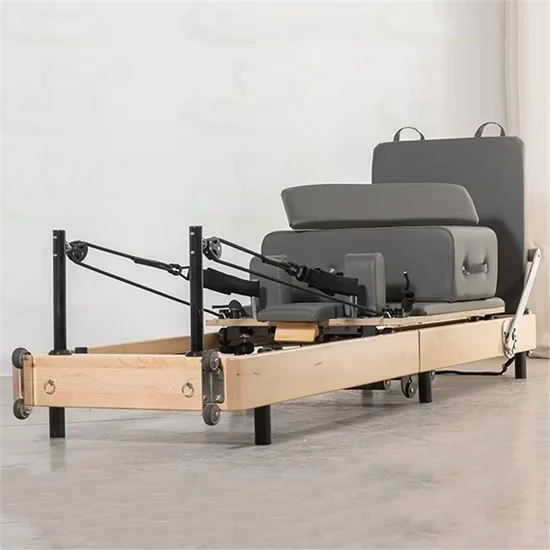
SRY-12A Folding Pilates Reformer, Aluminum Frame, 2570×730mm, 90kg — engineered with corrosion-resistant aluminum chassis and integrated folding hinge for compact storage between high-turnover studio sessions. Includes long box, jump board, and platform to expand movement repertoire without additional equipment investment. Backed by 3-year warranty and customized logo options for brand alignment.
Every unit undergoes load testing before shipment, ensuring structural integrity for commercial pilates environments.
// Spec Highlights
• Direct from Manufacturer · No Middlemen · Worldwide Shipping
01
// Material
Imported Solid Wood
Premium hardwood frames sourced for density and visual warmth.
02
// Hardware
Medical-Grade Silent
Whisper-quiet pulleys and springs for clinical environments.
03
// Customization
Appearance OEM
Color, upholstery, and branding tailored to your studio.
04
// Service
Layout Design
Free venue planning for studios and rehab institutions.
Every component is selected for longevity, performance, and aesthetic harmony - from imported hardwood frames to silent medical-grade accessories.
// Features
Aluminum rigidity under dynamic travel — the 2570mm frame maintains rail alignment during loaded carriage push-pull cycles, with a folding hinge rated for repeated studio turnover without play development.
| Parameter | Value |
|---|---|
| Designation | SRY-12A |
| Frame Material | Aluminum |
| Product Dimensions | 2570×730×270mm |
| Net Weight | 90kgs |
| Accessory | Long Box / Jump Board / Platform |
| Target User | Adult / Unisex |
| Warranty | 3 Years |
| Logo | Customized Is Allowed |
| Facility Type | Typical Use |
|---|---|
| Pilates studio | High-turnover group reformer classes requiring fold-and-store between sessions |
| Rehabilitation center | Controlled range-of-motion training with adjustable spring resistance |
| Yoga training facility | Multi-discipline studios adding reformer-based strength work |
| Home fitness | Space-constrained environments needing compact storage between uses |
Many reformers marketed as studio-grade use thin-wall steel frames that flex under loaded carriage travel, causing rail misalignment and uneven spring tension over time. The commercial folding aluminum pilates reformer addresses this by pairing an aluminum chassis with a hinge mechanism engineered to lock rigidly in the deployed position — so the fold function serves storage logistics without compromising structural continuity during exercise.
A foldable frame must carry load identically to a fixed one once opened. [NEED_CITE: structural hinge design and load transfer in folding fitness equipment]
When a reformer’s folding joint develops even slight play, the carriage wheels no longer track parallel to the rail. This creates asymmetric friction, uneven spring engagement, and eventually visible wear patterns on both the rail surface and the wheel bearings. In a studio running back-to-back classes, this degradation can appear within months rather than years.
This commercial folding aluminum pilates reformer occupies the transverse and sagittal plane movement categories — covering spinal articulation, hip hinge patterns, and loaded limb extension work. In a mixed studio layout, it complements mat-based zones and tower units by offering spring-resisted horizontal travel that fixed equipment cannot replicate. The 2570×730mm deployed footprint suits facilities running 8–12 person group classes, while the folding function allows the same floor area to serve dual purposes across different class formats throughout the day.
A reformer in a commercial studio environment experiences cyclic loading that differs fundamentally from home use. The carriage undergoes thousands of push-pull cycles weekly, with load direction shifting between concentric and eccentric resistance depending on the exercise. The rail-carriage wheel interface bears both vertical body weight and horizontal shear forces during transitional movements. Folding hinges experience impact loading each time the frame is deployed or collapsed — a stress category that fixed-frame reformers never encounter. Spring attachment points undergo repetitive tension cycling at the hook hardware, where fatigue cracking can initiate if the metal grade or heat treatment is insufficient. [NEED_CITE: fatigue behavior of aluminum alloys under cyclic loading in fitness equipment]
The aluminum frame material choice directly affects both weight and rigidity. Aluminum offers corrosion resistance and reduced mass — critical for a unit that must be folded and moved regularly — while maintaining sufficient stiffness to prevent rail deflection under loaded carriage travel. The 270mm frame height provides a low center of gravity that stabilizes the unit during standing exercises and jump board work. The 90kg net weight, distributed across the 2570mm length, ensures the reformer remains planted during dynamic movements without requiring permanent floor anchoring. The inclusion of a long box, jump board, and platform as standard accessories means the movement repertoire is not limited by aftermarket part sourcing.
Thin-wall aluminum or steel frames that prioritize weight reduction over section modulus will deflect under loaded carriage travel — a deflection that compounds at the hinge point. A folding joint designed without adequate locking engagement will develop play over time, requiring adjustment or replacement. Non-sealed carriage bearings exposed to studio dust and sweat will degrade glide quality within the first year. Low-density foam upholstery on the carriage compresses permanently under daily commercial use, altering the user’s starting position and movement mechanics. Powder coating applied without proper surface preparation chips at contact points, exposing bare aluminum to oxidation. [NEED_CITE: surface treatment adhesion and wear resistance in aluminum fitness equipment]
The aluminum frame construction eliminates the corrosion concerns associated with steel reformers in humidity-exposed studio environments. The folding mechanism reduces the storage footprint between sessions, allowing facilities to reallocate floor space for mat work or other equipment without purchasing additional units. The 3-year warranty covers structural and mechanical components, providing procurement confidence for high-turnover commercial use. Custom logo application supports brand consistency across multi-location studio operators. The included long box, jump board, and platform eliminate the need for separate accessory purchases that often go unmatched in specification.
Provide your studio floor dimensions and current equipment inventory to receive a 2D-3D layout plan showing reformer placement with safe clearance zones. Specify your daily class frequency and average participant count to confirm the structural grade matches your usage intensity. Indicate your target user height range to verify carriage travel and spring resistance settings accommodate your client demographic. Custom color and logo options are available for multi-location operators requiring brand alignment.
Q: How does aluminum frame construction compare to steel in reformer durability and maintenance?
A: Aluminum offers inherent corrosion resistance, eliminating the rust concerns associated with steel frames in humidity-exposed studio environments. The material’s lower density reduces overall unit weight, facilitating the folding and repositioning that studio turnover demands. Structural rigidity depends on frame section design rather than material density alone — properly engineered aluminum frames maintain rail alignment under loaded carriage travel comparable to steel equivalents, while requiring less surface maintenance over the equipment’s service life.
Q: What load capacity does the folding mechanism support during dynamic carriage use?
A: The folding hinge is engineered to lock rigidly in the deployed position, transferring carriage loads through the frame structure identically to a fixed-frame reformer. The locking engagement is designed to withstand the combined vertical and horizontal forces generated during loaded push-pull movements and jump board exercises. Regular inspection of the locking mechanism ensures continued engagement integrity, particularly in high-turnover studio environments where the reformer is folded and deployed multiple times daily.
Q: How to evaluate rail glide quality and long-term wear resistance?
A: Rail glide quality depends on the material pairing between the rail surface and carriage wheel bearings, as well as the precision of rail straightness and surface finish. Sealed bearings protect against studio dust and moisture contamination that accelerates wear. Long-term glide consistency requires both initial manufacturing precision and a maintenance protocol that includes regular rail cleaning and bearing inspection. A reformer that glides smoothly when new but degrades within months typically indicates inadequate bearing sealing or rail surface treatment.
Q: What is the spring replacement cycle and are springs user-serviceable?
A: Spring service life depends on usage frequency, resistance level selection, and environmental conditions. In a commercial studio running multiple daily classes, springs may require replacement based on visible elongation or loss of progressive resistance characteristics. The spring attachment hardware is designed for user replacement without specialized tools, allowing studios to maintain consistent resistance levels without scheduling technician visits. Keeping spare springs in inventory minimizes equipment downtime when replacement becomes necessary.
Q: Folded vs. deployed footprint — how to plan studio floor layout with mixed reformer and mat zones?
A: The deployed footprint of 2570×730mm requires adequate clearance on all sides for safe carriage travel and user mounting. The folding function reduces the storage footprint significantly, allowing the same floor area to serve mat-based classes or other equipment when reformer sessions are not scheduled. Studio layout planning should account for both the deployed operating zone with clearance and the folded storage configuration, ensuring traffic flow remains unobstructed during class transitions and non-reformer programming.
Premium aesthetics meet quiet operation for boutique studio environments.
Medical-grade silence and precision for sports & postpartum recovery.
Furniture-grade craftsmanship for premium residential installations.
Compact premium setups for one-on-one and small-group training.
Aesthetic Pilates integration for hybrid wellness studio programming.
Multi-unit deployment with instructor-grade reliability for certification programs.
Tell us about your project. Our team will respond within 24 hours with pricing, customization options, and shipping details.
// Sales Director
William
+86 132 2531 1800
// Export Manager
Bella
+86 198 5412 8032
william@bickfit.com