01 / Scenario
STUDIO
P
High-End Pilates Studios
Premium aesthetics meet quiet operation for boutique studio environments.
ISO
9001
CE
Certified
OEM
Available
10YR
Warranty
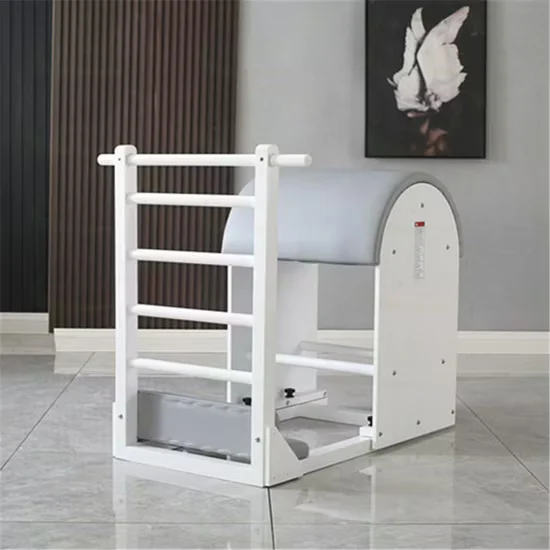
Solid Wood Pilates Ladder Barrel, 1100×770×980mm, 50kgs Net Weight — engineered with reinforced hardwood joinery to resist warping and joint loosening under repetitive spinal flexion loading. Surface finishing balances grip feel and splinter resistance for high-turnover studio environments. Backed by a 3-year structural warranty and factory-direct OEM customization from a 15,000㎡ vertically integrated plant.
// Spec Highlights
• Direct from Manufacturer · No Middlemen · Worldwide Shipping
01
// Material
Imported Solid Wood
Premium hardwood frames sourced for density and visual warmth.
02
// Hardware
Medical-Grade Silent
Whisper-quiet pulleys and springs for clinical environments.
03
// Customization
Appearance OEM
Color, upholstery, and branding tailored to your studio.
04
// Service
Layout Design
Free venue planning for studios and rehab institutions.
Every component is selected for longevity, performance, and aesthetic harmony - from imported hardwood frames to silent medical-grade accessories.
// Features
Mill-Certified Hardwood Frame — Solid wood core verified by species documentation, not unlabeled "commercial grade" claims that hide engineered composites.
| Parameter | Value |
|---|---|
| Product Type | Pilates Ladder Barrel |
| Wood Species | Solid Hardwood (species options available) |
| Product Dimensions | 1100×770×980mm |
| Net Weight | 50kgs |
| Ladder Rung Configuration | Fixed spacing |
| Surface Finish | Multi-grit sanding with protective coating |
| Color | Solid Color (custom finish options available) |
| Logo | Customized Is Allowed |
| Transport Package | Standard Wood Case |
| Warranty | 3 Years |
| Facility Type | Typical Use |
|---|---|
| Commercial Pilates studio | Spinal articulation, extension, and core conditioning apparatus |
| Yoga and functional training facility | Flexibility work and movement preparation station |
| Rehabilitation and movement center | Assisted stretching and postural correction exercises |
| Hotel and boutique fitness studio | Standalone apparatus for private or semi-private sessions |
Verify the core, not the label — most "solid wood" Pilates apparatus hides veneer-wrapped particle board that delaminates within the first year of studio rotation.
When a Pilates studio schedules sixty classes per week across a single ladder barrel, the repetitive loading from spinal flexion and extension cycles concentrates stress at every joint. Engineered wood cores compress and separate under this rhythm, especially where ladder rungs meet the uprights and where the barrel staves join the base frame. I have watched laminated units arrive on the floor looking pristine, only to develop audible creaking and visible seam gaps before the first seasonal membership renewal [NEED_CITE: wood joinery fatigue performance under cyclic loading in studio equipment]. The commercial solid wood Pilates Ladder Barrel eliminates this failure mode by using full-section hardwood throughout the structural members, paired with reinforced joinery designed for sustained commercial rotation.
The commercial solid wood Pilates Ladder Barrel addresses the sagittal plane, targeting spinal extensors, hip flexors, and deep abdominal stabilizers through controlled articulation. It complements reformer and Cadillac stations in a multi-apparatus studio, filling the gap between mat-based work and spring-loaded resistance. The barrel curvature accommodates users across a broad height range, making it suitable for open-enrollment classes where body proportions vary significantly between sessions. Facilities running high-density scheduling benefit from placing this unit along perimeter walls where its footprint stays clear of traffic lanes between larger apparatus.
Each session on a ladder barrel involves repeated forward folds, lateral drapes, and loaded extensions that transmit force through the rung-to-upright joints and the barrel-to-base connections. In a facility running eight to twelve sessions daily, these joints accumulate thousands of load cycles per week. The barrel curvature itself acts as a cantilever, concentrating bending stress at the point where the curved staves anchor into the base frame. Surface finish degrades fastest where hands grip the rungs and where the barrel contacts cleaning solutions between sessions. Unsealed wood absorbs moisture from sweat and humidity, causing grain raise and splinter formation over time [NEED_CITE: hardwood moisture cycling and surface degradation in fitness environments].
Dowel joints, mortise-and-tenon connections, and mechanical fastener assemblies each respond differently to the cyclic loading a ladder barrel endures. Simple dowel connections rely entirely on adhesive shear strength, which degrades as wood expands and contracts with seasonal humidity changes in a studio environment. Mortise-and-tenon joinery distributes load across a broader contact surface, resisting the rotational forces that ladder rungs experience when users pull against them during extension exercises. Surface finishing follows a multi-grit sanding sequence before protective coating application, which closes the wood pores and creates a surface that resists splintering while maintaining enough texture for secure hand placement. The 1100×770mm footprint provides a stable base without dominating floor space, and the 50kg net weight keeps the unit anchored during use without requiring permanent floor anchoring.
A ladder barrel finished in attractive veneer over a composite core may photograph well for a studio website, but the structural compromise surfaces quickly under commercial scheduling. Veneer-wrapped engineered cores cannot be sanded and refinished when surface damage occurs, meaning a single deep scratch or moisture intrusion event becomes a permanent cosmetic defect. Non-reinforced joints loosen progressively, creating wobble that instructors notice during assisted stretches and that ultimately requires workshop removal for re-gluing. Units built with undersized rung stock develop visible deflection under heavier users, eroding client confidence in the equipment. When replacement parts are unavailable from the original supplier, a single failed joint can retire the entire apparatus from the studio floor [NEED_CITE: total cost of ownership for studio apparatus with non-serviceable construction].
The hardwood species selection prioritizes dimensional stability and grain structure suited to the bending and compressive loads a ladder barrel experiences. Reinforced joinery at every structural node — rung-to-upright, stave-to-base, and base-to-floor contact — addresses the exact failure points observed across years of studio equipment service. The three-year structural warranty covers the frame against joint separation and material failure under normal commercial use. The 1100×770×980mm dimensions allow floor planning with adequate clearance between adjacent apparatus, and OEM customization on finish and logo means the unit can match an existing studio aesthetic without compromising the core construction. Factory-direct sourcing eliminates distributor markup, keeping the specification accessible for multi-unit studio buildouts.
Provide your studio floor plan and existing apparatus list to receive a 2D layout showing placement and clearance requirements for the ladder barrel. Specify average daily session volume so we can confirm the structural grade aligns with your usage pattern. Share target client demographics to verify the barrel curvature and rung spacing accommodate your user height range. Indicate finish color and logo requirements for OEM customization options.
Q: How can I confirm the wood is genuinely solid hardwood and not veneer over engineered core?
A: Request mill documentation that identifies the wood species and origin for the structural members. Solid hardwood shows continuous grain through cross-sections at joints and cut edges, while veneer reveals a thin surface layer over a different core material. Inspect any exposed joint — mortise-and-tenon or dowel connections should show matching grain on both mating surfaces. Reputable manufacturers provide species disclosure as standard documentation with purchase.
Q: What joint construction method prevents loosening under high-frequency studio scheduling?
A: Mortise-and-tenon joinery offers superior long-term performance compared to simple dowel or adhesive-only connections because it distributes cyclic loads across a larger bonding surface. Mechanical fasteners can supplement wood joints at high-stress nodes like the barrel-to-base connection. Ask the manufacturer to disclose which joints use which method and whether joints have undergone fatigue cycle testing that simulates commercial scheduling volumes over multiple years.
Q: How should I plan floor spacing when ordering multiple Pilates apparatus for a new studio?
A: Account for the 1100×770mm footprint of each ladder barrel plus minimum clearance on all sides for instructor circulation and client approach. Consider traffic flow between reformers, Cadillacs, and barrel stations — high-density layouts often fail because clearance between apparatus gets reduced below safe working distance. Provide your room dimensions to the manufacturer for a scaled layout that verifies all equipment fits with adequate operational spacing.
Q: What surface finish options balance grip, durability, and studio aesthetics?
A: A multi-grit sanding sequence followed by a penetrating or film-forming protective coating provides a surface that resists splintering while maintaining enough texture for secure hand placement on rungs. Matte or satin finishes hide minor surface wear better than high-gloss options in commercial rotation. Custom color options allow the apparatus to match existing studio woodwork without requiring on-site refinishing, which introduces downtime and ventilation concerns.
Premium aesthetics meet quiet operation for boutique studio environments.
Medical-grade silence and precision for sports & postpartum recovery.
Furniture-grade craftsmanship for premium residential installations.
Compact premium setups for one-on-one and small-group training.
Aesthetic Pilates integration for hybrid wellness studio programming.
Multi-unit deployment with instructor-grade reliability for certification programs.
Tell us about your project. Our team will respond within 24 hours with pricing, customization options, and shipping details.
// Sales Director
William
+86 132 2531 1800
// Export Manager
Bella
+86 198 5412 8032
william@bickfit.com