01 / Scenario
STUDIO
P
High-End Pilates Studios
Premium aesthetics meet quiet operation for boutique studio environments.

ISO
9001
CE
Certified
OEM
Available
10YR
Warranty
Verified through 32-point inspection protocol with 100% load testing before dispatch.
// Spec Highlights
• Direct from Manufacturer · No Middlemen · Worldwide Shipping
01
// Material
Imported Solid Wood
Premium hardwood frames sourced for density and visual warmth.
02
// Hardware
Medical-Grade Silent
Whisper-quiet pulleys and springs for clinical environments.
03
// Customization
Appearance OEM
Color, upholstery, and branding tailored to your studio.
04
// Service
Layout Design
Free venue planning for studios and rehab institutions.
Every component is selected for longevity, performance, and aesthetic harmony - from imported hardwood frames to silent medical-grade accessories.
// Features
Aluminum Alloy Rail Integrity — Every carriage rail is extruded from certified alloy stock, maintaining straightness tolerances that prevent binding under repetitive studio use.
| Parameter | Value |
|---|---|
| Product Type | Pilates Reformer Machine |
| Frame Material | Aluminium Alloy |
| Specification | 2480 × 730 × 350 mm |
| Net Weight | 90 kg |
| Color | White (customization available) |
| Accessory | Long Box / Jump Board / Platform |
| Logo | Customized Is Allowed |
| Warranty | 3 Years |
| Facility Type | Typical Use |
|---|---|
| Pilates studio | Daily group and private equipment-based reformer sessions |
| Boutique fitness studio | Hybrid mat-and-reformer class programming |
| Home studio | Dedicated personal practice with full accessory range |
| Rehabilitation and physiotherapy center | Low-impact controlled movement therapy protocols |
A warped rail does not just feel rough — it changes the entire resistance curve and forces compensatory movement patterns.
Most studios discover rail degradation the hard way. Wooden frames absorb ambient moisture and twist over seasonal humidity cycles, creating uneven carriage travel. Steel rails in coastal or tropical studio environments develop surface corrosion that transfers onto upholstery and client clothing. Unsealed carriage wheels accumulate chalk dust and sweat residue, introducing grinding friction that instructors feel before clients report it. I have seen entire reformer batches recalled from Southeast Asian studios because the carriage bearings were standard carbon steel units rated for dry indoor furniture, not the high-humidity, high-turnover reality of a commercial pilates floor [NEED_CITE: EN 957 structural requirements for stationary training equipment]. A commercial aluminum pilates reformer machine must hold dimensional stability through thousands of daily glide cycles without rail deflection or carriage play.
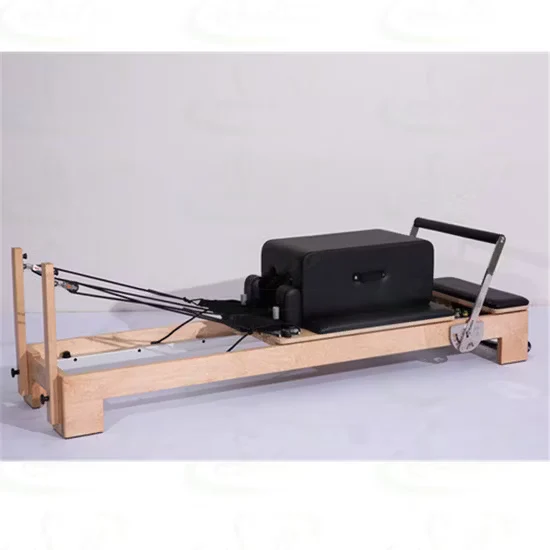
This reformer covers the full spectrum of supine, prone, seated, and standing movement patterns that define classical and contemporary pilates repertoire. On a studio floor, it pairs with cadillacs and wunda chairs to form a complete equipment triangle, allowing instructors to sequence sessions without repeating apparatus. The 2480 mm length accommodates clients across a broad height range while the integrated long box, jump board, and platform mounting points support rapid class transitions. In high-density boutique studios where floor space dictates revenue per square meter, the commercial aluminum pilates reformer machine footprint allows tight but safe spacing between units for group class layouts.
The reformer frame absorbs a complex mix of static bodyweight loads, dynamic spring tension, and eccentric deceleration forces every session. The carriage transfers user weight through wheel-to-rail contact points that endure repetitive impact during jump board sequences. Spring attachment hardware experiences thousands of stretch-release fatigue cycles weekly in a busy studio. Upholstery contact surfaces compress under sustained bodyweight and must resist splitting at seam lines where sweat and cleaning agents concentrate. The aluminum alloy frame maintains consistent structural behavior under these cyclic loads without the creep deformation that affects softer materials over time [NEED_CITE: aluminum alloy fatigue behavior under cyclic loading conditions].
The distinction between generic "aluminum" and a specified alloy grade determines long-term rail performance. Alloy composition and temper designation define yield behavior under carriage load and resistance to permanent deformation when clients push against heavy spring tension. Rail extrusion straightness tolerance directly governs carriage glide quality — even minor deviation produces audible rumble and uneven resistance feel. Wheel material selection balances grip on the rail surface against rolling resistance; harder compounds reduce drag but transmit more vibration, while softer compounds dampen noise but wear faster. The three-year warranty scope should explicitly address rail straightness retention, carriage wheel integrity, and spring tension consistency, not just frame structure.
A reformer that looks identical in a product photo can diverge dramatically in field performance based on decisions invisible at the point of sale. Underspecified rail wall thickness allows flex under heavier clients performing advanced repertoire, creating a wobble sensation that erodes client confidence. Non-sealed carriage bearings require frequent cleaning and eventual replacement — maintenance labor that studio operators rarely budget for until the first wheel seizes mid-class. Low-density foam padding compresses permanently within months of daily use, exposing hard substrate beneath the vinyl cover and forcing costly reupholstery. Standard hardware at spring attachment points strips under repeated tension cycling, leaving the studio sourcing replacement components from generic suppliers when original parts are unavailable.
The aluminum alloy frame stock is sourced with mill certification traceable to the production batch, providing verifiable material composition rather than a generic metal label. Robotic MIG welding produces continuous weld lines at structural joints, eliminating the spot-weld weak points that propagate cracks under repetitive dynamic loading. Every unit undergoes load testing before shipment, confirming carriage glide integrity and spring tension accuracy under actual working conditions rather than sample-based inspection. The 200μm industrial powder coating resists chipping at contact points where equipment and accessories repeatedly mount and dismount. Ten-year frame warranty coverage on the structural members, combined with 2D-3D CAD layout support, ensures this commercial aluminum pilates reformer machine integrates into your studio plan with verified clearance distances between stations. OEM customization for color and logo application allows brand-aligned studio design without compromising the structural specification.
Provide your studio floor dimensions and planned class capacity to receive a 2D-3D layout placing this commercial aluminum pilates reformer machine within verified safe spacing parameters. Specify your daily session volume and client demographic to confirm that the structural specification matches your operational intensity. Detail any customization requirements — frame color, logo placement, or upholstery selection — to align equipment appearance with your studio brand identity. Confirm accessory requirements across the long box, jump board, and platform to ensure your full class programming is supported from day one.
Q: How does an aluminum alloy reformer frame compare to wood or steel in a commercial studio?
A: Aluminum alloy maintains dimensional stability across humidity swings that cause wooden frames to warp and steel frames to corrode. In tropical or coastal studio environments, aluminum extrusion retains rail straightness without the seasonal adjustment cycles that wood demands or the rust prevention regimen that steel requires. The weight-to-rigidity ratio also supports easier repositioning during studio layout changes.
Q: What should I check to evaluate carriage glide quality before purchasing?
A: Request the carriage glide test report showing rail straightness tolerance and wheel runout under load. Ask about bearing type — sealed industrial bearings resist sweat and chalk infiltration far better than unsealed alternatives. Run the carriage through its full travel range at varying speeds to detect any rumble, binding, or lateral play that signals rail deviation or wheel misalignment.
Q: How do I choose spring resistance for a mixed-level studio population?
A: Studios serving rehabilitation clients alongside advanced practitioners should verify that the spring set offers a progressive tension curve spanning low-resistance therapeutic work through high-resistance athletic conditioning. Confirm that individual springs are replaceable and that the attachment hardware withstands thousands of stretch cycles without thread stripping or fatigue cracking at the anchor point.
Q: What does the three-year warranty actually cover on this reformer?
A: Verify that the warranty explicitly addresses rail straightness retention, carriage wheel and bearing integrity, spring tension consistency, and upholstery separately. Some warranties cover only the frame structure while excluding wear components that fail first in commercial use. Request the written warranty schedule detailing coverage scope and claim procedures before committing to a bulk studio purchase.
Premium aesthetics meet quiet operation for boutique studio environments.
Medical-grade silence and precision for sports & postpartum recovery.
Furniture-grade craftsmanship for premium residential installations.
Compact premium setups for one-on-one and small-group training.
Aesthetic Pilates integration for hybrid wellness studio programming.
Multi-unit deployment with instructor-grade reliability for certification programs.
Tell us about your project. Our team will respond within 24 hours with pricing, customization options, and shipping details.
// Sales Director
William
+86 132 2531 1800
// Export Manager
Bella
+86 198 5412 8032
william@bickfit.com