01 / Scenario
STUDIO
P
High-End Pilates Studios
Premium aesthetics meet quiet operation for boutique studio environments.

ISO
9001
CE
Certified
OEM
Available
10YR
Warranty
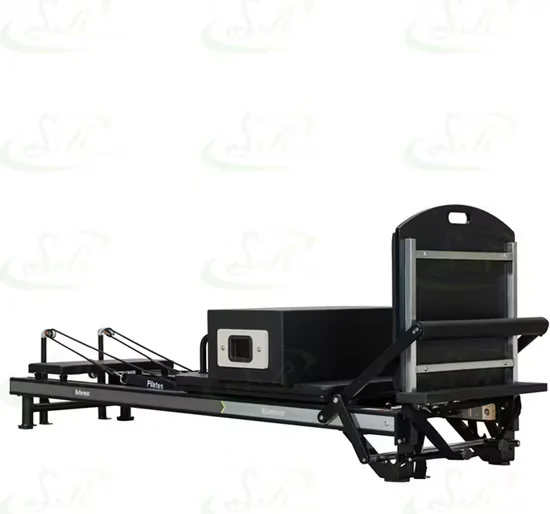
White Aluminum Pilates Reformer Machine, 2570×730mm Footprint, 70kg Net Weight — aluminum extrusion frame reduces mass for home placement while maintaining carriage rigidity under jump-board loading; sealed wheel bearings and progressive spring staging deliver controlled glide across classical and plyometric modules. Each unit undergoes carriage load testing and rail straightness inspection before shipment, with 3-year frame warranty and full accessory ecosystem included.
// Spec Highlights
• Direct from Manufacturer · No Middlemen · Worldwide Shipping
01
// Material
Imported Solid Wood
Premium hardwood frames sourced for density and visual warmth.
02
// Hardware
Medical-Grade Silent
Whisper-quiet pulleys and springs for clinical environments.
03
// Customization
Appearance OEM
Color, upholstery, and branding tailored to your studio.
04
// Service
Layout Design
Free venue planning for studios and rehab institutions.
Every component is selected for longevity, performance, and aesthetic harmony - from imported hardwood frames to silent medical-grade accessories.
// Features
Continuous Robotic Welding — every joint on this white aluminum pilates reformer machine for home use is MIG-welded in uninterrupted passes, eliminating spot-weld weak points that fail under repetitive carriage loading.
| Parameter | Value |
|---|---|
| Product Type | Pilates Reformer Machine |
| Frame Material | Aluminum |
| Product Dimensions | 2570×730×350mm |
| Net Weight | 70kg |
| Accessories | Long Box / Jump Board / Platform |
| Color Options | White (custom logo available) |
| Warranty | 3 Years |
| Production Capacity | 80 Pieces/Month |
| User Profile | Adult, Unisex |
| Facility Type | Typical Use |
|---|---|
| Home Pilates Studio | Daily classical reformer routines and flexibility work in residential spaces |
| Boutique Pilates Facility | Group class rotation between mat and reformer stations |
| Rehabilitation Center | Low-impact controlled-resistance movement for post-injury recovery |
| Personal Training Studio | One-on-one instruction with accessory-driven exercise variety |
A white aluminum pilates reformer machine for home use must resist carriage deflection during jump-board plyometrics and loaded footwork — the two highest-impact movement patterns in a reformer session.
Most home-oriented reformers cut cost by using thin-walled aluminum extrusions or unverified alloys. Under repeated jump-board loading, the carriage develops lateral wobble within months, degrading the precision of spring-resistance work and accelerating pulley wear. We source mill-certified aluminum profiles and verify extrusion wall thickness before any frame enters production, because a flexing rail is not just a comfort issue — it is a structural liability that compromises every exercise performed on the carriage [NEED_CITE: material fatigue and deflection thresholds in extruded aluminum profiles].
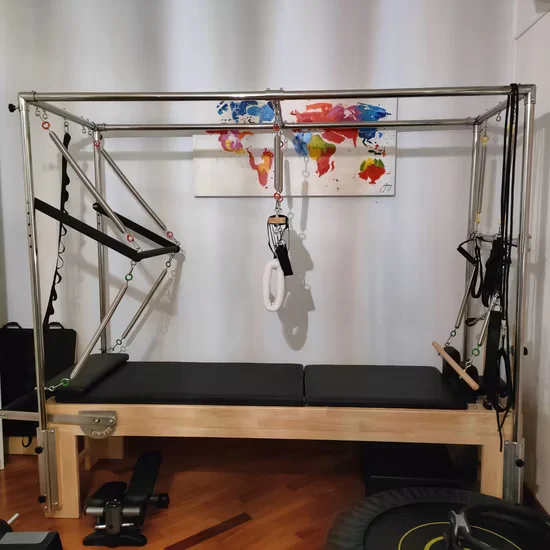
This reformer covers the full sagittal and frontal movement planes through classical footwork, strap work, and long-box exercises, targeting the posterior chain, hip stabilizers, and deep core musculature. In a studio setting, it pairs with a cadillac or tower unit to provide a complete Pilates apparatus ecosystem, while in a home environment it serves as the single primary resistance tool. The 2570×730mm footprint fits standard residential rooms and leaves adequate clearance for strap extension on both sides, accommodating users across a broad height range.
Carriage travel generates cyclical lateral and torsional loads on the frame rails with every repetition, and jump-board work introduces impact forces that spike well beyond static bodyweight. The aluminum extrusion profile and carriage wheel interface bear the majority of this stress, meaning rail straightness tolerance and wheel bearing quality directly determine long-term glide consistency. Spring hook-points endure thousands of attachment and release cycles, making hook geometry and metal hardness critical to preventing fatigue cracking at the anchor plate [NEED_CITE: cyclic loading and fatigue failure in spring anchor mechanisms].
Aluminum frame construction reduces overall unit weight to 70kg, making the reformer movable for floor cleaning or studio rearrangement — a practical advantage over welded steel units that exceed 120kg. However, weight reduction only works if the extrusion profile maintains adequate wall thickness to resist bending under dynamic carriage loads. The included long box and jump board attach through dedicated mounting points on the frame; whether these connections use pin-lock or bolt-through hardware determines how much play develops at the joint during repetitive impact. The three-year warranty covers frame structural integrity, which is a meaningful commitment for an aluminum-alloy unit in this class.
Thin-wall aluminum extrusions may look identical to heavier profiles in product photos but flex noticeably under jump-board impact, causing the carriage to track off-center and the wheels to grind against the rail shoulder. Non-sealed bushings instead of proper bearings accumulate dust and sweat residue, leading to a rough, noisy glide within the first year of regular use. Spring hooks stamped from low-grade sheet metal develop micro-cracks at the bend radius after several thousand cycles, and proprietary accessory hardware means a lost jump-board mount has no replacement path — forcing the owner to retire an otherwise functional machine [NEED_CITE: failure modes in lightweight fitness equipment frames].
Mill-certified aluminum profiles with traceable alloy specifications mean every frame can be verified against its material test report, not just described as "commercial grade." Continuous robotic MIG welding at the frame joints produces uniform penetration and eliminates the cold joints and incomplete fusion that plague hand-welded aluminum assemblies. Every unit undergoes load testing before shipment, confirming carriage deflection stays within tolerance under maximum user weight plus dynamic jump-board forces. The 200μm industrial powder coating resists chipping at high-contact points like the foot bar and shoulder rests. We provide 2D and 3D CAD layout files showing this reformer’s exact footprint and recommended safety clearances, so studio operators can plan class capacity before the first unit arrives. OEM customization covers color, logo placement, and accessory configuration to match brand identity across a multi-location rollout.
Provide your studio floor area and intended class size so we can generate a 2D-3D layout showing reformer spacing with safe movement corridors. Indicate expected daily usage frequency to confirm the frame and spring system match your operational volume. Share any branding requirements — custom color, logo engraving, or upholstery selection — so the units arrive ready for installation without secondary finishing.
Q: How does an aluminum frame compare to steel for daily studio use?
A: Aluminum reduces unit weight significantly, making the reformer easier to reposition between class formats. The trade-off is that aluminum extrusion profiles must maintain adequate wall thickness to resist bending under jump-board impact. Request the mill-certified alloy specification and extrusion profile dimensions to verify rigidity before purchasing, rather than relying on generic "commercial grade" claims.
Q: What determines carriage glide quality over time?
A: Rail straightness tolerance, wheel bearing type, and the seal quality around those bearings all affect long-term smoothness. Sealed bearings resist dust and sweat ingress far better than open bushings, which develop play and produce noise within the first year of frequent use. Ask the manufacturer for per-unit rail alignment inspection records and bearing specifications before committing to a bulk order.
Q: How should spring resistance be matched to user ability levels?
A: The reformer spring system provides progressive resistance staging, meaning heavier springs engage more force later in the carriage travel. Beginners benefit from lighter spring configurations that allow controlled movement through the full range, while advanced users load heavier springs for power-focused footwork. Spring replacement availability and recommended service intervals should be confirmed at the point of purchase.
Q: Is the jump board safe for repetitive plyometric work?
A: Jump board safety depends on the mounting interface between the board and the reformer frame. Bolt-through connections with metal-to-metal contact resist loosening under impact far better than friction-fit or plastic-pin systems. Verify that the mounting hardware is non-proprietary so replacement parts remain available, and inspect the connection points regularly for any signs of play or deformation.
Premium aesthetics meet quiet operation for boutique studio environments.
Medical-grade silence and precision for sports & postpartum recovery.
Furniture-grade craftsmanship for premium residential installations.
Compact premium setups for one-on-one and small-group training.
Aesthetic Pilates integration for hybrid wellness studio programming.
Multi-unit deployment with instructor-grade reliability for certification programs.
Tell us about your project. Our team will respond within 24 hours with pricing, customization options, and shipping details.
// Sales Director
William
+86 132 2531 1800
// Export Manager
Bella
+86 198 5412 8032
william@bickfit.com