
01 / Scenario
STUDIO
P
High-End Pilates Studios
Premium aesthetics meet quiet operation for boutique studio environments.
ISO
9001
CE
Certified
OEM
Available
10YR
Warranty
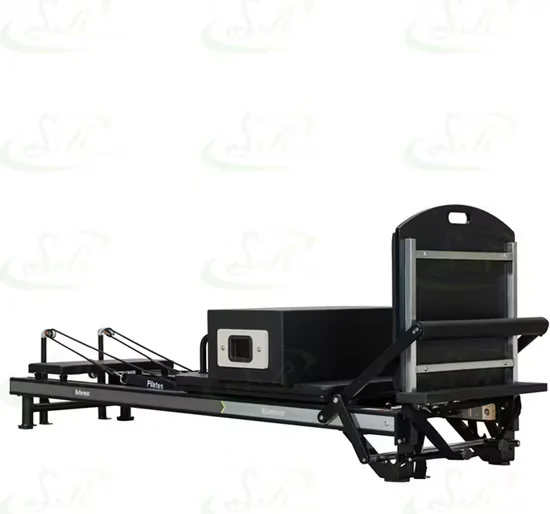
Commercial Aluminum Pilates Reformer, 2570×730×890mm Frame, 90kg Net Weight — aluminum alloy construction resists corrosion in humid studio environments while maintaining rigidity under continuous spring tension cycling. Carriage rail system with sealed wheel bearings ensures smooth travel and reduces maintenance frequency during high-repetition daily use. Complete accessory kit includes long box, jump board, and platform with reinforced mounting points for dynamic loading. Backed by 3-year frame warranty and full OEM private label capability for custom branding.
// Spec Highlights
• Direct from Manufacturer · No Middlemen · Worldwide Shipping
01
// Material
Imported Solid Wood
Premium hardwood frames sourced for density and visual warmth.
02
// Hardware
Medical-Grade Silent
Whisper-quiet pulleys and springs for clinical environments.
03
// Customization
Appearance OEM
Color, upholstery, and branding tailored to your studio.
04
// Service
Layout Design
Free venue planning for studios and rehab institutions.
Every component is selected for longevity, performance, and aesthetic harmony - from imported hardwood frames to silent medical-grade accessories.
// Features
Traced Aluminum Alloy — Every frame extrusion is backed by mill certification verifying alloy grade and wall thickness before it reaches the assembly floor.
| Parameter | Value |
|---|---|
| Product Type | Aluminum Pilates Reformer |
| Frame Material | Aluminum |
| Product Dimensions | 2570×730×890mm |
| Net Weight | 90kgs |
| Color | Black |
| Accessory | Long Box / Jump Board / Platform |
| Warranty | 3 Years |
| Logo | Customized Is Allowed |
| Age Group | Adult |
| Gender | Unisex |
| HS Code | 9506911900 |
| Facility Type | Typical Use |
|---|---|
| Commercial Pilates Studio | Daily group and private reformer classes with high repetition cycles |
| Boutique Fitness Studio | Hybrid mat-and-reformer programming in space-conscious layouts |
| Rehabilitation and Physical Therapy Center | Controlled spring-resistance protocols for post-injury recovery |
| Hotel and Resort Wellness Facility | Guest-accessible premium movement equipment with minimal maintenance overhead |
| Home Premium Fitness Setup | Dedicated residential training space requiring durable construction |
The carriage rail and frame junction bear the highest cyclic stress — material choice at that junction dictates whether the unit survives years of spring-tension loading without developing lateral play.
Many reformers marketed for studio use rely on thin-wall steel frames that accumulate micro-deformation at the rail mounting points under constant spring tension cycling. Once the carriage develops lateral play, the smooth travel that defines reformer work is compromised, and the unit requires service intervention [NEED_CITE: structural fatigue in cyclic-load fitness equipment frames]. In humid studio environments where condensation and sweat exposure are constant, steel frames also face corrosion at contact points — a problem aluminum construction sidesteps entirely. The commercial aluminum pilates reformer addressed here uses aluminum alloy extrusions specified for both corrosion resistance and sufficient section modulus to resist deflection under repeated carriage loading.
This commercial aluminum pilates reformer covers the full spectrum of supine, prone, seated, and standing movement patterns that form the core of classical and contemporary reformer programming. In a studio floor plan, it pairs with a tower or cadillac unit for spring-assisted vertical-plane work and complements mat zones for bodyweight sequences. The 2570mm length and 730mm width allow placement in standard studio bays with adequate clearance for instructor circulation. The accessory kit — long box, jump board, and platform — extends the movement repertoire without requiring separate equipment purchases, making it suited for studios running high-frequency class schedules.
The carriage undergoes thousands of reciprocating cycles per week in a busy studio, concentrating wear at the wheel-to-rail contact surface and the spring anchor points [NEED_CITE: bearing wear patterns in high-repetition linear motion equipment]. Jump board exercises introduce impact loading that propagates through the platform mounting points into the main frame extrusions, demanding reinforced junctions rather than simple bolt-through connections. Spring attachment hardware endures continuous tension-release cycling; any deformation at the anchor bracket gradually alters resistance calibration. The aluminum frame’s corrosion resistance eliminates one major degradation pathway — rust-induced surface pitting on rails — but the wheel bearing specification and spring fatigue characteristics remain the critical wear items requiring periodic inspection.
The aluminum frame’s alloy grade and wall thickness define its deflection threshold under carriage load — an undersized extrusion will flex perceptibly during single-leg work on the footbar, degrading movement quality. Carriage rail straightness tolerance directly governs travel smoothness; any deviation from true linearity causes binding or uneven wheel wear across the rail surface. Sealed wheel bearings resist contamination from chalk dust, skin cells, and cleaning solution residue that accumulate in studio environments, whereas open bushing designs develop play as particulate matter infiltrates the contact surface. The accessory mounting points — particularly the jump board bracket — must be reinforced at the frame junction to handle dynamic impact without loosening over repeated sessions. Spring resistance configuration should offer graduated loading across multiple springs, with anchor hardware rated for sustained tension cycling without permanent elongation.
A thin-wall aluminum extrusion or downgraded steel substitute may pass initial load testing but accumulates permanent deformation at stress-concentration points after months of daily spring-tension cycling [NEED_CITE: long-term deflection in extruded aluminum fitness frames]. Non-sealed carriage wheels require frequent replacement as contamination degrades smoothness, creating maintenance downtime that removes the unit from revenue-generating class schedules. Spring hardware fabricated from non-specified alloys loses tension calibration progressively, forcing instructors to compensate verbally rather than relying on consistent resistance delivery. When accessory mounting points lack reinforcement, the jump board bracket is typically the first failure point — a cracked weld or deformed bolt hole takes the reformer out of service until replacement parts arrive.
The aluminum frame on this reformer is specified with mill-certified alloy documentation, ensuring material traceability from extrusion to finished unit. Each unit undergoes pre-shipment inspection covering rail straightness verification and carriage travel testing under load. The 200μm industrial powder coating process — applied after surface preparation — protects exposed frame surfaces from cleaning chemical exposure and sweat contact in high-traffic studio settings. The three-year warranty covers structural frame integrity under commercial operating conditions. For studio buildouts, 2D-3D floor planning support accounts for the 2570×730mm footprint with recommended instructor clearance on all sides, preventing the common error of overcrowding reformers on the studio floor. OEM customization including logo placement and color options allows brand alignment without compromising structural specification.
Provide your studio floor area and planned reformer count to receive a 2D-3D layout that accounts for unit footprint, instructor circulation, and storage zones. Specify your expected daily class volume and client profile so the structural grade and spring configuration can be matched to actual operating conditions. Communicate branding requirements including logo placement and frame color preferences early in the procurement cycle to align with studio design timelines.
Q: How does aluminum frame construction compare to steel for commercial pilates reformers?
A: Aluminum frames resist corrosion from sweat and humidity without surface treatment degradation, which is critical in studio environments where moisture exposure is constant. The lower weight facilitates repositioning during layout changes while maintaining sufficient section rigidity for repeated spring-load cycles. Steel frames offer higher absolute stiffness but require ongoing corrosion management at rail contact points and welded junctions to prevent surface pitting over years of daily use.
Q: What carriage rail and wheel specifications ensure long-term smooth operation?
A: Rail straightness tolerance and sealed wheel bearing type are the two specifications that determine sustained travel quality. Sealed bearings prevent chalk dust and cleaning residue from infiltrating the rolling surface, maintaining smoothness across thousands of cycles. Open bushing designs require more frequent servicing as contamination accumulates, creating maintenance downtime that affects class scheduling in commercial studios.
Q: How to evaluate spring system durability for high-traffic studio use?
A: Request spring fatigue cycle testing documentation that demonstrates consistent resistance delivery across the expected service interval. Spring anchor hardware must withstand continuous tension-release cycling without bracket deformation or bolt elongation. Progressive multi-spring configurations allow instructors to scale resistance for different client levels while distributing mechanical load across multiple attachment points rather than concentrating stress on a single spring.
Q: What accessory compatibility and mounting reinforcement should buyers verify?
A: Verify that the jump board, long box, and platform mounting points are reinforced at the frame junction rather than relying on simple bolt-through connections. Dynamic loading during jump board exercises generates impact forces that propagate into the main frame; inadequate reinforcement leads to bracket deformation or fastener loosening over time. Confirm that replacement accessories remain available as separate order items throughout the expected equipment service life.
Q: What is the expected maintenance cycle for rails, wheels, and springs in daily commercial operation?
A: Sealed carriage wheel bearings typically require quarterly inspection under daily studio schedules, with replacement triggered by detectable lateral play or roughness during travel. Rails need periodic cleaning to remove residue buildup that affects wheel contact. Springs should be evaluated for consistent resistance calibration semi-annually, with replacement when tension delivery becomes uneven across the extension range.
Premium aesthetics meet quiet operation for boutique studio environments.
Medical-grade silence and precision for sports & postpartum recovery.
Furniture-grade craftsmanship for premium residential installations.
Compact premium setups for one-on-one and small-group training.
Aesthetic Pilates integration for hybrid wellness studio programming.
Multi-unit deployment with instructor-grade reliability for certification programs.
Tell us about your project. Our team will respond within 24 hours with pricing, customization options, and shipping details.
// Sales Director
William
+86 132 2531 1800
// Export Manager
Bella
+86 198 5412 8032
william@bickfit.com


