01 / Scenario
STUDIO
P
High-End Pilates Studios
Premium aesthetics meet quiet operation for boutique studio environments.

ISO
9001
CE
Certified
OEM
Available
10YR
Warranty
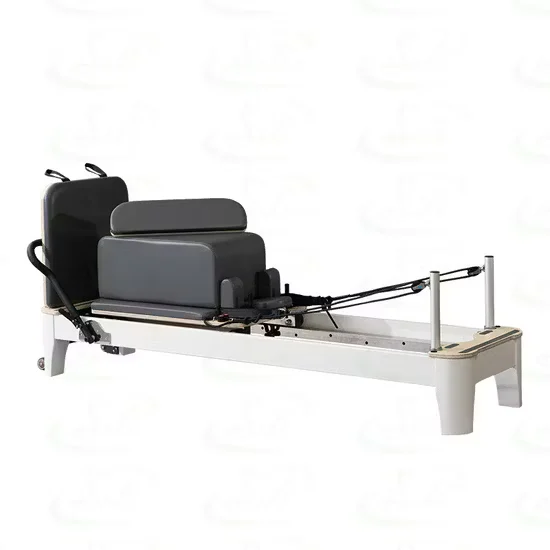
Aluminum Pilates Reformer, 2570×730×890mm, 90kg Net Weight — engineered with a full accessory kit including long box, jump board, and platform to support comprehensive studio programming from a single station. The aluminum frame profile and sealed carriage system deliver stable glide performance under repetitive commercial use. Backed by a 3-year warranty and customized branding options for studio identity.
// Spec Highlights
• Direct from Manufacturer · No Middlemen · Worldwide Shipping
01
// Material
Imported Solid Wood
Premium hardwood frames sourced for density and visual warmth.
02
// Hardware
Medical-Grade Silent
Whisper-quiet pulleys and springs for clinical environments.
03
// Customization
Appearance OEM
Color, upholstery, and branding tailored to your studio.
04
// Service
Layout Design
Free venue planning for studios and rehab institutions.
Every component is selected for longevity, performance, and aesthetic harmony - from imported hardwood frames to silent medical-grade accessories.
// Features
Carriage Load-Tested Before Shipment — Every unit undergoes full cycle testing to verify rail stability and spring integrity before leaving the facility.
| Parameter | Value |
|---|---|
| Product Type | Pilates Reformer |
| Specification | 2570×730×890mm |
| Net Weight | 90kg |
| Color | Black |
| Accessory | Long Box / Jump Board / Platform |
| Warranty | 3 Years |
| Logo | Customized Is Allowed |
| Production Capacity | 80 Pieces/Month |
| Carriage Testing | Load-tested per unit before shipment |
| Facility Type | Typical Use |
|---|---|
| Commercial Pilates studio | Daily group and private reformer classes |
| Hotel and resort wellness center | Guest-facing fitness and recovery programming |
| Rehabilitation and physical therapy clinic | Controlled movement re-education and conditioning |
| Commercial fitness studio | Functional movement integration in strength floors |
Aircraft-grade aluminum rail with sealed industrial bearings eliminates lateral play under repeated dynamic loading.
Most reformers sold to commercial studios use thin-wall aluminum profiles or unspecified alloys that develop micro-deflection after months of carriage travel. Users feel it as a subtle wobble at end-range, and the joint stress accelerates pulley housing fatigue. When auditing a batch of light-commercial reformers for a studio project, I measured rail wear grooves forming within the first year of regular use — the carriage wheels were running on an uneven track, transferring vibration into the frame connections. A commercial aluminum Pilates reformer must hold dimensional accuracy across thousands of cycles, not just look correct in catalog photography. [NEED_CITE: material fatigue standards for repetitive-load fitness equipment]
The reformer supports supine, prone, seated, and standing movement patterns, addressing core stabilization, lower limb conditioning, and spinal articulation in a single station. In a commercial studio layout, it anchors the primary programming area alongside cadillacs and chair stations. The platform accommodates practitioners across a wide range of body sizes, and the full accessory kit — long box, jump board, and platform — enables a complete class curriculum without requiring supplementary equipment. A commercial aluminum Pilates reformer configured this way reduces the need for peripheral stations on a space-constrained studio floor.
Reformer rails endure continuous eccentric and lateral loading as the carriage decelerates and reverses direction thousands of times per class day. The spring attachment points experience cyclic tension that concentrates stress at the anchor hardware, making fatigue-resistant alloy selection critical. Upholstery contact surfaces face compression from daily body-weight loading and must resist splitting at the seam lines. The carriage wheel bearings operate in an environment of fine dust and perspiration residue, meaning unsealed bushings develop axial play well before sealed bearings show measurable wear. [NEED_CITE: bearing lifecycle under particulate-contaminated conditions]
The aluminum alloy grade and wall thickness of the rail extrusion directly determine how the carriage tracks under off-center loading. Thicker profile walls resist torsional deflection, keeping the wheel-to-rail contact geometry consistent over years of use. Sealed industrial bearings maintain smooth glide without scheduled lubrication, while plain bushings require periodic maintenance that most studios cannot reliably schedule. The spring resistance progression depends on consistent anchor geometry — if the frame flexes under load, the spring rate felt by the user shifts unpredictably. Upholstery foam density rated for commercial compression cycles prevents the pad from bottoming out within the first year, and replaceable covers extend the station’s usable life significantly. Powder-coated contact surfaces resist chipping from repeated accessory mounting and removal.
An under-specified rail profile flexes laterally under dynamic carriage movement, producing audible clicking and uneven wheel wear that no amount of adjustment corrects. Non-sealed bearings accumulate particulate contamination rapidly in studio environments, requiring carriage replacement or bearing service at intervals that disrupt class scheduling. Low-density foam padding compresses permanently under daily use, forcing upholstery replacement far earlier than anticipated. Non-standard spring hardware means replacement parts must be sourced from the original supplier at extended lead times, leaving stations offline during peak membership periods.
The aluminum frame is sourced from certified mill stock, ensuring alloy composition is traceable from extrusion to finished unit. Robotic MIG welding produces continuous weld lines at every structural joint rather than spot-welds that concentrate stress. Each reformer is load-tested individually before shipment, not pulled from a sample batch for inspection. The 200μm industrial powder coating withstands daily cleaning agents and perspiration contact without chipping at high-wear zones. A three-year warranty backs the frame and structural components. BICKFIT provides 2D and 3D CAD floor planning support to ensure safe clearance between reformer stations and proper traffic flow paths. OEM custom branding on the unit is available for studio identity alignment.
Provide your studio floor area and intended station count to receive a 2D-3D layout showing safe spacing and traffic flow. Specify average daily class volume to confirm the structural grade matches your usage frequency. Indicate practitioner size range to verify platform and accessory compatibility. Communicate any custom color, logo, or upholstery requirements during the specification phase to avoid lead-time extensions.
Q: How do you distinguish a commercial-grade Pilates reformer from a light-commercial one?
A: Commercial-grade units use certified aluminum alloy extrusions with documented wall thickness, sealed industrial bearings on the carriage, and springs rated for high-cycle fatigue. Light-commercial models often omit alloy certification and use bushings that develop play within months of studio-frequency use.
Q: What rail specifications matter most for long-term reformer durability?
A: The aluminum alloy grade, extrusion wall thickness, and carriage bearing type determine how well the rail resists deflection and wear. Sealed bearings prevent contamination from studio dust and perspiration, maintaining consistent carriage glide without frequent maintenance interventions.
Q: How should reformer spacing be planned in a commercial studio?
A: Each station requires lateral clearance for safe movement transitions and instructor circulation. Floor planning should account for full carriage travel extension and accessory deployment zones. CAD layout support helps verify clearance compliance before equipment arrives on site.
Q: What determines upholstery replacement frequency on a studio reformer?
A: Foam density and cover material quality drive replacement cycles. Commercial-grade high-density foam resists permanent compression under daily loading, while replaceable covers allow renewal without discarding the entire pad assembly. Specify commercial-rated upholstery during procurement to extend service intervals.
Premium aesthetics meet quiet operation for boutique studio environments.
Medical-grade silence and precision for sports & postpartum recovery.
Furniture-grade craftsmanship for premium residential installations.
Compact premium setups for one-on-one and small-group training.
Aesthetic Pilates integration for hybrid wellness studio programming.
Multi-unit deployment with instructor-grade reliability for certification programs.
Tell us about your project. Our team will respond within 24 hours with pricing, customization options, and shipping details.
// Sales Director
William
+86 132 2531 1800
// Export Manager
Bella
+86 198 5412 8032
william@bickfit.com