01 / Scenario
STUDIO
P
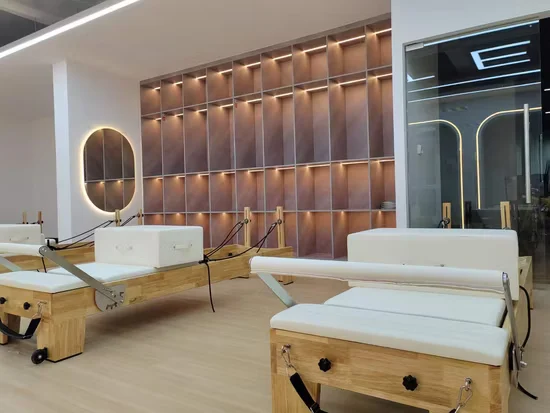
High-End Pilates Studios
Premium aesthetics meet quiet operation for boutique studio environments.

ISO
9001
CE
Certified
OEM
Available
10YR
Warranty
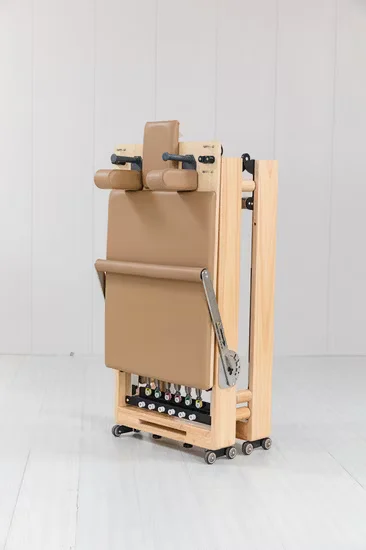
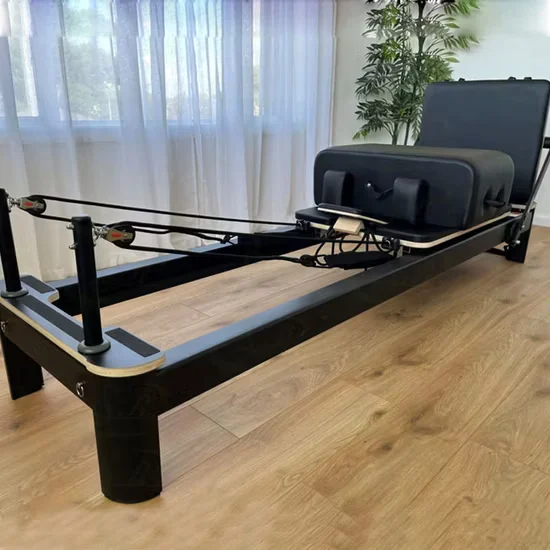
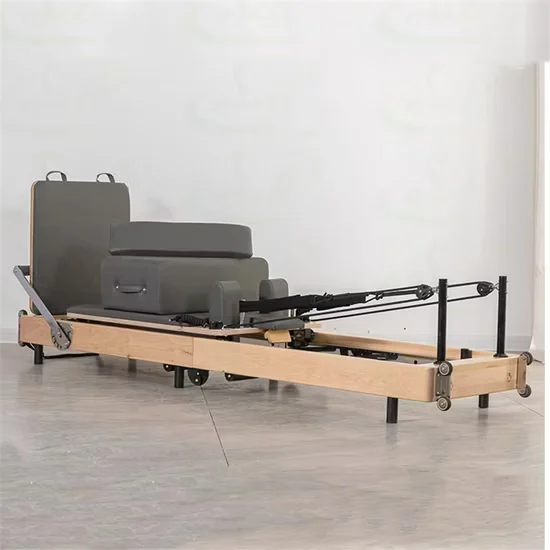
Commercial Aluminum Pilates Reformer, Aluminium Alloy Frame, 2570×730×890mm — precision-machined carriage rail with sealed wheel bearings ensures silent glide under cyclic loading, while progressive spring tension settings support both rehabilitation and athletic conditioning workflows. Factory-matched long box, jump board, and platform integrate via positive-lock mounting points with no aftermarket adaptation required. Full OEM customization and 3-year warranty backed by 32-point inspection and 100% load testing before shipment.
// Spec Highlights
• Direct from Manufacturer · No Middlemen · Worldwide Shipping
01
// Material
Imported Solid Wood
Premium hardwood frames sourced for density and visual warmth.
02
// Hardware
Medical-Grade Silent
Whisper-quiet pulleys and springs for clinical environments.
03
// Customization
Appearance OEM
Color, upholstery, and branding tailored to your studio.
04
// Service
Layout Design
Free venue planning for studios and rehab institutions.
Every component is selected for longevity, performance, and aesthetic harmony - from imported hardwood frames to silent medical-grade accessories.
// Features
Aircraft-Grade Alloy Frame — Mill-certified aluminium extrusion ensures corrosion immunity and dimensional stability across years of continuous studio cycles.
| Parameter | Value |
|---|---|
| Product Type | Pilates Reformer |
| Material | Aluminium Alloy |
| Color | Black (customization available) |
| Product Dimensions | 2570 × 730 × 890 mm |
| Net Weight | 90 kgs |
| Accessory | Long Box / Jump Board / Platform |
| Logo | Customized Is Allowed |
| Warranty | 3 Years |
| Target User | Adult / Unisex |
| Carriage Rail System | Precision-machined aluminium track |
| Carriage Wheel Bearings | Sealed industrial bearings |
| Spring Resistance | Progressive tension configuration |
| Mounting Points | Positive-lock accessory integration |
| Certification | CE European conformity, ISO 9001:2015 |
| Facility Type | Typical Use |
|---|---|
| Commercial Pilates studio | Daily group and private reformer sessions |
| Rehabilitation and physiotherapy center | Controlled loading for post-injury recovery |
| Boutique fitness facility | Mixed-level reformer programming |
| Hotel and resort wellness spa | Low-maintenance guest wellness equipment |
The carriage rail is where cutting corners shows up first. When studio owners evaluate a commercial aluminum pilates reformer, the frame material and rail machining tolerance determine whether the carriage stays true after thousands of cycles. Many units on the market use thin-wall alloys or unspecified steel that warps under repetitive spring tension, causing the carriage to drift, the wheels to bind, and the rail to develop visible wear grooves within the first year of heavy scheduling [NEED_CITE: EN 957 structural requirements for stationary training equipment].
I have seen reformers come back from overseas studios with the carriage skipping laterally because the rail tolerance was specified by someone who never watched a class of eight run the same equipment back-to-back for six hours. The aluminium alloy construction in this unit is not about aesthetics — it is about maintaining carriage alignment when the studio is fully booked and there is no time for maintenance calls between sessions.
The commercial aluminum pilates reformer serves as the anchor apparatus in any Pilates-based studio layout, covering sagittal and transverse plane movements for the full posterior chain, hip complex, and spinal stabilizers. In a typical studio configuration, it pairs with Cadillac and Wunda Chair stations to complete the classical repertoire, or stands alone in boutique fitness formats where reformer-only classes drive membership revenue. The 2570 mm length accommodates users across a wide anthropometric range without requiring carriage stop adjustments between clients, which matters when your schedule runs consecutive private sessions. The integrated accessory system — long box, jump board, and platform — eliminates the need for aftermarket purchases that rarely match the factory rail geometry.
Every reformer session generates cyclic loading through the spring anchors, carriage return, and foot bar connection points. In a studio running six classes daily with four reformers per class, each unit absorbs substantial dynamic and eccentric loading across hundreds of spring engagements per week. The stress concentrates at the rail mounting brackets and the spring anchor plate — areas where poor weld penetration or undersized fasteners produce micro-movement that grows into structural play. Sealed wheel bearings prevent the dust and particulate matter that accumulates in studio environments from migrating into the bearing race, which is the primary cause of carriage noise and glide degradation over time [NEED_CITE: bearing service intervals in high-cycle fitness equipment]. The powder-coated contact surfaces resist degradation from sweat exposure and cleaning chemicals used between clients.
The aluminium alloy frame delivers a weight-to-strength ratio that keeps the unit at 90 kgs — light enough for studio staff to reposition for floor cleaning or layout changes, yet rigid enough to resist lateral deflection under asymmetric spring loading. The precision-machined carriage track is the structural element that separates commercial-grade equipment from consumer units; the tolerance on that machining determines whether the carriage glides silently or develops a perceptible wobble that instructors and clients both notice. Sealed bearings in the carriage wheels eliminate the maintenance interval that unsealed bearings require — in a studio running eight or more hours daily, this is the difference between equipment that runs without attention and equipment that pulls an instructor off the floor for weekly lubrication. The positive-lock mounting points for the long box, jump board, and platform mean the accessories engage with the frame without adapters, shims, or the lateral play that develops when mounting systems are not factory-matched.
Thin-wall frame extrusions flex under full spring tension, creating a sensation of instability that experienced instructors recognize immediately — and that drives clients toward competitors with better equipment. Non-sealed bearings in the carriage wheels allow studio dust and humidity to infiltrate the bearing race, accelerating wear and producing the grinding noise that signals a unit needs to be pulled from the schedule. When accessory mounting points are not integrated at the factory, aftermarket jump boards and long boxes introduce connection play that compromises safety during plyometric sequences and creates a replacement cycle for hardware that was never designed for the specific frame geometry. Coatings that are applied without proper surface preparation chip at the rail contact points, exposing bare alloy to oxidation in the humid environment that hot yoga and heated studio formats create [NEED_CITE: coating adhesion and corrosion in fitness equipment].
The aluminium alloy frame was specified with mill-certified material documentation traceable to the production batch, so any frame issue can be traced back to the extrusion source rather than left as a mystery failure. The robotic welding on the steel components uses continuous weld passes rather than spot welding, which eliminates the discrete weak points where fatigue cracks initiate under cyclic spring loading. Every unit undergoes load testing before shipment — not sample-based testing on one unit from a production run, but testing on the actual machine that ships to the studio. The industrial powder coating at 200μm thickness protects the contact surfaces and frame members from the sweat, cleaning chemicals, and humidity that degrade thinner coatings within months. The three-year warranty covers the frame and structural components, and the factory provides 2D-3D CAD layout support so studio owners can plan reformer spacing with safe clearance for carriage extension and instructor circulation between units. OEM customization for color and logo integration is available for studio chains that maintain brand consistency across locations.
Provide your studio floor dimensions and current equipment list to receive a 2D-3D layout plan with safe clearance zones for each commercial aluminum pilates reformer. Specify your daily class volume and average client weight range so the spring tension configuration can be calibrated before shipment. Communicate color and logo requirements early in the order process for studio chains standardizing brand appearance across multiple locations.
Q: How does aluminium compare to steel for a commercial reformer frame?
A: Aluminium alloy eliminates rust entirely, which matters in humid studio environments and heated class formats. The weight-to-strength ratio keeps the unit maneuverable for studio staff while maintaining dimensional stability under full spring tension. Steel frames require coating integrity to prevent corrosion, and any chip at a contact point becomes a maintenance issue that aluminium simply does not present.
Q: How do I evaluate carriage rail precision before purchasing?
A: Run the carriage through full travel with asymmetric spring loading and observe whether lateral drift appears at any point in the stroke. Precision-machined rails maintain silent glide without perceptible wobble. Ask the manufacturer for the machining tolerance specification and whether sealed bearings are used to prevent dust ingress that degrades glide performance over time.
Q: What spring tension range is appropriate for a mixed-use studio?
A: Studios serving both rehabilitation clients and athletic populations need progressive tension settings that cover light resistance for controlled therapeutic movement and higher resistance for conditioning work. Confirm that replacement springs are available from the manufacturer and ask about the expected replacement cycle so you can budget maintenance accordingly.
Q: Are the long box, jump board, and platform interchangeable with other brands?
A: Factory-integrated accessories use positive-lock mounting points engineered for this specific frame geometry. Aftermarket accessories from other manufacturers may introduce connection play or require modification that compromises safety during dynamic movements. Keeping the accessory system within the manufacturer’s ecosystem ensures consistent fit and eliminates adapter hardware that loosens under cyclic loading.
Q: What does the warranty cover for high-traffic studio use?
A: The three-year warranty covers the frame and structural components under commercial operating conditions. Replacement parts for springs, carriage wheels, and accessory hardware are available directly from the factory. Ask for the spare parts catalog and typical lead times so your studio can maintain inventory for consumable components and minimize equipment downtime.
Premium aesthetics meet quiet operation for boutique studio environments.
Medical-grade silence and precision for sports & postpartum recovery.
Furniture-grade craftsmanship for premium residential installations.
Compact premium setups for one-on-one and small-group training.
Aesthetic Pilates integration for hybrid wellness studio programming.
Multi-unit deployment with instructor-grade reliability for certification programs.
Tell us about your project. Our team will respond within 24 hours with pricing, customization options, and shipping details.
// Sales Director
William
+86 132 2531 1800
// Export Manager
Bella
+86 198 5412 8032
william@bickfit.com