01 / Scenario
STUDIO
P
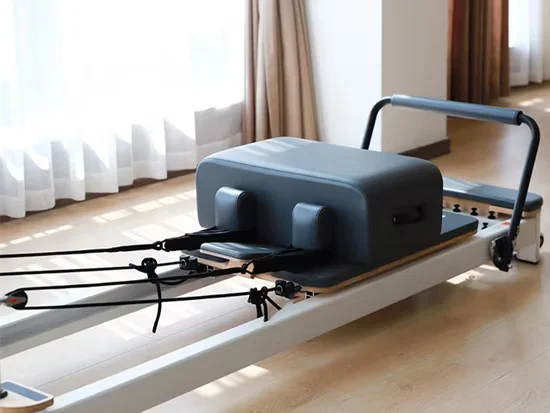
High-End Pilates Studios
Premium aesthetics meet quiet operation for boutique studio environments.
ISO
9001
CE
Certified
OEM
Available
10YR
Warranty
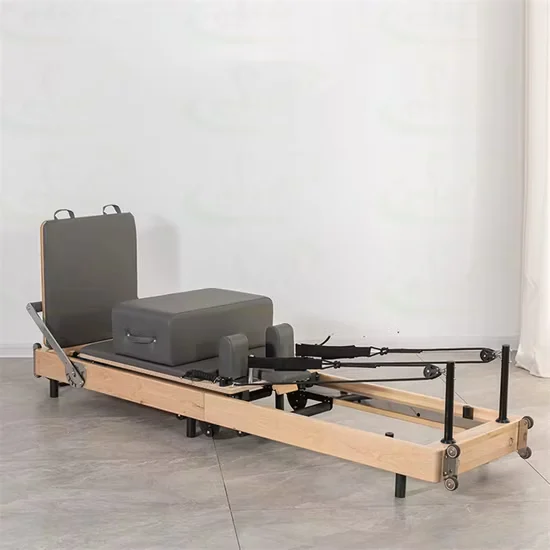
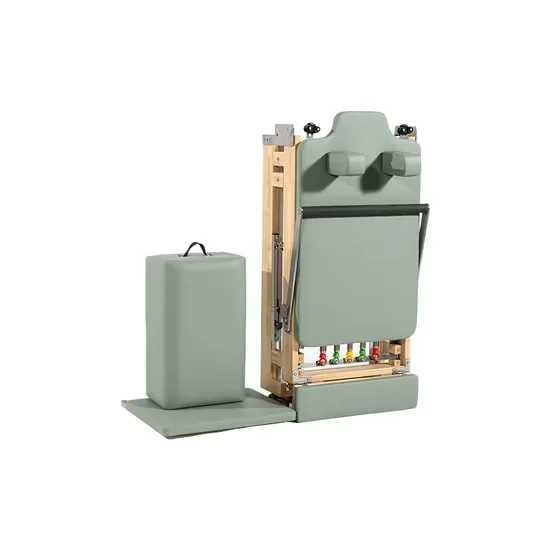
Foldable Wooden Pilates Reformer, Solid Wood Frame, 2300×690×580mm Dimensions — engineered with solid wood rail construction to resist deflection under repeated carriage loading, ensuring consistent glide performance. Includes long box, jump board, and platform for full-spectrum reformer training, with foldable mechanism for space-efficient studio storage. Backed by 3-year warranty and customizable branding options for commercial facility integration.
// Spec Highlights
• Direct from Manufacturer · No Middlemen · Worldwide Shipping
01
// Material
Imported Solid Wood
Premium hardwood frames sourced for density and visual warmth.
02
// Hardware
Medical-Grade Silent
Whisper-quiet pulleys and springs for clinical environments.
03
// Customization
Appearance OEM
Color, upholstery, and branding tailored to your studio.
04
// Service
Layout Design
Free venue planning for studios and rehab institutions.
Every component is selected for longevity, performance, and aesthetic harmony - from imported hardwood frames to silent medical-grade accessories.
// Features
Solid Wood Rail Integrity — Solid wood framing resists the warping and rail deflection that hollow-core reformers develop under daily carriage loading in high-humidity studio environments.
| Parameter | Value |
|---|---|
| Product Type | Pilates Reformer |
| Frame Material | Solid Wood |
| Product Dimensions | 2300 × 690 × 580 mm |
| Net Weight | 70 kg |
| Included Accessories | Long Box, Jump Board, Platform |
| Foldable Design | Yes |
| Color Options | Solid color finishes available |
| Customization | Logo and branding customization available |
| Warranty | 3 Years |
| Production Capacity | 200 Pieces / Month |
| Facility Type | Typical Use |
|---|---|
| Pilates Studio | Primary reformer-based group and private sessions |
| Yoga & Movement Studio | Complementary equipment for flexibility and core work |
| Rehabilitation & Physiotherapy Center | Low-impact resistance training and mobility recovery |
| Boutique Fitness Facility | Small-group reformer classes in space-constrained layouts |
| Home Studio | Foldable storage between sessions in multi-use rooms |
Solid wood rails maintain straightness under repeated carriage travel where engineered wood and laminate alternatives delaminate and warp.
When sourcing reformers for a busy studio, the rail and carriage interface is the single most failure-prone structural joint. Hollow-core and MDF-based rails absorb ambient moisture, swell unevenly, and cause the carriage to bind mid-track. In high-humidity climates — particularly across Southeast Asian studio environments — this degradation accelerates noticeably within the first year of daily use. A commercial wooden foldable Pilates reformer built with solid wood framing sidesteps this failure mode entirely, keeping the pulley travel smooth and the cable routing aligned through thousands of fold-and-unfold cycles [NEED_CITE: dimensional stability of solid wood vs. engineered wood under cyclic humidity exposure].
This unit serves as the primary resistance platform in a reformer-focused studio or a mixed-modality movement space. It covers the full sagittal and frontal plane exercise catalogue — footwork, leg circles, long stretch, short spine — and pairs with a cadillac or wall-mounted tower for facilities offering comprehensive apparatus-based programming. The foldable frame allows operators running small-group classes to clear floor space between sessions. The carriage travel accommodates users across a broad height range without requiring rail extensions.
The highest cyclic load on a reformer concentrates at the carriage-rail interface and the folding hinge mechanism. Each footwork repetition generates impact force against the shoulder blocks, transmitting stress through the carriage plate into the rail channels. The hinge joint bears the full unit weight during fold operations, and any play in the hinge pin accelerates wear on the surrounding wood. Spring tension and cable routing add continuous tensile load on the pulley anchors. Upholstery contact points on the headrest and shoulder blocks compress and recover hundreds of times daily, and the wood finish must tolerate sweat, cleaning agents, and chalk dust without surface degradation [NEED_CITE: fatigue loading patterns in studio-grade exercise apparatus].
Solid wood species selection directly affects rail straightness retention — denser hardwoods resist compression set under the carriage wheels better than softwoods or composite boards. The folding hinge mechanism must use through-bolted steel hardware rather than wood screws, which loosen after repeated fold cycles and compromise frame squareness. Spring resistance calibration should offer graduated tension options so instructors can match load to user strength without swapping hardware mid-class. The accessory mounting points — where the long box, jump board, and platform interface with the carriage — need precise alignment tolerances so that attachments seat without lateral play. A 200-piece monthly production capacity suggests a workshop capable of consistent output for multi-unit studio rollouts rather than one-off artisan builds.
A reformer built with particle board or laminated MDF may look identical in product photos but develops rail warping once exposed to studio humidity swings. Undersized hinge pins on foldable models bend under repeated deployment, eventually preventing the frame from locking flat. Non-calibrated springs deliver inconsistent resistance between units, making group class instruction unreliable. When mounting interfaces are cut without jigs, the long box wobbles during use and the jump board shifts under plyometric loading — both create liability exposure in a commercial setting [NEED_CITE: failure modes in light commercial fitness equipment structural joints].
Solid wood sourcing with species documentation ensures you can verify material grade before the first unit ships. Through-bolted hinge hardware on foldable models prevents the hinge play that plagues screw-fastened alternatives. Three-year warranty coverage on a reformer signals the manufacturer stands behind the rail integrity and spring system through a realistic commercial use cycle. Custom logo and color finishing allows multi-location operators to maintain brand consistency across studios without aftermarket modification. Production capacity at 200 units monthly supports phased studio buildouts where equipment arrives in coordinated batches rather than ad hoc singles.
Provide your studio floor dimensions and planned class size so we can map unit placement with safe clearance between reformers. Specify user population — rehabilitation clients versus athletic populations — to confirm the spring resistance range matches your programming needs. Indicate any custom color or logo requirements early so finishing is integrated at production rather than applied post-assembly. Share your phased rollout timeline if equipping multiple locations to align production batches.
Q: How do I verify whether a reformer uses solid wood versus engineered wood?
A: Inspect the rail cross-section and end grain. Solid wood shows continuous grain lines running through the full thickness, while engineered wood reveals layered particle or fiber content with a surface veneer. Request wood species documentation from the manufacturer. Solid wood units are noticeably heavier and produce a dense, resonant sound when tapped compared to the hollow thud of composite alternatives.
Q: What does carriage travel length mean for exercise range?
A: Carriage travel determines how far the platform moves during exercises like long stretch and elephant. Adequate travel allows full hip and knee extension for taller users without the carriage bottoming out against the frame stop. A 2300 mm overall reformer length typically provides sufficient travel for users across a broad height range without requiring extended rail options.
Q: What are the trade-offs between foldable and fixed-frame reformers?
A: Foldable reformers offer floor space recovery between sessions, which matters in multi-use studios and small-group rooms. The trade-off is a hinge mechanism that requires periodic bolt inspection and maintenance. Fixed-frame reformers eliminate this maintenance point and may feel marginally more rigid under heavy jump board work, but they occupy permanent floor space that cannot be reclaimed for other programming.
Q: How should spring resistance options align with different user groups?
A: Rehabilitation settings benefit from lighter spring tensions that allow controlled, low-load movement through injured ranges. Athletic and general fitness populations need heavier springs for strength-building footwork and explosive jump board work. Confirm that the reformer offers a graduated spring set or interchangeable springs so instructors can adjust load without purchasing separate accessory kits.
Premium aesthetics meet quiet operation for boutique studio environments.
Medical-grade silence and precision for sports & postpartum recovery.
Furniture-grade craftsmanship for premium residential installations.
Compact premium setups for one-on-one and small-group training.
Aesthetic Pilates integration for hybrid wellness studio programming.
Multi-unit deployment with instructor-grade reliability for certification programs.
Tell us about your project. Our team will respond within 24 hours with pricing, customization options, and shipping details.
// Sales Director
William
+86 132 2531 1800
// Export Manager
Bella
+86 198 5412 8032
william@bickfit.com