01 / Scenario
STUDIO
P
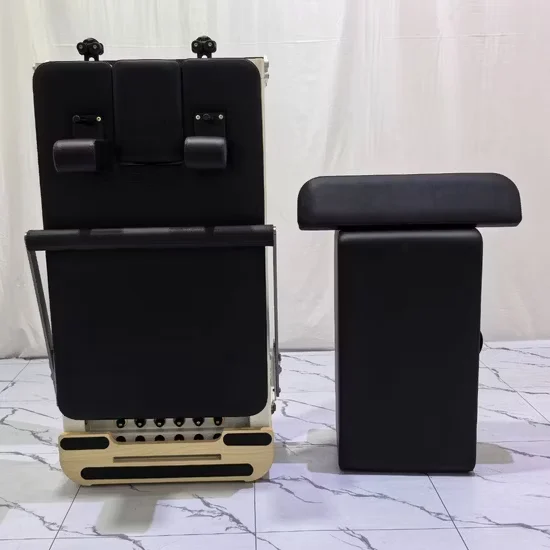
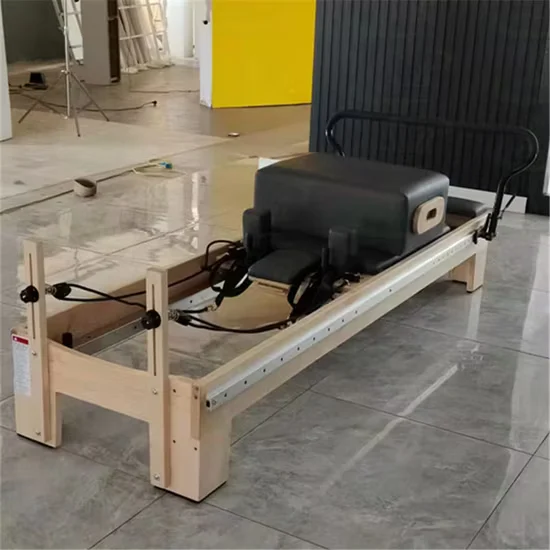
High-End Pilates Studios
Premium aesthetics meet quiet operation for boutique studio environments.

ISO
9001
CE
Certified
OEM
Available
10YR
Warranty
Yoga & Pilates Accessory Wall, 2440×800mm Panel, 35kg Frame Weight — engineered for high-traffic studio environments with solid-color powder coating resistant to daily wear. Wall-mounted design requires verified anchor points for structural stability; standard wood case packaging ensures safe transit across 45+ export markets. Each unit undergoes three-stage inspection with load testing before shipment, backed by a 3-year warranty for commercial operators.
// Spec Highlights
• Direct from Manufacturer · No Middlemen · Worldwide Shipping
01
// Material
Imported Solid Wood
Premium hardwood frames sourced for density and visual warmth.
02
// Hardware
Medical-Grade Silent
Whisper-quiet pulleys and springs for clinical environments.
03
// Customization
Appearance OEM
Color, upholstery, and branding tailored to your studio.
04
// Service
Layout Design
Free venue planning for studios and rehab institutions.
Every component is selected for longevity, performance, and aesthetic harmony - from imported hardwood frames to silent medical-grade accessories.
// Features
Traced Steel Integrity — Every frame tube in this accessory wall system is fabricated from mill-certified Q235 steel with full coil traceability, ensuring consistent yield performance across high-traffic studio installations.
| Parameter | Value |
|---|---|
| Product Type | Yoga & Pilates Accessory Wall |
| Product Dimensions | 2440 × 800 mm |
| Net Weight | 35 kg |
| Frame Steel | Q235 industrial steel, mill-certified |
| Cutting Tolerance | 6 kW fiber laser, ±0.1 mm |
| Welding | Robotic MIG, continuous weld lines |
| Powder Coating | 200 μm scratch-resistant finish |
| Color | Solid color options available |
| Logo | Customized logo allowed |
| Warranty | 3 Years |
| Certification | ISO 9001:2015, CE, SGS factory audit |
| Facility Type | Typical Use |
|---|---|
| Commercial yoga and Pilates studio | Wall-mounted storage for rings, straps, mats, and slings in dedicated accessory zones |
| Boutique fitness facility | Branded accessory display in reception-adjacent training areas |
| Hotel fitness center | Compact wall storage for functional training accessories in limited-floor-space layouts |
| Rehabilitation and performance center | Organized retrieval of therapy bands, slings, and waist belts between patient sessions |
| University athletic department | Centralized accessory management in shared strength and conditioning rooms |
The anchor point is only as reliable as the load calculation behind it.
Most commercial yoga and Pilates accessory walls are installed with generic expansion bolts rated for static loads, ignoring the eccentric pull created when users retrieve heavy mats or load slings at full extension. Over months of daily studio traffic, this off-axis force propagates through the mounting plate into the substrate, and the failure is rarely the steel — it is the interface between fastener and wall. Facility operators discover cracked drywall anchors or stripped masonry sleeves only after the unit shifts under load, creating a liability event that could have been prevented with a structural survey before installation [NEED_CITE: anchor pull-out resistance under eccentric loading in masonry and concrete substrates].
This 2440 × 800 mm commercial yoga and pilates accessory wall occupies a linear wall segment that pairs directly with adjacent mat work zones, reformer rows, or functional rig areas. It serves as the transition point between open floor space and dedicated equipment storage, keeping high-turnover accessories — Pilates rings, yoga straps, fitness slings, waist belts, and rolled mats — within arm’s reach of instructors mid-class. The footprint is compact enough for boutique studios yet wide enough to serve a 20-person class without bottlenecking. It accommodates users across a broad height range, with hook and rail positions spanning from low-reach rehabilitation accessories to overhead mat retrieval.
Each accessory retrieval applies a moment load to the mounting plate that compounds across hundreds of daily cycles. A commercial studio running six classes per day generates well over a thousand pull-and-return events weekly, each introducing micro-stresses at the weld joints connecting hooks and rails to the main frame. The critical fatigue points concentrate where horizontal rails meet vertical uprights and where individual hook brackets are welded to the cross-members. Powder coating at these junctions must resist chipping from repeated metal-on-metal contact with accessory carabiners and strap buckles, while the coating across the full surface endures perspiration transfer, cleaning chemicals, and UV exposure from studio lighting [NEED_CITE: fatigue classification for welded steel joints under repeated low-amplitude loading].
The 200 μm scratch-resistant powder coating on this unit is not a cosmetic layer — it is the primary corrosion barrier in an environment where sweat, humidifier output, and daily chemical cleaners constantly attack exposed steel. The coating thickness ensures that even after surface micro-scratches from accessory carabiners and mat buckles accumulate over years of use, the underlying steel remains sealed. The sandblast pre-treatment before coating creates a mechanical bond profile that prevents delamination at high-contact zones, which is where thinner coatings typically fail first. The solid color finish is specified to maintain visual consistency across multiple units installed in the same facility, supporting brand-coherent studio design.
Choosing a lighter-gauge accessory wall with spot-welded hook brackets leads to a predictable failure sequence: hooks develop wobble within months as spot welds crack under repeated loading, exposed steel at contact points begins surface corrosion, and the unit shifts from an asset to a recurring maintenance line item. Non-standard hook spacing forces facilities to improvise with aftermarket add-ons that void the original warranty. A wall storage system that fails structurally in a commercial environment also creates a safety incident — a loaded accessory wall detaching from its mounting is a facility liability that extends beyond replacement cost into member injury exposure [NEED_CITE: commercial facility liability standards for wall-mounted equipment failure].
The 35 kg net weight of this commercial yoga and pilates accessory wall reflects the steel mass required to resist deflection under fully loaded conditions — a lighter unit is almost certainly built from thinner gauge material that will deform under commercial use cycles. Every frame is cut with 6 kW fiber lasers at ±0.1 mm tolerance, meaning mounting hole patterns align precisely with template drilling on-site, eliminating the field-modification that compromises wall integrity. Robotic MIG welding produces continuous weld lines at every bracket junction, removing the spot-weld weak points that crack under retrieval loads. The 3-year warranty and OEM customization options — including custom logo application and color matching — allow facility operators to align the unit with their brand identity while maintaining structural accountability. Our 2D-3D CAD floor planning support ensures this unit is positioned with correct safety clearances from adjacent equipment and traffic lanes, not just placed wherever wall space happens to be available.
Provide your studio floor plan dimensions and existing equipment list to receive a 2D-3D layout showing optimal accessory wall placement relative to mat zones, reformer areas, and traffic flow. Specify your daily class volume and member count so we can confirm the hook configuration supports your retrieval density without queue bottlenecks. Share your brand color palette and logo files for custom finish and logo application matching. For multi-location rollouts, specify per-site quantities and installation phasing requirements.
Q: What wall substrate is required for mounting this accessory wall?
A: The unit requires a structural substrate — poured concrete, reinforced masonry, or steel-stud framing with plywood backing rated for the specified anchor pull-out load. Hollow-core block or standard drywall alone cannot support the 35 kg unit weight plus loaded accessory mass. We provide anchor specifications matched to your wall type during the CAD layout phase, and installation must follow the supplied torque values to prevent fastener creep under repeated retrieval cycles.
Q: How do I determine if one unit is enough or if I need multiple walls?
A: Calculate the total number of accessories per class session — rings, straps, slings, belts, and mats — and divide by the hook capacity per unit. For studios running back-to-back classes, factor in retrieval bottleneck time: if members queue more than a few seconds to collect gear, a second unit positioned at the opposite end of the studio floor eliminates congestion. Our CAD planning service models accessory traffic flow to recommend unit count and placement.
Q: Can the hook configuration be customized for specific accessory types?
A: Hook spacing, bracket types, and rail positions can be adjusted during the OEM customization process to match your studio’s specific accessory inventory. This includes wider hooks for thick yoga mats, carabiner-compatible loops for fitness slings, and angled cradles for Pilates rings. Custom configurations are confirmed during the design approval stage before production begins, ensuring the finished unit matches your retrieval workflow rather than forcing accessories onto generic hook spacing.
Q: What maintenance does the powder coating require in a humid studio environment?
A: The 200 μm powder coating requires wiping with a pH-neutral cleaner on a weekly schedule to remove perspiration residue and humidity-borne mineral deposits. Avoid abrasive pads or solvent-based cleaners, which micro-scratch the surface and expose primer layers. In high-humidity environments such as hot yoga studios, increase cleaning frequency and ensure ventilation systems maintain airflow across the wall surface to prevent moisture accumulation at hook junctions where accessories rest against the frame.
Q: How does the custom logo application affect the structural warranty?
A: Logo customization is applied during the powder coating stage using heat-transfer or secondary coating processes that do not penetrate or compromise the frame steel or the 200 μm base coat. The 3-year structural warranty remains fully intact because the logo application does not alter weld integrity, steel gauge, or anchor mounting points. Logo proof approval is completed before production, and color matching is verified against your brand specification files.
Premium aesthetics meet quiet operation for boutique studio environments.
Medical-grade silence and precision for sports & postpartum recovery.
Furniture-grade craftsmanship for premium residential installations.
Compact premium setups for one-on-one and small-group training.
Aesthetic Pilates integration for hybrid wellness studio programming.
Multi-unit deployment with instructor-grade reliability for certification programs.
Tell us about your project. Our team will respond within 24 hours with pricing, customization options, and shipping details.
// Sales Director
William
+86 132 2531 1800
// Export Manager
Bella
+86 198 5412 8032
william@bickfit.com