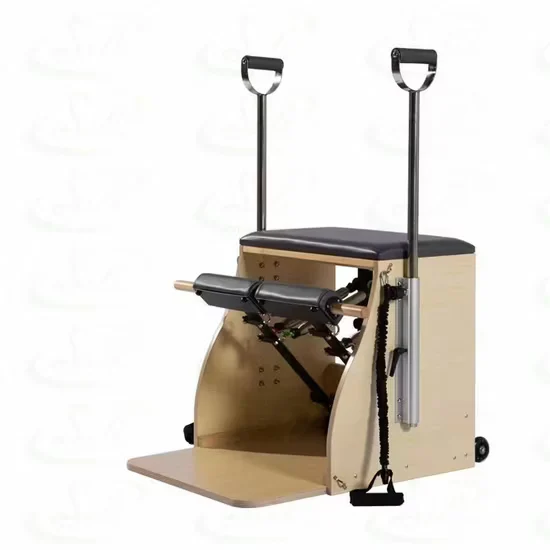
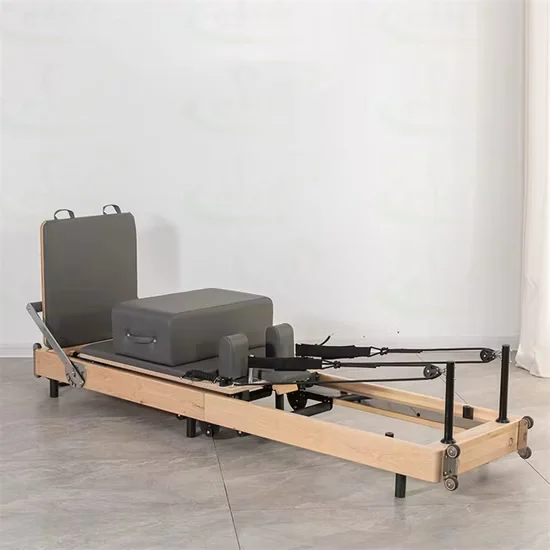
01 / Scenario
STUDIO
P
High-End Pilates Studios
Premium aesthetics meet quiet operation for boutique studio environments.
ISO
9001
CE
Certified
OEM
Available
10YR
Warranty
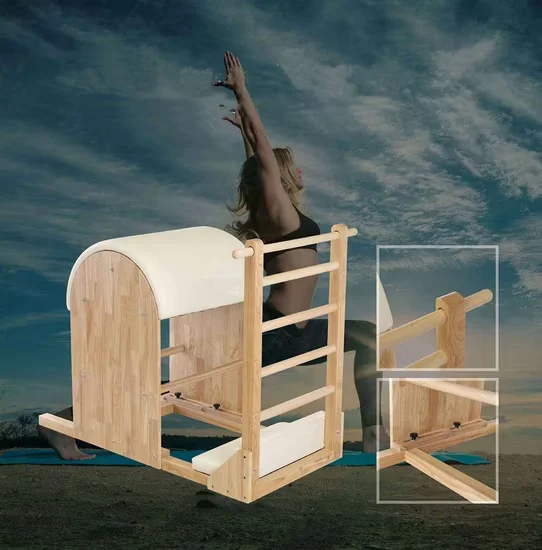
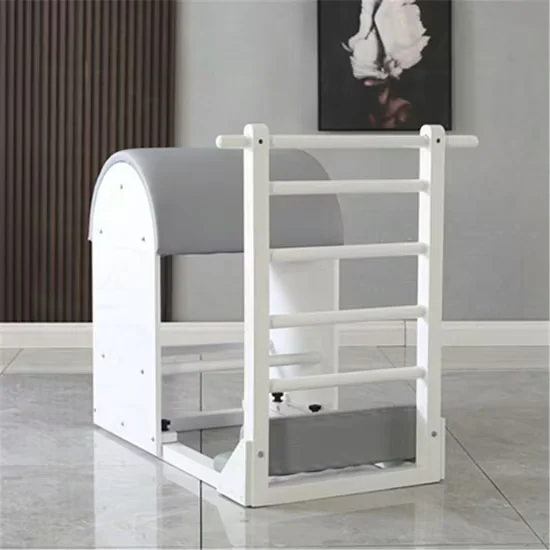
Solid Wood Pilates Ladder Barrel, 1100×770×980mm, 50kg Net Weight — engineered with solid timber frame and precision-spaced rungs for consistent grip positioning during progressive flexibility training. Barrel curvature and padding density are optimized for spinal support and long-term compression resistance in daily studio use. Every unit undergoes rigorous structural inspection and load verification before shipment from our 15,000㎡ vertically integrated facility.
// Spec Highlights
• Direct from Manufacturer · No Middlemen · Worldwide Shipping
01
// Material
Imported Solid Wood
Premium hardwood frames sourced for density and visual warmth.
02
// Hardware
Medical-Grade Silent
Whisper-quiet pulleys and springs for clinical environments.
03
// Customization
Appearance OEM
Color, upholstery, and branding tailored to your studio.
04
// Service
Layout Design
Free venue planning for studios and rehab institutions.
Every component is selected for longevity, performance, and aesthetic harmony - from imported hardwood frames to silent medical-grade accessories.
// Features
Traced Timber Integrity — Solid timber frame sourced with certified moisture control and mill documentation for every production batch.
| Parameter | Value |
|---|---|
| Product Type | Pilates Ladder Barrel |
| Product Dimensions | 1100×770×980mm |
| Frame Material | Solid Wood Timber |
| Color Options | Solid Color / White Frame |
| Net Weight | 50kgs |
| Warranty | 3 Years |
| Customization | Logo and upholstery color available on request |
| Certification | CE European Conformity |
| Facility Type | Typical Use |
|---|---|
| Commercial Pilates studio | Daily group and private reformer-class flexibility and spinal articulation sessions |
| Physical therapy and rehabilitation clinic | Post-injury spinal mobilization and controlled stretching protocols |
| Boutique yoga and movement studio | Progressive back extension and hip flexor release in class rotation |
| Hotel and resort fitness center | Low-impact flexibility station complementing cardio and resistance zones |
| University athletic department | Supplemental mobility work for student-athlete recovery programs |
A commercial wooden pilates ladder barrel built from laminated plywood or hollow-core timber delaminates at the rung-to-rail joints once daily studio traffic exceeds a few months. The glue lines crack under repeated bending loads, rungs develop lateral play, and the barrel curvature loses its original profile — meaning clients no longer receive the spinal support geometry the exercise requires. I have seen studios pull barrels off the floor after less than a season because the white finish peeled at every contact edge, exposing particle board underneath to humidity and sweat [NEED_CITE: EN 957 structural requirements for stationary training equipment]. Solid timber construction avoids this failure mode entirely because the wood grain runs continuously through each joint rather than relying on adhesive between veneer layers.
The Pilates ladder barrel occupies a dedicated flexibility and spinal articulation zone, complementing reformers and Cadillac tables that handle supine and prone resistance work. It covers the sagittal plane for back extension, hip flexor stretching, and lateral flexion progressions across users of varying torso lengths. A commercial wooden pilates ladder barrel suits high-rotation studios where multiple clients cycle through the station daily, and the fixed curvature accommodates body types from petite to tall without mechanical adjustment. Its footprint pairs naturally beside a mat zone or against a wall in a rehabilitation clinic where therapists guide controlled range-of-motion work.
Every time a client arches over the barrel or pulls against the rungs, the timber frame absorbs a combination of static bending and eccentric shear forces at the rung insertion points. In a busy studio running eight or more sessions per day, those joints cycle through thousands of load repetitions per month, concentrating fatigue at the tenon shoulders and dowel interfaces. The barrel curvature itself must resist permanent deformation from sustained compression against the padding, especially when heavier users hold end-range positions. Surface finish durability matters equally: sweat, essential oils, and cleaning solvents attack the coating at every hand-contact and body-contact zone [NEED_CITE: wood finish chemical resistance under commercial fitness conditions]. Upholstery seams face peel forces each time a client shifts position, and low-density foam loses its recovery profile within months of that abuse.
Solid timber species selection governs how the frame responds to humidity swings in a studio environment where HVAC cycles create daily moisture content shifts. Mortise-and-tenon joinery locks each rung into the rail with mechanical interlock that dowel-only joints cannot match under lateral pull, which matters when clients use the rungs as leverage points during deep stretches. Rung spacing tolerance directly affects grip consistency: if spacing varies by even a few millimeters between units, progressive stretch programs lose their measurement baseline across different barrels in the same studio. Padding density must balance comfort against long-term compression resistance — high-density closed-cell foam retains its profile under daily use far better than open-cell alternatives. The white frame finish requires a coating system thick enough to resist chipping at rung edges while remaining smooth enough to prevent splintering, and that balance depends on the number of sealant layers applied before the topcoat.
Thin-walled laminated rails warp when studio humidity rises, pulling the barrel curvature out of its designed profile and creating uneven pressure points against the user’s spine. Rungs glued without mechanical joinery loosen under repeated gripping and pulling, eventually rotating in their sockets and creating a pinch hazard for fingers. Low-density padding compresses permanently within weeks of high-frequency use, leaving a hard ridge where the foam has bottomed out against the timber shell. Insufficient surface sealing lets sweat penetrate end-grain at rung tips, darkening the wood and inviting microbial growth that no amount of surface cleaning removes [NEED_CITE: microbial resistance standards for fitness equipment upholstery and surfaces]. Studios that replace barrels annually because of these failures spend far more over a five-year cycle than those investing in properly specified timber and joinery from the start.
Solid timber sourcing with moisture content certification means every frame entering our Ningjin production floor meets a documented baseline before machining begins, preventing post-assembly warping. Robotic MIG welding applies to the steel reinforcement brackets at high-stress joints, producing continuous weld lines rather than the spot-welds that crack under cyclic loading. Every unit undergoes load testing before crating — not sample-based batch testing, but individual verification that the barrel sustains its curvature profile under rated force. The 200μm industrial powder coating on steel bracket components resists chipping from dropped plates and repeated contact with cleaning equipment. Our 2D-3D floor planning CAD service maps this barrel’s footprint alongside reformers and Cadillacs to confirm safe clearance distances and traffic flow in your studio layout.
Provide your studio floor area and existing equipment list to receive a 2D-3D layout placing this barrel within your flexibility zone with verified clearance distances. Indicate your average daily session count so we confirm the timber grade and padding density match your traffic volume. Share your studio branding palette and logo files for custom frame color and upholstery matching.
Q: How can I tell solid timber apart from laminated plywood in a Pilates barrel?
A: Examine the end-grain at rung tips and rail ends. Solid timber shows continuous grain lines running through the entire cross-section, while laminated plywood reveals stacked veneer layers with visible glue lines. You can also check the weight — solid timber barrels carry noticeably more mass due to the density difference, and knocking on the rail produces a deeper tone compared to the hollow sound of laminated construction.
Q: What joint method keeps rungs stable under daily commercial use?
A: Mortise-and-tenon joinery provides the strongest mechanical interlock for ladder barrel rungs, because the tenon passes through the rail and is wedged or pinned in place. Dowel joints offer less shear resistance and tend to loosen after repeated lateral loading. Ask your supplier for a cross-section photo or factory audit image showing the actual joint construction inside the rail before committing to a bulk order.
Q: How does barrel curvature affect user comfort during spinal articulation?
A: The curvature radius determines which segment of the spine receives support during extension exercises. A radius too flat leaves the lumbar region unsupported, while one too tight creates pressure concentration at the thoracic spine. Padding density works in tandem — high-density foam distributes body weight evenly across the curve, preventing hard spots that cause discomfort during sustained holds in therapeutic or flexibility sessions.
Q: What customization is available for studio branding consistency?
A: Frame color can be specified beyond the standard white and solid color options to match your studio interior palette. Logo placement is available on the barrel base panel or rail end caps. Upholstery color and stitching pattern can be coordinated with your existing reformer and Cadillac padding, creating a unified equipment appearance across your entire Pilates floor without minimum order quantities that exceed a single studio fit-out.
Q: What warranty coverage applies in a high-traffic studio environment?
A: The three-year warranty covers structural frame integrity, including joint failure and timber cracking under normal commercial use. Padding and upholstery are classified as wear components and carry a separate replacement schedule based on your session volume. Replacement barrel inserts and upholstery covers remain available as spare parts throughout the warranty period and beyond, ensuring you never have to retire an otherwise sound frame due to surface wear alone.
Premium aesthetics meet quiet operation for boutique studio environments.
Medical-grade silence and precision for sports & postpartum recovery.
Furniture-grade craftsmanship for premium residential installations.
Compact premium setups for one-on-one and small-group training.
Aesthetic Pilates integration for hybrid wellness studio programming.
Multi-unit deployment with instructor-grade reliability for certification programs.
Tell us about your project. Our team will respond within 24 hours with pricing, customization options, and shipping details.
// Sales Director
William
+86 132 2531 1800
// Export Manager
Bella
+86 198 5412 8032
william@bickfit.com