
Gym Equipment Price in Germany: 2026 Wholesale Buyer Guide
The sticker price on a commercial treadmill means almost nothing compared to what you will actually pay over five years of operation in a German gym.
The real gym equipment price in Germany is not the FOB quote you see on an invoice. It is the sum of unit cost, ocean freight allocation, CE compliance documentation, customs clearance, last-mile delivery, and post-warranty maintenance. When you add all of this up, hidden costs typically account for a significant share of the total cost of ownership, often outweighing the initial savings from choosing a cheaper machine.
I still remember a shipment of commercial treadmills we sent to a fitness studio in Bavaria years ago. The buyer had selected a configuration based purely on unit price, and we followed the spec sheet without pushing back hard enough on motor sizing and belt thickness. Within a few months of daily heavy use, the running belts started delaminating. Replacement belts, technician visits, and downtime for a full gym floor added up to a sum that completely erased whatever margin the buyer thought he had secured on the purchase price. That job changed how I calculate gym equipment price in Germany for every client after it. [NEED_CITE: total cost of ownership methodology for commercial fitness equipment per ISO 20957]
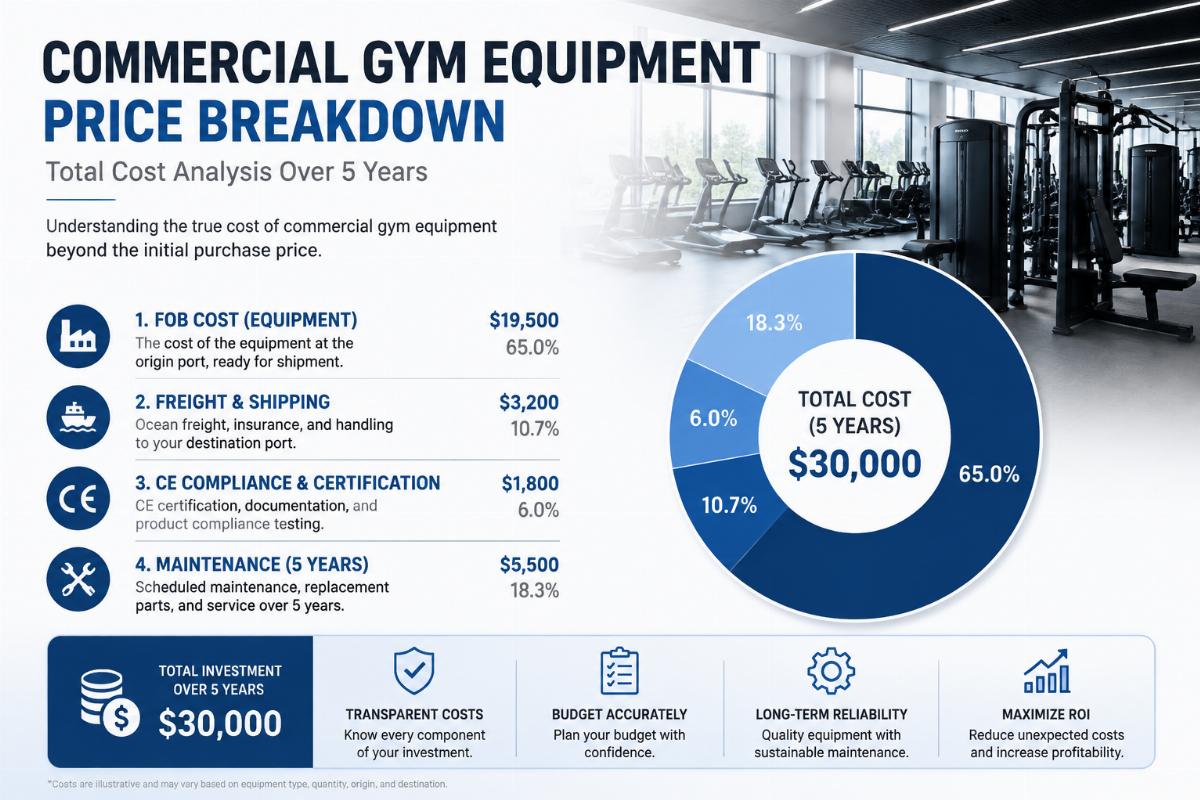
If you are sourcing for a commercial gym, hotel fitness center, or distribution business in Germany, the rest of this guide walks through exactly where the money goes, which specifications actually matter, and how to structure your order so the gym equipment price in Germany stays under control without sacrificing reliability.
What Is the Real Cost Structure Behind Gym Equipment Price in Germany?
The landing cost of any imported fitness machine in Germany is built from at least five visible layers and two invisible ones. The visible layers are the FOB unit price, ocean freight, import duty, VAT, and inland transport. The invisible ones are CE compliance preparation and long-term maintenance. Most buyers only compare the first layer, which is why so many of them end up disappointed a year after opening.
Let us walk through a typical container of mixed cardio and strength equipment coming from a Chinese manufacturer to a warehouse in North Rhine-Westphalia. The FOB price is what you negotiate with the factory. Ocean freight is calculated per container, and the per-unit share depends entirely on how efficiently you load the container. Import duty for fitness equipment into the EU generally falls under a specific CN code, and the rate is published in the TARIC database. [NEED_CITE: EU TARIC duty rate for commercial gym equipment under CN code 9506] VAT at the German rate is then applied on top of the CIF value. Inland delivery from the port of Hamburg or Bremerhaven to the final site adds another line item that varies by distance and whether the venue has a freight elevator.
Then come the two invisible layers. CE compliance is not optional. Every motorized cardio machine and every strength station sold or used commercially in Germany must carry a valid CE mark backed by a technical file that includes risk assessment, test reports, and a Declaration of Conformity. If your supplier cannot produce these documents in German or English with clear reference to the EN standards, customs can hold the shipment, and your liability insurance can refuse coverage in case of an accident. [NEED_CITE: EU Machinery Regulation 2023/1230 CE marking requirements for fitness equipment]
The second invisible layer is maintenance. A cheap treadmill with an undersized motor and a thin running belt will need belt replacements, roller changes, and motor brush servicing far more often than a properly specced commercial unit. Over a five-year window, the cumulative maintenance cost on a low-spec machine can easily surpass the initial price difference between it and a better-built alternative. This is the single biggest reason why the gym equipment price in Germany must be evaluated on a total-cost basis, not a unit-price basis.
A hotel developer in southern Germany once asked me to quote a fitness room package. The first offer he received from another source looked significantly cheaper on paper. When we broke down the five-year maintenance forecast based on the competitor’s spec sheet, the projected service cost turned the deal upside down. He ended up placing the full order with us because the numbers finally made sense on paper.

Commercial Grade vs Home Grade: Which Specifications Actually Change the Gym Equipment Price in Germany?
The gap between a commercial-grade machine and a home-grade machine is not marketing language. It is written in motor duty cycle, belt thickness, and steel gauge, and it directly determines how long the equipment survives in a high-traffic German gym.
When buyers ask me about gym equipment price in Germany, I usually pull up a spec comparison like the one below. The differences look small on paper, but in daily operation they translate into completely different service intervals.
| Parameter | Commercial Grade | Light Commercial / High-End Home | Entry Home Grade |
|---|---|---|---|
| AC Motor Continuous Duty | Rated for extended daily operation | Rated for moderate daily use | Peak duty only |
| Running Belt Thickness | Heavy-duty multi-ply construction | Standard multi-ply | Single or thin ply |
| Frame Steel Thickness | Heavy-gauge welded structure | Medium-gauge frame | Light-gauge bolted frame |
| Bearing Specification | Sealed industrial-grade bearings | Standard bearings | Open or light-duty bearings |
| Warranty Structure | Multi-year frame and parts coverage | Limited multi-year coverage | Short-term limited coverage |
| CE Documentation | Full technical file with EN test reports | Basic CE declaration | CE self-declaration only |
[NEED_CITE: EN 957 standard classification for stationary training equipment categories S and H]
The motor is the most obvious example. A commercial treadmill needs an AC motor rated for continuous duty at high user weights, running many hours a day. A home-grade DC motor might look powerful on the peak horsepower number printed on the label, but it is not designed for that duty cycle. Put it in a commercial environment and the windings overheat, the controller fails, and the motor needs replacement well within the first couple of years.
The running belt is another silent cost driver. A heavy-duty multi-ply belt on a commercial machine holds its surface texture and structural integrity through tens of thousands of running hours. A thin home-grade belt starts showing wear patterns and edge fraying after a fraction of that life. In a gym that runs twelve hours a day, the replacement interval on a low-spec belt becomes a recurring expense that adds up quickly.
Frame steel thickness matters even more for strength equipment. A power rack or Smith machine built with heavy-gauge welded steel will stay rigid and square for many years under heavy loading. A lighter-gauge frame may look identical in photos, but over time the welds develop micro-cracks, the uprights develop play, and the entire unit needs to be replaced. I have walked into gyms where the original "bargain" racks had to be pulled out and replaced within a few years, while the heavier units from the same era were still running without issue.
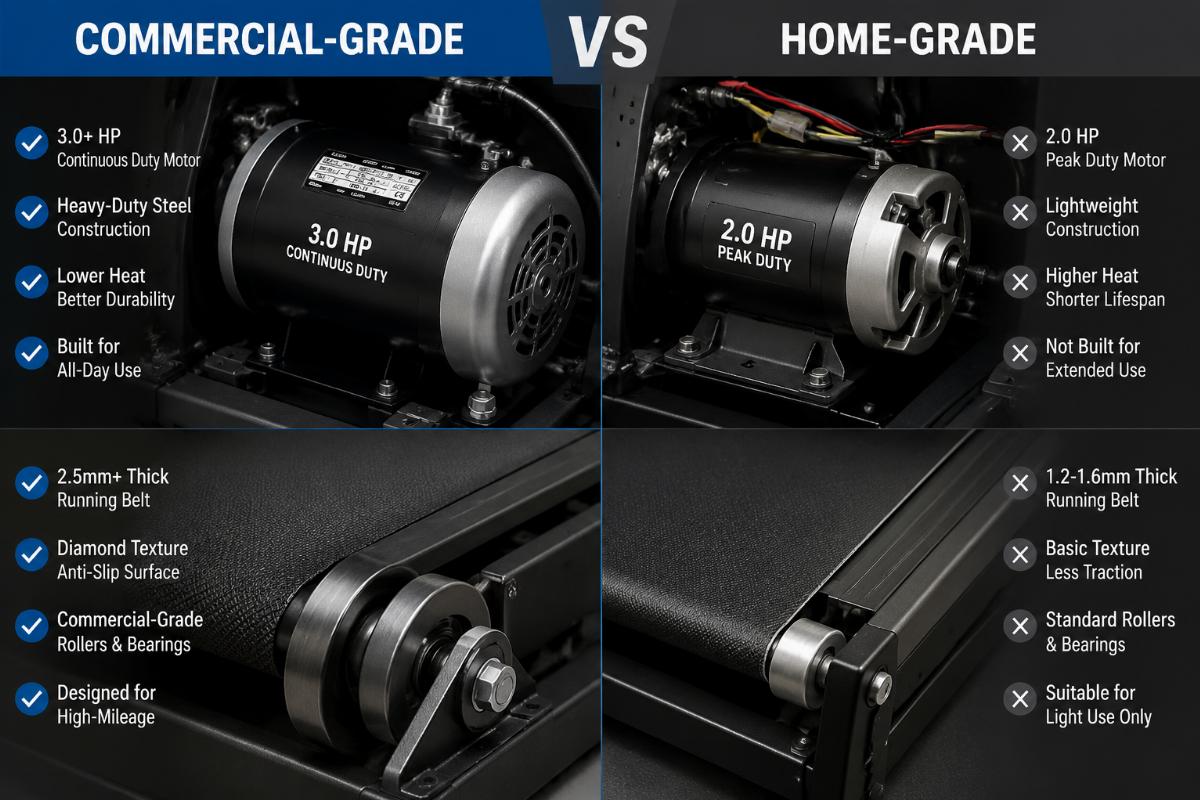
When you evaluate gym equipment price in Germany, always ask the supplier for the actual spec sheet with these parameters spelled out, not just the marketing brochure. The difference in unit price is almost always smaller than the difference in five-year running cost.
How to Avoid the Certification Trap When Importing Gym Equipment to Germany
CE marking is the single most common reason fitness equipment shipments get delayed or rejected at German customs, and it has nothing to do with the quality of the machine itself.
Germany enforces EU machinery safety rules strictly, and the responsible market surveillance authorities in each Bundesland actively check imports. For fitness equipment, the applicable framework is the EU Machinery Regulation, and the relevant harmonized standards are the EN 957 series for stationary training equipment. [NEED_CITE: EN 957 series standards for stationary training equipment safety requirements] Every motorized cardio machine, every cable station, every plate-loaded unit needs a technical file that includes a risk assessment, design drawings, a list of applied standards, test reports from a competent body, and a signed EU Declaration of Conformity.
The trap that catches many buyers is this: a supplier says the product is "CE certified" and shows a certificate, but the certificate is either self-issued without any supporting test data, or it covers a different product category, or it references outdated standards. When customs asks for the full technical file and the buyer cannot produce it, the container sits at the port. Demurrage charges accumulate. In the worst case, the equipment has to be re-exported or destroyed.
I worked with a distributor in the Middle East who had previously tried to route a shipment through Germany to serve Central European clients. The supplier he used could not provide EN 957 test reports for the strength line. The shipment was held for weeks, and the distributor ended up absorbing a loss that wiped out the margin on the entire order. He now sources his European-bound gym equipment price packages exclusively from manufacturers who can provide complete, verifiable CE documentation before the container is sealed.
Here is a practical checklist to run before you place any order for the German market:
- Confirm the supplier can provide an EU Declaration of Conformity signed by the legal manufacturer, not a trading company.
- Ask for the full technical file, including risk assessment and test reports, and verify that the EN 957 parts cited match your actual product categories.
- Check that the test reports are issued by a competent laboratory, not just an in-house document.
- Make sure the user manuals and safety labels are available in German, as required for commercial use in Germany. [NEED_CITE: EU Machinery Regulation language requirements for instructions and safety information]
- Verify that the CE mark is physically affixed to each machine and matches the model numbers in the documentation.

Skipping any of these steps to save a small amount on the gym equipment price in Germany is one of the most expensive mistakes a buyer can make. The cost of proper certification preparation is always lower than the cost of a shipment stuck at the port.
Wholesale Pricing Strategy: Full Container vs Shared Consolidation
The way you structure your container load has a direct and measurable impact on the per-unit gym equipment price in Germany, often more than the negotiation on the FOB price itself.
Ocean freight is charged per container, not per machine. A fully loaded container spreads the freight cost across the maximum number of units. A partially loaded container spreads the same freight cost across fewer units, pushing the per-unit freight share significantly higher. On top of that, customs clearance fees, port handling charges, and inland transport costs are largely fixed per shipment, so under-loading a container wastes money twice.
For a commercial gym buyer, the ideal scenario is a full container of mixed equipment that matches the layout plan. A typical full load for a mid-size gym might include a set of commercial treadmills, a few ellipticals and exercise bikes, a complete strength line covering all major muscle groups, a free weight area with racks, plates, and dumbbells, and functional training accessories. When all of this is engineered into one container by a manufacturer who understands loading optimization, the per-unit freight share drops noticeably compared to buying pieces from different suppliers and consolidating through a forwarder.
| Loading Strategy | Freight Cost per Unit | Handling Complexity | CE Documentation Consistency |
|---|---|---|---|
| Full container from single manufacturer | Lowest per-unit share | Single point of coordination | Uniform documentation package |
| Shared container from multiple suppliers | Moderate per-unit share | Multiple coordination points | Mixed documentation quality |
| Loose cargo consolidation | Highest per-unit share | High coordination burden | Fragmented documentation risk |
For hotel and apartment developers, the order volume is usually smaller, and a full container of only cardio equipment may not be realistic. This is where shared consolidation makes sense. The key is to work with a manufacturer who can produce the full range of equipment and consolidate your order into a shared container alongside other clients heading to the same region. This approach keeps the per-unit freight share reasonable while still giving you access to commercial-grade products.
I have seen buyers in North Africa and the Middle East save a meaningful portion of their landed cost simply by switching from scattered LCL shipments to a well-planned shared container organized by their manufacturer. The gym equipment price in Germany or any other destination market drops not because the machines got cheaper, but because the logistics got smarter.
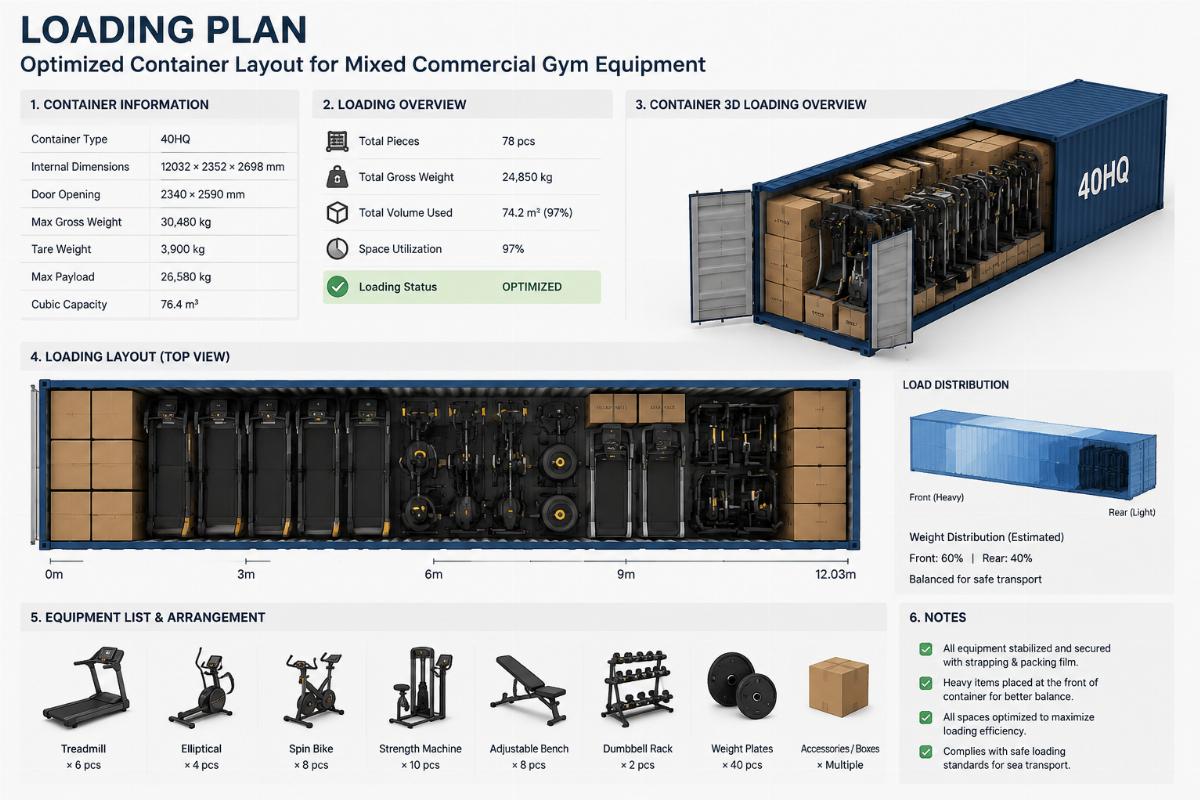
If you are evaluating suppliers, ask them directly how they handle container loading optimization and whether they offer shared consolidation for smaller orders. The answer will tell you a lot about how seriously they take the total gym equipment price in Germany for their clients.
Hidden Maintenance Costs: What German Gym Owners Regret After Year One
The maintenance bill that arrives in year two is the invoice nobody thought about when signing the purchase order in year one.
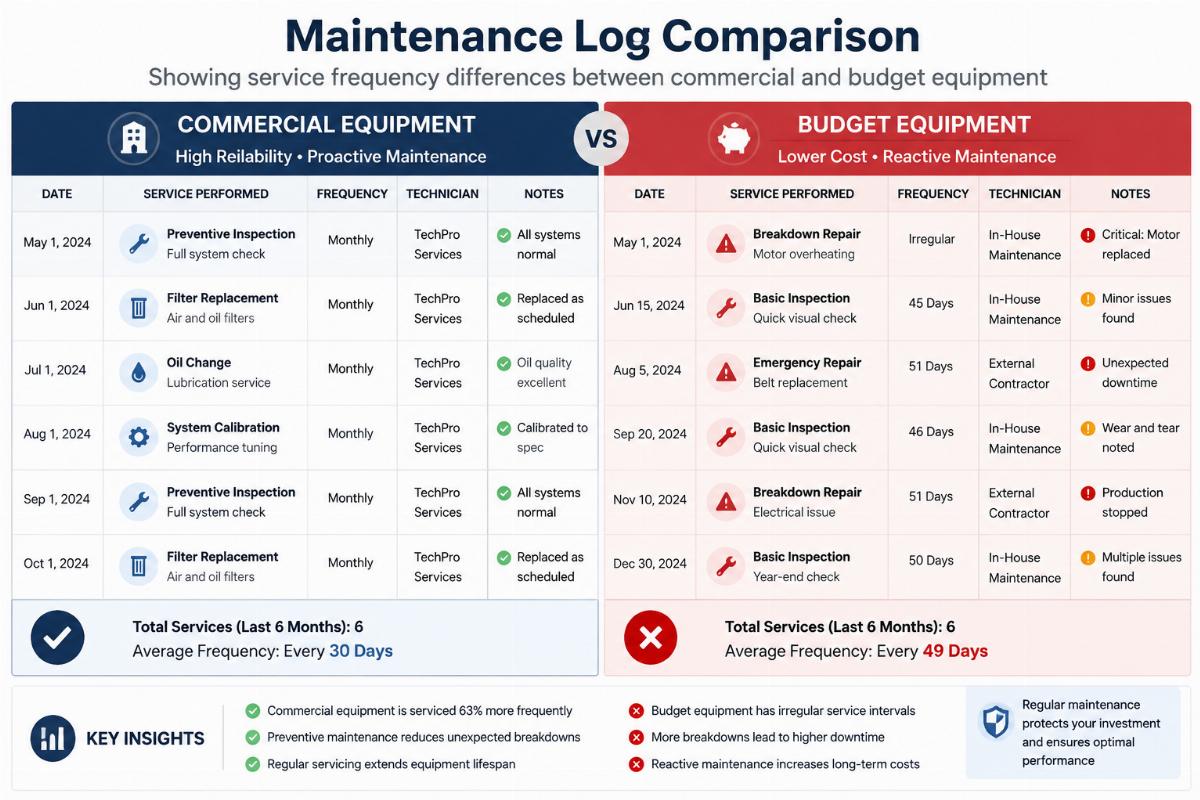
German gym operators run their equipment hard. Commercial facilities in cities like Berlin, Munich, and Hamburg often operate from early morning until late at night, seven days a week. Treadmills see continuous use, strength machines get loaded and unloaded hundreds of times a day, and free weight equipment gets dropped and dragged across the floor. In this environment, the difference between a well-built machine and a marginally built machine shows up in the maintenance log.
The most common complaints I hear from gym owners twelve to eighteen months after opening with budget equipment are belt wear on treadmills, bearing noise on ellipticals and bikes, cable stretch and fraying on cable stations, and upholstery tearing on benches. Each of these issues has a direct cost: replacement parts, technician labor, and revenue loss while the machine is out of service. When multiple machines in the same category start needing attention at the same time, the cumulative effect is significant.
A commercial gym owner in Frankfurt told me that his first set of treadmills, sourced purely on price, needed belt replacements across the entire fleet within the first year. The cost of the belts, the shipping for them, and the technician visits added up to a sum that he said he would rather have paid upfront for better-spec machines. He later replaced the entire cardio line with commercial-grade units from our factory and has not had a repeat of the problem.
| Maintenance Area | Commercial-Grade Expectation | Budget-Grade Expectation |
|---|---|---|
| Treadmill belt replacement interval | Substantially extended service life | Frequent early replacement |
| Bearing and roller service | Sealed industrial components resist wear | Standard bearings require periodic service |
| Cable and pulley systems | Heavy-duty cables resist stretch and fraying | Cables show wear and require adjustment |
| Upholstery durability | High-density foam and commercial vinyl resist tearing | Standard upholstery shows wear quickly |
| Electronics and console reliability | Industrial-grade boards resist heat and vibration | Consumer-grade boards fail under continuous use |
[NEED_CITE: commercial fitness equipment maintenance frequency benchmarks per equipment category]
The lesson is straightforward. When you compare gym equipment price in Germany across suppliers, build a simple five-year maintenance forecast into your evaluation. Ask the supplier for recommended service intervals and spare part prices. Multiply that by the number of machines and the expected daily usage hours. The result will almost always show that the cheapest machine on day one is not the cheapest machine on day one thousand.
Conclusion
The gym equipment price in Germany is a multi-layer figure, and the lowest unit price rarely produces the lowest total cost. By understanding the full cost structure, choosing commercial-grade specifications where they matter, securing proper CE documentation, optimizing your container loading, and forecasting maintenance costs honestly, you can build a fitness facility that performs reliably for years without surprise expenses. The numbers always reward the buyer who looks past the first page of the quote.


