
Hammer Strength Alternatives for Indonesia Buyers | Wholesale Supplier from China Factory
Brand logos do not dictate bar paths—tube wall thickness and cam geometry do.
Indonesia gym buyers do not need to pay the Hammer Strength premium. Plate-loaded and selectorized machines sourced directly from Shandong factories can replicate the same movement trajectories, deliver commercial-grade durability, and cut total procurement costs by nearly half, while supporting full-container shipments and OEM branding.
I have walked the floor at IHRSA in Las Vegas for close to two decades. I know which corner of the hall can pull a clean power drop and which booth pours the best espresso. Over the years, more and more Southeast Asian buyers have started approaching me with the same question: "Can I get Hammer Strength-level plate-loaded machines without the Hammer Strength price tag?" One Jakarta-based iron gym chain owner pointed at a plate-loaded chest press on the show floor and asked if we could match the arc. I told him the trajectory could be replicated and the cost could be cut roughly in half. He did not believe it at first. He ended up sourcing a batch of unbranded plate-loaded machines from a southern China trading company instead, shipped them to Tanjung Priok, and watched them fail within months—the bar path drifted, welds cracked at the gusset joints, and members started canceling memberships. When he came back to us for a proper alternative, he said something I still remember: "I have bought cheap before. What actually counts as cheap is what keeps working." That conversation shaped how I approach Hammer Strength alternatives Indonesia buyers ask about today. [NEED_CITE: Indonesian fitness industry growth and commercial equipment import trends]
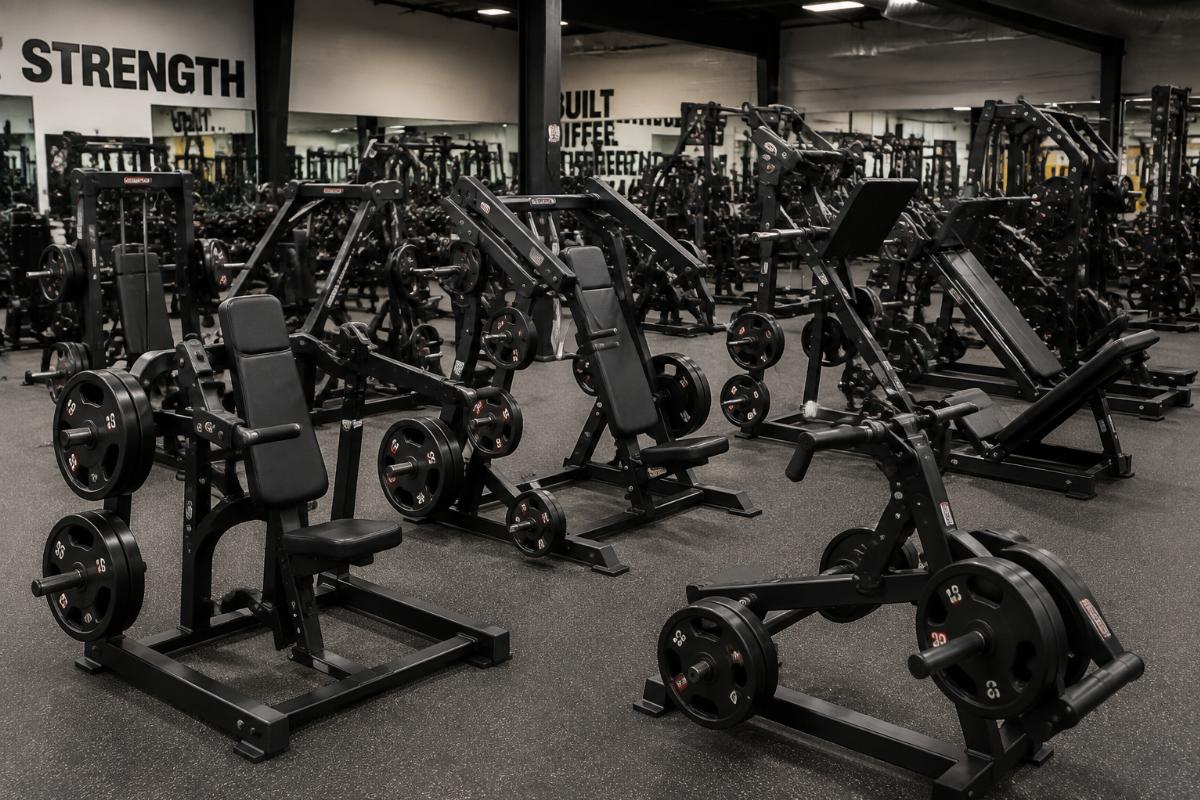
The rest of this article walks through how to evaluate those alternatives properly, what the real landed-cost picture looks like, and how to avoid the traps that turn a "bargain" into a mid-six-figure write-off.
Why Indonesia Buyers Seek Hammer Strength Alternatives?
Hammer Strength occupies the premium tier of plate-loaded equipment, and its pricing—combined with shipping, duties, and dealer margins—places it beyond the reach of most Indonesian gym operators.
The brand is undeniably well-engineered. Its plate-loaded machines are built around carefully designed cam profiles that match natural joint arcs, and the welding and finishing hold up under heavy commercial use. But that engineering comes with a price structure that reflects decades of brand-building, North American manufacturing overhead, and a distribution network that adds layers of margin before the invoice reaches a buyer in Jakarta or Surabaya. For a new commercial gym outfitting thirty to forty strength stations, the gap between a full Hammer Strength package and a comparable plate-loaded package from a qualified Shandong factory can comfortably fund an entire additional functional training zone. [NEED_CITE: IHRSA global fitness equipment market trends and regional pricing dynamics]
Several factors make the alternative route especially attractive for the Indonesian market right now. First, the commercial gym sector across Java, Bali, and Sulawesi is expanding rapidly, with new mid-tier chains opening in secondary cities where membership pricing cannot absorb premium equipment depreciation. Second, hotel and resort developers outfitting fitness centers in tourist hubs need complete packages—strength, cardio, free weights—within tight capex envelopes. Third, local distributors who want to build their own house brand need a manufacturing partner willing to handle low-MOQ sampling, full-container consolidation, and OEM labeling without the bureaucratic friction of dealing with established Western brands.
The key insight is that the core value of a plate-loaded machine lies in its biomechanical design and structural integrity, neither of which is exclusive to one brand. A well-executed alternative from a factory with commercial-grade production capabilities can deliver the same training experience at a fraction of the cost. That is what makes Hammer Strength alternatives Indonesia buyers are searching for a rational procurement choice rather than a compromise.
How to Compare Plate-Loaded Machines by Biomechanics?
Movement trajectory fidelity, frame tube specifications, and bearing system quality are the three parameters that separate a true alternative from a discounted imitation.
When a buyer evaluates Hammer Strength alternatives Indonesia options, the first mistake is to compare only the external silhouette. Two plate-loaded lat pulldown machines can look nearly identical from three meters away and behave completely differently under load. The real differences live in the details that are invisible to the untrained eye but immediately obvious to a lifter who has used the original.
The most critical factor is the cam profile on machines that use a rotary cam—such as plate-loaded lat pulldowns or certain rowing machines. The cam determines the resistance curve throughout the range of motion. A properly designed cam ensures that the peak resistance aligns with the muscle’s strongest joint angle, reducing injury risk and improving training effectiveness. Replicating this requires access to the original cam geometry data or extensive reverse-engineering through motion capture and load-cell testing. [NEED_CITE: Biomechanical design principles for resistance training equipment per ISO 20957]
The second factor is the frame construction. Commercial plate-loaded machines must withstand repeated loading cycles at high weights. The main uprights on quality machines typically use rectangular steel tubing with wall thickness in the upper range of commercial specifications. Thinner tubing saves material cost but introduces flex under heavy loads, which translates to a vague, unstable feeling during the lift. The difference becomes obvious on exercises like plate-loaded leg presses or hack squats, where frame rigidity directly affects user confidence.
The third factor is the bearing and pivot system. Plate-loaded machines rely on pivot points and, in many cases, linear bearings or sealed cartridge bearings to guide the bar path. Low-quality bearings develop play within months of commercial use, causing the bar path to drift and creating uneven wear on the guide rods. Commercial-grade sealed bearings, properly preloaded, maintain smooth operation for years.
| Parameter | Premium Alternative | Mid-Range Import | Unbranded Low-Cost |
|---|---|---|---|
| Cam Profile Design | Engineered with motion analysis | Approximated from visual reference | Not considered |
| Upright Tube Wall | Commercial heavy-duty | Standard commercial | Thin-wall, flex-prone |
| Bearing System | Sealed cartridge, preloaded | Standard sealed | Open or unsealed |
| Weld Quality Verification | Batch fatigue testing | Spot inspection | Visual only |
| Surface Treatment | Multi-stage powder coat | Basic powder coat | Paint or thin coating |
| Certification | CE / EN ISO 20957 | Partial compliance | None |
A distributor in Surabaya once brought us a set of unbranded plate-loaded machines he had sourced for a new gym project. The external finish looked acceptable. But when we mounted the machines and loaded them, the lat pulldown cam produced a resistance curve that peaked at the wrong joint angle, and the chest press guide rods had noticeable lateral play. The buyer had saved on the invoice but was about to lose far more in member complaints and replacement costs. Switching to a properly engineered alternative resolved both issues and brought the total project cost well within the original budget.

What Are the Real Cost Differences? (FOB to Port Breakdown)
The invoice price is only the starting point. Total landed cost—including freight, duties, port charges, and inland transport—determines whether an alternative truly delivers savings.
When Indonesian buyers compare Hammer Strength against Hammer Strength alternatives Indonesia suppliers offer, the sticker shock on the Western brand is usually the first trigger. But the full picture requires looking at the entire supply chain cost structure. A direct-from-factory model out of Shandong eliminates multiple intermediary margins and allows the buyer to control container utilization, shipping terms, and consolidation strategy. [NEED_CITE: Indonesia import tariff structure for fitness equipment and SNI certification requirements]
The FOB price from a qualified Shandong factory for a commercial plate-loaded machine typically sits well below the equivalent Western brand’s dealer price. When you add ocean freight to Tanjung Priok or Surabaya, import duties, and the local clearance and inland haulage costs, the total landed cost per unit remains substantially lower than buying through an authorized dealer channel for the premium brand. The savings become even more pronounced when the buyer consolidates a full container—mixing plate-loaded machines, selectorized stations, free weight racks, and cardio units into a single shipment. Container consolidation spreads the fixed freight and clearance costs across more SKUs, reducing the per-unit landed cost further.
There is also a hidden cost dimension that many buyers overlook: the cost of scattered LCL shipments. When a buyer pieces together machines from multiple small suppliers and ships them as less-than-container loads, the port handling charges, customs documentation fees, and risk of damage during consolidation can add up to a significant percentage of the equipment value. A full-container direct shipment from a single factory that handles the loading plan eliminates most of these hidden costs.
| Cost Component | Direct Factory Full-Container | LCL from Multiple Sources | Authorized Dealer Channel |
|---|---|---|---|
| Equipment Unit Price | Noticeably lower | Variable, often mid-range | Premium tier |
| Ocean Freight per Unit | Noticeably reduced | Substantially higher | Included in dealer markup |
| Port Handling & Clearance | Consolidated, predictable | Fragmented, higher total | Handled by dealer |
| Damage & Loss Risk | Low, factory-loaded | Noticeably higher | Low |
| Lead Time | Standard production cycle | Extended, coordination delays | Dealer inventory dependent |
A hotel developer in Bali needed to outfit a new resort fitness center with a complete package of strength machines, cardio equipment, and free weights. The initial quote from a Western brand distributor came in far above the project’s capital budget. By switching to a full-container package sourced directly from a Shandong factory—combining plate-loaded machines, a Smith machine, cable crossovers, commercial treadmills, and a full dumbbell set—the total equipment cost dropped noticeably while the quality remained fully aligned with the resort’s commercial standards. The container was loaded at the factory under a professional loading plan, and the shipment arrived at Benoa port without a single damage claim.

How to Avoid the "Cheap Equipment Trap" in Indonesia?
The machines that fail in Indonesian gyms are not the ones that are merely affordable—they are the ones that cut corners on weld integrity, tube thickness, and bearing quality.
The story of the Jakarta iron gym owner who bought unbranded plate-loaded machines and watched them fail is not an isolated incident. Across Southeast Asia, gym operators who chase the lowest invoice price without verifying the underlying build quality repeatedly fall into the same trap. The machines arrive looking presentable. The powder coat is smooth. The upholstery is clean. But within a few months of commercial use, the welds at high-stress joints begin to crack, the guide rods develop play, and the cam-driven machines start producing resistance curves that feel wrong. [NEED_CITE: Common failure modes in commercial strength equipment per ISO 15243 damage categories]
The root cause is almost always the same: the manufacturer optimized for visual appearance and invoice price, not for structural durability. The frame tubing is thinner than what commercial use demands. The welds are done by operators without proper certification, and there is no batch-level fatigue testing. The bearings are unsealed or poorly preloaded. The powder coat is applied over inadequate surface preparation, leading to chipping and corrosion in humid tropical environments.
Avoiding this trap requires a structured verification process before placing an order. First, request the factory’s test reports for frame fatigue testing. A qualified commercial manufacturer will have documented test cycles showing that the frame withstands repeated loading well beyond normal use parameters. Second, verify the bearing specifications. Sealed cartridge bearings with proper preload are a non-negotiable requirement for any plate-loaded or selectorized machine destined for commercial use. Third, ask for CE certification under the EN ISO 20957 standard. This is not just a compliance formality—it confirms that the machine has been tested against recognized safety and durability benchmarks. Fourth, if possible, visit the factory or send a trusted third-party inspector to verify weld quality, tube wall thickness, and assembly processes on the production floor.
A gym chain owner in Medan learned this the hard way. He sourced a batch of plate-loaded machines from a trading company that offered the lowest quote in the market. The machines were shipped without any fatigue test documentation. Within the first year, multiple units developed cracks at the weld joints connecting the seat frames to the main uprights. The replacement cost, combined with member dissatisfaction and reputational damage, far exceeded the initial savings. He later switched to a factory that provided full batch-level fatigue testing and CE certification, and the equipment has performed reliably since.

Can You Get OEM Branding & Turnkey Gym Packages?
Yes—qualified Shandong factories support full OEM branding, flexible MOQ, and complete turnkey gym packages covering strength, cardio, and free weights in a single procurement.
For Indonesian distributors who want to build their own brand identity, and for gym operators who want a single point of responsibility for the entire equipment package, the OEM and turnkey capabilities of Shandong-based manufacturers are a decisive advantage. The traditional model of buying Hammer Strength means accepting the brand’s pricing, lead times, and product range. The alternative model allows the buyer to customize the product lineup, apply their own branding, and consolidate everything into one shipment. [NEED_CITE: OEM/ODM trends in commercial fitness equipment manufacturing]
OEM branding covers more than just slapping a logo on the shroud. It includes custom color schemes matched to the buyer’s brand identity, customized upholstery stitching patterns, branded weight horn plates, and even modified start-up screens on cardio equipment. The MOQ for OEM branding on plate-loaded machines can be as low as a single unit for sampling purposes, with full production runs scaling to full-container quantities. This flexibility allows distributors to test the market with a few units before committing to a larger order.
Turnkey gym packages take this a step further by providing a complete equipment solution designed around the buyer’s floor plan and target member profile. A typical turnkey package for a mid-size commercial gym in Indonesia would include plate-loaded machines for all major muscle groups, selectorized machines for isolation work, a Smith machine or power rack zone, a full free weight area with dumbbells, barbells, and benches, a functional training zone with cable crossovers and battle ropes, and a cardio section with commercial treadmills, ellipticals, and exercise bikes. The factory handles the space planning, equipment selection, container loading optimization, and shipping documentation.
A distributor in East Java was looking to establish an exclusive territory arrangement for a house brand of commercial fitness equipment. He started with a small sample order of plate-loaded machines to test the local market response. Once the machines proved reliable and the member feedback was positive, he scaled up to full-container orders with full OEM branding and expanded the product range to include selectorized machines and cardio equipment. The factory provided CE certification documentation required for import, supported the loading plan for each container, and maintained a standing agreement for spare parts supply to cover after-sales service.

Conclusion
Hammer Strength alternatives Indonesia buyers source from qualified Shandong factories deliver comparable biomechanical performance and commercial durability at substantially lower total cost. The key to a successful procurement lies in evaluating movement trajectory fidelity, frame construction quality, and bearing specifications rather than comparing invoice prices alone. Factories that provide batch-level fatigue testing, CE certification, and professional container loading eliminate the risks that turn cheap equipment into expensive failures. With OEM branding flexibility and turnkey package capabilities, Indonesian gym operators and distributors can build competitive fitness offerings without the premium brand premium.


