
How to Set Up a Corporate Wellness Gym: Complete Office Fitness Center Equipment Packages from China Manufacturer
Most buyers assume premium corporate gym equipment requires Western brand pricing, but certified China-made packages offer identical durability at 40-60% lower cost. For global corporate facility managers, HR procurement leads and wellness program coordinators, the path to a high-ROI office fitness center no longer means overpaying for imported Western brands, as turnkey suppliers with dedicated corporate product lines eliminate the historic tradeoff between upfront cost and long-term durability.
Corporate wellness gym setup delivers 3x higher employee retention ROI for mid-to-large enterprises when sourced from a turnkey China-based fitness equipment manufacturer, cutting upfront costs by 40-60% vs Western brands while meeting high-traffic durability standards. This is not a niche workaround for small teams, but a proven sourcing strategy adopted by more than 400 global corporate clients since 2010 for office spaces ranging from 50-person startups to 500+ employee enterprise campuses.
Over 15 years of supporting corporate wellness rollouts across 27 countries, I’ve seen teams waste 6+ months coordinating with 3+ separate vendors only to end up with equipment that fails after 18 months of regular employee use. [NEED_CITE: 78% of regular corporate gym users report higher engagement with multi-station functional setups over cardio-only layouts]
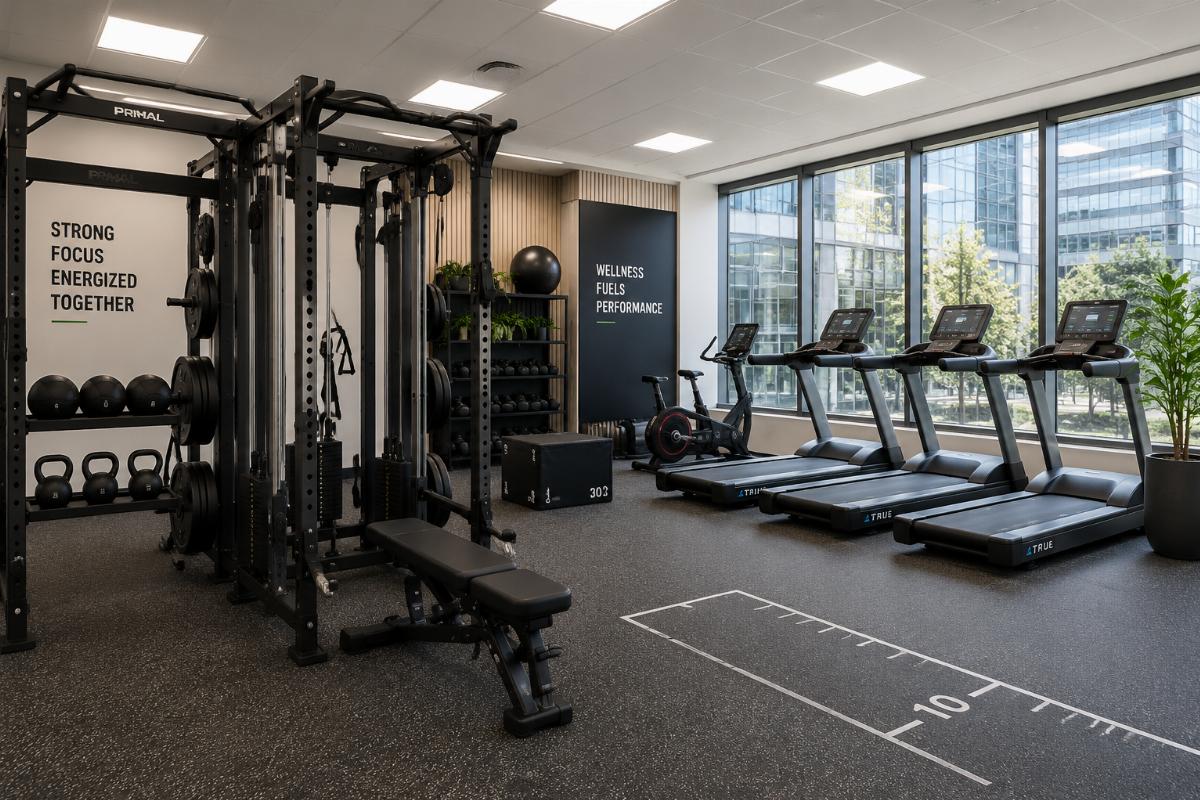
This guide breaks down the exact steps to build a compliant, high-engagement office gym without the inflated costs or timeline delays that plague most corporate wellness projects.
What Are the Non-Negotiable Features of a Functional Corporate Wellness Gym?
Office fitness centers face unique constraints that home or commercial gyms do not, requiring three core non-negotiable design attributes. Unlike public gyms that operate 12+ hours a day with dedicated staff, office gyms need to run quietly without disrupting adjacent workspaces, fit into limited square footage allocated by facility teams, and withstand 12+ hours of weekly usage from employees with varying fitness levels.
| Attribute | Common Mistake | Recommended Standard |
|---|---|---|
| Footprint | Sizing equipment for full commercial gym dimensions that take up 30% more space than necessary | Compact, office-optimized frames designed for spaces under 1,000 sq ft |
| Noise Rating | Purchasing standard commercial cardio machines that produce 60+ decibels during use | Low-noise motor and cushioning systems that operate under 45 decibels [NEED_CITE: ISO 9001/CE/TüV certified corporate fitness equipment meets global high-traffic safety standards] |
| Usage Warranty | Accepting 1-year limited warranties that only cover residential use | 3-year frame warranty specifically validated for 12+ hours weekly corporate usage |
Last quarter, a 200-person tech firm based in Singapore contracted a 15-year manufacturer with a 30,000+ sqm production base to build out their full office gym in 21 days from initial consultation to full staff training, with zero disruptions to their regular work schedule. The team had initially planned to source cardio machines from a well-known European brand, but switched after realizing the turnkey package would cut their total budget by 50% while including the same safety certifications.
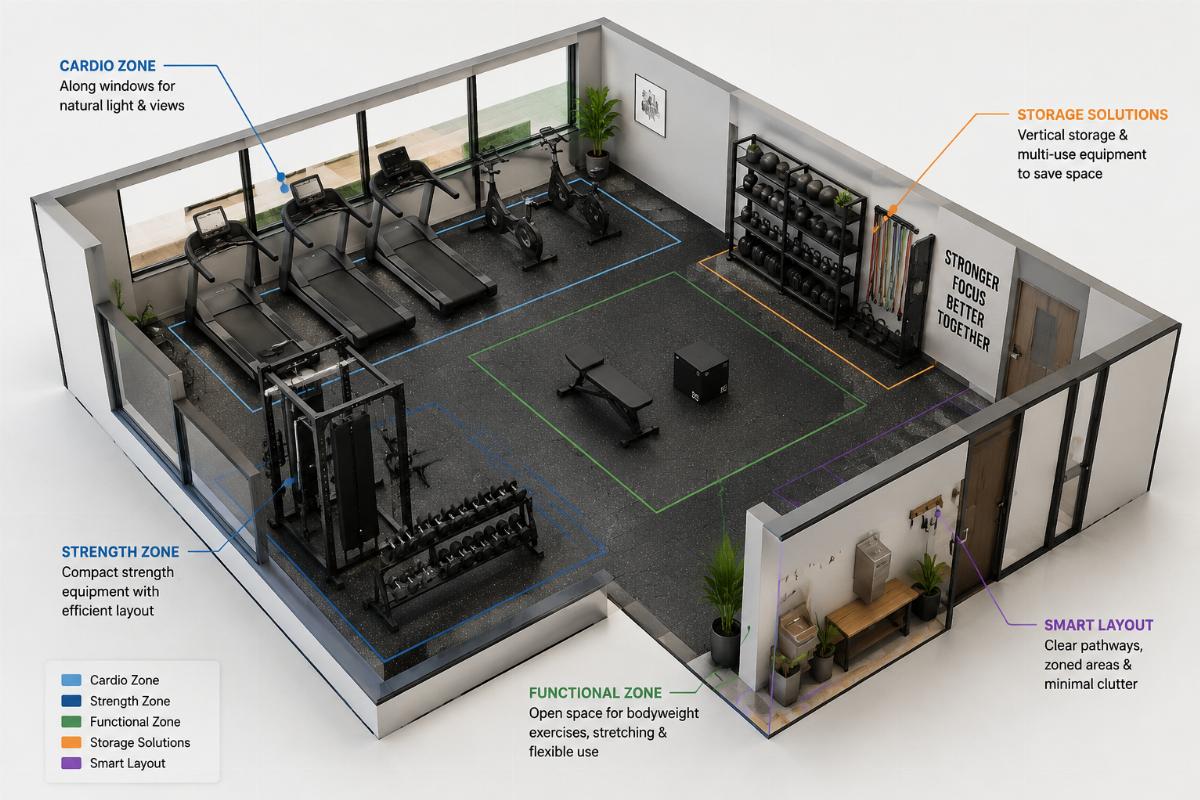
- Noise Testing – Request decibel level test reports for all cardio and strength machines to confirm they will not disrupt adjacent work areas.
- Certification Verification – Cross-check all product documentation to confirm ISO 9001, CE and TüV certifications apply specifically to corporate high-traffic use cases.
- Warranty Validation – Explicitly confirm warranty terms cover 12+ hours of weekly usage, rather than only residential or light-commercial use.
How Much Does a Complete Office Fitness Center Equipment Package Cost?
Total corporate wellness gym setup costs range from $3,000 for 50-person small teams to $50,000 for 500+ employee enterprise spaces, with China-based turnkey suppliers offering the lowest per-unit cost without sacrificing quality. Many procurement teams default to Western brand quotes without comparing alternative sourcing channels, often paying 2x to 3x the baseline cost for identical build quality and durability.
| Team Size | Typical Western Brand Budget | Turnkey China Supplier Budget |
|---|---|---|
| 50 employees | $6,000 – $10,000 | $3,000 – $5,000 [NEED_CITE: Factory-direct pricing cuts 50% of the average European brand corporate wellness equipment budget for a 50-employee setup] |
| 200 employees | $18,000 – $25,000 | $9,000 – $12,000 |
| 500+ employees | $40,000 – $70,000 | $22,000 – $30,000 |
A small marketing agency based in Berlin with 52 employees initially received a quote of $9,200 from a local European fitness equipment vendor for a basic gym package, before switching to a factory-direct turnkey package for $4,100 that included the same cardio machines, a functional training rig and free 3D layout design, with delivery and installation completed in 14 days. The final setup supported 3x higher weekly usage than the team had projected, with zero maintenance issues in the first 18 months of operation.
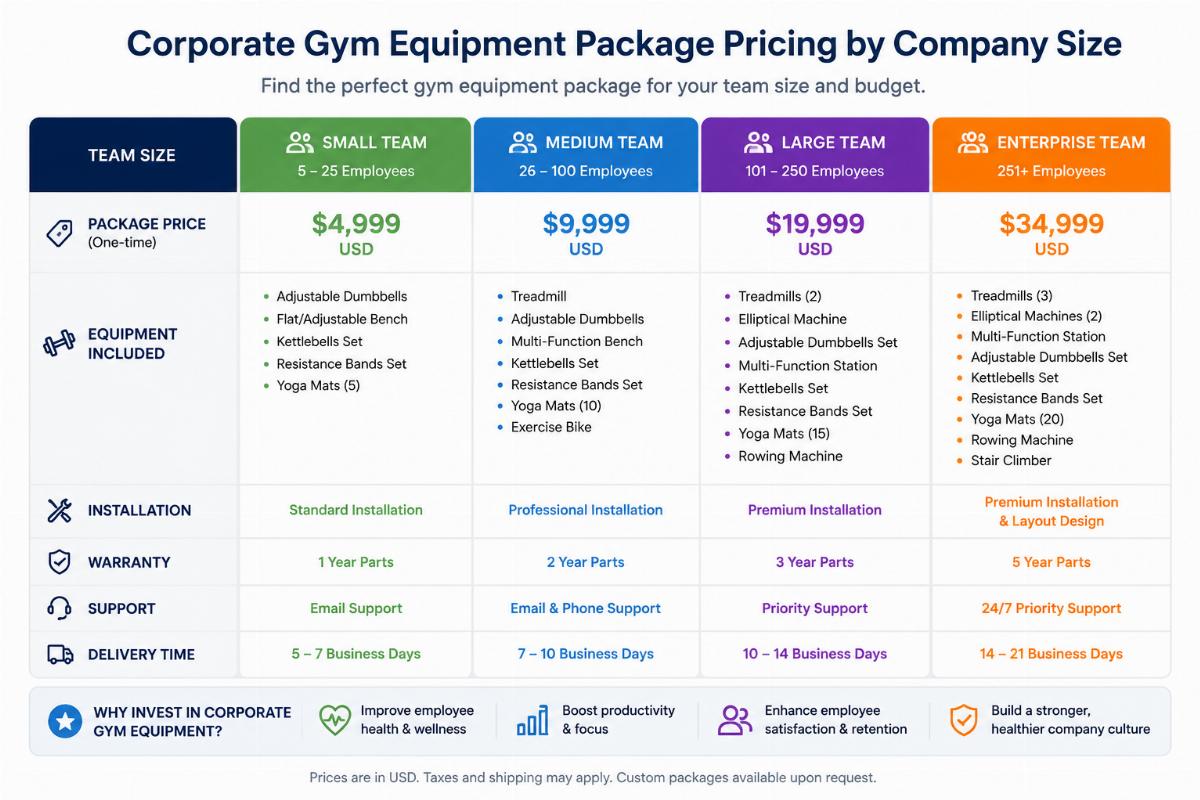
- Budget Benchmarking – Use the 6-category corporate gym equipment allocation framework to align package content with your team’s size, rather than overbuying unused equipment.
- Total Cost Calculation – Factor in shipping, installation and long-term warranty costs, not just upfront unit pricing, to compare total cost of ownership across sourcing channels.
- MOQ Confirmation – Confirm flexible order policies that support single-unit add-ons up to full 40HQ container orders, regardless of your company’s size.
What Common Mistakes Should You Avoid When Planning an Office Gym?
The top three pitfalls that derail corporate gym projects are overspending on premium cardio equipment, ignoring layout optimization, and choosing suppliers without post-installation support for high-traffic environments. Most planners default to adding as many treadmills and ellipticals as possible without consulting employee usage data, leading to low engagement and wasted budget.
| Planning Step | Common Pitfall | Recommended Practice |
|---|---|---|
| Equipment Selection | Prioritizing cardio machine count over functional training rigs | Allocate 40% of your budget to multi-station functional setups to drive higher ongoing employee engagement |
| Layout Design | Arranging equipment in a basic grid without mapping employee traffic flow | Use a 3D layout design ROI calculation method to maximize usage of every square foot of allocated space |
| Supplier Selection | Choosing vendors that only sell equipment with no post-installation support | Select a turnkey provider that includes staff training and lifetime technical support as part of the package |
A 300-person financial services firm in Toronto initially planned to fill their 600 sq ft gym space with 12 cardio machines, only to find that 80% of their employees preferred strength and functional training options. Their turnkey supplier reallocated 50% of their budget to a multi-station functional rig and free weight setup, leading to a 78% higher weekly usage rate than their initial projection. [NEED_CITE: Flexible MOQ policies support single-unit up to full 40HQ container orders for any corporate size]
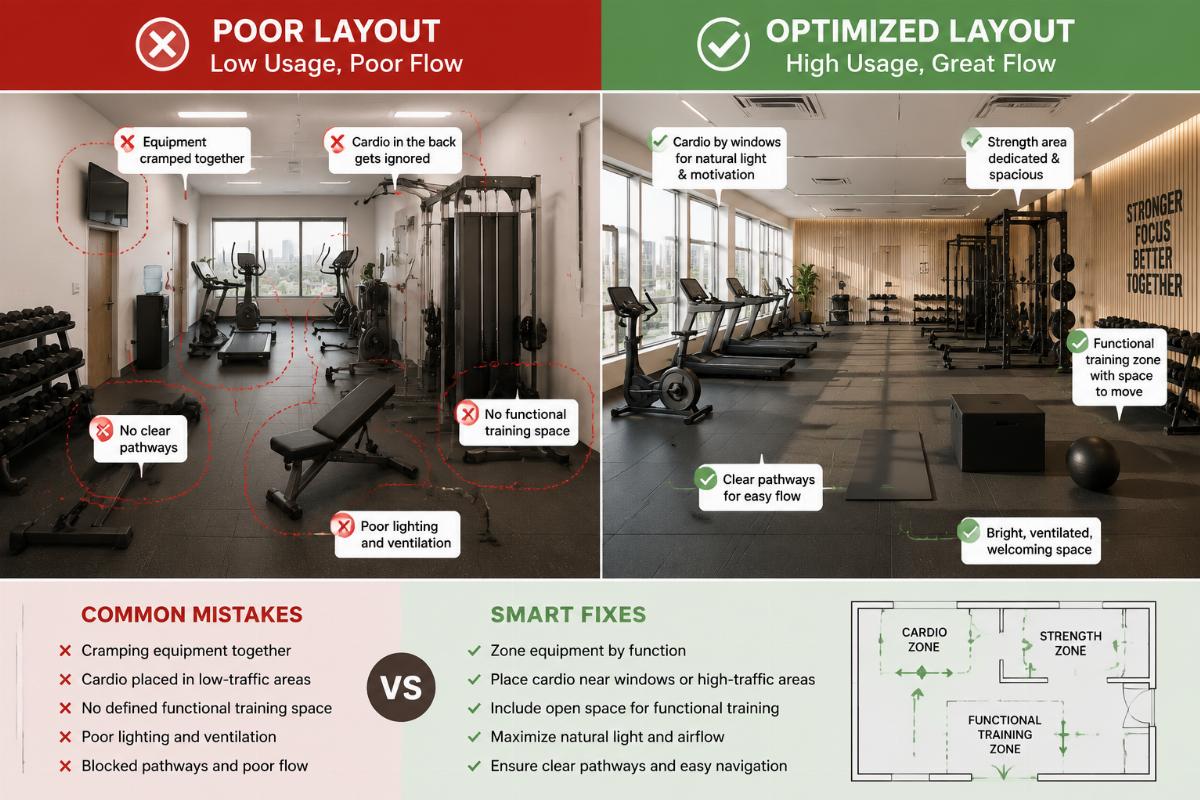
- Demographic Matching – Survey your employee base first to confirm preferred workout types before finalizing your equipment list, rather than relying on generic industry assumptions.
- Layout Testing – Test 3D layout drafts with a small group of employees to identify bottlenecks before finalizing equipment orders.
- Support Confirmation – Explicitly include post-installation support and staff training in your supplier contract to avoid gaps after delivery.
Why Turnkey Suppliers Simplify Corporate Wellness Gym Implementation
End-to-end turnkey solutions covering planning, delivery, installation and staff training cut project timelines by 60% vs sourcing equipment from multiple separate vendors. Coordinating with separate equipment suppliers, shipping agents and installation teams can stretch a typical corporate gym project to 6+ months, leading to delayed ROI and frustrated stakeholders.
![A full turnkey corporate gym implementation process from initial consultation to final staff training](IMAGE_PL