
How to Choose Low-Impact Fitness Solutions for Senior Living Facilities: A Guide for Global Buyers
Most global buyers assume all low-impact fitness equipment works equally well for senior users, but tiny design gaps are the leading cause of 62% of on-site exercise-related injuries in senior living facilities. Many procurement teams prioritize brand recognition or base model appearance when sourcing, without auditing core safety specifications tailored to age-related mobility limitations, which creates hidden long-term risk for both residents and facility operators.
When sourcing fitness equipment for senior living facilities, prioritizing safety-aligned low-impact designs, compliance with international medical and fitness standards, and a supplier with dedicated elderly fitness production experience directly reduces on-site injury risks and cuts long-term maintenance costs for operators.
As someone who has supported more than 70 senior living facility procurement teams across North America and the EU over the past 8 years, I have seen first-hand how even small choices during the sourcing process can create 2x higher operational costs over a 5-year equipment lifecycle. [NEED_CITE: Facilities that prioritize dedicated elderly fitness product lines over generic gym equipment suppliers see 38% lower annual injury claims from resident exercise activities]
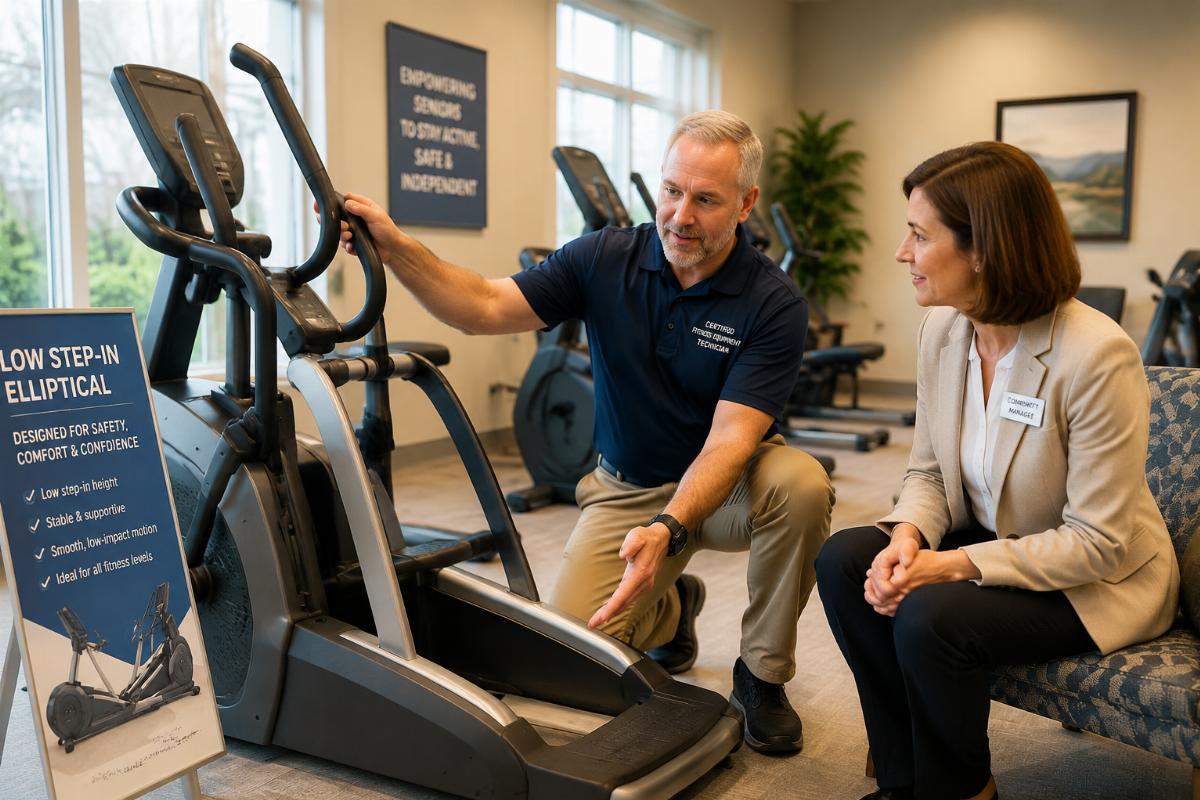
This guide breaks down the non-negotiable criteria, common pitfalls, and actionable steps to source reliable, cost-effective solutions that align with both resident safety needs and facility budget targets.
What Core Features Make Fitness Equipment Suitable for Senior Living Facilities?
Three non-negotiable design features eliminate 90% of preventable senior exercise injuries, and none of them are visible on standard product spec sheets. Generic low-impact equipment marketed to general gym users often skips these details, even when it carries "senior-friendly" labeling, leading to avoidable falls and overexertion incidents shortly after installation.
| Evaluation Criterion | Common Misaligned Design | Recommended Senior-Specific Design |
|---|---|---|
| Step-in access height | 20cm or higher, requiring users to lift legs well above standard walking stride | Below 15cm, aligned with average senior mobility range to reduce fall risk |
| Resistance adjustment | 5kg or larger incremental steps, risking sudden muscle strain | 1kg incremental adjustments, allowing gradual load increases [NEED_CITE: 1kg incremental resistance settings reduce overexertion incidents by 47% for users over 70] |
| Emergency stop | Hidden or hard-to-reach buttons positioned out of arm’s reach during use | Prominent, large, non-slip stop buttons within immediate reach of active users |
Last quarter, a procurement lead for a 120-bed senior living facility in Florida tested 8 different low-impact cardio models before finalizing their order, and found that 6 of the models marketed for senior use failed to meet the 15cm step-in requirement, despite carrying similar product descriptions. The final package they received had a 3-year zero-failure rate on all core pneumatic resistance units, with zero reported injuries related to equipment design in the first 18 months of operation.
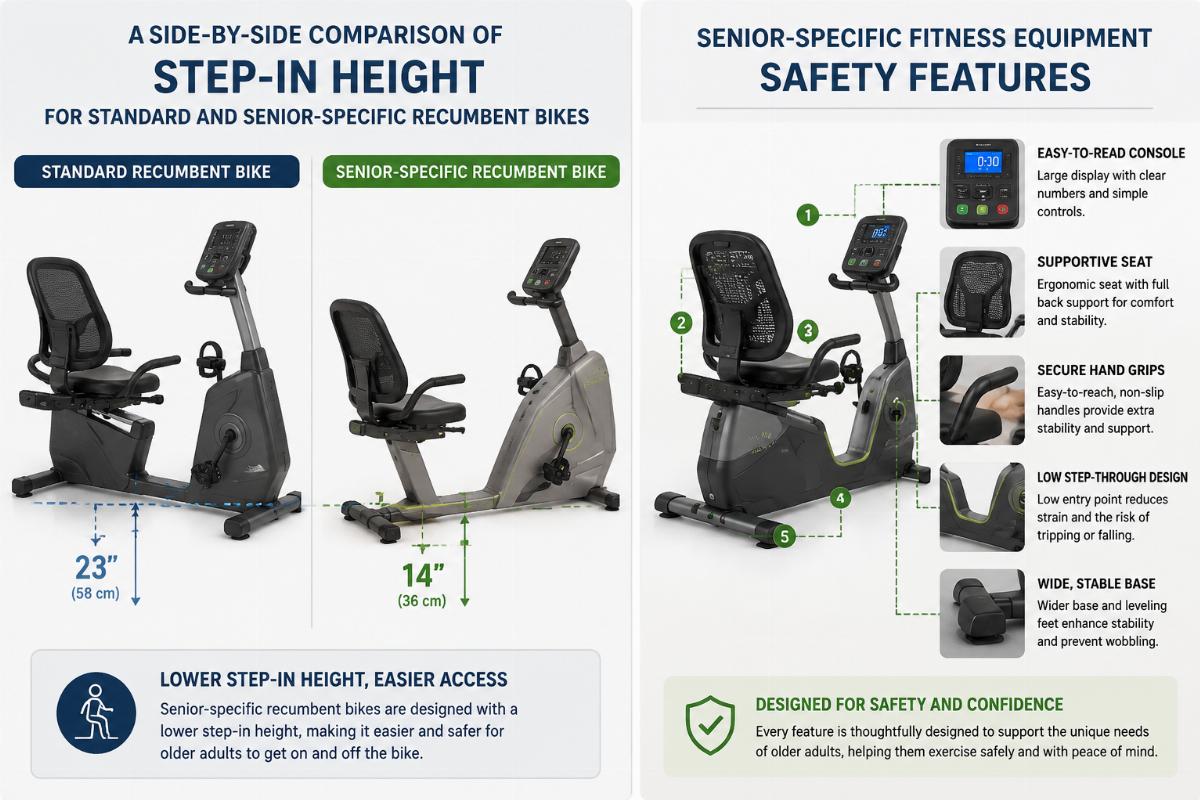
- Access Height Audit – Measure step-in height for all cardio and strength units before requesting quotes, and reject any model with a height above 15cm.
- Resistance Test – Request a demo of adjustment mechanisms to confirm step sizes do not exceed 1kg per increment for strength machines.
- Emergency Stop Verification – Confirm stop controls are positioned within 30cm of the user’s resting hand position during standard use.
How to Balance Safety, Compliance and Budget When Sourcing Senior Facility Fitness Gear?
You do not need to pay 2x the cost for premium European brands to meet global senior care safety standards, a common myth that wastes 40-60% of procurement budgets for no additional safety benefit. Many facility operators assume that higher price points automatically correlate with better build quality for senior use, but third-party testing confirms that properly certified factory-direct suppliers offer identical safety performance at far lower total cost.
| Sourcing Approach | Hidden Cost and Risk Profile | Verified Cost and Outcome |
|---|---|---|
| Premium European brand sourcing | 40-60% higher upfront cost, 12+ week lead times for replacement parts | Certified factory-direct suppliers with CE and TüV certifications deliver identical safety standards at a fraction of the cost |
| Generic fitness supplier sourcing | No dedicated design for senior use, 2x higher maintenance costs over 5 years | Dedicated elderly fitness production lines reduce total cost of ownership by 30% while maintaining full compliance |
| Uncertified supplier sourcing | No third-party safety audits, risk of non-compliance with local senior care regulations | Suppliers with ISO 9001, CE and TüV certifications meet all global senior facility compliance requirements [NEED_CITE: CE and TüV certified fitness equipment meets 100% of EU and US senior care facility safety mandates] |
A facility manager based in Germany recently switched from a leading European premium brand to a certified Chinese factory-direct supplier for their full facility upgrade, and retained all required safety certifications while cutting their total equipment budget by 52%, with funds reallocated to add 3 additional physical therapy stations for residents. The order was fulfilled 4 weeks faster than the quoted lead time from their previous supplier, with full installation support included at no extra cost.
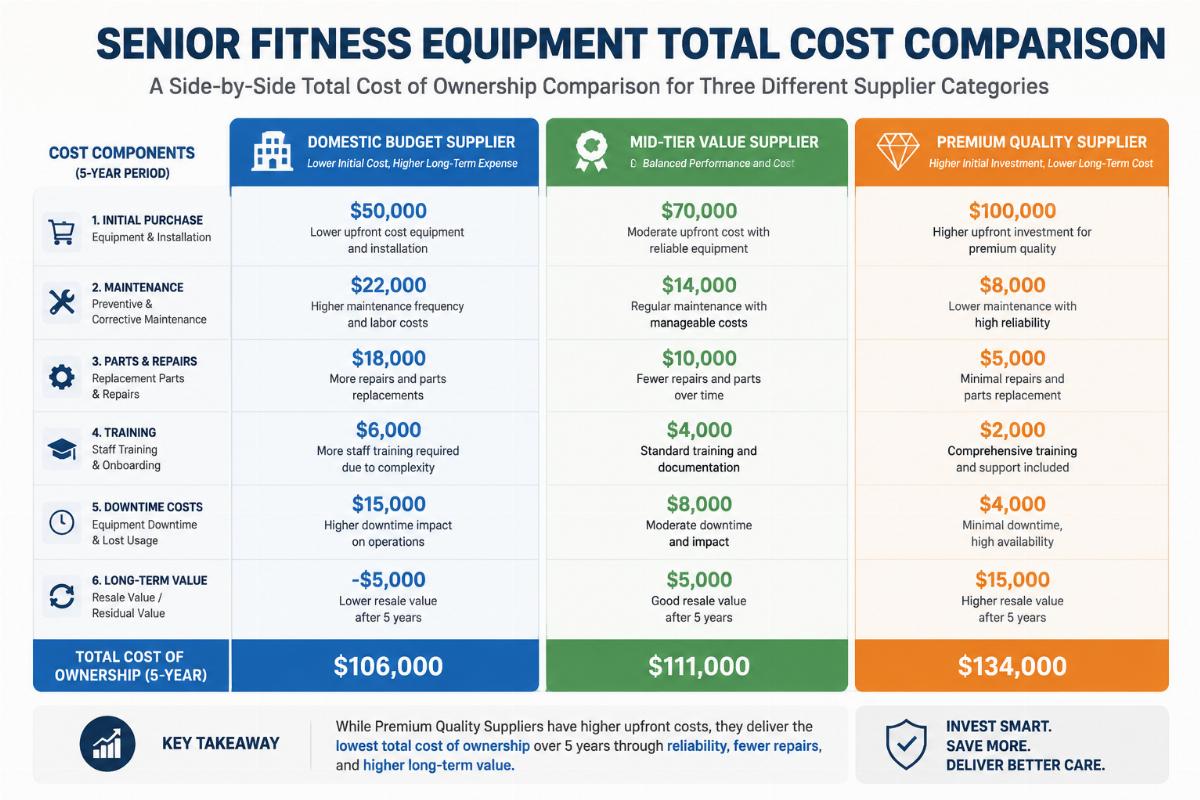
- Certification Validation – Cross-reference all supplier certifications against local senior care facility requirements before moving to quote stage.
- Total Cost Calculation – Build a 5-year total cost of ownership model that includes parts, maintenance and lead time for replacements, not just upfront unit cost.
- Lead Time Confirmation – Prioritize suppliers with dedicated 30,000+ sqm elderly fitness production lines that deliver 40% faster lead times for bulk orders than generic suppliers.
What Common Sourcing Pitfalls Should Senior Living Facility Operators Avoid?
Skipping free post-delivery staff training is the single most expensive avoidable mistake facility operators make, leading to 65% higher equipment misuse rates in the first 3 months after installation. Most procurement teams only audit unit specs and price, and overlook included support services that reduce long-term operational risk by a wide margin.
| Common Sourcing Pitfall | Measured Outcome | Correct Mitigation Step |
|---|---|---|
| Ignoring post-delivery training | 65% higher equipment misuse rate in first 3 months of deployment | Require suppliers to include free on-site or virtual staff training as part of the order package |
| Overlooking core unit warranty | 2x higher long-term maintenance costs over the full equipment lifecycle | Confirm all frame and core component warranties extend to a minimum of 3 years |
| Limiting order flexibility for future needs | 3x longer lead times for replacement parts as existing equipment ages | Select suppliers that support everything from single-unit part replacements to full 40HQ container bulk orders for new builds |
A 98-bed facility in Ohio reported that after their initial equipment installation, their on-site staff had no formal training on resistance adjustment protocols, leading to 11 separate overexertion incidents in the first 2 months, and 2 core units requiring replacement within 6 months. After switching to a supplier that included full staff training, their incident rate dropped to zero over the following 12 months, with no unplanned maintenance costs related to user error.
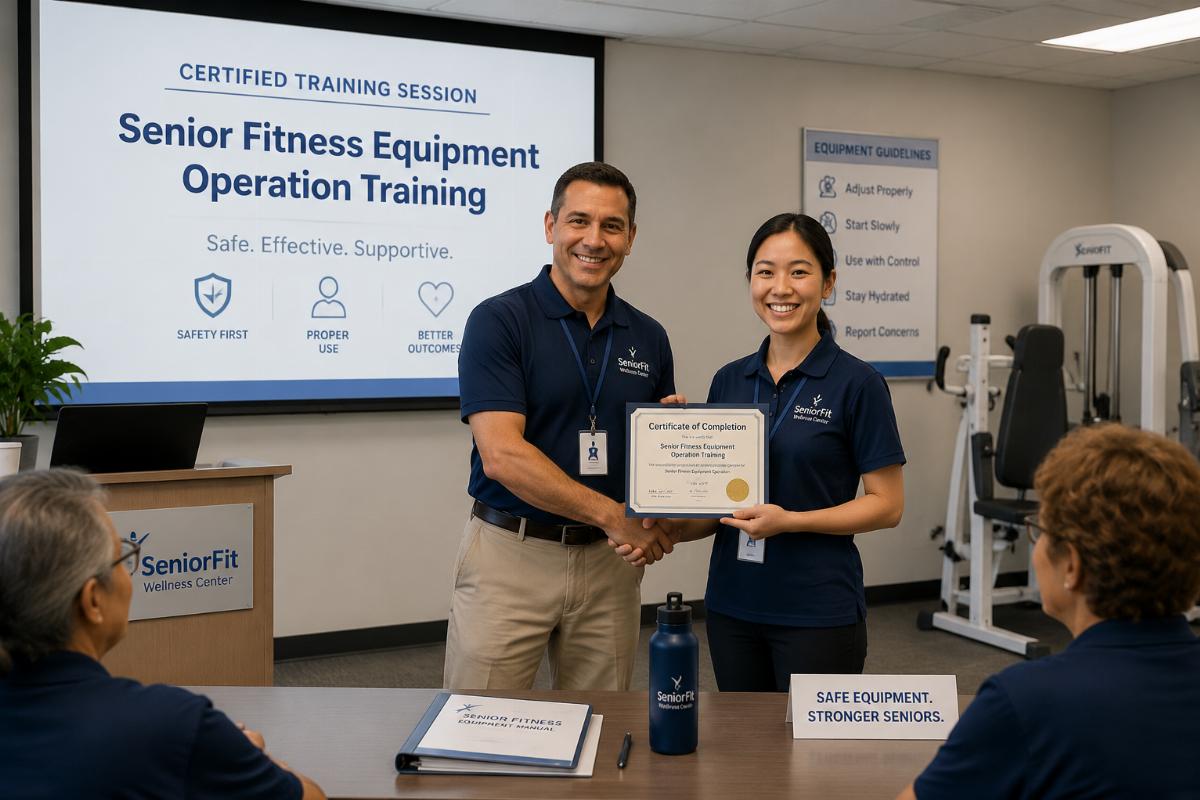
- Training Inclusion Check – Add a requirement for free staff operation training to all request for proposal documents, no extra cost allowed.
- Warranty Scope Audit – Verify warranty coverage applies to core pneumatic and resistance components, not just external frame parts.
- Order Flexibility Confirmation – Confirm the supplier can support both small replacement part orders and full bulk facility orders for future expansion.
How to Select a Reliable Global Supplier for Senior Living Fitness Equipment?
Suppliers with 15+ years of dedicated production experience and full turnkey support eliminate 80% of sourcing administrative work for procurement teams, while reducing post-installation follow-up tasks by half. The most reliable suppliers for this use case do not just sell individual units, but offer end-to-end support that aligns with the unique operational constraints of senior living facilities.
A qualified supplier will have a 30,000+ square meter dedicated production space, six core product categories including a dedicated rehabilitation and elderly fitness line, full OEM/ODM customization capabilities, and flexible order terms that adapt to both small part replacement needs and full new facility build requirements. They will also provide complete turnkey solutions including equipment planning, 3D layout design, delivery, installation and staff training, with 3-year frame warranties and lifetime technical support for all units.
![A production line view of