
PowerLine Incline Chest Press OEM Supplier from China Factory
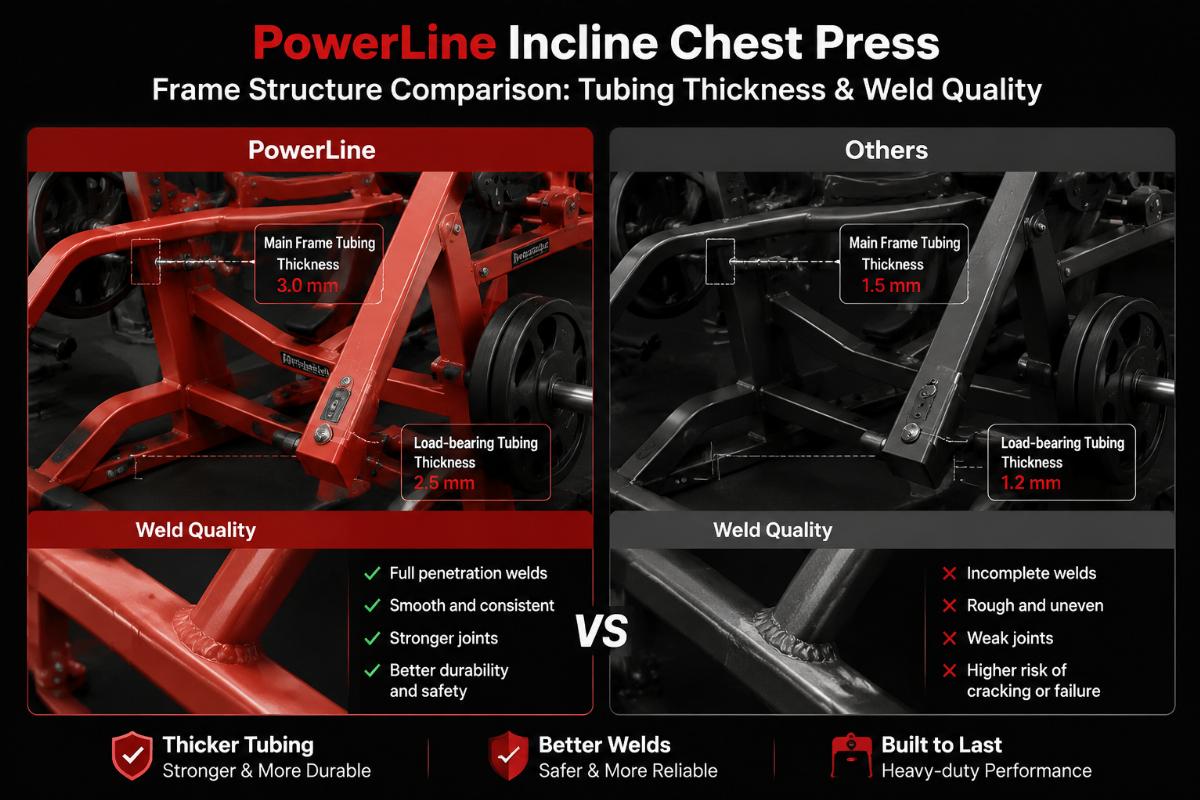
Most buyers chasing a PowerLine-style incline chest press at OEM price end up fixing cracked welds within a single season.
The shortest answer to "who can supply a PowerLine incline chest press from a China factory" is: any qualified Shandong-based OEM supplier that uses cold-rolled rectangular steel tubing at commercial wall thickness, provides weld-penetration inspection reports, and matches the original seat-adjustment mechanism — not the cheapest quote that thins the main frame. [NEED_CITE: common failure modes in budget plate-loaded chest presses]
I still remember a container that arrived at Jeddah port with the side panels dented inward. The buyer had spec’d a PowerLine incline chest press lookalike, accepted a lower price, and never asked to see the frame-wall certificate. When the gym owner opened the crate, the upright posts flexed under hand pressure. The manufacturer had swapped the specified rectangular tube for a lighter gauge and hidden the change behind the shroud. That kind of substitution is invisible on a spec sheet but obvious the moment a 100 kg user loads the horns.
So let me walk you through how a real PowerLine incline chest press OEM supplier from a China factory should be evaluated — the parameters that actually separate a machine that lasts from one that becomes a warranty nightmare.
Why Do So Many "PowerLine Alternatives" Fail Within Months?
The root cause is almost never the paint or the upholstery — it is the main frame and the pivot bushing. [NEED_CITE: failure analysis of plate-loaded strength equipment in commercial gyms]
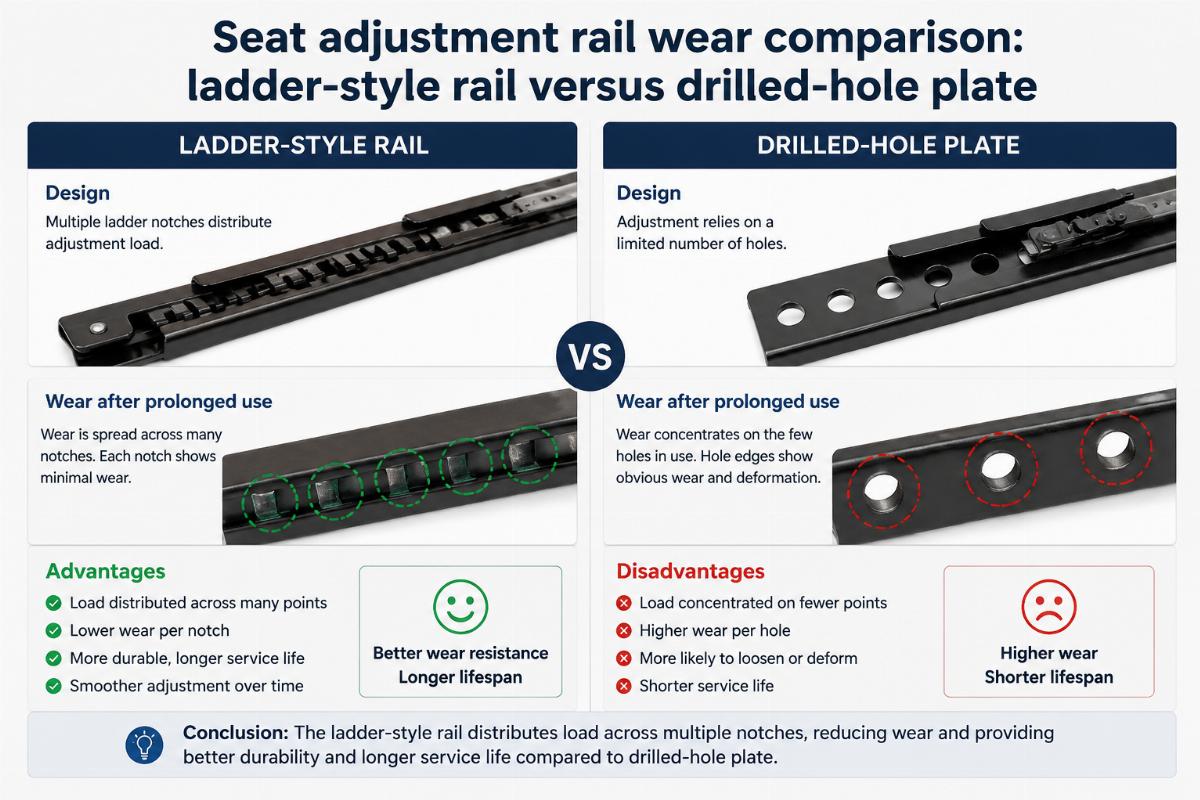
When a gym in the Gulf region ordered a batch of incline chest presses as a PowerLine alternative, the first complaint came in around the fifth month: the seat-adjustment pin holes had elongated into ovals. Users could feel the seat slide forward under load. The OEM had used a simple drilled-hole plate instead of a ladder-style rail with hardened bushings — a detail that costs marginally more in tooling but eliminates the single most common wear point on any incline press.
Three failure patterns I see repeatedly:
- Frame flex under load. The original design calls for a specific rectangular tube profile. Substituting a thinner wall or a smaller cross-section saves material cost but introduces lateral sway that users feel as instability.
- Pivot bushing wear. Cheap units use bare steel-on-steel pivots. Within months the hole wallows out and the arm develops play. A proper OEM supplier presses in a self-lubricating bronze or polymer bushing and retains it with a circlip.
- Seat-rail deformation. The adjustment rail is a high-stress component. If it is stamped from thin sheet rather than formed from plate, repeated pin insertion bends the rail and jams the mechanism.
None of these failures show up in a glossy brochure. They show up in the service log.
What Specifications Should You Verify Before Placing an Order?
Request the tube certificate, the weld procedure specification, and a sample-unit teardown photo set — not just a rendered 3D drawing. [NEED_CITE: procurement checklist for commercial strength equipment OEM sourcing]
Here is the parameter matrix I use when a buyer asks me to benchmark a PowerLine incline chest press OEM supplier against alternatives. Every row is a field-verified attribute, not a marketing claim.
| Parameter | Reputable OEM Supplier | Low-Cost Alternative |
|---|---|---|
| Main frame tube material | Cold-rolled rectangular steel, commercial grade | Unspecified mild steel, wall thickness unverified |
| Frame wall thickness | Commercial-grade profile matching original design | Thinner gauge substituted to reduce weight and cost |
| Weld inspection | Batch-level weld penetration reports available | Self-reported quality, no third-party documentation |
| Pivot bushing type | Pressed-in self-lubricating bushing with retention | Bare steel-on-steel pivot or unretained sleeve |
| Seat adjustment mechanism | Ladder-style rail with hardened pin holes | Simple drilled-hole plate, prone to elongation |
| Upholstery foam density | High-density commercial foam, shape-retaining | Low-density foam that compresses permanently |
| Finish durability | Powder coat with verified adhesion rating | Standard paint, chip-prone on contact edges |
| Documentation | Full teardown photos, BOM, and test reports | Rendered images only, no physical verification |
[NEED_CITE: industry standards for powder coat adhesion on fitness equipment]
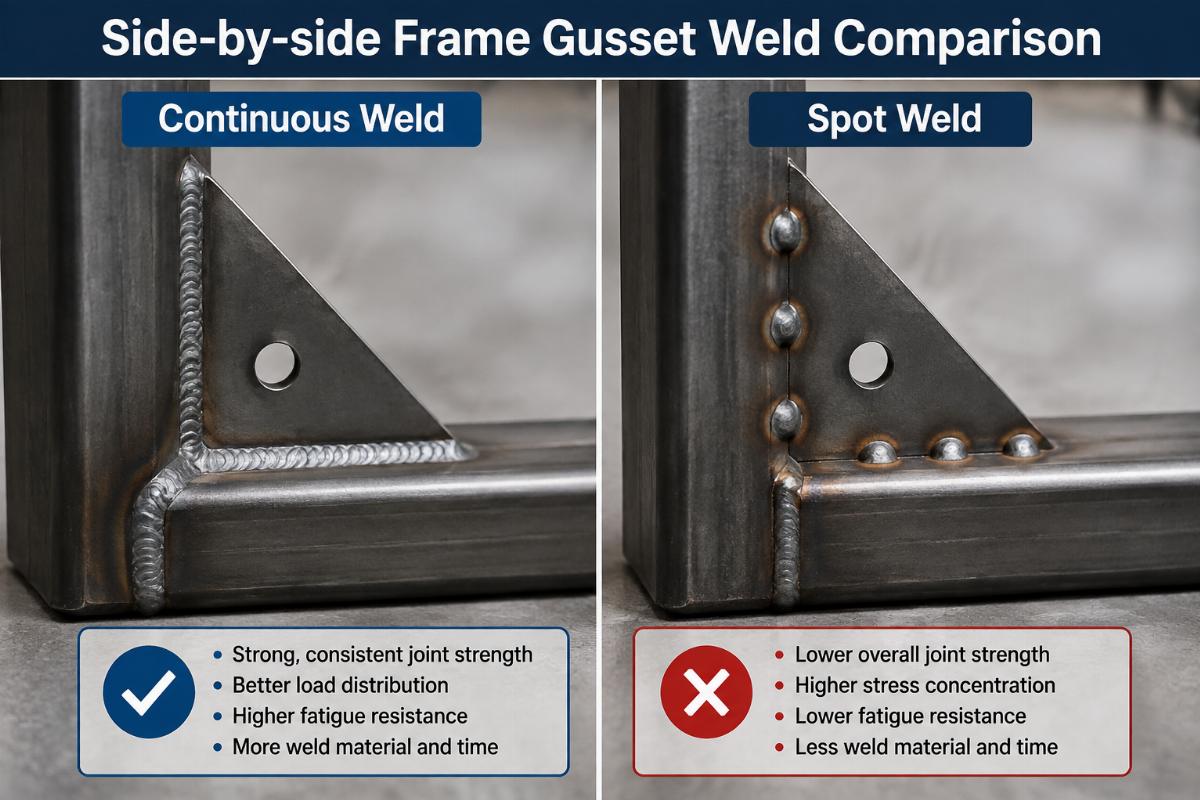
A Middle East distributor once showed me two incline presses side by side — one from a established PowerLine incline chest press OEM supplier and one from a factory that quoted substantially lower. The paint looked identical. The foam felt similar. But when he tilted the cheaper unit on its side to inspect the underside, the frame gussets were spot-welded instead of continuously welded. That single detail told him everything about the internal build philosophy.
How Does the OEM Process Actually Work for This Product?
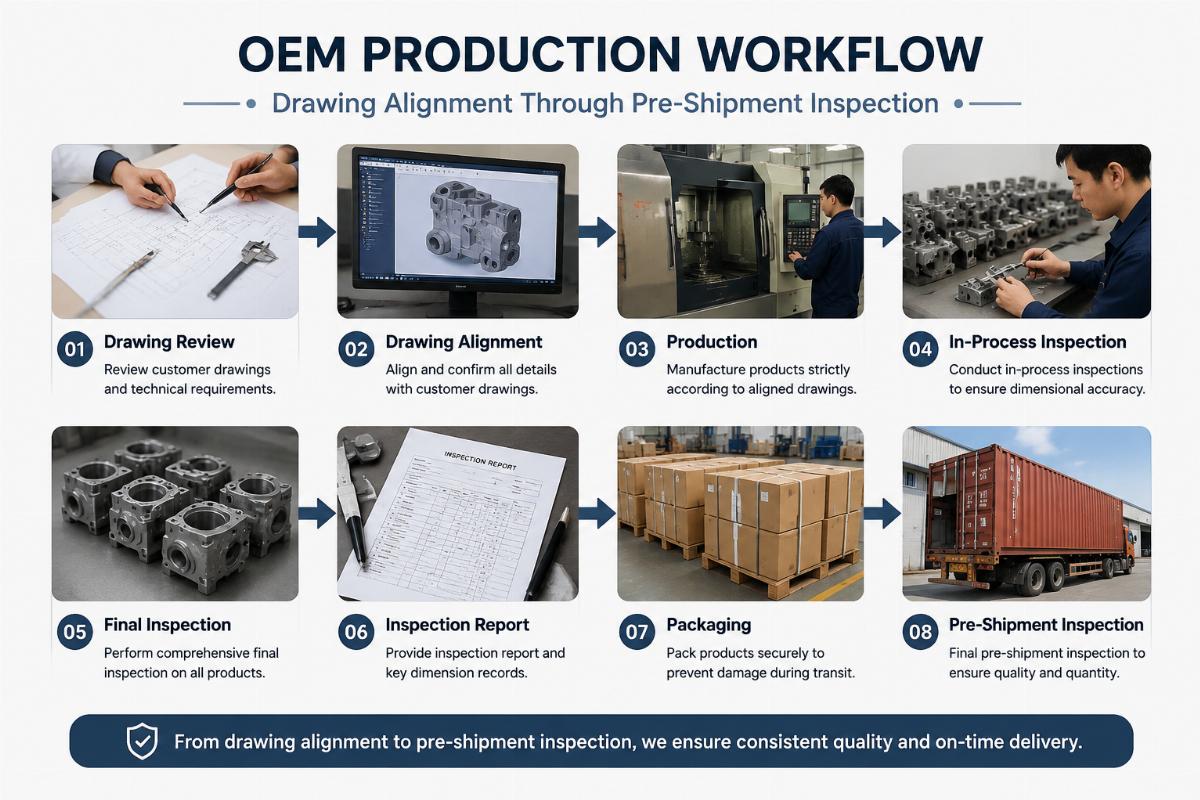
A credible PowerLine incline chest press OEM supplier will walk you through sampling, tooling confirmation, pilot run, and pre-shipment inspection — in that order, with no step skipped. [NEED_CITE: standard OEM workflow for plate-loaded strength machines in Shandong manufacturing cluster]
Here is the sequence I follow with buyers who are sourcing this product for the first time:
- Drawing alignment. The buyer provides the target specification or a reference unit. The engineering team produces a detailed drawing set covering frame dimensions, pivot locations, seat travel range, and horn length. Any deviation from the reference design is flagged before tooling begins.
- Tube and material confirmation. The factory sources the specified rectangular tubing and provides the mill certificate. The buyer or a third-party inspector verifies the wall thickness with a caliper on the first production cut.
- Welding procedure validation. A weld sample plate is produced and photographed. The buyer confirms penetration quality on the joint photos before full-frame welding is authorized.
- Pilot assembly. A small batch — typically a handful of units — is assembled, painted, and photographed at every stage. The buyer reviews the seat-adjustment feel, the arm pivot smoothness, and the horn alignment.
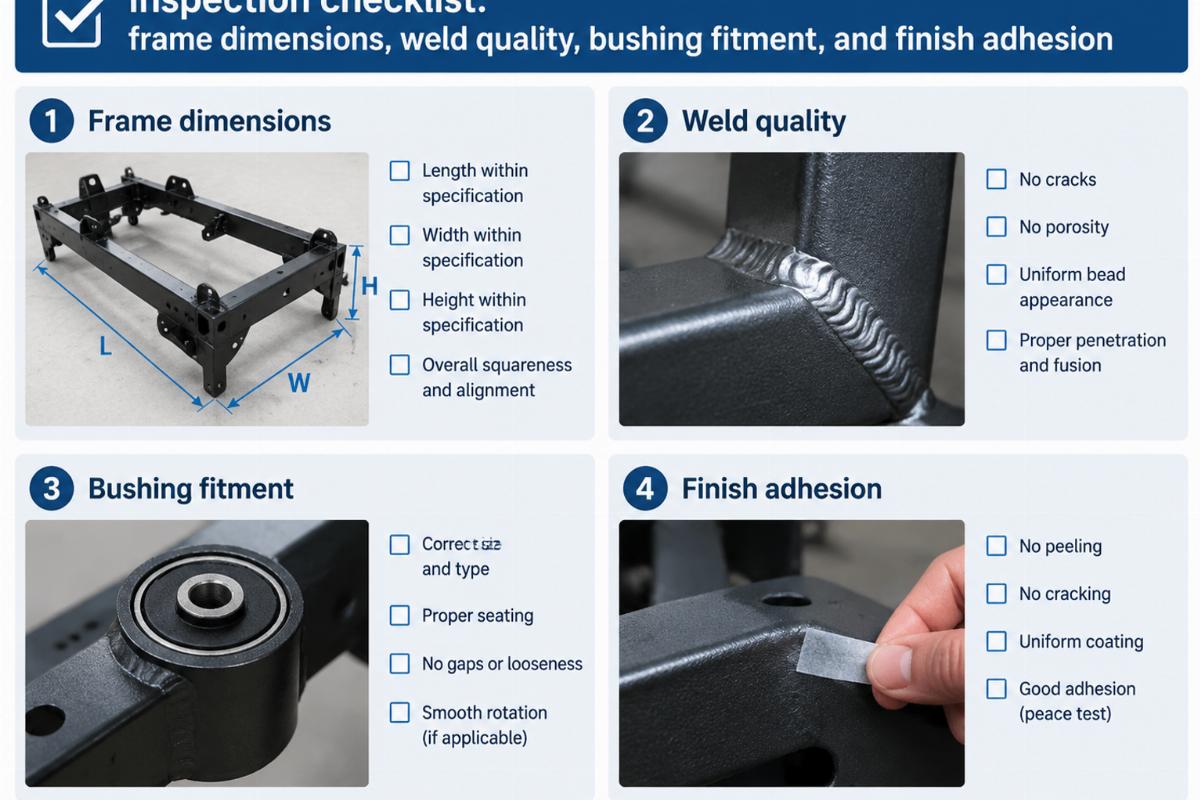
- Pre-shipment inspection. A random sample is pulled from the finished batch. Frame dimensions, weld integrity, foam density, and powder-coat adhesion are checked against the approved pilot unit.
A buyer from Southeast Asia once asked to skip the pilot run to save time. I insisted on keeping it. The pilot revealed that the seat-rail holes were drilled slightly off-center, which would have caused the adjustment pin to bind under load. Catching that at the pilot stage cost a few days of delay. Catching it after a full container shipped would have cost the buyer’s reputation with every gym he supplied.
What Are the Real Cost Drivers — and Where Do Suppliers Cut Corners?
The frame accounts for the single largest material cost in an incline chest press, and it is also the area where unscrupulous OEM suppliers find the easiest margin to recover. [NEED_CITE: cost structure breakdown of plate-loaded strength training equipment]
When I compare quotes from different factories for the same PowerLine-style design, the spread almost always traces back to three line items:
- Tube gauge. Dropping from a commercial wall thickness to a lighter gauge saves noticeably on steel cost per unit, especially across a full container. The trade-off is frame flex and long-term weld fatigue.
- Welding labor. Continuous welding on every joint takes more time and consumable than intermittent or spot welding. A factory under price pressure will shorten weld runs on non-visible joints — the gussets, the rear braces, the horn-to-arm connections.
- Bushing and hardware. A pressed-in self-lubricating bushing costs more than a bare pivot. A hardened adjustment pin costs more than a mild-steel one. These are small per-unit savings that compound across a large order but create outsized warranty exposure.
A gym chain owner in Latin America sourced a full order of incline presses from a factory that undercut the market. The first six months were fine. By month nine, three units in high-traffic locations had developed arm play at the pivot. The replacement bushings cost the buyer a mid-four-figure sum in air freight and technician time — far more than the per-unit savings on the original order.

The lesson is simple: the cheapest PowerLine incline chest press OEM supplier is rarely the most economical one over a two-year ownership period.
How to Protect Your Order Before and After Shipment
Build inspection checkpoints into your purchase agreement — not as optional extras, but as contractual release gates for payment. [NEED_CITE: quality assurance framework for imported commercial fitness equipment]
Based on repeated experience, I recommend buyers structure their engagement with any PowerLine incline chest press OEM supplier around these safeguards:
- Approved sample retention. Keep the signed-off pilot unit in your warehouse as the physical reference for all future inspections. Do not rely on drawings alone.
- Third-party pre-shipment inspection. Engage an independent inspector to verify frame dimensions, weld quality, bushing fitment, and finish adhesion against the approved sample. The cost is marginal relative to the container value.
- Spare-parts commitment. Confirm that the supplier can provide replacement bushings, adjustment pins, and seat pads for an extended period. Wear parts will need replacement; the question is whether the supplier still has them in stock.
- Weld-report traceability. Require batch-level weld inspection documentation tied to production dates. This allows you to trace any field failure back to a specific production run.
A European distributor I work with now insists on receiving a short video clip of the weld inspection for every batch before the balance is released. It takes the factory fifteen minutes to record. It has prevented two potential disputes in the past year.
Conclusion
Sourcing a PowerLine incline chest press from a China factory is straightforward when you inspect what matters and ignore what does not. The frame tube, the weld integrity, the pivot bushing, and the seat-adjustment mechanism are the four attributes that determine whether the machine survives commercial use or becomes a service burden. A credible PowerLine incline chest press OEM supplier will provide verifiable documentation on each of these points without hesitation. The ones who deflect or offer only rendered images are telling you everything you need to know.


