01 / Scenario
STUDIO
P
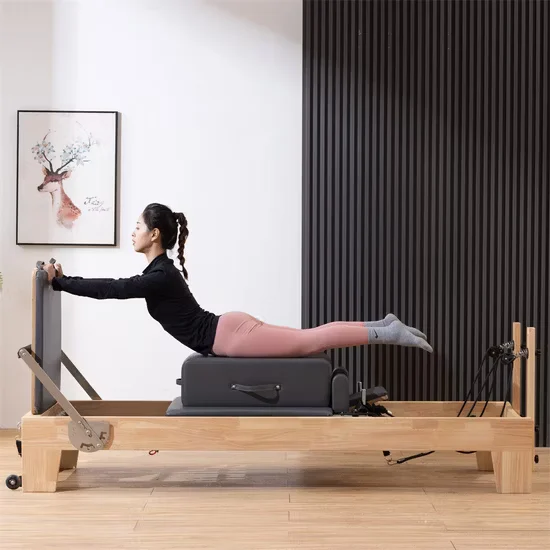
High-End Pilates Studios
Premium aesthetics meet quiet operation for boutique studio environments.

ISO
9001
CE
Certified
OEM
Available
10YR
Warranty
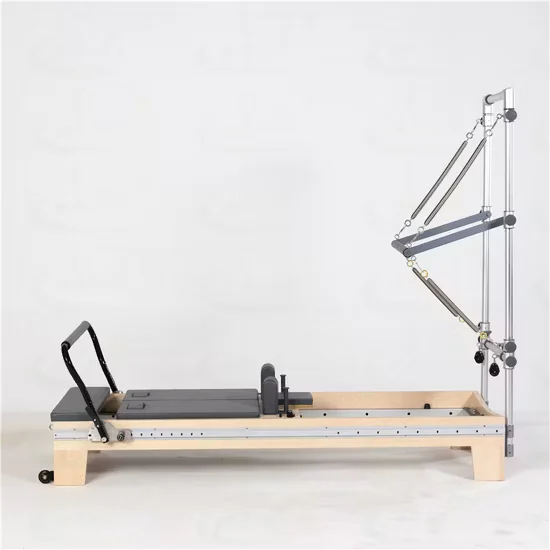
Aluminum Alloy Pilates Reformer Machine, 2570×730mm, 90kg Net Weight — engineered with aluminum alloy frame for studio-grade rigidity, includes long box, jump board, and platform for full-range training progression. Senrui SRY-12 delivers 3-year warranty and custom logo options for commercial operators. Direct manufacturer support with load testing on every unit before shipment.
// Spec Highlights
• Direct from Manufacturer · No Middlemen · Worldwide Shipping
01
// Material
Imported Solid Wood
Premium hardwood frames sourced for density and visual warmth.
02
// Hardware
Medical-Grade Silent
Whisper-quiet pulleys and springs for clinical environments.
03
// Customization
Appearance OEM
Color, upholstery, and branding tailored to your studio.
04
// Service
Layout Design
Free venue planning for studios and rehab institutions.
Every component is selected for longevity, performance, and aesthetic harmony - from imported hardwood frames to silent medical-grade accessories.
// Features
Structural Rigor — The SRY-12 Pilates reformer uses a high-strength aluminum alloy frame engineered to maintain slide rail alignment under continuous studio use.
| Parameter | Value |
|---|---|
| Product Type | Pilates Reformer |
| Frame Material | Aluminum Alloy |
| Product Dimensions | 2570×730×270mm |
| Net Weight | 90kg |
| Included Accessories | Long Box, Jump Board, Platform |
| Color Options | White (standard), custom colors available |
| Logo | Customized |
| Warranty | 3 Years |
| Production Capacity | 80 Pieces/Month |
| Facility Type | Typical Use |
|---|---|
| Commercial Pilates studio | Group reformer classes, private sessions |
| Boutique fitness studio | Hybrid Pilates and functional movement programming |
| Hotel and resort wellness center | Guest-accessible reformer sessions and guided classes |
| Rehabilitation and physiotherapy clinic | Low-impact controlled resistance rehabilitation |
| Yoga and movement training facility | Flexibility and core stabilization work |
Alloy grade and wall thickness determine whether the slide rail holds tolerance or develops play within the first year.
The market is saturated with reformers labeled simply "aluminum alloy" without disclosing the specific alloy designation or extrusion wall thickness. Studio operators routinely report slide rail deflection and pulley noise appearing after six months of high-frequency use — symptoms that trace back to undersized aluminum profiles unable to sustain repeated loading cycles. A commercial aluminum alloy Pilates reformer machine must be specified with verifiable material documentation, not marketing adjectives. When alloy wall thickness falls short, the carriage develops lateral play, pulley tracking degrades, and the entire movement quality deteriorates, forcing costly rail replacement or full unit overhaul [NEED_CITE: aluminum extrusion structural requirements for fitness equipment].
The reformer occupies the primary movement station in any dedicated Pilates studio, addressing supine, prone, and seated movement patterns that engage the core, hip complex, and lower extremities through spring-loaded resistance. It pairs naturally with Cadillac units and Wunda chairs to form a complete apparatus training environment, allowing instructors to progress clients across resistance planes without leaving the designated zone. For studios running back-to-back group classes, this unit accommodates users across a broad height range and supports the transition from foundational mat-style exercises to advanced jump board sequences. The commercial aluminum alloy Pilates reformer machine serves as the throughput anchor of a revenue-generating studio layout.
A reformer in a commercial studio endures continuous cyclic loading — carriage travel under spring tension, impact from jump board repetitions, and off-center force application during single-leg work. The aluminum frame must resist cumulative fatigue at the rail-to-frame junction where stress concentrates over thousands of cycles daily. Pulley contact points experience wear from cable friction combined with sweat exposure, while the upholstery surface compresses under body weight across every session and must resist surface cracking from repeated cleaning. Coating integrity at contact edges determines whether the frame remains presentable or shows visible wear within the first operational year [NEED_CITE: fatigue performance standards for cyclic-loaded fitness structures].
The aluminum alloy frame on this reformer dictates long-term rail precision — wall thickness and alloy temper together define how much deflection occurs under loaded carriage travel and whether the profile returns to true alignment or accumulates permanent deformation over time. The net weight of 90kg reflects the mass required to anchor the unit against lateral forces generated during jump board use and aggressive unilateral exercises, preventing the frame from walking across the floor mid-session. Included accessories — the long box, jump board, and platform — extend the exercise vocabulary without requiring separate purchases, and each attachment must interface with the frame through precise mounting points that do not loosen under repeated mounting and removal. Spring resistance grading across multiple tension levels allows progressive overload from rehabilitation protocols through advanced athletic conditioning.
Reformers built with undersized aluminum profiles deflect under loaded carriage travel, degrading the smooth feel that clients associate with quality instruction and prompting negative reviews. Non-sealed pulley systems accumulate dust and sweat residue, increasing friction and requiring frequent service visits that pull the unit out of revenue-generating rotation. Low-density foam padding compresses permanently within months, creating visible surface deformation that signals poor equipment quality to prospective members. Insufficient surface finishing on aluminum contact edges leads to cosmetic degradation that studio operators cannot reverse, forcing premature equipment replacement at significant capital cost [NEED_CITE: maintenance cost analysis for commercial fitness equipment].
The aluminum frame sourcing includes alloy certification traceable to the extrusion batch, providing studio operators with verifiable material documentation rather than generic claims. Continuous weld patterns at structural junctions eliminate the weak points inherent to spot-welded assemblies that crack under the dynamic loads of jump board exercises. Every unit undergoes carriage travel testing and spring resistance verification before shipment, ensuring the slide system operates within tolerance from the first client session. Industrial-grade surface finishing protects the aluminum frame against cosmetic degradation from daily cleaning chemicals and sweat contact. The 10-year frame warranty reflects confidence in structural longevity, while 2D-3D floor planning CAD support ensures proper safety spacing between adjacent reformers in high-density studio configurations.
Provide your studio square footage and target reformer count to receive a 2D-3D floor plan that accounts for safe operational spacing between units and instructor circulation paths. Specify your expected daily session volume so the appropriate structural grade and spring configuration can be confirmed. Indicate your client demographic height range to verify the carriage travel accommodates your user base. Submit logo files and color preferences early in the procurement cycle to align custom branding with production scheduling.
Q: How do aluminum alloy and steel frames compare for commercial reformer deployment?
A: Aluminum alloy frames offer lighter weight for studio reconfiguration while maintaining rigidity sufficient for daily class scheduling. Steel frames provide greater mass for absolute stability but complicate floor layout changes. The choice depends on whether your studio prioritizes fixed installation permanence or occasional equipment repositioning for varied class formats. Material certification and wall thickness matter more than the base material category itself.
Q: What indicates a slide rail system meets commercial durability expectations?
A: Verifiable aluminum alloy grade documentation, measured wall thickness of the extrusion profile, and factory carriage travel test records together indicate whether the rail will hold tolerance under continuous use. Pulley systems should use sealed bearings to resist sweat and dust contamination. Request these documents before purchasing rather than relying on generic durability claims.
Q: How does spring resistance grading support progressive client programming?
A: Multiple spring tension levels allow instructors to scale resistance from rehabilitation-appropriate loads through advanced athletic conditioning on a single commercial aluminum alloy Pilates reformer machine. Color-coded springs enable quick transitions between exercises during group classes. Verify that replacement springs remain available as consumable parts throughout the equipment service life.
Q: What is the typical upholstery replacement cycle under commercial scheduling?
A: Upholstery lifespan depends on foam density, surface material quality, and daily session volume. High-density foam with commercial-grade vinyl resists permanent compression and surface cracking longer than budget alternatives. Confirm that replacement pads are available as spare parts and clarify lead times so replacements align with scheduled studio maintenance windows rather than causing revenue interruption.
Premium aesthetics meet quiet operation for boutique studio environments.
Medical-grade silence and precision for sports & postpartum recovery.
Furniture-grade craftsmanship for premium residential installations.
Compact premium setups for one-on-one and small-group training.
Aesthetic Pilates integration for hybrid wellness studio programming.
Multi-unit deployment with instructor-grade reliability for certification programs.
Tell us about your project. Our team will respond within 24 hours with pricing, customization options, and shipping details.
// Sales Director
William
+86 132 2531 1800
// Export Manager
Bella
+86 198 5412 8032
william@bickfit.com