01 / Scenario
STUDIO
P
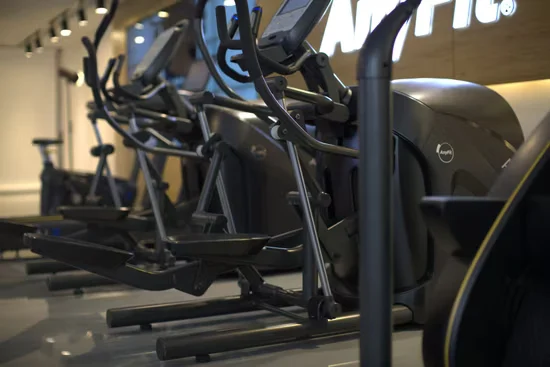
High-End Pilates Studios
Premium aesthetics meet quiet operation for boutique studio environments.
ISO
9001
CE
Certified
OEM
Available
10YR
Warranty
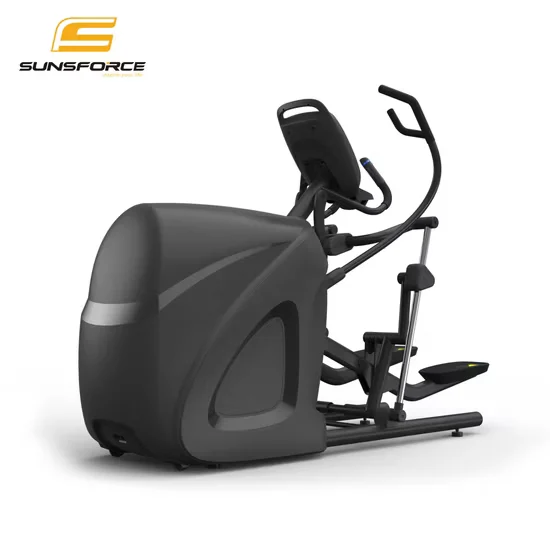
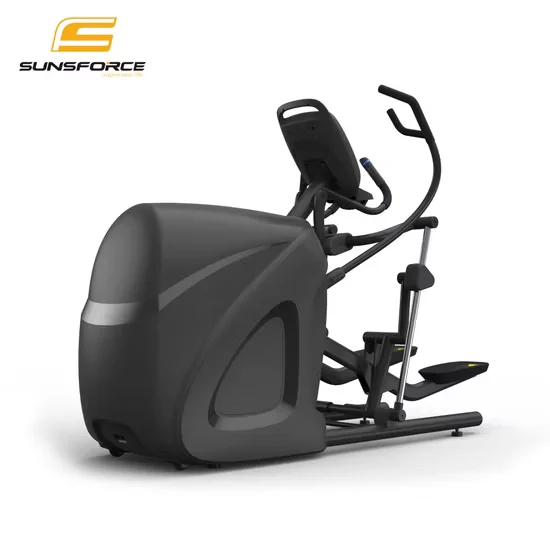
Commercial Elliptical Machine, 240kg Net Weight, 180kg User Capacity — self-powered design with 25-level resistance and 1-10 stride grade adjustment eliminates electrical dependencies while maintaining smooth operation through sealed bearing systems. LED console delivers clear feedback across high-traffic environments, and 230mm pedal center distance supports natural gait patterns for diverse user profiles. Every unit undergoes full load testing before shipment, backed by 10-year frame warranty and factory-direct floor planning support.
// Spec Highlights
• Direct from Manufacturer · No Middlemen · Worldwide Shipping
01
// Material
Imported Solid Wood
Premium hardwood frames sourced for density and visual warmth.
02
// Hardware
Medical-Grade Silent
Whisper-quiet pulleys and springs for clinical environments.
03
// Customization
Appearance OEM
Color, upholstery, and branding tailored to your studio.
04
// Service
Layout Design
Free venue planning for studios and rehab institutions.
Every component is selected for longevity, performance, and aesthetic harmony - from imported hardwood frames to silent medical-grade accessories.
// Features
Robotic Continuous Welds — Every joint on the CTC60 elliptical trainer is welded with robotic MIG for continuous penetration, eliminating the spot-weld cracks that appear under repetitive commercial loading cycles.
| Parameter | Value |
|---|---|
| Product Type | Self-Powered Elliptical Trainer |
| Model NO. | CTC60 |
| Console Type | LED |
| Resistance Level | 1-25 |
| Stride Grade | 1-10 |
| Step Depth Grade | 1-15 |
| Pedal Center Distance | 230mm |
| Net Weight | 240kg |
| Max User Weight | 180kg |
| Product Dimensions | 2120×790×1680mm |
| Certification | ISO, RoHS, CE, EN957 |
| Facility Type | Typical Use |
|---|---|
| Commercial gym cardio zone | High-traffic daily operation with diverse user body types requiring wide stride and resistance range |
| Hotel and resort fitness center | Accommodates varying fitness levels with 25 resistance levels and 10-grade stride adjustment |
| University athletic facility | Sustained use during peak training hours with structural reliability for continuous operation |
| Corporate wellness center | Durable construction for moderate daily usage with low maintenance requirements |
Sealed industrial bearings maintain rotational precision where open bearings accumulate contamination and looseness.
In commercial gym environments, elliptical trainers operate for extended periods with minimal downtime. The pivot points and flywheel assemblies experience continuous rotational stress combined with ambient dust, sweat aerosol, and cleaning chemical exposure. Non-sealed bearing designs allow particulate infiltration that accelerates wear, creating audible play and lateral wobble within months of deployment. This degradation compromises the smooth elliptical path that users expect, increases maintenance call-outs, and shortens equipment replacement cycles. The CTC60 addresses this with sealed bearing systems designed to retain lubrication while excluding contaminants throughout the service life [NEED_CITE: bearing seal effectiveness in contaminated industrial environments].
The CTC60 occupies the self-powered cardio category where facilities need equipment that operates independently of electrical infrastructure while delivering consistent resistance across the full stride cycle. The 230mm pedal center distance and 10-grade stride adjustment accommodate users from compact to tall statures, reducing the need for multiple machine sizes on the cardio floor. In commercial gym cardio zones, this commercial elliptical machine for gym use complements treadmills and rowers by providing low-impact continuous motion that distributes load across lower body muscle groups without the joint impact of running surfaces. The 240kg net weight provides sufficient mass to prevent lateral shift during vigorous use by heavier athletes, while the 180kg maximum user capacity covers the vast majority of commercial gym demographics.
Elliptical trainers experience complex loading that combines static weight support with dynamic rotational forces and eccentric pedal forces during each stride cycle. The crank arms, pedal linkages, and flywheel bearings undergo millions of load reversals over the equipment’s service life, creating fatigue conditions at weld junctions and bearing seats. Unlike strength equipment where loads are primarily unidirectional, cardio equipment subjects frames to multi-axis stress as users vary stride length, resistance, and cadence. The weld joints connecting the main frame to the upright posts and resistance mechanism housings represent critical stress concentration points where incomplete penetration or porosity can initiate crack propagation under cyclic loading [NEED_CITE: fatigue failure modes in welded structural joints under cyclic loading]. The 200μm powder coating must resist not only mechanical abrasion from user contact but also chemical attack from sweat and disinfectant cleaners applied daily in commercial settings.
The 240kg net weight relative to the 180kg maximum user capacity creates a mass ratio that provides inertial stability during transitional movements and prevents resonance vibration at high stride rates. This weight distribution ensures the machine remains stationary during vigorous use without requiring floor anchoring in typical commercial installations. The 2120×790×1680mm footprint accommodates the full stride arc while maintaining adequate clearance from adjacent equipment when positioned with standard 24-inch spacing between units. The LED console operates without external power, drawing energy from the user’s stride through the resistance mechanism, eliminating power cord management and reducing failure points associated with electronic transformers and switching power supplies. The 1-25 resistance range provides sufficient granularity for rehabilitation users at the low end while delivering adequate challenge for conditioned athletes at the upper range, with the mechanical resistance system avoiding the electronic control board failures common in motorized alternatives.
Facilities that specify elliptical trainers based on initial purchase price often encounter escalating operational costs when thin-wall frames develop permanent deformation under heavy user loads, requiring complete machine replacement rather than component repair. Spot-welded joints that pass visual inspection at installation can develop fatigue cracks after 12-18 months of commercial use, creating structural failure risk and liability exposure. Non-sealed bearings that develop play require complete disassembly for replacement, generating labor costs that exceed the original bearing price multiple times over. Low-density upholstery that compresses permanently within months creates user complaints and replacement cycles, while inadequate powder coating that chips at contact points exposes bare steel to sweat corrosion, leading to rust staining and aesthetic degradation that reflects poorly on facility maintenance standards [NEED_CITE: corrosion mechanisms in fitness equipment exposed to sweat and cleaning agents].
The CTC60 elliptical trainer benefits from manufacturing processes that prioritize structural integrity over cost minimization. The frame construction uses industrial-grade steel with mill certification traceable to the original coil, ensuring material properties match design specifications rather than relying on supplier claims. Robotic MIG welding produces continuous penetration welds at every structural joint, eliminating the weak points inherent in manual spot-welding where operator fatigue or technique variation creates inconsistent quality. Every unit undergoes load testing before shipment, verifying that the assembled machine meets the rated capacity rather than relying on sample-based quality control that allows defective units to reach the field. The 200μm powder coating applied after sandblast surface preparation provides scratch resistance that maintains appearance through years of commercial use and cleaning. The 10-year frame warranty reflects confidence in the structural design and manufacturing quality, while 2D-3D facility planning support ensures the CTC60 integrates into cardio zones with proper spacing and traffic flow considerations.
Provide your cardio zone floor plan dimensions and existing equipment list to receive 2D-3D layout recommendations that optimize traffic flow and equipment density for the CTC60 footprint. Specify your anticipated daily usage hours and peak concurrent user count to confirm the structural rating matches your operational intensity. Indicate your typical user height and weight range to verify the 230mm pedal spacing and 180kg capacity accommodate your demographic without requiring alternative models. Note any branding, color, or upholstery customization requirements for facility design coordination.
Q: How does self-powered elliptical resistance compare to motorized systems in commercial settings?
A: Self-powered resistance mechanisms eliminate electronic control boards and power supplies that fail in high-use environments. The mechanical resistance system generates load through magnetic or friction braking activated by user stride force, requiring no external power connection. This reduces failure points and eliminates power cord management across the cardio floor. Maintenance focuses on mechanical components with predictable wear patterns rather than electronic diagnostics.
Q: What bearing maintenance is required for commercial elliptical trainers?
A: Sealed industrial bearings require minimal maintenance when properly specified for commercial use. The sealed design retains factory lubrication while excluding dust, sweat, and cleaning chemicals that accelerate wear in open bearing systems. Quarterly inspection involves checking for smooth rotation and listening for unusual sounds. Bearing replacement, when eventually needed, requires disassembly but occurs far less frequently than with non-sealed alternatives in high-traffic facilities.
Q: How do I determine proper spacing between elliptical machines in a commercial gym?
A: Standard commercial practice requires minimum 24-inch clearance between adjacent cardio equipment for safe user mounting and dismounting, plus emergency egress access. The CTC60 footprint of 2120×790mm plus clearance zones determines equipment density. Aisle widths between equipment rows should accommodate wheelchair passage and emergency responder access if required by local codes. Facility planning support provides layout optimization for your specific space dimensions and traffic patterns.
Q: What structural differences distinguish commercial ellipticals from residential models?
A: Commercial elliptical trainers use heavier gauge steel frames, typically 11-gauge or thicker, to withstand continuous daily use by diverse users. Welding quality follows industrial standards with continuous penetration rather than spot welds. Bearings are sealed for contamination resistance rather than open designs requiring frequent lubrication. Maximum user capacity reaches 180kg or higher to accommodate all facility users. Component durability targets 8+ hours daily operation over multi-year service life rather than occasional residential use patterns.
Premium aesthetics meet quiet operation for boutique studio environments.
Medical-grade silence and precision for sports & postpartum recovery.
Furniture-grade craftsmanship for premium residential installations.
Compact premium setups for one-on-one and small-group training.
Aesthetic Pilates integration for hybrid wellness studio programming.
Multi-unit deployment with instructor-grade reliability for certification programs.
Tell us about your project. Our team will respond within 24 hours with pricing, customization options, and shipping details.
// Sales Director
William
+86 132 2531 1800
// Export Manager
Bella
+86 198 5412 8032
william@bickfit.com