01 / Scenario
STUDIO
P
High-End Pilates Studios
Premium aesthetics meet quiet operation for boutique studio environments.
ISO
9001
CE
Certified
OEM
Available
10YR
Warranty
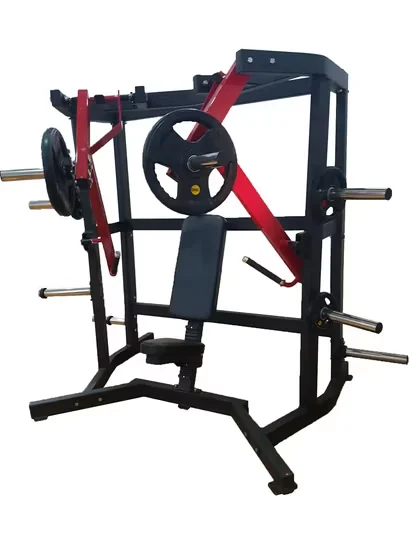
ISO-Lateral Wide Chest Machine, Pin Select Loading, 1343×1981×1761 mm Dimensions — engineered with converging movement patterns for natural biomechanics in high-traffic commercial gyms. Built for selectorized plate-loaded resistance training targeting chest muscle groups with smooth cable-driven operation. Every unit undergoes load testing before shipment with 10-year frame warranty and floor planning support included.
// Spec Highlights
• Direct from Manufacturer · No Middlemen · Worldwide Shipping
01
// Material
Imported Solid Wood
Premium hardwood frames sourced for density and visual warmth.
02
// Hardware
Medical-Grade Silent
Whisper-quiet pulleys and springs for clinical environments.
03
// Customization
Appearance OEM
Color, upholstery, and branding tailored to your studio.
04
// Service
Layout Design
Free venue planning for studios and rehab institutions.
Every component is selected for longevity, performance, and aesthetic harmony - from imported hardwood frames to silent medical-grade accessories.
// Features
Steel Traceability Standard — Mill-certified frame steel traceable to the coil, with verifiable gauge specifications rather than vague "commercial grade" labels on this commercial selectorized iso-lateral wide chest machine.
| Parameter | Value |
|---|---|
| Product Type | Selectorized Chest Machine |
| Frame Steel Grade | Steel (mill-certified sourcing) |
| Loading Type | Pin select |
| Product Dimensions | 1343 × 1981 × 1761 mm |
| Net Weight | 141 kg |
| Certification | ISO 9001, CE |
| Exercise Focus | Chest (iso-lateral converging movement) |
| Upholstery | Available in standard or high-density options |
| Powder Coating | Available in 200μm scratch-resistant finish |
| Bearing Type | Sealed industrial bearings available |
| Pulley System | Aircraft-cable pulley system available |
| Warranty | 10-year frame warranty available |
| Facility Type | Typical Use |
|---|---|
| Commercial gym strength floor | Primary chest pressing station in selectorized line |
| Hotel and resort fitness center | Low-maintenance chest training for transient users |
| University strength and conditioning room | Daily heavy-use chest development for athletes |
| Community fitness center | Durable chest machine for high member turnover |
| Rehabilitation and performance center | Controlled iso-lateral pressing for return-to-training protocols |
Heavier gauge steel maintains frame geometry under repeated max-effort pressing cycles.
Most selectorized chest machines on the market quote "commercial grade" framing without disclosing what that actually means in wall thickness or cross-section. When a member loads the pin at the bottom of the stack and drives through a heavy set, the frame experiences cyclic stress at every weld joint and mounting point. Thin-wall tubing flexes under these loads, and over hundreds of cycles per week, that flex concentrates stress at spot welds until they develop hairline cracks. A commercial selectorized iso-lateral wide chest machine built with 11-gauge steel and continuous robotic MIG welds distributes that same force across a broader structural path, keeping the frame rigid where it matters most [NEED_CITE: EN 957 structural requirements for stationary training equipment].
The difference shows up around month eight in a busy facility. Machines with undersized framing start developing play at the pivot points, and the converging arm movement begins to feel uneven between sides. By year two, the seat carriage may show visible deflection under load. These are not cosmetic issues — they are structural fatigue indicators that compromise both safety and user experience.
A commercial selectorized iso-lateral wide chest machine fills a specific role in the pressing movement category — it targets the pectoralis major with a converging arc that mirrors natural shoulder mechanics, reducing anterior deltoid dominance compared to a flat barbell path. In a well-configured strength floor, this unit pairs with a narrow-grip chest press and an incline press to cover the full pressing spectrum without redundancy. It suits facilities running high daily traffic where users need intuitive pin-select loading without plate management. The iso-lateral arm design accommodates users with significant bilateral strength differences or those working through unilateral rehabilitation, making it practical for facilities serving mixed-ability populations.
In a gym operating ten or more hours daily, a chest press station sees concentrated use waves — early morning, midday, and evening peaks where the machine cycles through twenty to thirty sets per hour. Each set introduces eccentric loading as the user controls the return, peak concentric force at mid-range, and impact loading when the weight stack contacts the rest position. These forces travel through the pivot bearings, down the frame tubes, and into the floor mounting points [NEED_CITE: weld classification and fatigue performance in structural steel]. Sealed industrial bearings at the pivot axis prevent dust and sweat ingress that accelerates play development in unsealed bushings. The powder coating at contact points — where selectorized weight stacks slide and where users grip the handles — faces abrasion and chemical exposure from cleaning agents and perspiration salts, requiring industrial-grade thickness to prevent bare steel exposure over years of service.
Frame tube gauge and wall thickness set the deformation threshold: when a user presses maximally, thinner tubing deflects elastically at first, then develops permanent set after thousands of cycles. Continuous robotic MIG welding eliminates the cold joints and incomplete penetration common in manual spot welding, distributing stress across the full joint length rather than concentrating it at discrete weld points. Sealed bearings maintain rotational tolerance under load, whereas unsealed bushings develop axial play as lubricant degrades and particulate contamination increases. The powder coating process matters structurally as well as cosmetively — a 200μm industrial finish applied over sandblasted steel resists chipping at handle contact zones and weight stack guide rails, preventing the oxidation cascade that begins at bare steel exposure points. Pulley diameter relative to cable specification determines cable fatigue life; undersized pulleys force aircraft cable through tighter bend radii, accelerating strand breakage in high-cycle environments.
Gyms that select chest machines based on lowest unit price encounter predictable failure sequences. Thin-wall frame tubes develop permanent deformation at stress concentration points, requiring frame replacement rather than simple part swaps. Spot-welded joints crack under cyclic loading, creating liability exposure if a member is mid-set when structural failure occurs. Unsealed bearings develop play within the first year of commercial use, generating user complaints and maintenance tickets that consume technician hours weekly. Low-density upholstery compresses permanently within months, requiring re-covering at costs that approach original equipment value. Thin powder coatings chip at handle contact zones, exposing bare steel that oxidizes and spreads beneath adjacent coating, accelerating cosmetic degradation across the entire unit.
The 11-gauge steel framing with mill certification traceable to the coil means every tube in this commercial selectorized iso-lateral wide chest machine can be verified against material specifications, not just labeled "commercial grade." Robotic continuous MIG welding produces uniform weld lines without the cold joints and incomplete fusion inherent in manual spot welding processes. Three-stage QC inspection with load testing on every unit before shipment catches structural deviations that sample-based inspection misses. The 200μm industrial powder coating applied over proper pre-treatment resists the chipping and oxidation that degrades appearance and structural integrity in high-contact zones. A 10-year frame warranty backs the structural engineering decisions. Floor planning CAD support ensures this machine fits within your strength zone with proper safety clearances between adjacent stations, accounting for user movement envelopes and maintenance access paths [NEED_CITE: commercial gym equipment spacing and safety clearance standards].
Provide your strength zone square footage and target equipment list to receive 2D or 3D floor planning that positions this machine with proper clearances and user flow. Specify your average daily member traffic to confirm the structural grade matches your usage intensity and maintenance capacity. Share your target user population’s body size range to verify the adjustment positions accommodate your membership demographics. Communicate any customization requirements including frame color, logo placement, or upholstery material preferences for OEM private label production.
Q: How do I verify that a chest machine uses true commercial-grade steel rather than light-commercial framing?
A: Request mill-certified steel documentation traceable to the original coil, specifying gauge thickness and tube dimensions. True commercial equipment uses 11-gauge or heavier steel with verifiable cross-section measurements. Light-commercial machines often quote "commercial grade" without providing actual material specifications, leaving buyers unable to confirm structural capacity. Manufacturers confident in their steel sourcing provide traceability documentation willingly.
Q: What bearing specification ensures smooth operation over years of high-traffic use?
A: Sealed industrial bearings maintain rotational tolerance by preventing dust, sweat, and cleaning chemical ingress that degrades lubrication in unsealed bushings. In commercial environments where a chest machine cycles through thousands of sets monthly, unsealed bearings develop axial play within the first year, creating uneven movement feel and increasing maintenance frequency. Sealed bearings eliminate this failure mode and reduce long-term service costs significantly.
Q: How does iso-lateral movement differ mechanically from a standard converging chest press?
A: Iso-lateral machines allow each arm to move independently along its own converging arc, accommodating bilateral strength differences and enabling unilateral training without the working arm compensating for the weaker side. Standard converging presses link both arms to a single weight stack or movement path, forcing symmetrical loading regardless of individual arm strength. This independence makes iso-lateral designs suitable for rehabilitation contexts and members with strength imbalances.
Q: What equipment spacing and clearances are necessary around a selectorized chest machine?
A: Commercial strength zones require sufficient clearance for users to enter and exit safely, for maintenance access to all adjustment points and cable routing, and for adjacent equipment users to move without interference. Proper floor planning accounts for the machine footprint plus user movement envelope during loading and unloading. Request CAD drawings from the manufacturer that specify minimum clearances based on the actual equipment dimensions rather than generic spacing guidelines.
Q: How does powder coating thickness affect long-term equipment appearance and structural protection?
A: Industrial-grade powder coatings at 200μm thickness resist chipping at high-contact zones like handles and weight stack guide rails, where repeated impact and abrasion occur. Thin coatings chip easily, exposing bare steel that oxidizes and spreads corrosion beneath adjacent coating layers. Proper pre-treatment including sandblasting ensures coating adhesion that prevents undercutting corrosion, maintaining both appearance and structural protection over years of commercial use.
Premium aesthetics meet quiet operation for boutique studio environments.
Medical-grade silence and precision for sports & postpartum recovery.
Furniture-grade craftsmanship for premium residential installations.
Compact premium setups for one-on-one and small-group training.
Aesthetic Pilates integration for hybrid wellness studio programming.
Multi-unit deployment with instructor-grade reliability for certification programs.
Tell us about your project. Our team will respond within 24 hours with pricing, customization options, and shipping details.
// Sales Director
William
+86 132 2531 1800
// Export Manager
Bella
+86 198 5412 8032
william@bickfit.com