01 / Scenario
STUDIO
P
High-End Pilates Studios
Premium aesthetics meet quiet operation for boutique studio environments.

ISO
9001
CE
Certified
OEM
Available
10YR
Warranty
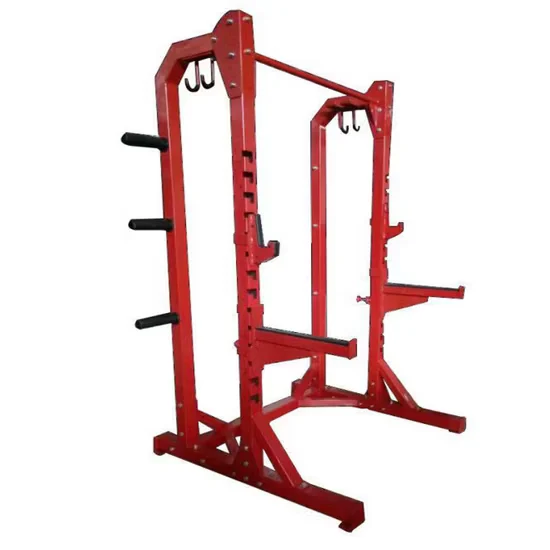
Linear Hack Press, 2375x1500x1475mm, 250kg Net Weight — selectorized leg machine built with heavy-duty steel framing and precision linear guide systems for smooth, stable movement under heavy loads. Reinforced structural joints and industrial-grade bearings ensure long-term durability in high-traffic commercial environments. Every unit undergoes full load testing before shipment, backed by a 10-year frame warranty.
// Spec Highlights
• Direct from Manufacturer · No Middlemen · Worldwide Shipping
01
// Material
Imported Solid Wood
Premium hardwood frames sourced for density and visual warmth.
02
// Hardware
Medical-Grade Silent
Whisper-quiet pulleys and springs for clinical environments.
03
// Customization
Appearance OEM
Color, upholstery, and branding tailored to your studio.
04
// Service
Layout Design
Free venue planning for studios and rehab institutions.
Every component is selected for longevity, performance, and aesthetic harmony - from imported hardwood frames to silent medical-grade accessories.
// Features
11-Gauge Traceability — Every steel coil used in this Linear Hack Press is mill-certified back to the source, ensuring the frame you inspect matches the spec sheet you signed off on.
| Parameter | Value |
|---|---|
| Product Type | Selectorized Leg Machine |
| Frame Steel Gauge | 11-gauge |
| Frame Tube Size | 3×3 inch |
| Steel Grade | Q235 / Q345 industrial steel |
| Welding Type | Robotic MIG continuous weld |
| Loading Type | Linear guide rail system |
| Bearing Type | Sealed industrial bearings |
| Upholstery | Standard or high-density options available |
| Powder Coating | 200μm scratch-resistant finish |
| Product Dimensions | 2375 × 1500 × 1475 mm |
| Net Weight | 250 kg |
| Certification | ISO 9001, CE |
| Warranty | 10-year frame |
| Facility Type | Typical Use |
|---|---|
| Commercial gym strength floor | Primary leg pressing station for general membership |
| University strength and conditioning room | Athlete lower-body development in supervised sessions |
| Hotel fitness center | Durable leg station for high-turnover guest use |
| Rehabilitation and performance center | Controlled linear pressing for return-to-training protocols |
| CrossFit box functional zone | Supplemental heavy leg work outside WOD programming |
Precision linear bearings eliminate the lateral play that turns a heavy press into a binding, uneven grind.
Most facility operators only notice rail problems after members start complaining about sticking or uneven resistance mid-repetition. The root cause is almost always undersized guide rails or unsealed bushings that accumulate chalk dust and sweat residue over months of use. Once play develops in the linear system, the carriage no longer tracks true, creating off-axis loading that accelerates wear on the entire frame structure [NEED_CITE: EN 957 structural requirements for stationary training equipment]. A commercial linear hack press machine must maintain alignment through thousands of loaded cycles, and that demands sealed bearings riding on hardened rails — not nylon bushings on mild steel tubes.
This machine anchors the lower-body pressing section, covering the sagittal plane through a fixed linear path that targets quadriceps, glutes, and adductors without requiring the stabilizer demand of free-weight squats. It complements pivot-arm leg press units and isolation machines like leg extensions, giving members a pressing option that feels more natural than a 45-degree sled. In high-density commercial floors, the linear footprint allows tighter spacing against walls or adjacent stations while maintaining safe entry and exit corridors. The fixed carriage path accommodates users across a wide height range without requiring complex setup adjustments between sets.
Every repetition transfers load from the footplate through the carriage, into the guide rails, and ultimately into the main uprights — creating cyclic fatigue at the rail mounting brackets. In high-traffic commercial environments, this junction endures hundreds of loaded transitions daily, with eccentric lowering phases generating the highest impact forces. Continuous robotic MIG welding at these bracket joints distributes stress across the full seam rather than concentrating it at discrete spot-weld points [NEED_CITE: weld classification and fatigue performance in structural steel]. The powder coating at these stress zones also faces micro-flexing, making the 200μm industrial finish critical for preventing corrosion initiation at hairline cracks in thinner coatings.
The 11-gauge frame steel and 3×3 inch tube cross-section define the deformation threshold: when a member loads the carriage heavily and pauses at the bottom, the uprights must resist bowing outward. Tube wall thickness matters more than overall weight because it governs the moment of inertia resisting that lateral spread. Robotic continuous welding ensures every bracket-to-tube joint achieves*elding leaves unwelded gaps that become crack initiation sites under repeated cycling. Sealed industrial bearings keep chalk dust, sweat, and cleaning chemicals out of the rolling elements, maintaining smooth carriage travel without the maintenance intervals that unsealed bushings demand. The sandblast pre-treatment before powder coating removes mill scale and creates mechanical adhesion, so the finish resists chipping at high-contact areas like the carriage bumpers and footplate edges.
Thin-wall tubing saves material cost upfront but deflects noticeably under loaded pauses, creating a flexing sensation that experienced lifters immediately recognize as instability. Spot-welded rail brackets may pass visual inspection at delivery but develop fatigue cracks within months of heavy commercial use, eventually requiring full carriage removal for re-welding. Unsealed bushings demand regular lubrication and replacement as they wear oval, and the labor cost of pulling a machine off the floor for bearing service compounds quickly across a fleet. Low-density upholstery compresses permanently within a season, exposing hard backing plates that generate member complaints and require complete pad replacement. Undersized powder coating chips at the carriage stop points, exposing bare steel to sweat corrosion that spreads beneath the remaining finish [NEED_CITE: powder coating adhesion standards for fitness equipment].
The 11-gauge Q235 and Q345 steel used in this commercial linear hack press machine frame is sourced with mill certificates traceable to the coil, so the gauge on paper matches what arrives on your floor. Every weld seam is laid by robotic MIG in continuous passes, eliminating the cold joints and incomplete penetration that plague manual welding at high-production volumes. Each unit undergoes load testing before crating — not sample-based batch inspection — verifying that the carriage tracks true and the frame holds alignment under rated stress. The 200μm powder coating, applied over sandblasted surfaces, provides a scratch-resistant barrier that survives the daily contact with shoes, plates, and cleaning equipment. The 10-year frame warranty reflects confidence in these structural decisions rather than a marketing add-on. Floor planning support includes CAD layouts showing this machine’s exact footprint with recommended safety clearances, so adjacent stations don’t create pinch points at the carriage travel limits.
Provide your strength zone square footage and existing equipment list to receive a 2D or 3D layout showing this machine integrated with safe clearance zones. Specify your expected daily user volume so the structural grade and bearing specification align with actual traffic patterns. Detail the height and weight range of your target user population to confirm the adjustment positions accommodate them without compromise. Note any custom requirements including frame color, logo placement, or upholstery material preferences for OEM branding alignment.
Q: How can I verify the steel gauge and tube specifications match what was quoted?
A: Request mill certificates tied to your production batch. These documents trace the steel coil back to the rolling mill and confirm chemical composition and wall thickness. For a commercial linear hack press machine, the frame tube should be 11-gauge with a 3×3 inch cross-section. Visually inspecting a sample unit and measuring wall thickness with calipers at cut ends provides physical confirmation.
Q: What maintenance do linear guide rails require in a high-traffic commercial environment?
A: Sealed industrial bearings significantly reduce maintenance compared to open bushings. Quarterly inspection for debris buildup around the rail surfaces and wiping with a dry cloth typically suffices. Avoid spraying liquid cleaners directly onto the rails, as residue attracts chalk dust. If carriage travel develops noticeable play or roughness, the sealed bearing cartridges can be replaced without machining the frame.
Q: How does a linear guide system compare to traditional pivot-arm hack press designs?
A: Linear systems constrain the carriage to a fixed path, producing consistent resistance through the full range of motion. Pivot-arm designs create a variable resistance curve as the leverage angle changes. For commercial settings, linear guides offer more predictable loading and tend to be preferred by members who train with heavy loads, since the movement path does not shift as weight increases on the carriage.
Q: What safety clearances are needed around a linear hack press in a gym layout?
A: Beyond the machine footprint itself, account for user entry and exit space on the loading side and clearance behind the carriage at full extension. A minimum corridor width should be maintained between adjacent equipment to prevent members from walking through the press zone. Providing your floor dimensions allows generation of a scaled CAD layout with precise clearance zones marked for safe operation.
Q: How do I evaluate welding quality when inspecting a sample unit before committing to a bulk order?
A: Look for continuous weld beads along all structural joints rather than discrete spot welds. A continuous robotic MIG weld appears as an even, uniform seam without gaps, undercut, or spatter. Check high-stress areas like the carriage bracket mounts and base frame connections. Spot welds may look clean but leave unwelded sections that become fatigue failure points under repeated heavy commercial use.
Premium aesthetics meet quiet operation for boutique studio environments.
Medical-grade silence and precision for sports & postpartum recovery.
Furniture-grade craftsmanship for premium residential installations.
Compact premium setups for one-on-one and small-group training.
Aesthetic Pilates integration for hybrid wellness studio programming.
Multi-unit deployment with instructor-grade reliability for certification programs.
Tell us about your project. Our team will respond within 24 hours with pricing, customization options, and shipping details.
// Sales Director
William
+86 132 2531 1800
// Export Manager
Bella
+86 198 5412 8032
william@bickfit.com