01 / Scenario
STUDIO
P
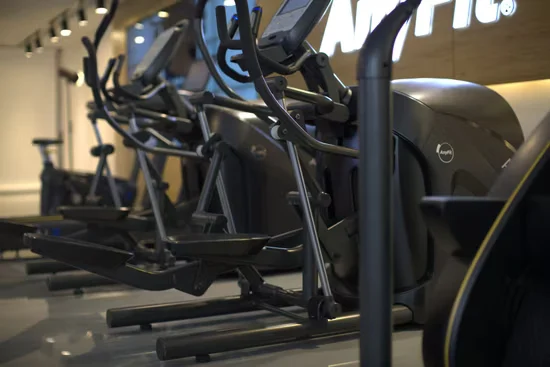
High-End Pilates Studios
Premium aesthetics meet quiet operation for boutique studio environments.
ISO
9001
CE
Certified
OEM
Available
10YR
Warranty
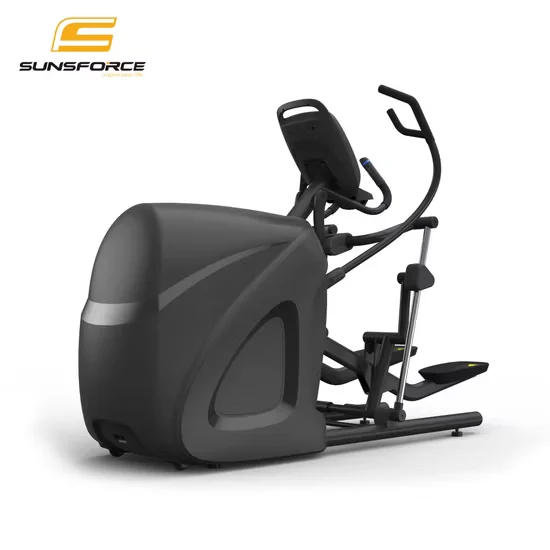
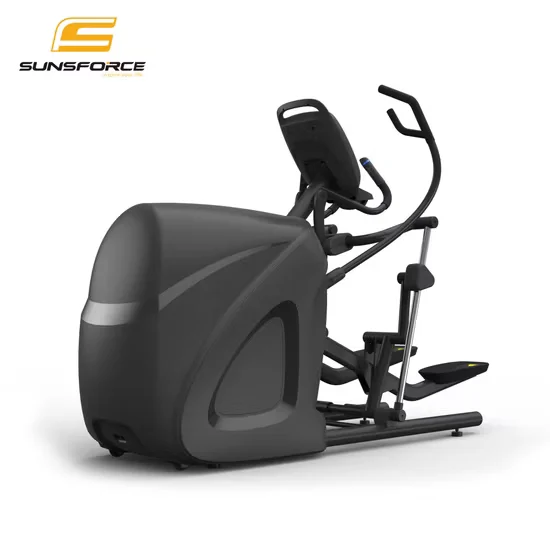
Commercial Magnetic Elliptical Cross Trainer, 10.1" Touch Screen, 180kg Max User Weight — engineered with 240kg net weight and 25-level magnetic resistance for high-traffic commercial environments. The 230mm pedal center distance reduces knee joint stress, while sealed bearings ensure long-term reliability under daily use. Every unit undergoes 10,000-hour durability testing before shipment.
// Spec Highlights
• Direct from Manufacturer · No Middlemen · Worldwide Shipping
01
// Material
Imported Solid Wood
Premium hardwood frames sourced for density and visual warmth.
02
// Hardware
Medical-Grade Silent
Whisper-quiet pulleys and springs for clinical environments.
03
// Customization
Appearance OEM
Color, upholstery, and branding tailored to your studio.
04
// Service
Layout Design
Free venue planning for studios and rehab institutions.
Every component is selected for longevity, performance, and aesthetic harmony - from imported hardwood frames to silent medical-grade accessories.
// Features
Robotic continuous MIG welding eliminates spot-weld failure points — every joint on the CTC60-T frame is welded with uninterrupted seams, removing the fatigue cracks that typically originate at intermittent spot welds under commercial daily use.
| Parameter | Value |
|---|---|
| Product Type | Commercial Magnetic Elliptical Cross Trainer |
| Model NO. | CTC60-T |
| Console Type | 10.1" Touch Screen |
| Resistance Level | 1-25 |
| Stride Grade | 1-10 |
| Step Depth Grade | 1-15 |
| Pedal Center Distance | 230mm |
| Net Weight | 240kg |
| Max User Weight | 180kg |
| Product Dimensions | 2120×790×1680mm |
| Certification | ISO, RoHS, CE, EN 957 |
| Facility Type | Typical Use |
|---|---|
| Commercial gym cardio zone | Primary elliptical stations for high-traffic member use |
| Hotel fitness center | Reliable, low-maintenance cardio for guest-facing floors |
| University athletic facility | Pre- and post-training low-impact conditioning |
| High-traffic fitness club | Endurance and warm-up zone equipment |
Sealed industrial bearings prevent the wobble that forces early replacement. The most common failure path in commercial elliptical trainers is not structural — it is the gradual introduction of play into the pedal crank and flywheel assembly. In high-dust, high-sweat environments like CrossFit boxes and open-floor gyms, unsealed bearings allow particulate contamination that degrades lubrication within months. Users feel the instability first as a lateral wobble at the pedal, then as a grinding sensation through the stride cycle. By the time maintenance staff notice, the bearing race is scored and the entire crank assembly requires replacement. The CTC60-T addresses this with sealed bearing units rated for sustained commercial operation, paired with a 240kg net mass that anchors the frame against harmonic vibration during aggressive stride inputs. [NEED_CITE: bearing seal classification and contamination resistance in fitness equipment]
This commercial magnetic elliptical cross trainer occupies the low-impact, full-body conditioning segment of the cardio zone. Its converging arm and leg path engages both upper and lower kinetic chains simultaneously, complementing treadmills and air bikes that isolate lower-body or upper-body effort respectively. The 230mm pedal center distance aligns with natural hip-width stride geometry, reducing lateral knee deviation for users across a wide anthropometric range. Facilities deploying this unit alongside self-powered treadmills and rowers create a balanced cardio floor that serves rehabilitation, warm-up, and steady-state endurance programming without overlapping mechanical stress patterns.
Commercial elliptical trainers experience a unique stress profile: repetitive eccentric loading through the pedal crank, torsional input from alternating arm pulls, and constant exposure to汗液 and cleaning chemicals. The CTC60-T’s 240kg net weight provides the inertial mass necessary to resist frame flex during high-cadence efforts from users up to 180kg. The magnetic resistance system eliminates physical contact between the resistance mechanism and the flywheel, removing a primary wear path found in belt-driven or friction-braked alternatives. Welded joints are subjected to millions of load reversals over the equipment’s service life; continuous robotic MIG welding ensures uniform penetration and eliminates the cold-joint defects that propagate cracks under cyclic stress. [NEED_CITE: weld classification and fatigue performance in structural steel]
The 240kg net weight and 180kg maximum user capacity establish a mass ratio that ensures frame stability during dynamic movement. Heavier frames resist harmonic vibration — the oscillation that users perceive as "shakiness" at high stride rates. The 10.1-inch touch screen console integrates resistance adjustment across 25 levels and stride grade modulation across 10 positions, allowing the machine to serve users from rehabilitation protocols to high-intensity interval training without mechanical reconfiguration. The magnetic resistance system operates through eddy current induction rather than physical friction, meaning the resistance mechanism does not contact the flywheel surface. This eliminates the wear debris and belt replacement cycles inherent in traditional electromagnetic or mechanical brake systems. The 230mm pedal center distance is calibrated to match average adult hip width, minimizing lateral knee shear and accommodating users from approximately 155cm to 195cm in height.
Reducing frame mass below the threshold required for user weight creates a machine that flexes visibly during use. This flex is not merely cosmetic — it accelerates fatigue at welded joints, introduces misalignment into the pedal crank path, and transmits vibration into the console mounting points. Non-sealed bearings in dusty gym environments accumulate particulate contamination that scores bearing races, introducing play that compounds with every rotation. Thin powder coatings chip at contact points where users grip, adjust, or mount the machine, exposing bare steel to汗液 corrosion that spreads beneath adjacent coating. These failures do not occur simultaneously — they cascade. A wobbling pedal increases user instability, which increases grip force on handles, which accelerates upholstery wear, which exposes foam to sweat degradation. The maintenance cost of addressing each failure individually exceeds the initial cost premium of specifying sealed bearings, adequate frame mass, and industrial-grade coating from the outset. [NEED_CITE: powder coating thickness and adhesion standards for fitness equipment]
Every CTC60-T unit undergoes individual load testing before shipment — not batch sampling, but verification of each machine’s structural integrity under rated capacity. The manufacturing process uses mill-certified Q235 and Q345 steel with traceable coil origin, robotic MIG welding with continuous seams, and 200μm scratch-resistant powder coating applied after sandblast surface preparation. The 10-year frame warranty reflects confidence in these structural specifications. For facility planners, we provide 2D-3D CAD layout support that accounts for the CTC60-T’s 2120×790mm footprint and required safety clearances between adjacent cardio stations. OEM private label and custom upholstery options are available for chain operators standardizing across multiple locations.
Provide your facility’s cardio zone dimensions and target equipment count to receive a 2D-3D layout plan that optimizes traffic flow and safety spacing around each commercial magnetic elliptical cross trainer. Specify your expected daily user volume so we can confirm the structural rating matches your operational intensity. If your chain requires standardized upholstery colors, branded console interfaces, or custom logo placement across multiple sites, include these requirements in your inquiry to receive a coordinated OEM specification package.
Q: How does magnetic resistance differ from electromagnetic or belt-driven systems in commercial use?
A: Magnetic resistance uses eddy current induction to create drag on the flywheel without physical contact. This eliminates friction wear, belt replacement, and debris accumulation inside the resistance mechanism. In commercial environments with continuous daily operation, magnetic systems maintain consistent resistance calibration without the degradation curves seen in contact-based alternatives.
Q: What structural features prevent the pedal wobble that develops in lower-grade ellipticals?
A: The CTC60-T uses sealed industrial bearings at all pivot points, preventing dust and moisture contamination that scores bearing races and introduces play. The 240kg frame mass provides inertial stability that resists harmonic vibration during high-cadence use. Combined with continuous robotic welding at all frame joints, these specifications eliminate the progressive loosening that forces early replacement in lighter machines.
Q: How does the 230mm pedal center distance affect user comfort and joint stress?
A: This dimension matches average adult hip width, allowing the stride path to follow natural leg biomechanics without forcing knees inward or outward. Users outside the typical height range still benefit from the consistent lateral alignment, which reduces shear forces at the knee joint compared to machines with narrower or wider pedal spacing that force compensatory movement patterns.
Q: What maintenance does the touch screen console require in high-traffic commercial settings?
A: The 10.1-inch touch screen is sealed against sweat and cleaning chemical exposure. Maintenance involves periodic inspection of mounting hardware and replacement of the protective film if surface scratches impair touch responsiveness. The console software supports multi-user profile management and usage tracking, reducing the need for manual logging by facility staff.
Q: Can this elliptical accommodate users from rehabilitation through high-intensity training?
A: Yes. The 25-level resistance range spans from minimal load suitable for post-injury mobility work through substantial drag for cardiovascular conditioning. The 10-level stride grade and 15-level step depth grade allow users to modify movement amplitude and intensity without changing equipment, supporting diverse programming within a single machine footprint.
Premium aesthetics meet quiet operation for boutique studio environments.
Medical-grade silence and precision for sports & postpartum recovery.
Furniture-grade craftsmanship for premium residential installations.
Compact premium setups for one-on-one and small-group training.
Aesthetic Pilates integration for hybrid wellness studio programming.
Multi-unit deployment with instructor-grade reliability for certification programs.
Tell us about your project. Our team will respond within 24 hours with pricing, customization options, and shipping details.
// Sales Director
William
+86 132 2531 1800
// Export Manager
Bella
+86 198 5412 8032
william@bickfit.com