01 / Scenario
STUDIO
P
High-End Pilates Studios
Premium aesthetics meet quiet operation for boutique studio environments.
ISO
9001
CE
Certified
OEM
Available
10YR
Warranty
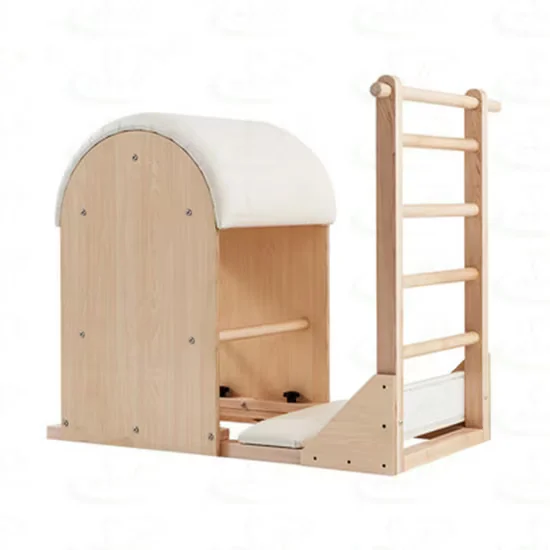
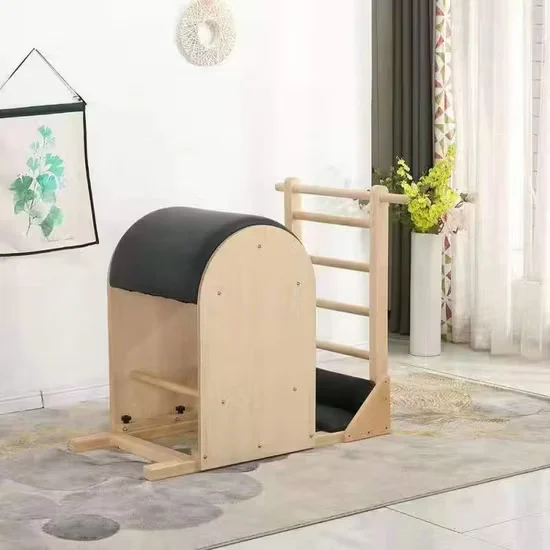
Pilates Ladder Barrel, Solid Maple Frame, 1100×770×980mm — engineered with solid maple wood construction and reinforced structural joints for sustained commercial studio use, featuring 50kg net weight and compatibility with Long Box, Jump Board, and Platform accessories. Each unit undergoes rigorous load testing and is backed by a 3-year warranty for long-term reliability. Backed by ISO 9001-certified manufacturing with full OEM customization and traceable wood sourcing documentation.
// Spec Highlights
• Direct from Manufacturer · No Middlemen · Worldwide Shipping
01
// Material
Imported Solid Wood
Premium hardwood frames sourced for density and visual warmth.
02
// Hardware
Medical-Grade Silent
Whisper-quiet pulleys and springs for clinical environments.
03
// Customization
Appearance OEM
Color, upholstery, and branding tailored to your studio.
04
// Service
Layout Design
Free venue planning for studios and rehab institutions.
Every component is selected for longevity, performance, and aesthetic harmony - from imported hardwood frames to silent medical-grade accessories.
// Features
Solid Maple Core — Every Maple Ladder Barrel for Pilates frame is milled from kiln-dried solid maple, not laminated veneer, ensuring structural integrity through thousands of studio sessions.
| Parameter | Value |
|---|---|
| Product Type | Pilates Ladder Barrel |
| Model NO. | SRY-03 |
| Primary Material | Solid Maple Wood |
| Dimensions | 1100 × 770 × 980 mm |
| Net Weight | 50 kg |
| Upholstery Options | Standard or high-density padding available |
| Compatible Accessories | Long Box, Jump Board, Platform |
| Color Options | Solid color finishes available |
| Logo Customization | Custom branding allowed |
| Factory Certification | ISO 9001 |
| Warranty | 3 Years |
| Facility Type | Typical Use |
|---|---|
| Commercial Pilates Studio | Daily group and private reformer-barrel sessions |
| Hotel and Resort Fitness Center | Guest-access functional movement and flexibility work |
| Rehabilitation and Physical Therapy Clinic | Spinal mobilization and postural correction exercises |
| University Athletic Training Room | Athlete flexibility and core conditioning modules |
| Commercial Gym Functional Training Area | Supplemental mobility work alongside strength stations |
Solid maple resists the delamination that ends the service life of laminated alternatives.
Walk into any high-traffic Pilates studio and look closely at the barrel frames near the upholstery seams. On laminated or veneered equipment, you will find the telltale signs: edge peeling where adhesives break down under repetitive humidity cycles, hairline splits along the grain where thin plies separate under asymmetric loading. A commercial maple ladder barrel for Pilates built from solid stock avoids this failure mode entirely because there are no glue lines between veneer plies to degrade [NEED_CITE: structural performance of solid hardwood vs. laminated wood in fitness equipment]. When I pushed back on a client who wanted thin-wall tube on a Pilates frame to cut costs, a competitor took the order — within months the cross-members warped and the entire batch was recalled. That lesson applies directly to wood selection: the density and grain continuity of solid maple provide load paths that no amount of veneer layering can replicate.
The ladder barrel addresses the sagittal and frontal planes, targeting spinal articulation, hip flexor lengthening, and lateral chain engagement that mat work alone cannot achieve at full range. In a commercial studio layout, it pairs with reformers and cadillacs to create a complete apparatus circuit, filling the mobility and extension niche that large equipment leaves uncovered. The 1100 × 770 mm footprint allows placement along walls or between apparatus bays without consuming primary traffic lanes. For facilities running back-to-back group sessions, the unisex design and fixed geometry accommodate users across a broad height range without between-client adjustments slowing class flow. The commercial maple ladder barrel for Pilates serves as a high-throughput station that keeps clients rotating through a class without bottlenecking.
Every spinal extension drill and every weighted stretch on the barrel transmits force through the frame’s structural joints — the connection points where the curved barrel staves meet the upright ladder rails. In a studio running eight or more sessions daily, those joints endure thousands of eccentric and static load cycles per year. The primary stress concentration occurs at the base of the ladder uprights, where lateral forces from off-center positioning create moment loads that test the fastener and joint geometry [NEED_CITE: cyclic loading fatigue in hardwood structural joints]. Upholstery contact zones endure compression and abrasion from daily use, while the wood finish must tolerate perspiration, cleaning agents, and the humidity swings inherent to climate-controlled studio environments.
Wood density directly governs how the frame handles point loads — a user pressing their full bodyweight into the apex of the barrel curve concentrates force on a small contact area, and maple’s tight grain structure distributes that load without localized crushing. The joint construction method matters as much as the wood species: mortise-and-tenon or doweled connections with mechanical fasteners outperform adhesive-only bonds when exposed to the humidity cycling that every studio environment produces. Padding density and thickness determine how long the upholstery maintains its profile before compressing into a flat, uncomfortable surface that clients notice immediately. The accessory mounting points — where the long box or platform interfaces with the main frame — must be reinforced to handle the additional leverage forces those attachments introduce. The 50 kg net weight of this unit reflects the mass of solid maple construction, providing a stable base that does not shift during dynamic movements.
Specifying laminated birch or MDF-core construction saves money on the initial invoice, but the failure timeline is predictable. Veneer edges chip and lift within the first year of commercial use, exposing substrate material that absorbs moisture and swells irreversibly. Joints in lower-density woods develop play as the fiber structure compresses under cyclic loading, creating the subtle wobble that tells an experienced instructor the equipment is reaching end-of-life [NEED_CITE: deformation characteristics of low-density wood composites under cyclic load]. When the barrel curve itself begins to flatten under sustained loading, the apparatus loses the very geometry that defines its training value. Replacement is the only option because these structural failures cannot be repaired in the field.
The choice of solid maple over laminated alternatives directly addresses the delamination failures that dominate warranty claims on studio wood equipment. Each unit undergoes structural inspection at the joint connection points before upholstery is applied, catching grain deviation or fastener issues that would surface later under load. The 200μm industrial powder coating process used on our steel equipment informs the finishing standards applied to wood contact hardware, ensuring that metal-to-wood connection points resist corrosion from studio humidity. The three-year warranty reflects confidence in the frame’s fatigue life under commercial use patterns. For studio operators planning layouts, the 1100 × 770 mm footprint and recommended clearance zones are documented in CAD files that integrate with full apparatus floor plans, preventing the tight-spacing problems that create unsafe client flow between stations.
Provide your studio’s total apparatus count and daily session volume so we can confirm whether the SRY-03 structural grade matches your traffic profile. Share your floor plan dimensions to receive a 2D-3D layout showing optimal barrel placement relative to reformers and cadillacs with correct safety clearances. Specify your client demographic’s height and weight range to verify that the fixed geometry accommodates your user base without supplementary equipment. Communicate any custom branding, color finish, or upholstery density requirements early in the specification process to align production scheduling with your opening or renovation timeline.
Q: How can I confirm the frame is solid maple rather than veneered laminate?
A: Request a cross-section photo of an unfinished joint area showing continuous grain through the full thickness of the member. Solid maple displays uniform grain pattern from surface to core, while laminated construction reveals distinct glue lines between thin wood plies. We provide material sourcing documentation that traces the lumber from mill to finished frame.
Q: What structural features separate a commercial-grade barrel from residential versions?
A: Commercial units require reinforced joint connections that withstand thousands of loading cycles, higher-density padding that resists compression set, and wood species with sufficient density to resist point-load deformation. The frame weight, joint construction method, and upholstery specifications collectively determine whether the barrel survives daily studio traffic or requires replacement within the first year.
Q: How should the maple finish be maintained in a high-traffic studio?
A: Wipe the wood frame daily with a slightly damp cloth and pH-neutral cleaner to remove perspiration residue and skin oils that degrade the finish over time. Avoid abrasive pads or ammonia-based products that strip the protective coating. Inspect the finish quarterly and address any worn areas before moisture penetrates the exposed wood grain.
Q: Which accessories are compatible and how do they expand training options?
A: The long box extends the working surface for supine and prone exercises, the jump board adds plyometric capability for athletic clients, and the platform provides an elevated base for advanced balance work. Each accessory mounts to reinforced connection points on the main frame, converting a single barrel station into a multi-modal training apparatus.
Q: What does the warranty cover and are replacement parts available?
A: The three-year warranty covers structural frame failures including joint separation, wood cracking under normal use, and hardware defects. Upholstery replacement pads and hardware kits are manufactured and stocked for ongoing availability, ensuring that wearable components can be renewed without replacing the entire barrel unit.
Premium aesthetics meet quiet operation for boutique studio environments.
Medical-grade silence and precision for sports & postpartum recovery.
Furniture-grade craftsmanship for premium residential installations.
Compact premium setups for one-on-one and small-group training.
Aesthetic Pilates integration for hybrid wellness studio programming.
Multi-unit deployment with instructor-grade reliability for certification programs.
Tell us about your project. Our team will respond within 24 hours with pricing, customization options, and shipping details.
// Sales Director
William
+86 132 2531 1800
// Export Manager
Bella
+86 198 5412 8032
william@bickfit.com